The other omelet

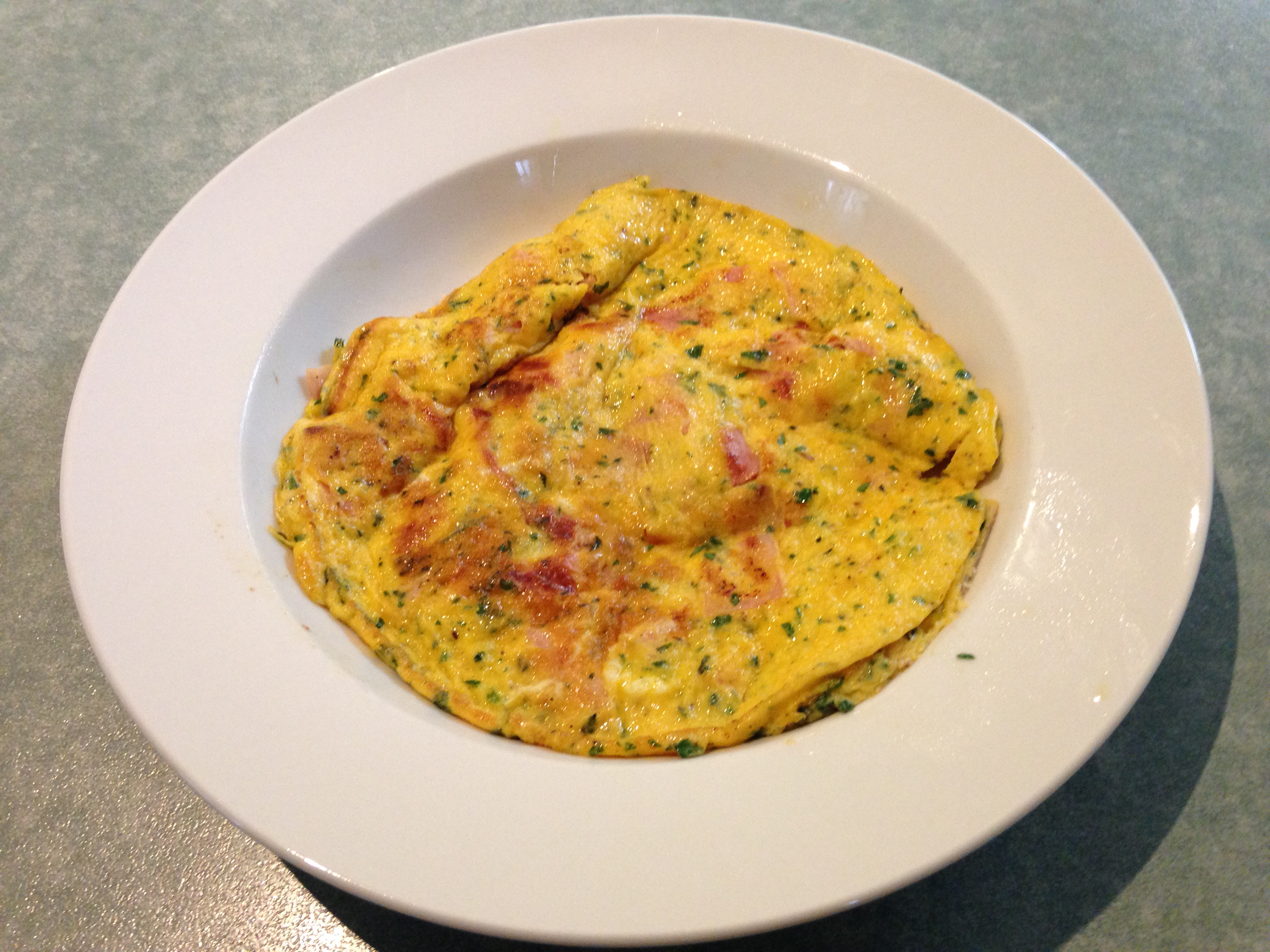
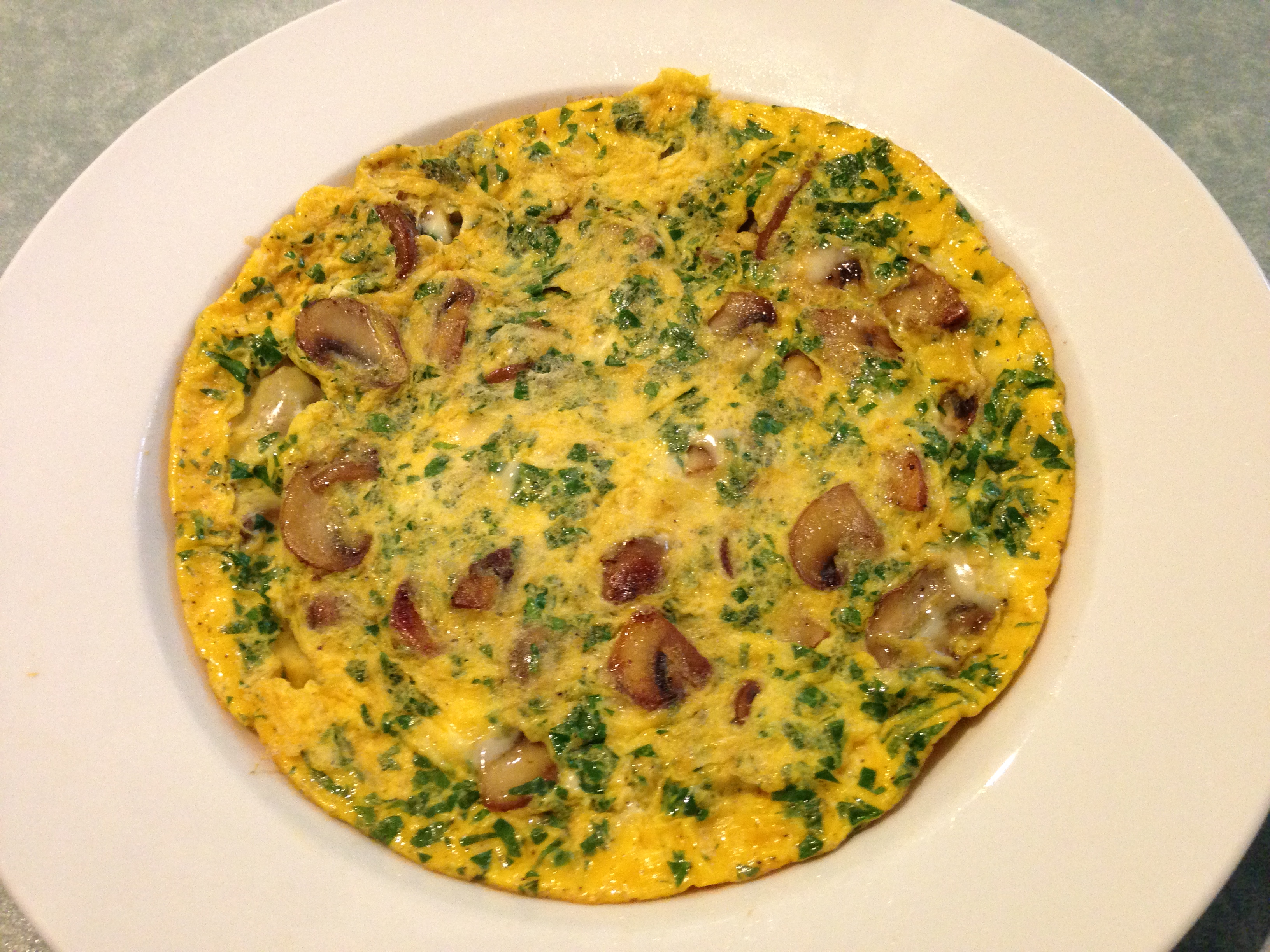
In my recent post about some of the ways we use the fresh tarragon from our garden, I wrote about what I call my ‘French omelet’. I mentioned that I make a second omelet, with mushrooms, parsley and cheese. I’ve just made and consumed one of these – it’s lunchtime in Melbourne – so I thought I’d briefly tell you about it, beginning with a photo.

IMG_0681

The ingredients are: 60-70g button mushrooms, butter, 2 x 60g eggs, sea salt and black pepper, 20ml of chopped fresh parsley and 30-35g of grated cheese.

I chopped the mushrooms roughly and sauteed them with some melted butter in a non-stick pan, small enough to make a 2-egg omelet. The mushrooms were tossed regularly, until they were soft and beginning to brown.

Meanwhile, I whisked the eggs in a bowl with a couple of pinches of salt and pepper – the cheese provides additional salt – and the parsley and cheese were then folded into the egg. I go easy on the cheese – its function is to melt and soften the texture of the omelet rather than to provide a prominent flavour.

I transferred the cooked mushrooms to a bowl and tipped the egg mixture into the still-warm pan and returned it to a low-to-medium heat. I then added a pinch of salt and pepper to the mushrooms and sprinkled them evenly by hand across the surface of the omelet. After about 4 minutes – sorry, I wasn’t watching the clock- the omelet was setting around its rim. I flipped it and turned off the heat, allowing one minute for the omelet to finish cooking.

Easy and nutritious!

Posted in Cooking | Tagged , | 1 Comment

Which came first: the white or the yolk?

“Ahem. That’s a joke, ah say, that’s a chicken joke, son.” (Foghorn Leghorn, my second favourite cartoon character.)

Consumption of whole eggs – fried, boiled, poached, scrambled, as an omelet, in a cake/quiche/burger/fried rice/caesar salad, you name it – is as popular in Australia as in pretty much any country around the world, with the possible exception of France (but I would say that, wouldn’t I?)

When it comes to using just one part of an egg – the white or the yolk – it was traditionally the former with which Australians first learned to prepare something to eat. And that something is known as a pavlova.

There was a time when making your first pavlova was akin to a rite of passage for young Australians; less so these days, due to the rich ethnic and culinary diversity of our nation in the 21st Century. However, it is still a crowd-pleaser at a social gathering, especially when there is a plentiful supply of the favoured fruits – passionfruit, strawberry, kiwi fruit and banana; tinned peaches are also popular in some households.

I have no memory of my mother making a pav, as it is known affectionately. She had easy access to a good quality version from a local cake shop, so she just whipped the cream and added the fruit. So, despite my enthusiasm for cooking, it would be well into my fifth decade before I made my first pavlova and then, only through the intervention of serendipity.

Around the end of the 20th Century, I belatedly discovered the pleasures of eating fresh asparagus AND I ate my first dish of eggs benedict. The latter led me back to my French cookbook and a recipe for hollandaise sauce, which is also a perfect partner for asparagus. Two egg yolks were required. Fine. I had cooked plenty of souffles, so I was competent enough to separate two yolks from their whites and then gently convert them into a pretty decent sauce.

What was to be done with the two egg whites? I opened my copy of The Cook’s Companion, went to the eggs section and came across a recipe for meringues. Two whites, a lot of rapid beating, 100g of sugar and a dash of vanilla essence, more beating, small mounds spooned onto a lined baking tray, 40 minutes of gentle baking and there were six little gems ready to be partnered with, say, cream and strawberries macerated in brandy. My greedy neighbours in the small block of apartments where I lived were agog!

Before long, I did get to make a pavlova or two, for which at least four egg whites are required, which fitted in neatly with making a custard – another new addition to my repertoire – that used four egg yolks.

Maggie and I made a home together a few years later and I introduced her to the whole hollandaise/meringue two-sides-of-a-coin thing. We have tweaked the meringue half of the deal, adding 50g of hand-crushed almond flakes, folded in VERY CAREFULLY at the last minute, as fat is the arch-enemy of beaten egg whites. And Maggie divides the mixture into eight piles, which gives us four evenings of dessert and reduces the average sugar hit.

The bearnaise sauce that featured in my previous post also involved two egg yolks. So, we made meringues yet again. (Maggie is quietly pleased that the supply of egg whites will now be less dependent on the availability of asparagus spears worthy of homemade hollandaise.)

Here is my plate from last night, with beautiful berries, grown in the Yarra Valley by the D’Angelo family, and small portions of vanilla ice-cream and light sour cream atop the meringue. Eye candy anyone?

IMG_0633


Posted in Cooking | Tagged , , | Leave a comment

Estragon: le roi des herbes!

In France, estragon (tarragon) is known as the king (roi) of herbs. I imagine this is in deference to its pronounced flavour, which can subjugate other ingredients, or because, when used expertly, its contribution to a dish is sans pareil.

I first came across tarragon, as a dried herb, more than 30 years ago. I had bought some to use in a chicken dish that I was preparing for the first time. What I didn’t notice, was that the recipe intended that the cook use fresh tarragon. By using the dried herb, I rendered the chicken inedible; my palate resolved that it would NOT go anywhere near tarragon again!

About 25 years later, I became one of the tens of thousands of Australians who owned a copy of Stephanie Alexander’s encyclopaedic book, The Cook’s Companion. One of the recipes that caught my eye was for a carpaccio of salmon served with a salsa of fresh herbs and tomato; tarragon was one of the four herbs to be used. Fresh salmon – farmed off the coast of Tasmania – had only been available in Australia for about a decade and I was one of many who was relishing the opportunity to cook with it. Hence my interest in the carpaccio recipe, despite the tarragon. Once I had impressed friends with the dish, I was converted and added tarragon to the range of herbs I would try to grow in my own garden.

Our tarragon plant, soon after it had emerged from its winter hibernation

Our tarragon plant, soon after it had emerged from its winter hibernation

One of the best known concoctions that has introduced tarragon to a vast audience is bearnaise sauce. Chopped tarragon and tarragon-infused white wine vinegar are both essential ingredients in this condiment, most frequently served with a beef steak that has been grilled or pan-fried. It took us until very recently to buy some tarragon vinegar for our pantry – as an owner of grocery lines and batterie de cuisine I am a minimalist – but we finally made bearnaise sauce for the first time earlier this week. We had some with a light lunch of ham and fresh asparagus; the bearnaise was good but hollandaise sauce is superior as a companion for asparagus. The balance of the bearnaise will be consumed this evening, when we will be barbecuing two thick steaks of beef rump.

And here they are - perfect partners

And here they are – perfect partners

My personal favourite destiny for fresh tarragon is as one of three herbs – parsley and chives being the others – that I use in my version of a meurniere sauce to accompany a serve of pan-fried delicate white fish. (The recipe for the sauce was provided in last month’s post A fish dish to celebrate our baby kipflers.)

And I have just eaten another tarragon-flavoured dish which I prepare regularly for my lunch. I call it my French omelet.

French omelet 1   French omelet 2

The ingredients are: 2 x 60g eggs, 1/2 tsp Dijon mustard, generous pinch of salt, 3 or 4 grinds of black pepper, 30g of well-smoked ham roughly chopped and 1 tsp each of finely chopped tarragon and parsley. I add the mustard to the bowl before I beat the eggs to ensure full incorporation in the mixture. If Maggie is on the list of diners, I am lobbied to add some grated cheese but I prefer to reserve the cheese for an omelet I make with sauteed mushrooms and chopped parsley.

Posted in Cooking, Home life | Tagged , , | 1 Comment

NE Victoria: food & wine

A leading commentator on televised matches of Australian Rules football is renowned for his quick-witted quips and puns as much as for his football knowledge. Possibly the best known of the terms he has coined is “centimetre-perfect”, which is used to describe a precise transfer of the football by foot or hand from one player to a team-mate.

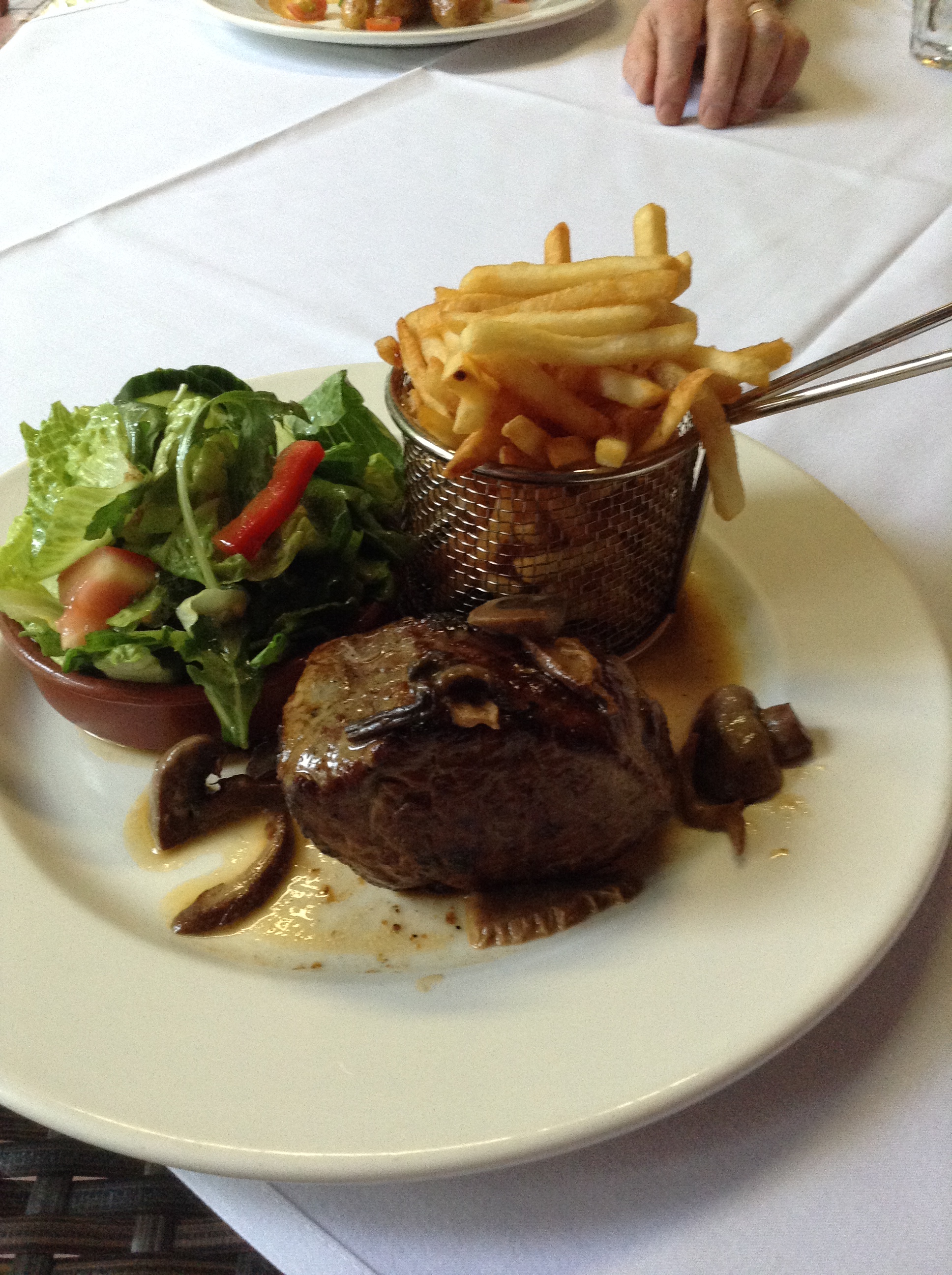
This term came to mind when Maggie cut into the porterhouse steak she ordered for dinner on our first night at the Mountain View Hotel, in the small town of Whitfield in the King Valley. Yes, it was her preferred shade of deep reddish pink in the middle but there was a thick layer of too-well-cooked meat on the top and bottom of the steak. This was due to the piece of beef being cut imperfectly, at least a centimetre over-sized, thus requiring excessive cooking to achieve a medium-rare result in the middle of the steak.

I chose a plate of local freshwater trout, accompanied by garlic prawns, roast potato pieces and wilted spinach. I was unsure how the two seafoods would work together but the trout was robust enough to hold its own and the chef had used the garlic lightly. A promising start to dining in the region.

NE Food 5   NE Food 6

The following night, we were advised that fresh supplies had arrived and we would be able to order the specialty of the house – roast pork knuckle, including a generous layer of crackling. One plate, at $39, including smashed potato and sauerkraut, was more than enough for the two of us. The dish proved to be all it was cracked up to be!

Famous Whitfield pub grub - a super-sized plate of pork knuckle

Whitfield pub grub – a super-sized plate of pork knuckle

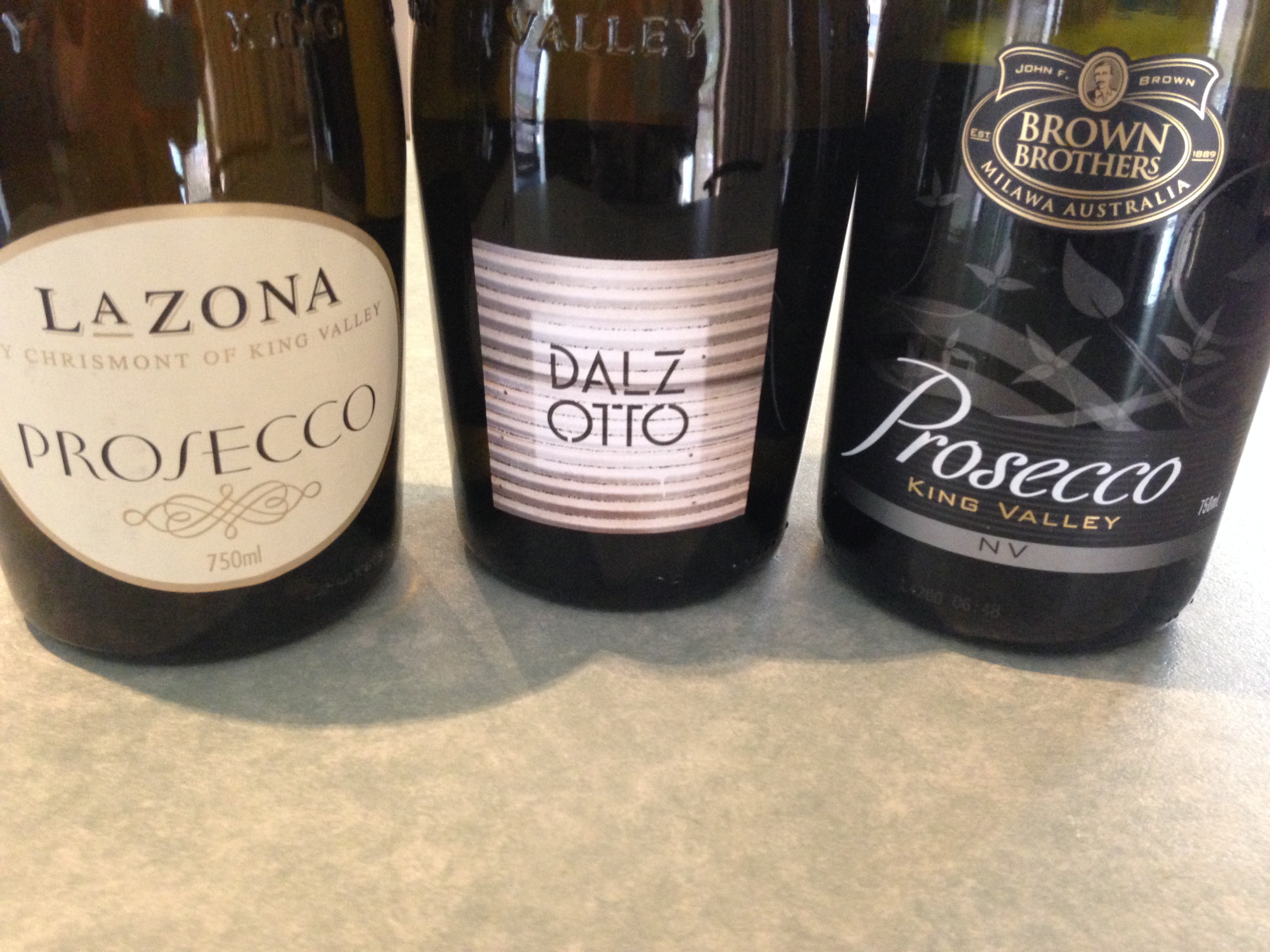
As a wine region, King Valley is best known for producing table wines from Italian grape varieties, eg sangiovese, arneis, barbera; this is hardly surprising, given the Italian heritage of so many of the region’s families. The greatest success-story, from a commercial point of view, has been prosecco, the grape that is grown in the north-east of Italy to produce a sparkling wine.

The King Valley is the Australian home of prosecco

The King Valley is the Australian home of prosecco

We bought three bottles of prosecco, including one from Dal Zotto wines, the first winery to make prosecco in Australia. Interestingly, the next time we visited one of the ‘barns’ that dominate the liquor retail trade here, we noticed that there were as many as 20 different brands of prosecco on display. Some were from Italy, several from the King Valley, and some were being offered by labels that have hitherto been associated with low-cost bubbly in a pseudo-French style. The prosecco band-wagon has left the station!

On our second day in the region, we set off from Whitfield on a round trip that would place us in Beechworth at lunchtime and then in Milawa on the way back. In the former, we had a light lunch at a local pub – adequate but nothing to write home about – and then we visited one of the two premises of Beechworth Honey, a business that is known for its commitment both to producing fine-quality commercial honey and to the Australian bee-keeping and honey industry. No imported honey crosses their threshold! There were at least 20 different varieties available for tasting and, with help from the staff, I found one that will be just right for the raw muesli I make.

NE Food 1   NE Food 3

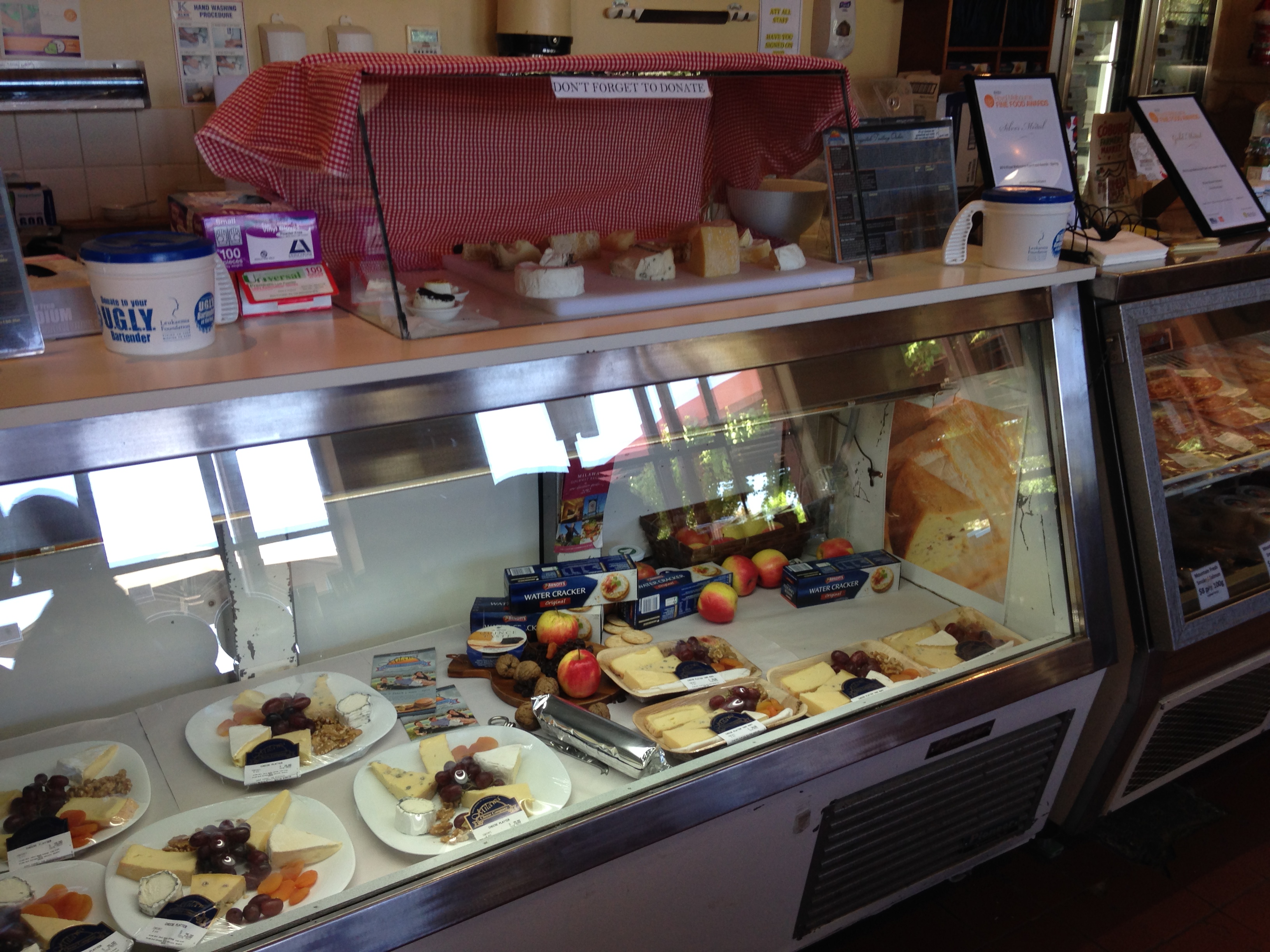
Milawa is little more than a village set along the axes of two crossroads but it has become known as something of a gourmand’s destination and Milawa Cheese has been one of the pacesetting businesses. We were able to taste a generous number of cheeses (and we learnt that there had been long queues during the preceding long weekend). We bought a piece of three of the cheeses and looked after them in our hotel room fridges and a cool bag equipped with ice bricks. Two of the cheeses are being saved for the imminent festive season.

Before we left the King Valley on our third day, we walked over to the Whitty Cafe for some fresh coffee and a bite to eat. We shared an egg, bacon and lettuce sandwich; my short macchiato was so good that I ordered a second – a very rare event. The cafe’s vibe was relaxed and colourful; its product was quality. Another milestone in this area’s emergence as a wine and food destination?

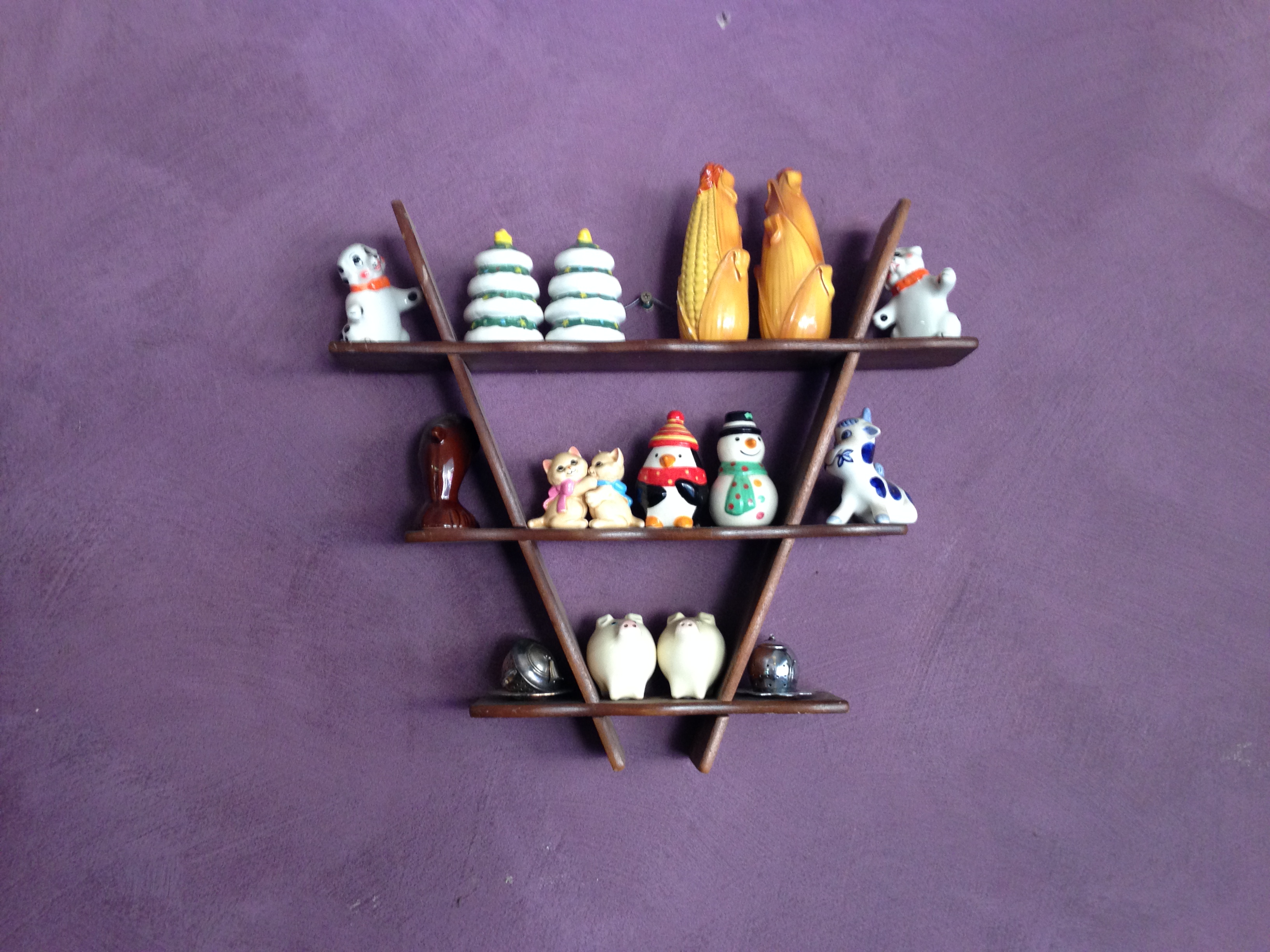
A seasoning of whimsy: The Whitty Cafe has a burgeoning collection of salt and pepper shakers from all over the world

A seasoning of whimsy: The Whitty Cafe has a burgeoning collection of salt and pepper shakers from all over the world

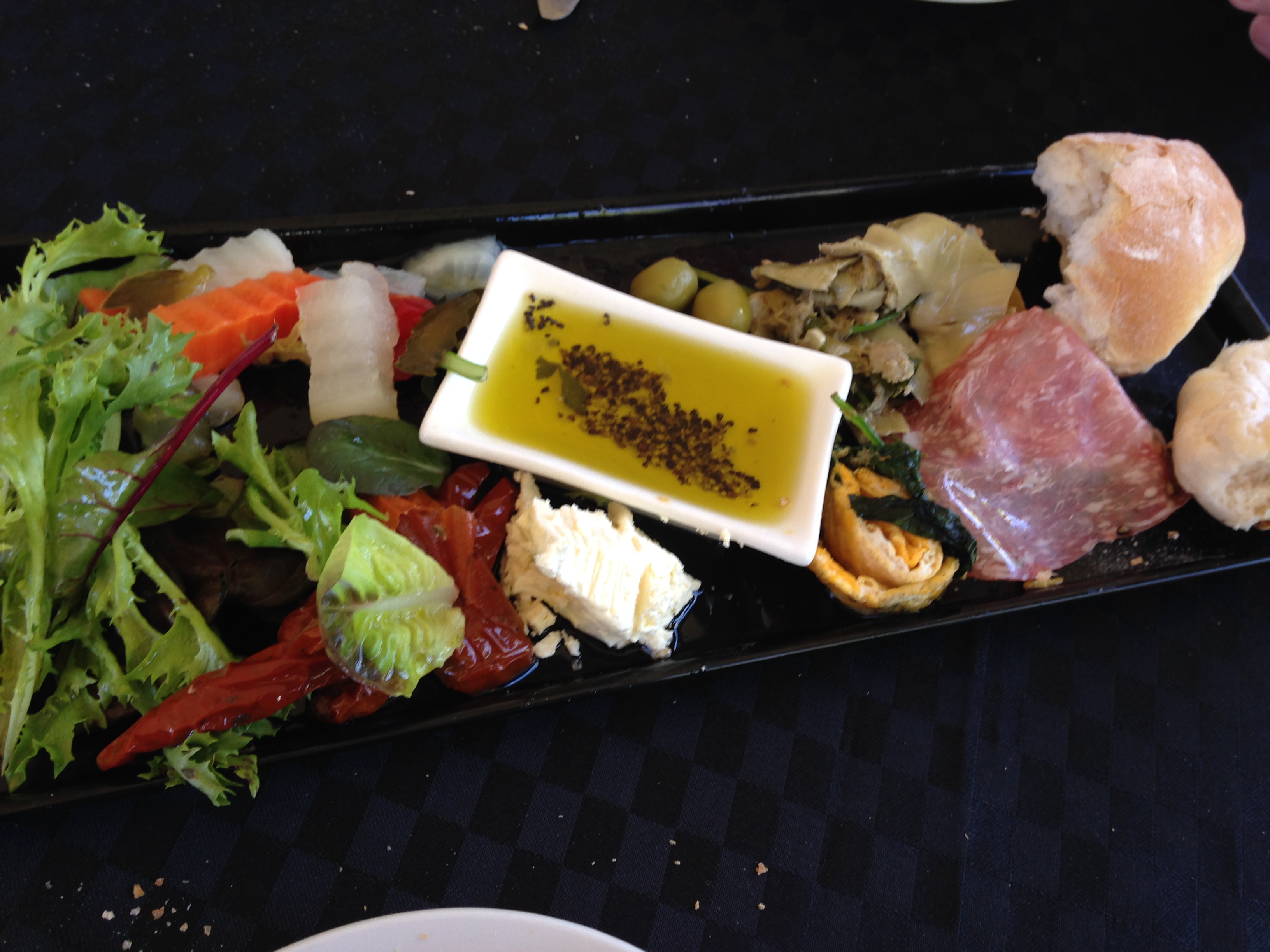
Now, for the last event in this tale of two greedy travellers – lunch at Ceccanti Wines, in the Kiewa Valley. Italian cuisine and typical Italian ingredients are the biggest factors in the reputation of north-east Victoria as a region where you can eat well. You can choose from a range of Italian cooking classes, in King Valley or in Bright. You can enjoy fine dining – Patrizia Simone blazed the trail, others have followed. Or you can go to Ceccanti Wines, where you will experience fun dining.

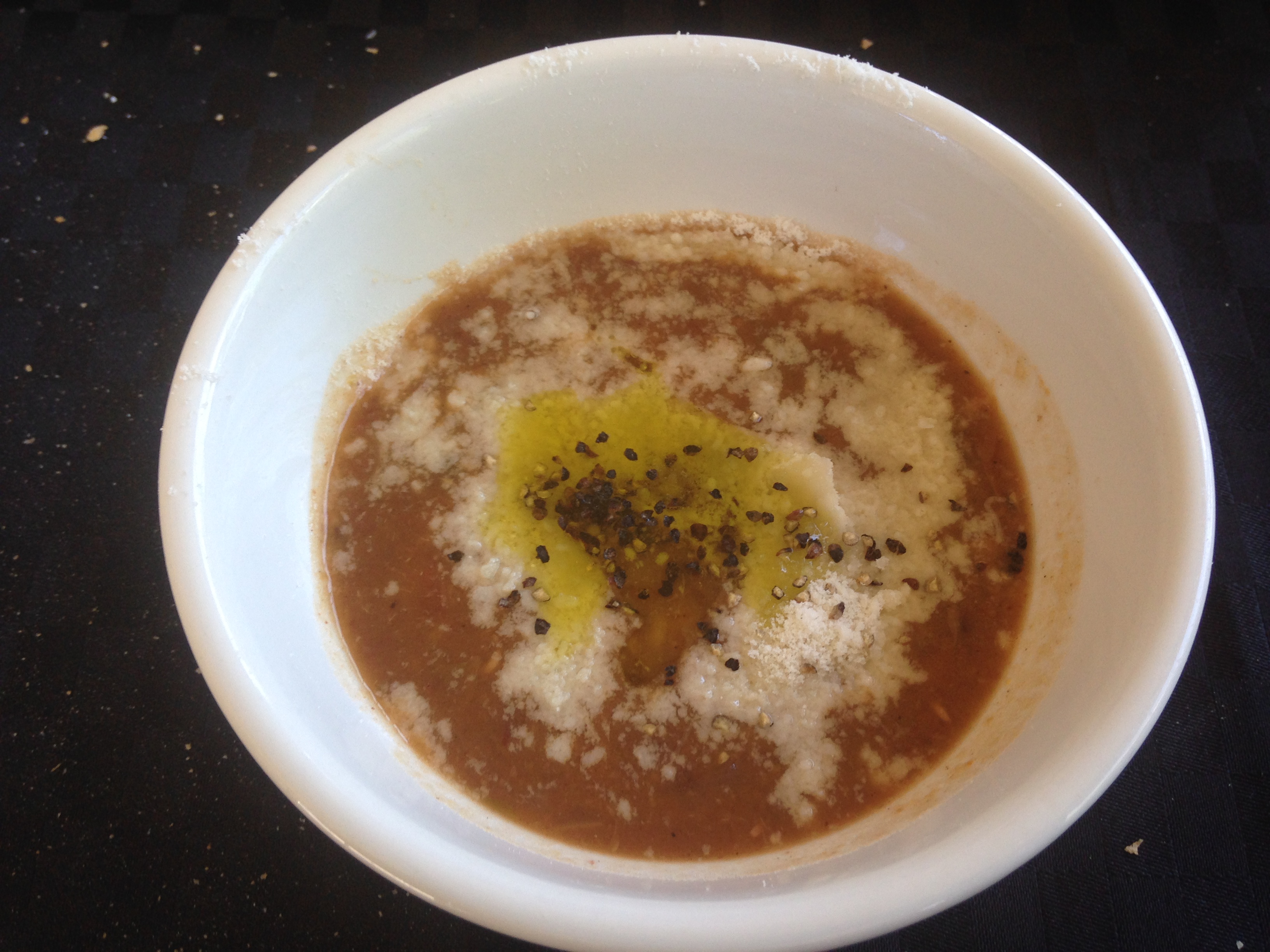
Angelo Ceccanti hails from the city of Lucca in Tuscany and the menu prepared by his wife and himself is much as would be served by a Tuscan nonna after church on a Sunday. The setting is simple and rustic. The wines are idiosyncratic and food-friendly. And each course is cooked just the once. So, if you only want the main course, you will have to wait while everyone else is served their antipasti, followed by a bean soup.

The complete menu of five courses is priced at only $45. An irresistible bargain, our stomachs told us. Three hours and way too much delicious food later, we bad a fond farewell to the Ceccantis. In the interest of protecting the guilty parties, I have omitted photos of the last two courses.

NE Food 11   NE Food 12

Are we there yet? Pasta was the third of five courses

Are we there yet? Pasta was the third of five courses

Posted in Eating out, Travel, Wine | Tagged , , , , , | Leave a comment

NE Victoria: towns

A common theme in the post-colonial histories of North America and Australasia is the rise and fall of rural towns. In some cases, a meteoric rise fuelled by the discovery of gold or another precious metal has inevitably been followed by collapse as the ore supply peaked then dissipated. The other version of this story has been driven by declines in the labour-intensity of agriculture, transport and government and retail services.

There are some instances of one or both of these occurrences in north-east Victoria. However, the region has been protected to some extent from the ravages of rural depopulation by a combination of enduring natural advantages and opportunities to offer products and services that cater for the vast market that is metropolitan Melbourne, just three hours away.

IMG_0488   IMG_0485

The photos of Beechworth above show the creek where gold was discovered in the 1850s, ushering in a boom period reflected in sturdy public buildings such as those in the second photo. Although Beechworth did fall back when the gold ran out, it had the dubious good fortune to be the site of a large prison, with its attendant workforce and demand for services. Over the last couple of decades, its stock of intact 19th century buildings and streetscapes have proven to be a drawcard for good-spending visitors from Melbourne, which has stimulated the establishment of a wide variety of retail and service businesses, which has attracted more visitors and so the virtuous cycle builds.

Deciduous trees are a popular feature of Bright

Deciduous trees are a popular feature of Bright

The prosperity of Bright has had more to do with natural advantages. It is the nearest town of any substance to the ski-fields at Mt Hotham and is a popular place to stop and refuel bodies and vehicles during the ski season. And, as accommodation at Mt Hotham is limited, many skiers use Bright as their base for day trips to the ski slopes. In addition, Bright is popular in its own right as an autumn destination when its avenues of deciduous trees change colour and local fresh produce such as premium nuts are at their peak; and in warmer months for travellers en route to high-country bushwalking trails.

The town of Mount Beauty at the foot of Mt Bogong

The town of Mount Beauty at the foot of Mt Bogong

Mount Beauty is the last town on the way to the Falls Creek ski resort and its location is visually stunning. So, it gets some benefits from the ski season but not to the same extent as Bright, as the supply of accommodation at Falls Creek is much greater than at Mt Hotham. It is also a longer drive away from Melbourne, so the number of out-of-season visitors is much less. That said, its economy is stable and diverse enough that it can survive through the quieter months.

Other towns have similar stories to tell – Myrtleford, Milawa and Whtifield come to mind – making the region a satisfying and gently dynamic place in which to live, work or travel.

Posted in Travel | Tagged , , , | Leave a comment

NE Victoria: countryside

This second post about our recent excursions in the north-east of Victoria presents a few  examples of what we saw as we drove to and around the region.

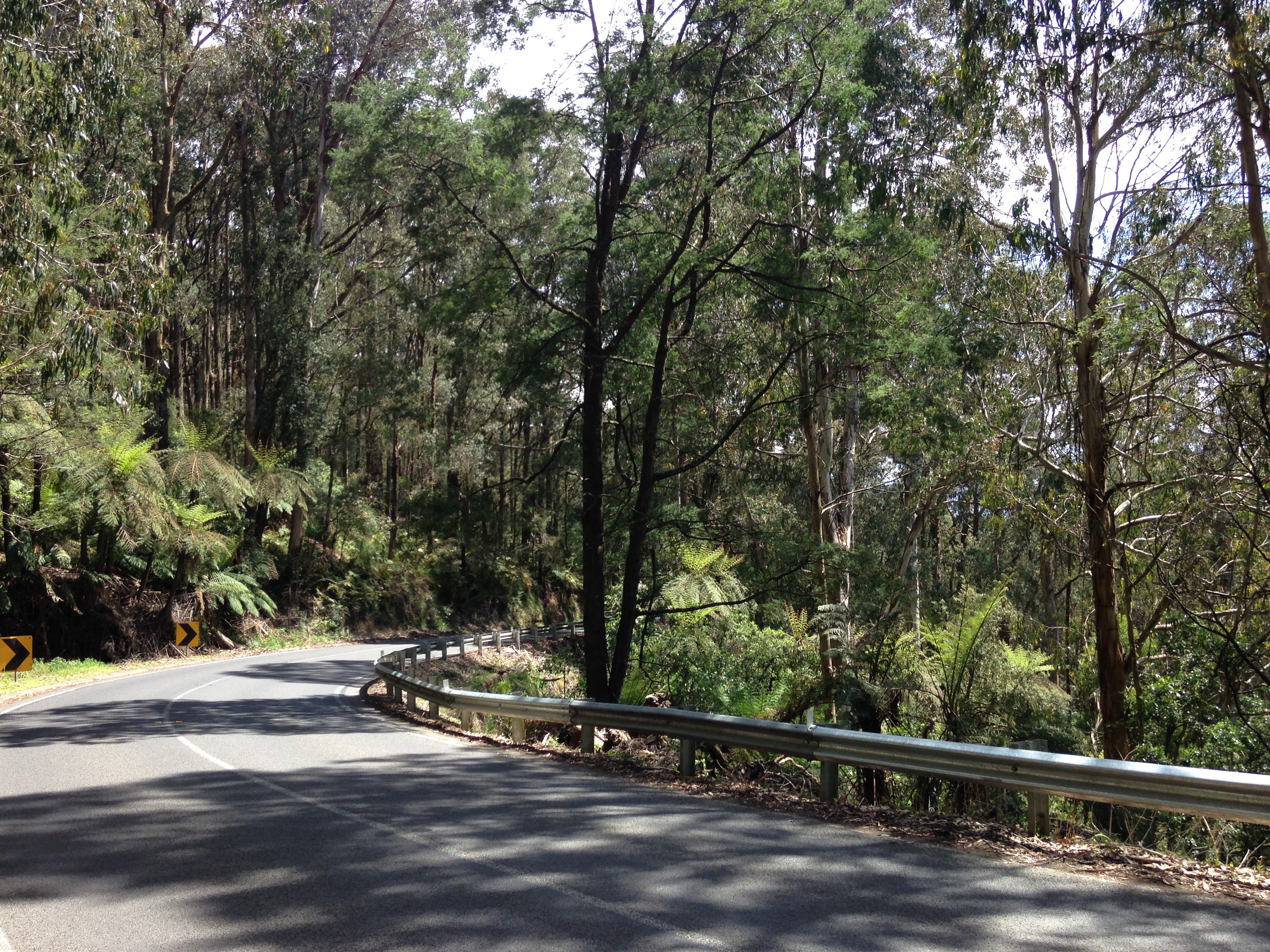
Tree ferns and forest on Black Spur, north-east of Healseville

Tree ferns and forest on Black Spur, north-east of Healesville

About once a decade I drive along this stretch of highway and wonder why I don’t do it more often.

Slopes planted to pine to provide softwood for building

Slopes planted to pine to provide softwood for building houses

I have mixed feelings about the sight of foreign trees growing on slopes that were formerly covered by native vegetation.  However, I am resigned to this being a case of a necessary evil, provided that our indigenous hardwood forests are adequately conserved (and that is a never-ending battle).

One of many lakes formed by damming rivers fed by snow and rain

One of many lakes formed by damming rivers that are fed by snow-melt and rain

Another vexed issue in our part of Australia is the volume of water taken from rivers and then used for crop irrigation. This might not be one of them but the cumulative effect of all these blocked flows has been calamitous for the health of the once mighty Murray, Australia’s longest river.

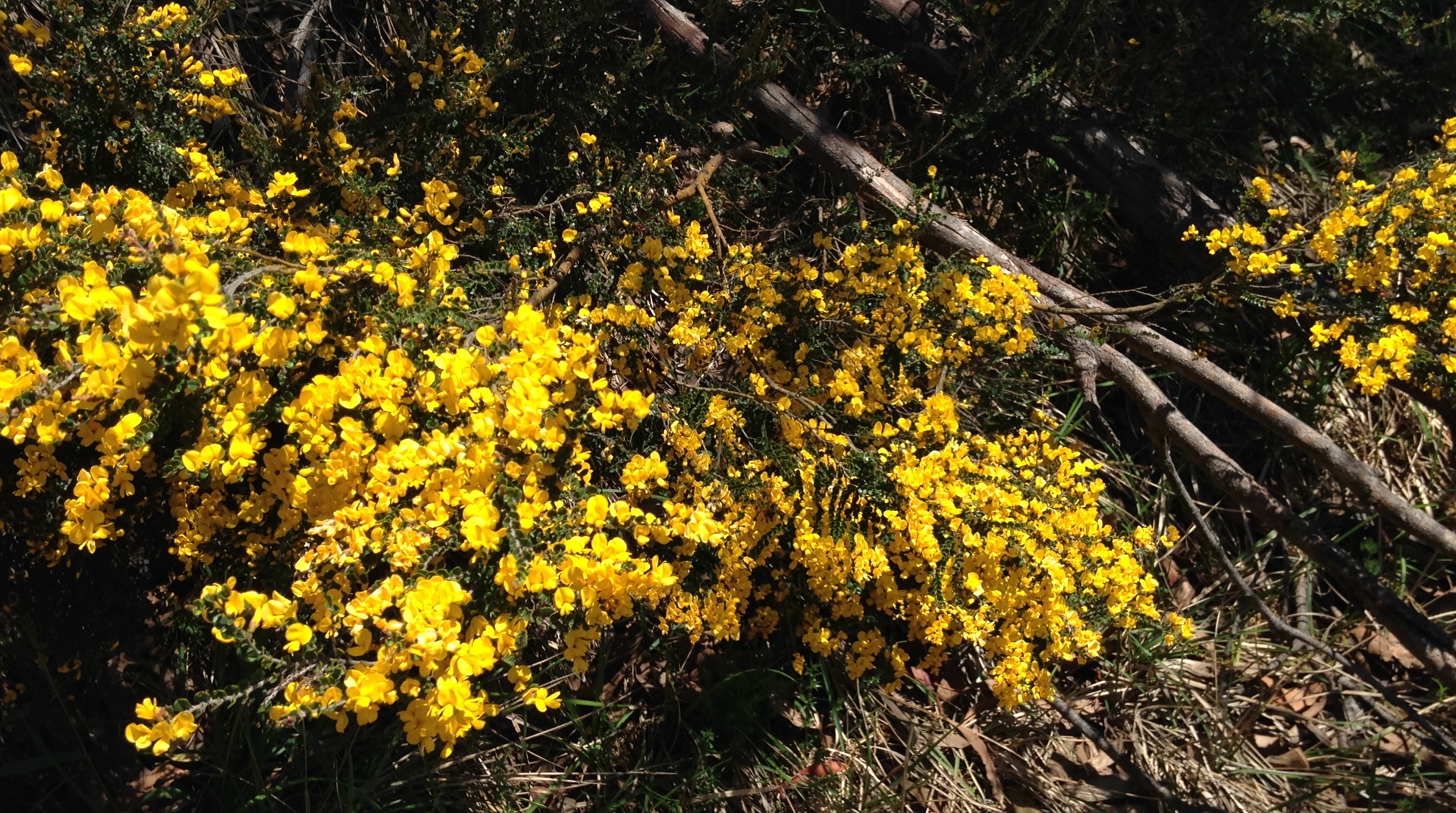
Native flowers colour the roadsides

Native flowers colour the roadsides

During my years of university study, I had the good fortune to spend summer vacations working for the government agency that was responsible for the management of WA’s indigenous flora. I remain an enthusiast with a good working knowledge of Australian plant species and we have devoted a section of our garden at home to some of our favourite natives.

Typical scene of a mountain stream in the Australian bush

A mountain stream in the Australian bush

A rugged scene of natural Australian beauty, the sound of water running over rocks and, on a warm day, the bonus of the aroma of eucalyptus leaves. That’s my home …

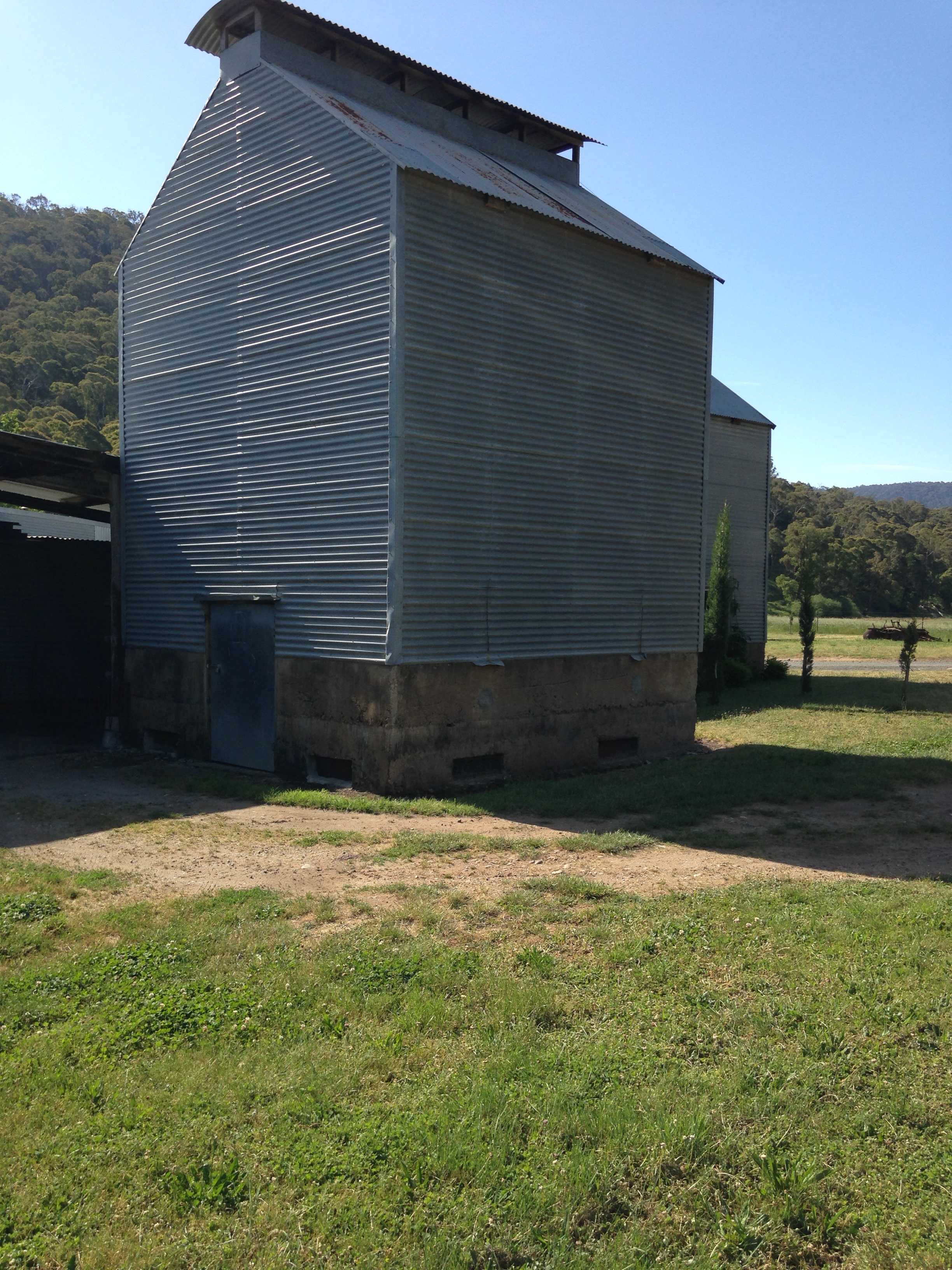
Tobacco curing shed converted to boutique accommodation

Tobacco curing shed converted to boutique visitor accommodation

There are hundreds of former tobacco-curing sheds along the valley floors of the region. Although tobacco had been grown here since the 1850s, it boomed after World War II with an influx of migrants from Italy, mostly, Yugoslavia and Spain and improved production, harvesting, processing and marketing practices. After peaking in the 1970s, the industry began to decline, as manufacturers sought cheaper and better leaf product from overseas and governments cutback on research and introduced schemes to buy back production quotas. The industry ceased production in 2006, by which time some growers had already shifted to new crops such as grapes for table wines and premium nut varieties.

Posted in Travel | Tagged , , | Leave a comment

NE Victoria: high country

Maggie and I spent five days and four nights in the north east of Victoria last week, driving there on the Tuesday and returning home on Saturday.

We had a diverse and enjoyable experience of this region, which I will describe in four separate posts. I will begin with the region’s high country, as it is known here; subsequent posts will cover the countryside, regional towns and some of the food and wine we sampled.

The high country of north-east Victoria forms part of Australia’s Great Dividing Range and features most of our state’s highest peaks, winter snowfields and ski resorts and, in the warmer months, some exceptional bushwalking trails. In fact, the last time I was up on the mountains was in December 1969, as part of a 10-day hike organised by my high school; we carried – and cooked – our own food, gas bottles, pans, tents, sleeping bags, clothes, etc.

On the morning of our third day, Maggie and I left the King Valley, where we had spent two agreeable nights, and entered the wide valley floor of the Ovens River, which rises further to the east. We passed through a series of picturesque towns and then drove up to Mt Hotham, a mountain-top ski resort that was established long after my visit as a bushwalker.

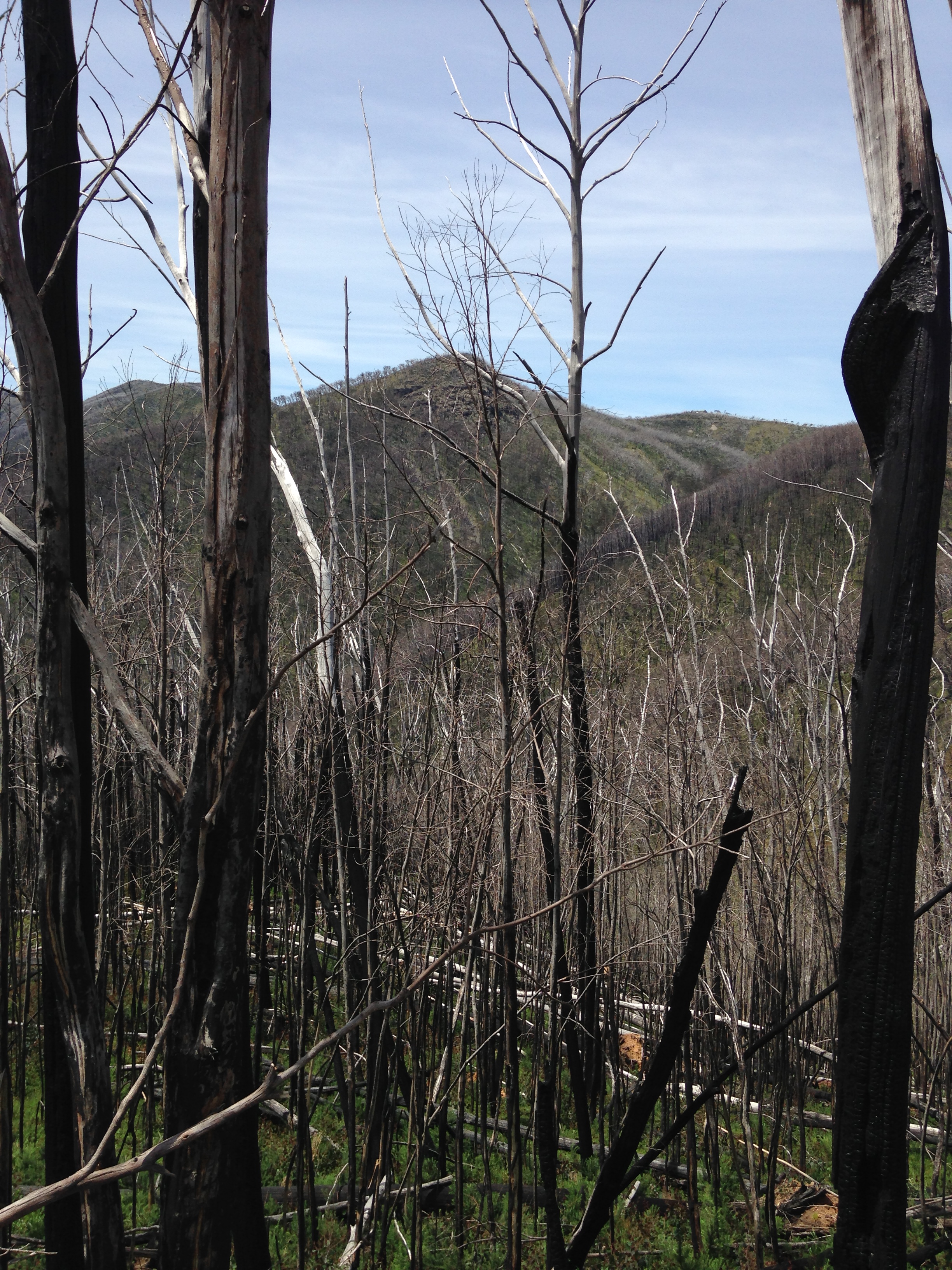
Getting to the top of Mt Hotham takes time – 30km on a steep and windy road, probably averaging about 25kmh, even on a bitumen surface (frequent stops for photo opportunities were also a factor!) For most of the climb, we were confronted by scenes similar to the one in this photo – grey and black trunks of dead Alpine Ash trees, like so many skeletons, as far as the eye could see, with just the early stages of new growth dotted across the scorched earth.
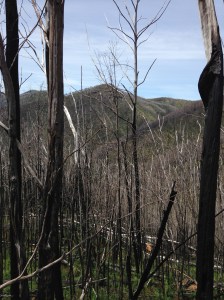
IMG_0507

IMG_0509Clearly, there had been a catastrophic fire in the area some years ago but neither of us could recall such an event. Since we came home, I have learnt that the fire occurred in the summer of 2002/03. At that time, I was tucked away in the relative obscurity of the south coast of Western Australia, one month into my 29th year out of Victoria. That’s probably why I missed the news or gave it scant attention; even so, that’s also a tad peculiar, given the scale of this disaster.

Some facts for you to digest. On 8 January 2003, 87 separate fires were ignited by lightning strikes. Eight of these fires could not be contained and eventually joined to form one large conflagration, the biggest in Victoria since 1939. By the time the fire was doused, 59 days after it began, 13,000 square kilometres had been destroyed. Nearly 16,000 persons were involved in the battle, including crews flown in from New Zealand and the United States. No person died but thousands of livestock and native fauna perished.

So, small wonder that the vista has a greyish tinge to it and will do so for a few more years yet, as wind, snow and rain bring down the dead trunks and new trees flourish.

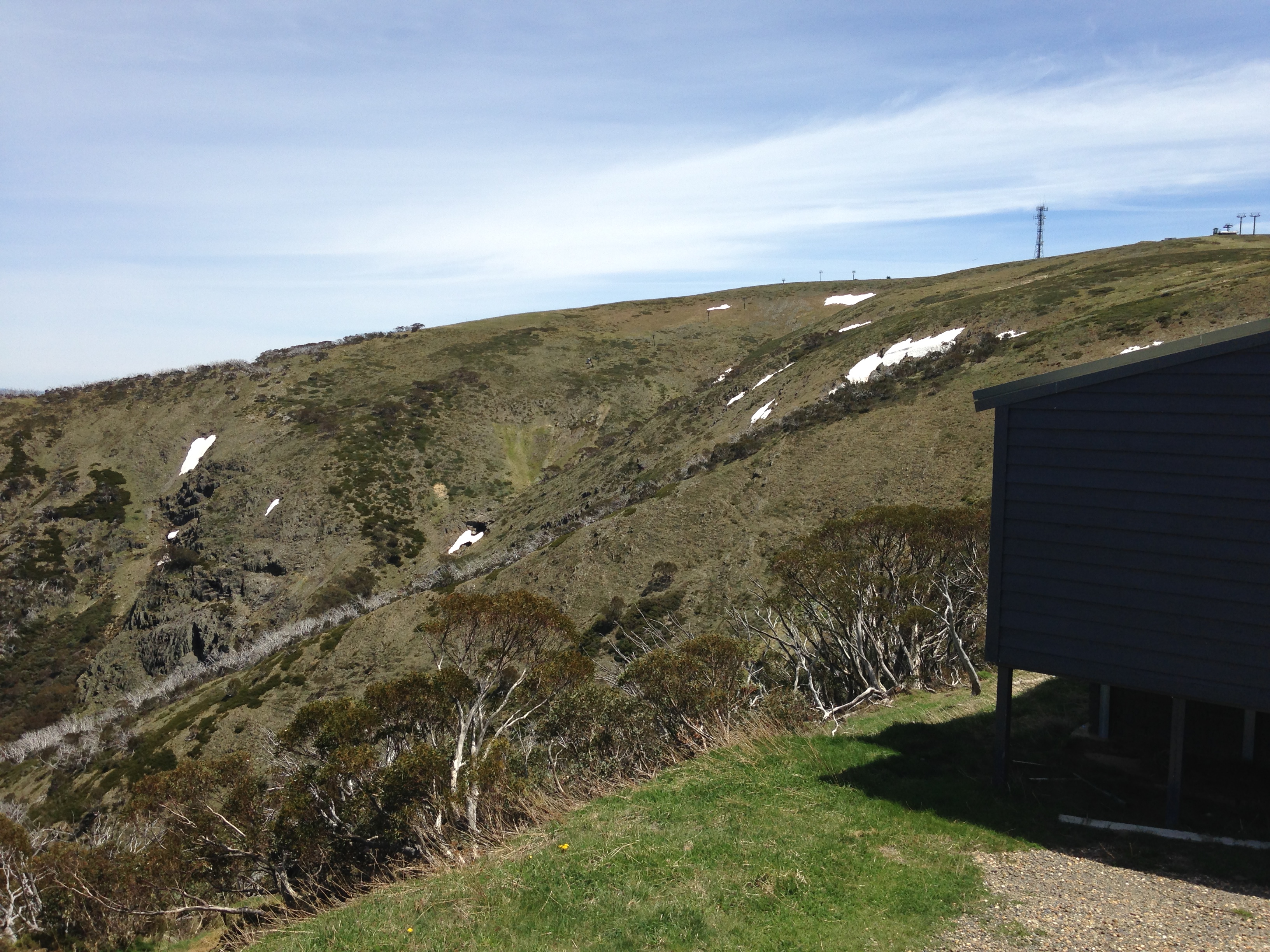
On a lighter note, here are photos of the last pockets of snow, at the back of the ski resort and, in the distance, on the southern face of Mt Feathertop.

IMG_0512   IMG_0513

We had a quick bite to eat at the ski resort’s tavern – surviving out of season on a customer base of modest vehicular traffic from each side, warm-weather day-trippers, bushwalkers and over-achieving cyclists – before making our descent. We then made our way through Tawonga Gap, from which we enjoyed spectacular views to the east, including this vista of Mt Bogong, Victoria’s highest point at 1,968 metres, with the valley of the Kiewa River at its base.

IMG_0523Next morning, we drove up from the town of Mount Beauty to the village of Falls Creek, one of the largest ski resorts in Australia. The road to Falls Creek climbs to a point well below Mt Hotham and it was originally built to carry large vehicles associated with a hydro-electric scheme. So the drive was easier but the scenery was similar to what we had seen the previous day. Some of the dead trees in the left-hand photo were less than 100 metres from the resort.

IMG_0538   IMG_0543

As we made the return trip down to the Kiewa Valley, I felt a mixture of my renewed  fondness for the sights and scents of Victoria’s native bushlands and not a little awe at the degree of destruction that had been wrought by fire.

Posted in Travel | Tagged , , , | Leave a comment

These chicken wings flew off!

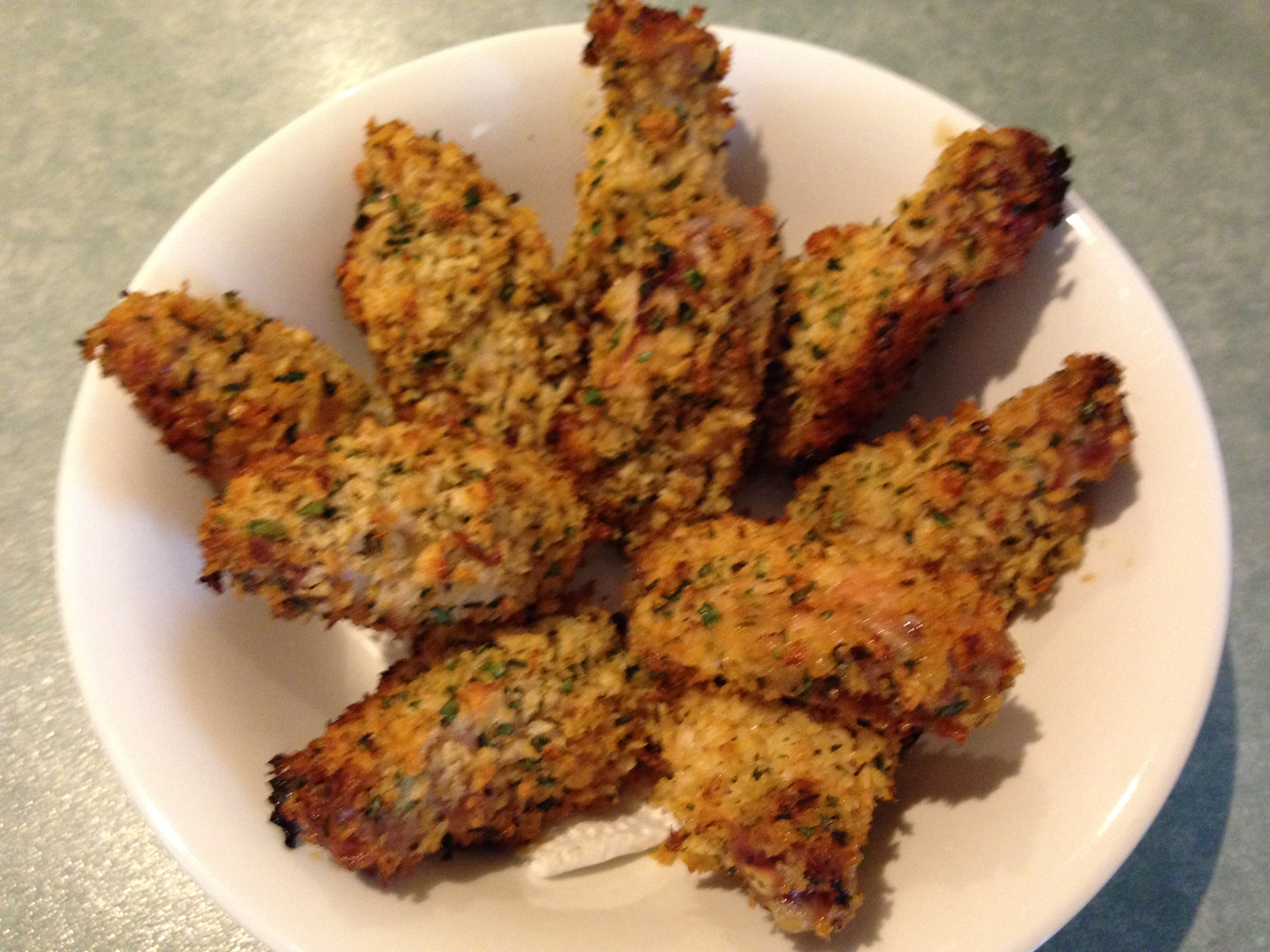
A few years ago, we used to buy some of our meat from a butcher whose product range included pieces of chicken wing coated with breadcrumbs and a few herbs and spices, eg red chilli flakes. They cooked up quite well on the grill of the barbecue we had at the time, provided we brought the pieces to room temp first, sprayed them with olive oil, cooked them over a medium flame and put the lid down for part of the cooking. (Phew, that’s a plethora of provisos!)

A couple of years later, we began to make our own marinade for chicken wing pieces – the two larger segments – to be roasted in the kitchen oven or the Weber Q, as described in an item I posted in September this year. That marinade has now been promoted to the service of chicken Marylands, leading me to think we should find something new for those delectable wing pieces. Our palate memories turned us in the direction of crumbs with attitude.
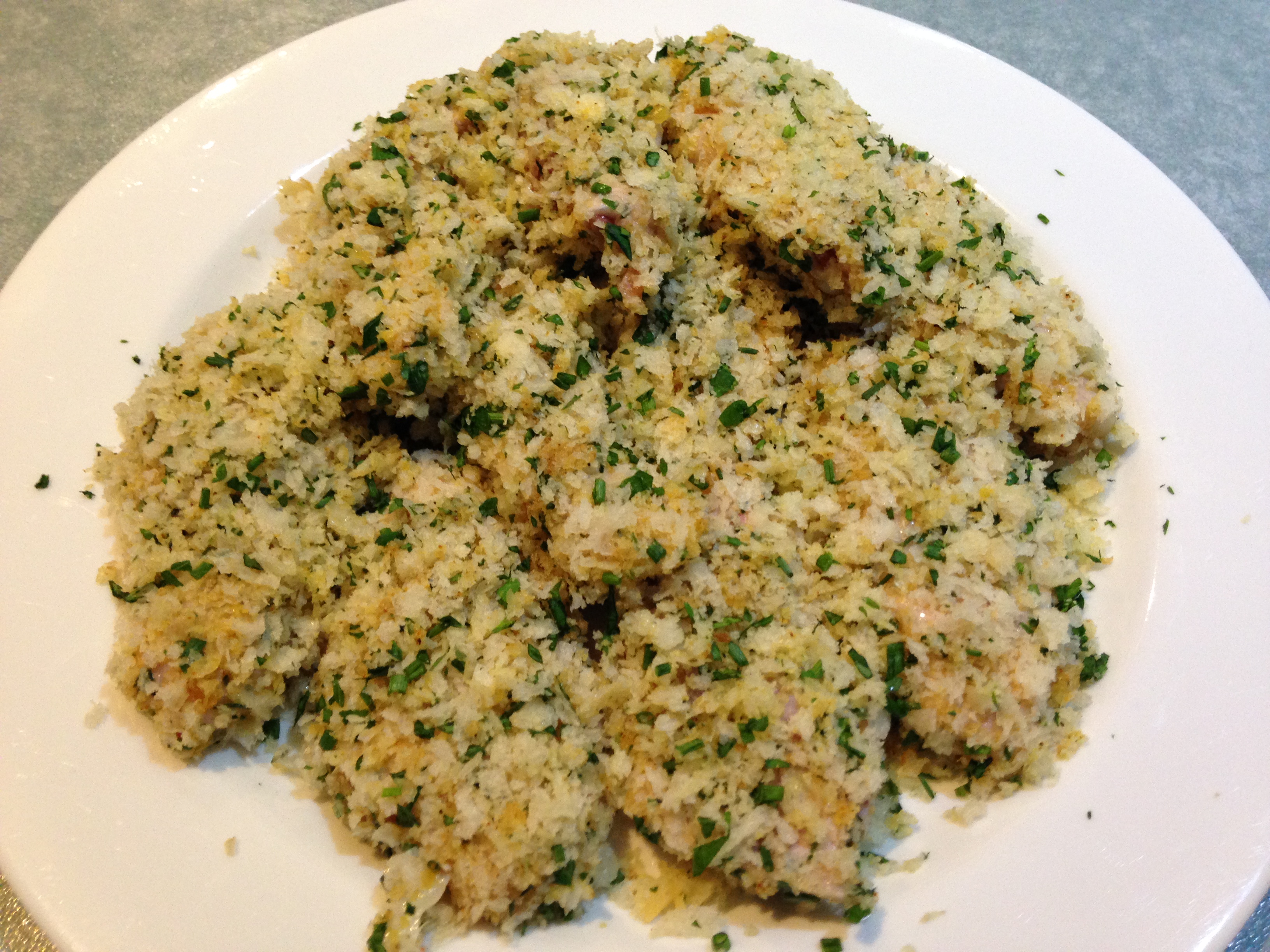
We began with two or three cloves of garlic, mashed to a paste by Maggie with the tip of a bread-and-butter knife (subsequently replaced with a garlic grater received as a Christmas present!). We added dry ingredients to the paste – cayenne pepper, black pepper and chicken stock powder; we often use the last as a flavouring but not as a stock substitute. Then we used a spoon to gradually disperse the paste through some breadcrumbs, adding extra crumbs as we went. Once the garlic was well integrated with the crumbs, we added some finely chopped parsley and chives, then some olive oil and a few more breadcrumbs.
Maggie then coated the wing pieces lightly with some egg yolk, just enough to help the crumb mix stick to the chicken. The plate of crumbed goodies spent some time in the fridge before being brought back to room temp and roasted in the Weber Q.

Meanwhile, we made a Caesar-style salad with asparagus, bacon, lettuce, not-quite-hard-boiled eggs and a dressing of our favourite mayonnaise lightened up with some sour cream. Yummy!

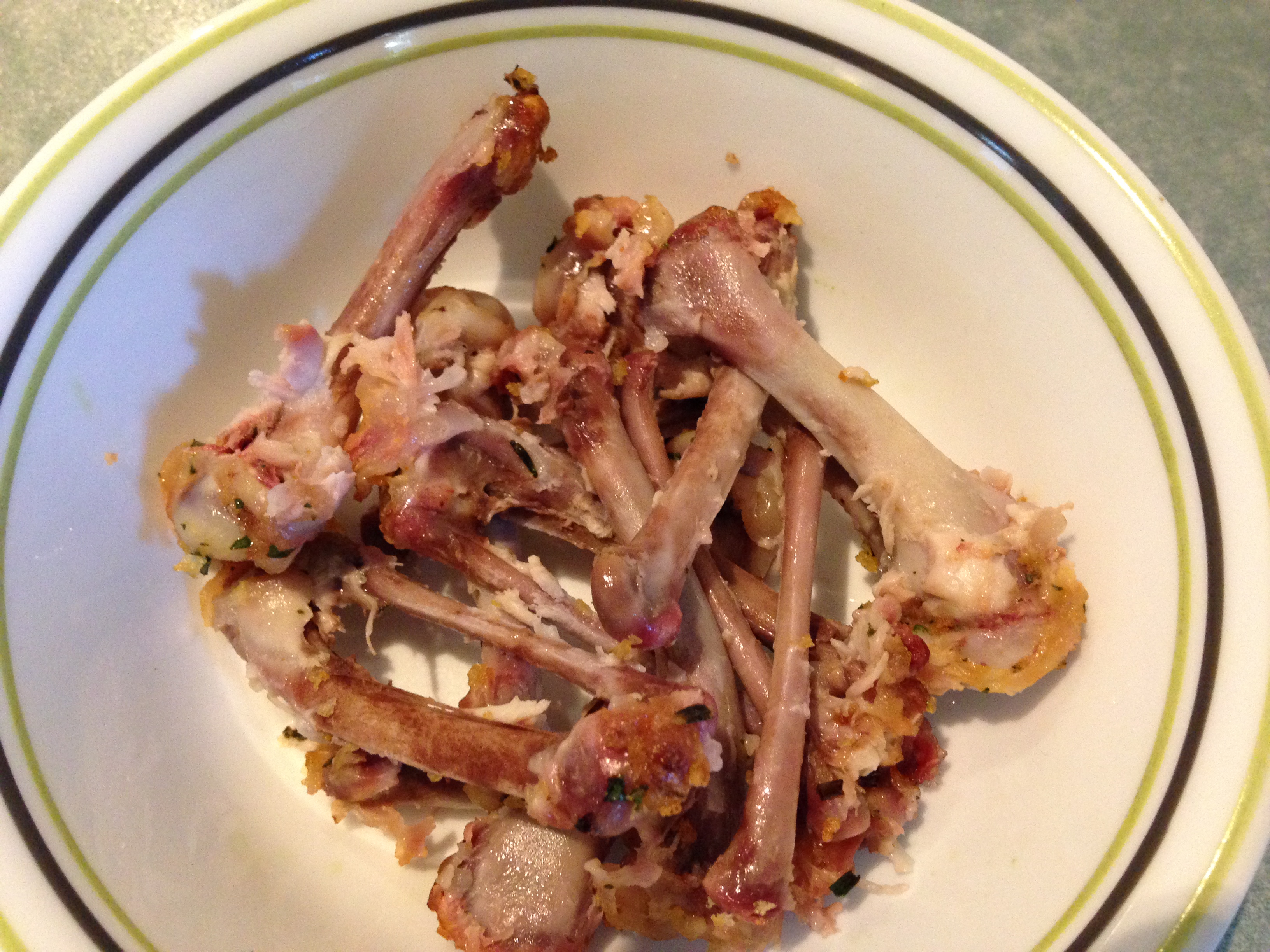
As you can see, the protein count in the bone bowl was kinda low!

The whole garlic-breadcrumb massage thing was a bit tedious, much as we were happy with the result. Next time, say, next week, we might use some garlic salt instead, purchased from Gewürzhaus, Melbourne’s leading spice retailer.

Chicken wings 2   Chicken wings 4

Chicken wings 3   Chicken wings 5


Posted in Cooking | Tagged , , , | Leave a comment

Boneless lamb with an overcoat

When we were growing up, the traditional lamb roast was a leg, on the bone; it is still popular today, especially for feeding a family. However, in the last decade or so, a rolled boned leg, often with a Mediterranean-inspired stuffing, has become popular – the cooking time is shorter and the cut is leaner. And a whole lamb roasted on a spit has become more common, under the influence of the hundreds of thousands of Australians whose families migrated from southern Europe.

In our home, there are only two mouths to feed as a rule, so there is no call for a whole lamb leg, boned or otherwise. So, we order a butterflied, boned leg and cut into three pieces – two larger, well-shaped pieces for roasting and the third to be minced for a meal of rissoles with Middle Eastern flavours.

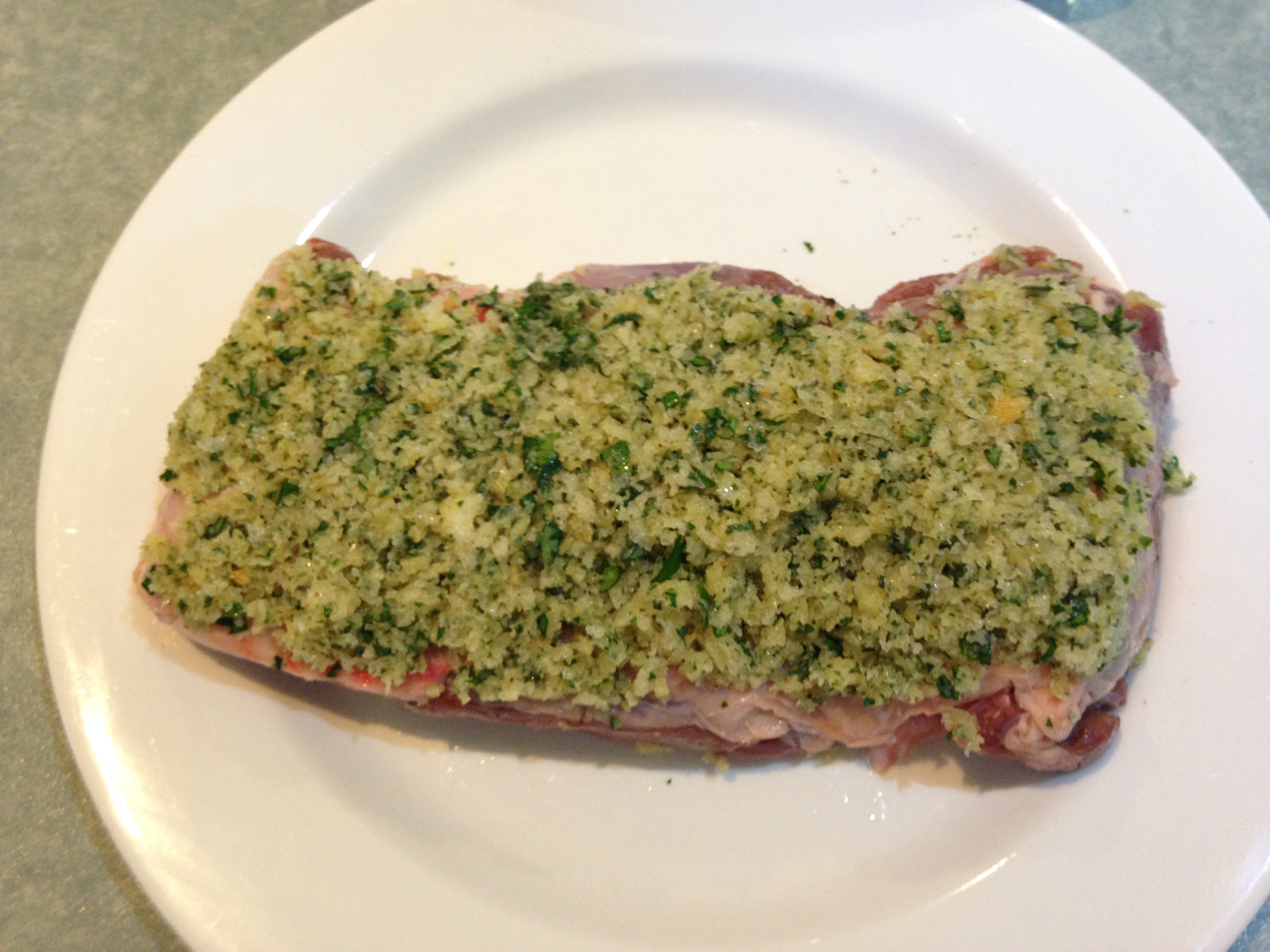
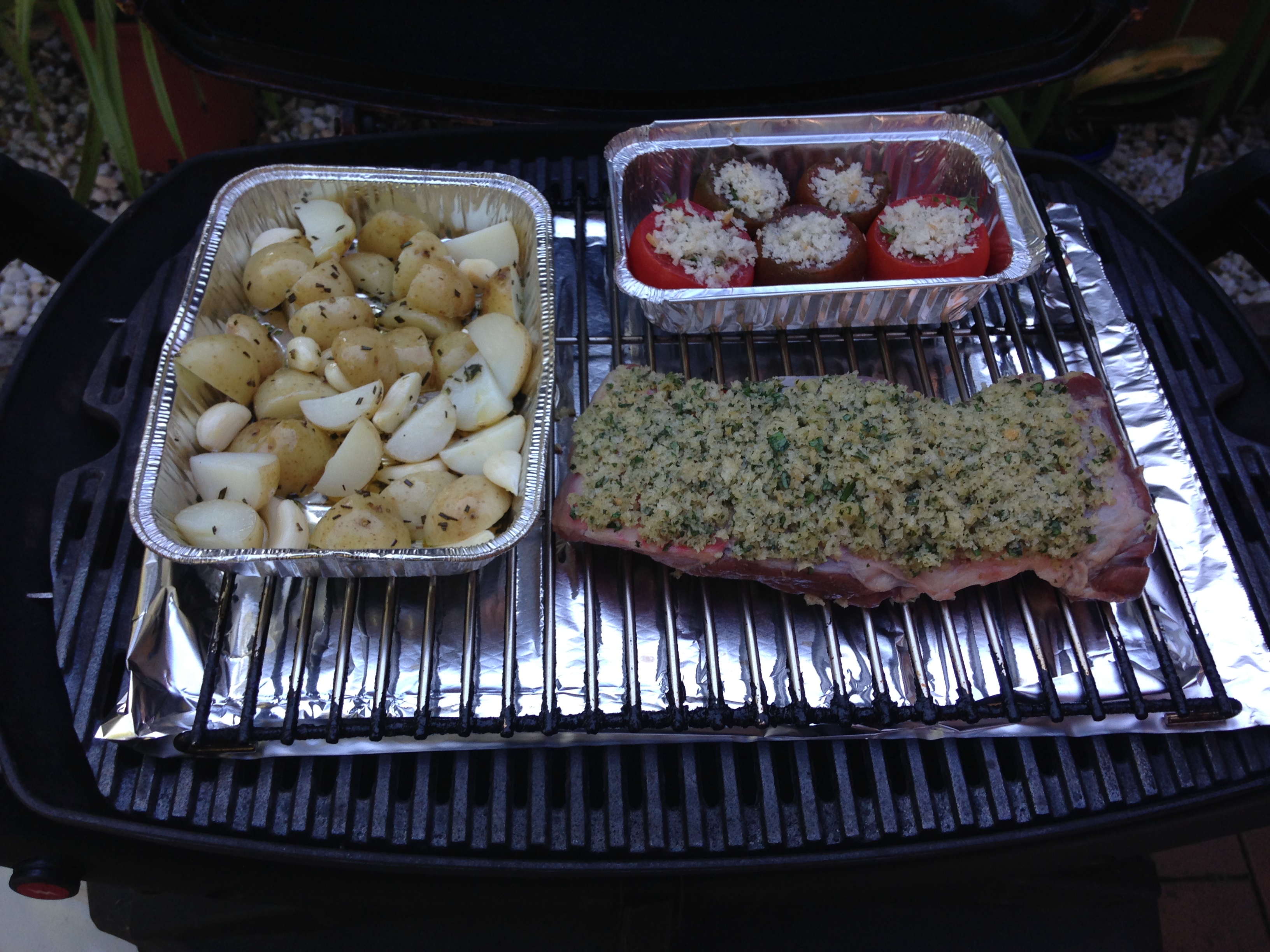
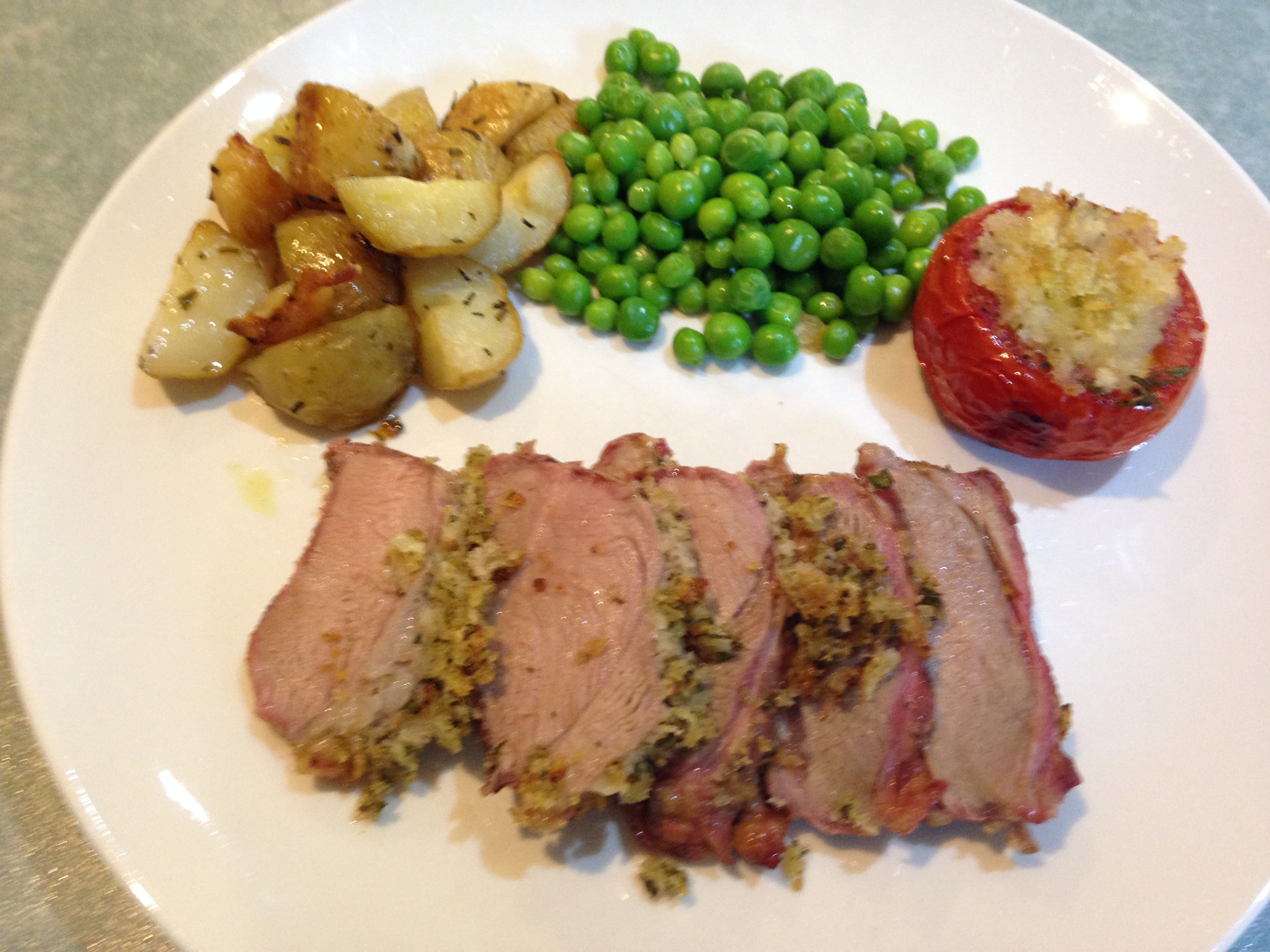
The last time we roasted a piece of lamb leg in our Weber Q, we noticed that the cap of fat on the surface was quite thin. So, using her trusted knife from Toledo, Maggie slashed through the fat at 1cm intervals; then we coated it with a mixture of chopped, fresh parsley and marjoram; chopped flesh of a small piece of preserved lemon; and breadcrumbs, pepper and olive oil. We might have used garlic and rosemary as well, but they were destined to be tossed with pieces of potato, salt and olive oil. The last item to go in the Weber was a tray of tomatoes capped with chopped thyme leaves, breadcrumbs and seasoning.

I think we overcooked the lamb by about 5 minutes but it was still delicious. And moist – no need to make gravy when it’s Spring lamb season!

IMG_0397   Lamb roast 2

Lamb roast 4   Lamb roast 5

Lamb roast 6

Posted in Cooking | Tagged , , , | Leave a comment

Sweet pork cutlets with a savoury marinade

Pork went out of favour in many Australian homes through the 1980s and 1990s, as consumers turned off hoggy flavours and aromas and generally preferred to use leaner types of meat.

Over the last decade or so, the quality of pork produced here has improved dramatically. Positive factors include free-range and organic production methods, a higher percentage of female pigs and a small but growing use of heritage breeds, the last being a bit luxurious for us but a welcome market development nevertheless. And both wholesalers and butchers have worked diligently to present cuts of pork that appeal visually and to the palate.

So, the pork we purchase at Ashburton Meats is always full of attractive flavours and textures, provided we deliver on our part of the journey from paddock-to-plate. The main cuts we use are pork belly, as spare ribs or a whole piece; boneless medallions, for a favourite winter dish; fillet, which Maggie slices thinly for a red Thai curry; and cutlets, which we marinade and cook in the Weber Q using the roasting set up.

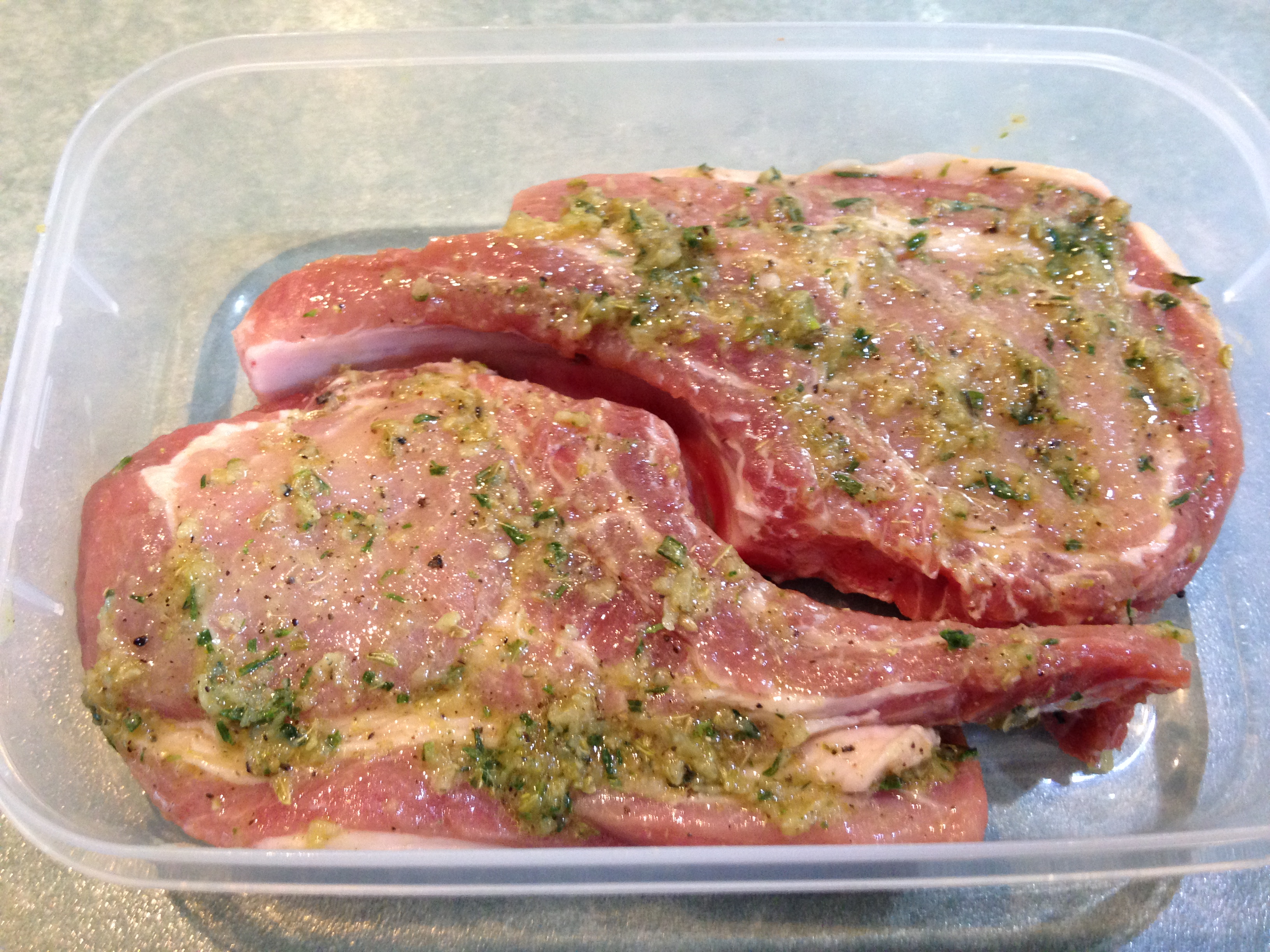
The meat on the cutlets is just about the sweetest pork you can get, so we add a savoury edge using a marinade we have been making for the last seven years. I posted the recipe for this marinade back in April but we now have some photos that help bring the words to life, beginning with the finished product.

Pork cutlets 2

The marinade can also be used as part of the lining for roast porchetta – just add some sage leaves and some thin slices of pancetta – as well as chicken thighs or, used lightly, a robust fish such as Hapuka.

At this time of the year, we serve it with a simple salad of thin slices of fennel, roughly diced flesh of a blood orange and a spoonful of vinaigrette dressing.

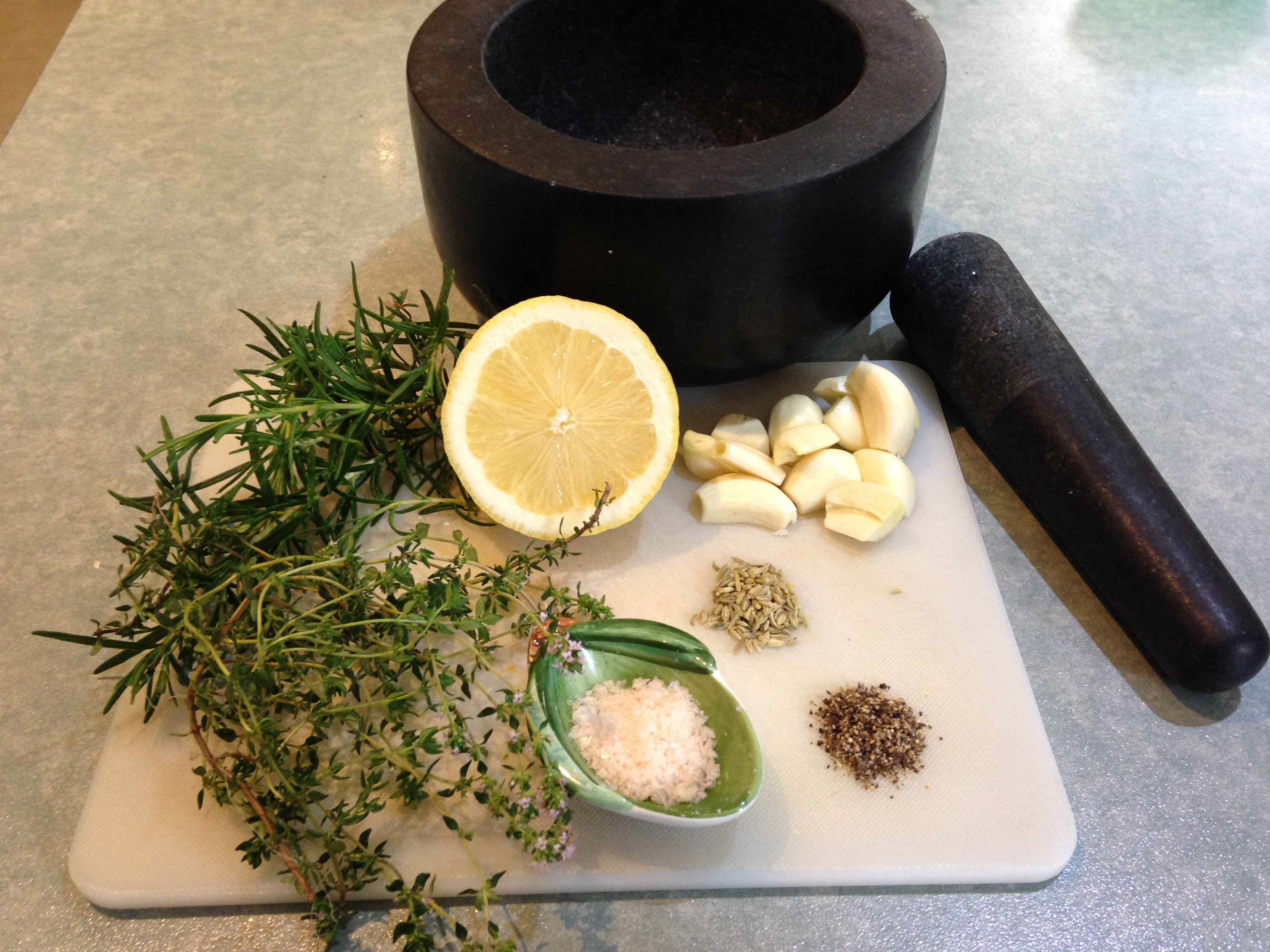
Ingredients

4 cloves garlic
1½ tsp fennel seeds
leaves from 4 young sprigs rosemary
leaves from 4 sprigs thyme
3 tsp black peppercorns (or use 2 tsp coarse, freshly ground pepper)
3 tsp sea salt flakes
½ tsp caster sugar (to enhance caramelisation of the meat)
2-3 tbsp olive oil
juice of 1 or 2 lemons (depends on size and juice content)

Method

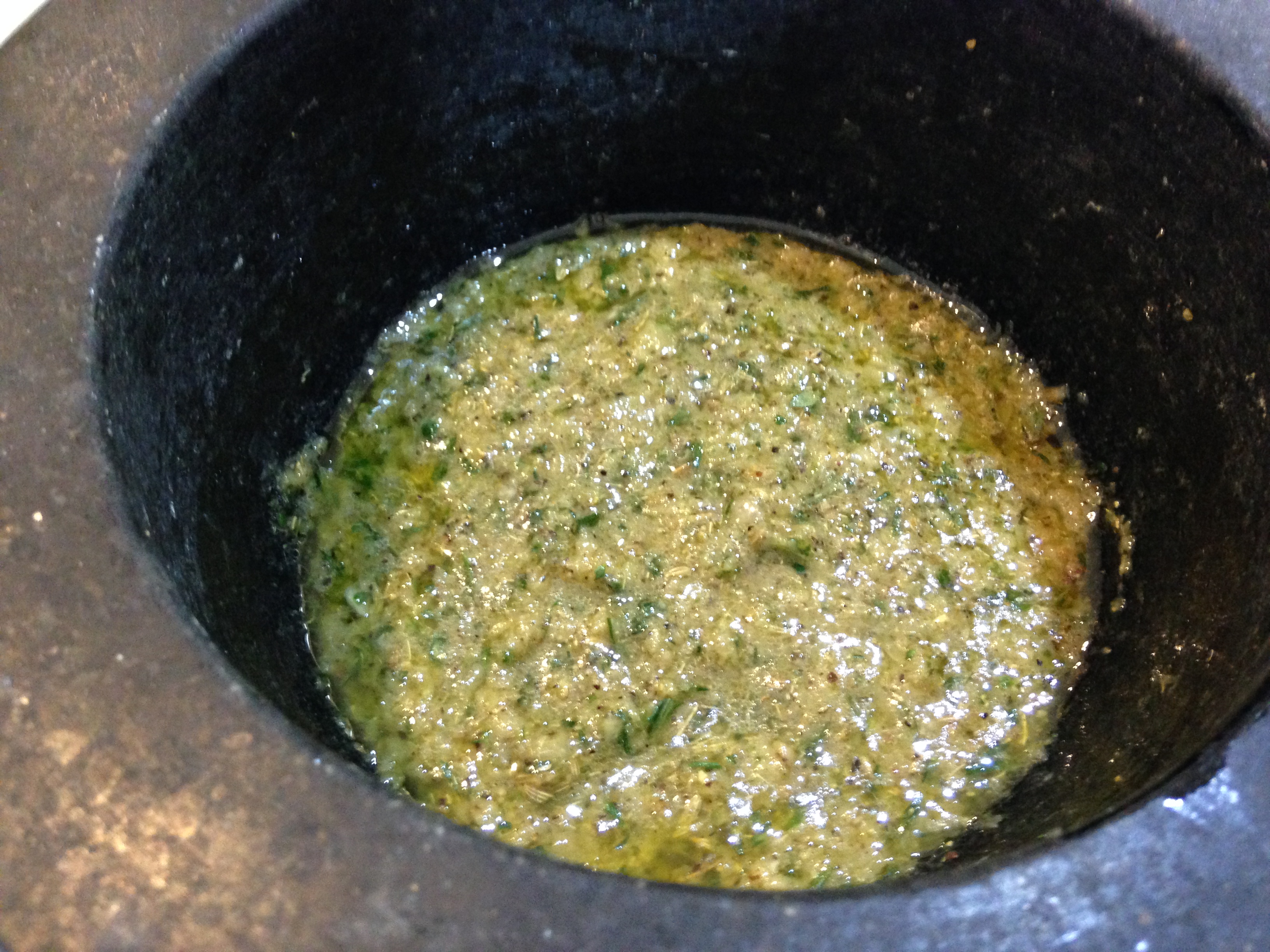
  1. In a mortar, grind the garlic, fennel seeds, herbs, peppercorns, salt and sugar.
  2. Add the sugar, olive oil and lemon juice and combine well. Adjust to taste (salt, oiliness, acidity)
  3. Rub the marinade into the flesh of the meat to be cooked, cover and refrigerate for several hours or overnight.
  4. Remove meat from fridge one hour before cooking.

Pork marinade 1   Pork marinade 2

Pork cutlets 1

Posted in Cooking | Tagged , , | Leave a comment