In-digest, week ending 7 June 2015

I am writing this on a Tuesday; we had a public holiday yesterday, so Maggie was home and we spent much of the day in our kitchen. As we do. However, I did have just enough time to write the post about our meal of gnocchi with a blue cheese sauce, the final home-cooked meal of the past week.

The weather was wintry from Monday to Thursday, with strong winds driving the apparent daytime temperatures down to single digits. So, our oven was quite busy, beginning with a lemon & yoghurt cake. I found this recipe about this time last year, when the cooking group I support at Strathdon Aged Care said they would like to cook something with the season’s fresh lemons from our tree. It is relatively easy to prepare, cooks quickly and the end result is light with a pleasing balance of tang and sweetness. Maggie took some with her on Tuesday to share with her work buddies, a practice we have followed for many years.

The centrepiece of Tuesday evening’s dinner was lamb korma, one of the modest number of dishes from the Indian sub-continent that Maggie cooks and eats with relish. When three elderly members of our family were still living in their own homes, we used to make lamb or chicken korma for them using a Pataks brand of paste. More recently, Maggie went looking for a recipe that we could use to cook lamb korma from scratch. The first attempt was edible but, to our palates, not repeat-worthy. A further internet search found a recipe on Pataks own website. It worked pretty well and, with a few small modifications, we will make it again this winter (and then I will write a post about it). We served the lamb with a side dish of spicy potatoes and some store-bought Naan bread.

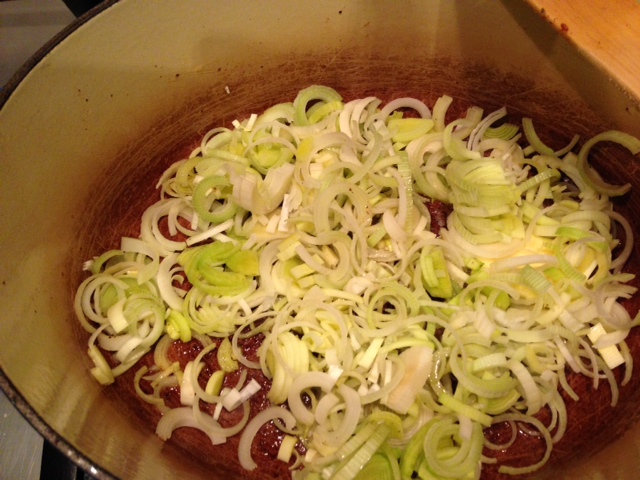
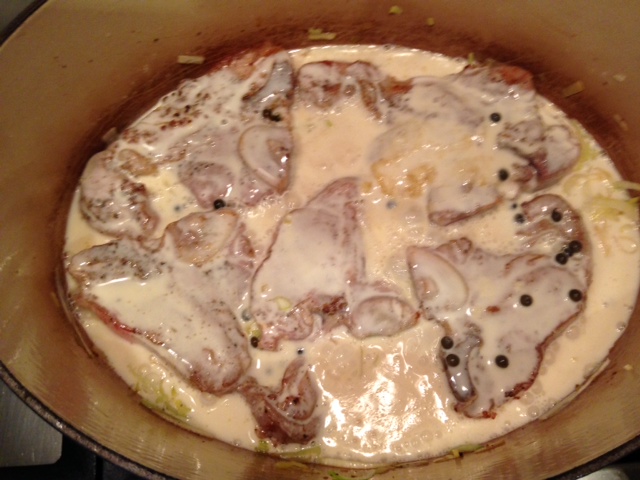
For the next two wintry evenings, we turned to a couple of faves – chicken braised with leeks and veal parmigiana; they always satisfy. On Thursday afternoon, we also made a batch of pea & ham soup, using an Otway Pork ham hock. The hock was much bigger than specified in our recipe, so the end result was quite richly textured but still with well-balanced flavours.

We were scheduled to visit Julian, Sara & Iris on Sunday, so we set aside some of the soup for them. Then I remembered Sara telling me – hint, hint – that there were no tubs of borscht in their freezer. Iris is quite fond of borscht and, with so many vegetables and so little fat, it is a good-health food; sometimes Sara will add some lentils or similar to make it more complete as a meal. So, we made a batch of borscht, setting aside a tub to put in our freezer for me.

On Friday afternoon, we made one more dish for Iris and her hard-working parents – lasagne, using our homemade bolognese sauce. The previous time we had taken lasagne to Healesville, we had shared some of it as a light lunch; then Sara and Iris ate the leftovers on the Monday, while Julian was at work. My son found a way of letting me know that this was not his preferred outcome! So, this time, we planned to leave the entire dish with them to share at their leisure.

By Saturday morning, the weather had improved. That and the prospect of light traffic – many households had gone to the coast or the snowfields for the long weekend – enticed us out of our home to spend a leisurely couple of hours shopping for ingredients, including those we would need to make the dish of gnocchi & blue cheese.

Our first destination was Migliore, a small business that produces a fine range of Italian biscuits, cakes and the like. We shop at their Armadale premises regularly, mainly for the benefit of my father, who is a devotee of the cheese-and-cayenne biscuits. With each purchase, Maggie puts her name on a ticket to go into the monthly draw to win a hamper of Migliore goodies. On Thursday, she had received a phone call with the happy news that she was the winner for May. And what a pretty hamper it was!

Migliore

From Migliore, it was only a short drive to the Hawksburn shopping precinct, home to Tosacano’s and Stocked, two of our favourite suppliers. And stock up we did, including Toolangi Delight potatoes, a bunch of spinach and a piece of gorgonzola cheese, the three key ingredients for our meal of gnocchi.

Shopping done, we decided to visit a cafe that we had driven past en route from Migliore to Toscano’s. The seasonal kitchen opened earlier this year as a partnership between one of our favourite writers of cookbooks, Beverley Sutherland-Smith and her daughter, Suzanne, who has form in the kitchen too. On this long-weekend Saturday, the cafe was busy but unhurried. We began with our ‘road-test’ coffees – a skinny cap for her and a short mach for me – which were both very flavoursome, to the last drop. Then we shared a serve of smashed avocado, feta & friends on sourdough toast; it was tasty and, by comparison with overworked versions we have eaten elsewhere, light and well-balanced. We could easily become regular patrons!

The mild weather lasted all day, so we were able to use our Weber to barbecue some excellent mid-loin lamb chops, which we served with wilted spinach and slow-roasted tomato halves. And then it was Sunday. Did I mention the gnocchi?

(I won’t be writing an ‘In-digest’ post next week. We will be exploring the Barossa Valley in the second half of this week; our home-cooked meals – new veal and duck dishes and a new dessert – for the first half of the week will be covered in separate posts; and, besides, I did vow that this series would be occasional, with a focus on innovations and highlights.)

Posted in Cooking, Eating out | Tagged , , , , | Leave a comment

Gnocching on the door of sauce heaven

This recipe was inspired by a dish we enjoyed in the stylish café at Jones Winery in the famous Rutherglen region of Victoria. Soon after we returned home, we took some ideas for a wine sauce from Beverley Sutherland-Smith and developed them into a recipe that worked well. We choose to make our own gnocchi from scratch, using a Stephanie Alexander recipe, but you could use some plain bought gnocchi; this dish is all about the sauce.

Gnocchi blue cheese 1

There is no getting around the fact that, on its own, the sauce is quite rich, but that is exactly what you need to complement the slight blandness of the gnocchi. Served with a glass of well-flavoured, dry white wine, the overall palate experience is quite ethereal or, as we dare to say, heavenly.

Ingredients

18g butter
2 shallots
1½ tsp Dijon mustard
½ cup white wine
1/3 cup chicken stock
120ml light cooking cream
100g gorgonzola (or similar quality of soft blue cheese)
black pepper
8-10 large spinach leaves
500g gnocchi

Method

  1. Sauté finely chopped shallots very slowly in butter until soft; at least 10 minutes.
  2. Add mustard and stir. Add white wine, simmer gently and reduce by two-thirds, stirring from time to time.
  3. Add chicken stock, simmer gently and reduce by half, stirring occasionally. (All this slow cooking will provide a sweet base and soft texture to the sauce.)
  4. Add cream, and simmer, stirring, until thickened.
  5. Cook gnocchi according to recipe or packet instructions and keep warm in a well-buttered dish in an oven heated to 75C
  6. Add cheese and melt slowly, stirring. When the cheese has melted, add black pepper to taste.
  7. Remove from the heat, add shredded spinach leaves and stir well to combine.
  8. Divide gnocchi between four entrée dishes and spoon over the sauce.

Eat slowly and savour every mouthful!

Posted in Cooking, Eating out, Travel | Tagged , , , , , , | Leave a comment

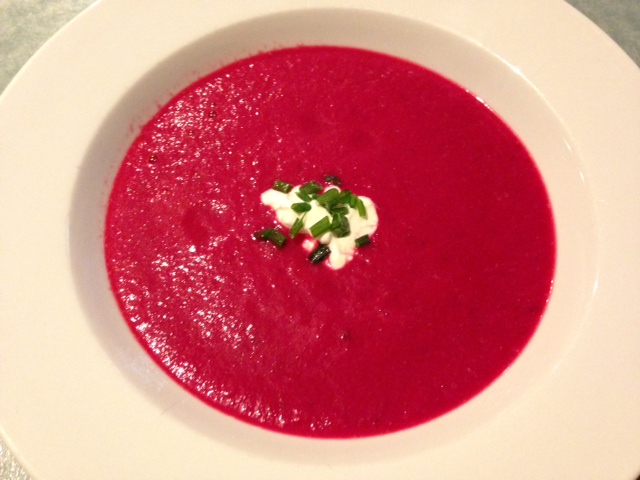
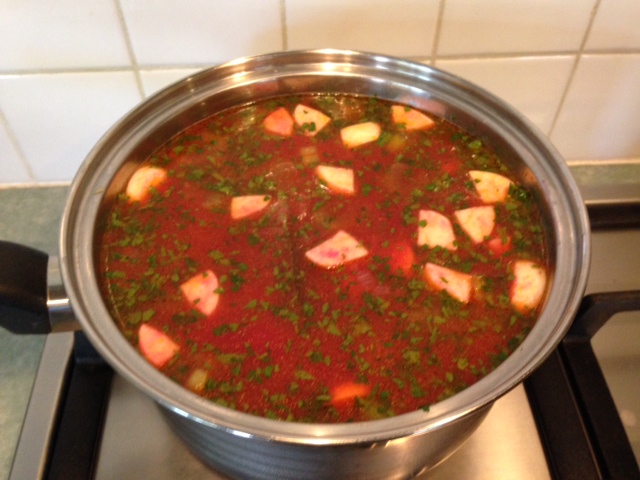
Borscht: low in fat, high on colour

It is nearly four decades since I first made some borscht, using a recipe that came with my first food processor. It was summer time in Perth, so I  served it as a cold soup.

In the cooler climes of Albany, where I spent a subsequent decade, and now Melbourne, I prefer to make it to be enjoyed as a warm soup. However, because there is hardly any fat content, the blended soup produced by my recipe works just as well as a cold soup.

The recipe integrates our selection of ideas about ingredients and method from various sources, including Terry Durack, Maggie Beer and Stephanie Alexander. The mix of root vegetables can be varied but we recommend that you use about 2 parts beetroot to 1 part other vegetables.

As well as being tasty and nutritious, borscht has a vibrant colour, not unlike the rosé wines made in the Barossa Valley from the fruit of old grenache vines. Think Turkey Flat, Charles Melton, Rockford … Happily, we will be in their vicinity next week.

Ingredients

40g unsalted butter
1 tbsp olive oil
3 medium brown onions, chopped coarsely
Celery heart or two sticks of celery, chopped coarsely
800g beetroot, peeled and chopped coarsely
200g carrots, peeled and chopped coarsely
100g parsnip, chopped coarsely
100g Nicola or Desiree potatoes, peeled and chopped coarsely
2 litres chicken stock
1 bay leaf
2 tbsp red wine vinegar
1 tbsp tomato paste
½ tsp sugar
Salt and pepper, to taste
Sour cream for serving
2 tbsp snipped chives

Method

  1. Heat the butter and oil in a soup pot and sweat the onion gently for about 10 minutes until soft and translucent
  2. Add the celery and stir through; add the other vegetables and briefly sauté. Add stock, bay leaf, vinegar, tomato paste and sugar and bring to the boil.
  3. Cover, reduce heat and simmer for 60 minutes, stirring occasionally, until all the vegetables are soft.
  4. Allow to cool partly, remove bay leaf, blend in batches and combine all batches. Adjust seasoning.
  5. In winter, gently reheat and serve with side bowls of chives and sour cream to be added at the table. In hot weather, cold borscht is very refreshing.

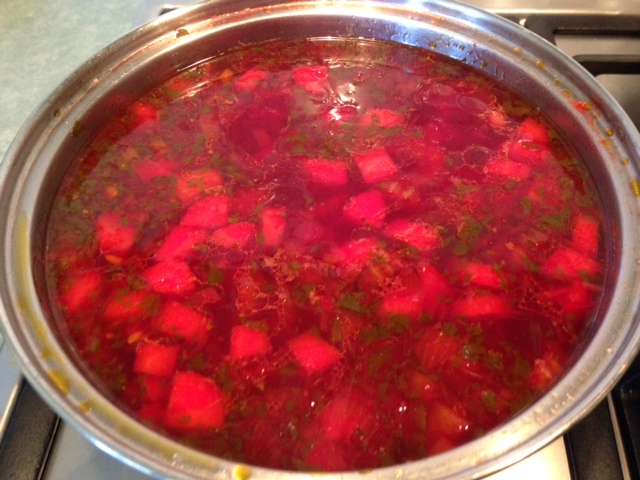
Borscht 1   Borscht 2

Borscht 3

Posted in Cooking | Tagged , , , | Leave a comment

In-digest, week ending 31 May 2015

This is the first in a series of occasional posts devoted to brief stories about what Maggie and I cooked at home during the preceding week, including tidbits of associated events and activities.

Waistline alert: you’ll find a lot of protein and other rich ingredients featured in our weekly diet. It’s partly because I rarely bother to devote words to the simple sides of vegetables, grains or salads that we consume, unless they are features in their own right. Besides, we do eat modest portions of the dishes we cook. And the cheque is in the mail …

My week began with eight hours of solo-grandparenting. My daughter-in-law, Sara doesn’t usually work on a Monday, but she needed to spend the day at a workshop with her winery’s distributor, so we arranged for her to bring Iris to our home on her way into the city from Healesville. As Maggie works from Monday to Wednesday, that left me solely responsible for the care of my 16-months old granddaughter. (For a mad moment, I had thought of adding the 7-months old grand-dog to the mix, but I came to my senses after not-sleeping-very-well on it!)

Iris is a happy child, so my task was not too daunting. She is also a busy and highly interactive child. We spent the morning exploring our home and back garden, playing with a variety of toys and household effects, a stroller-based journey around the neighbourhood, a little bit of reading, and a short walk out in our quiet street.

Here is photo of Iris teaching her Pop how to delete software from his Macbook. (Maggie took this when she popped home from work to spend a short time with Iris.)

photo-4

Iris is also a hungry and willing eater. For morning tea, she ate a toasted, de-crusted piece of sourdough, spread with avocado; half a ripe banana; and four strawberries. At lunchtime, we both had some vegetable-flavoured pasta spirals tossed with homemade bolognese sauce and some lovely fresh ricotta. Iris washed this down with a further five strawberries. Later she had a snack of cauliflower souffle, more of the banana and, for the road, some more of the ricotta. Make that a VERY willing eater.

Our afternoon went happily, beginning with a long nap for Iris after a few minutes of half-hearted protest. If I’d been smart, I would have gone horizontal too. Noted for next time, as I ‘hit the wall’ soon after Sara came by to take Iris home. Fortunately, our dinner of braised chicken topped with dumplings had been assembled on Sunday afternoon; all we had to do was put it in the oven until it was heated through and the dumplings were cooked. (We also gave Sara a dish of this to take home, heat up and share with Julian.)

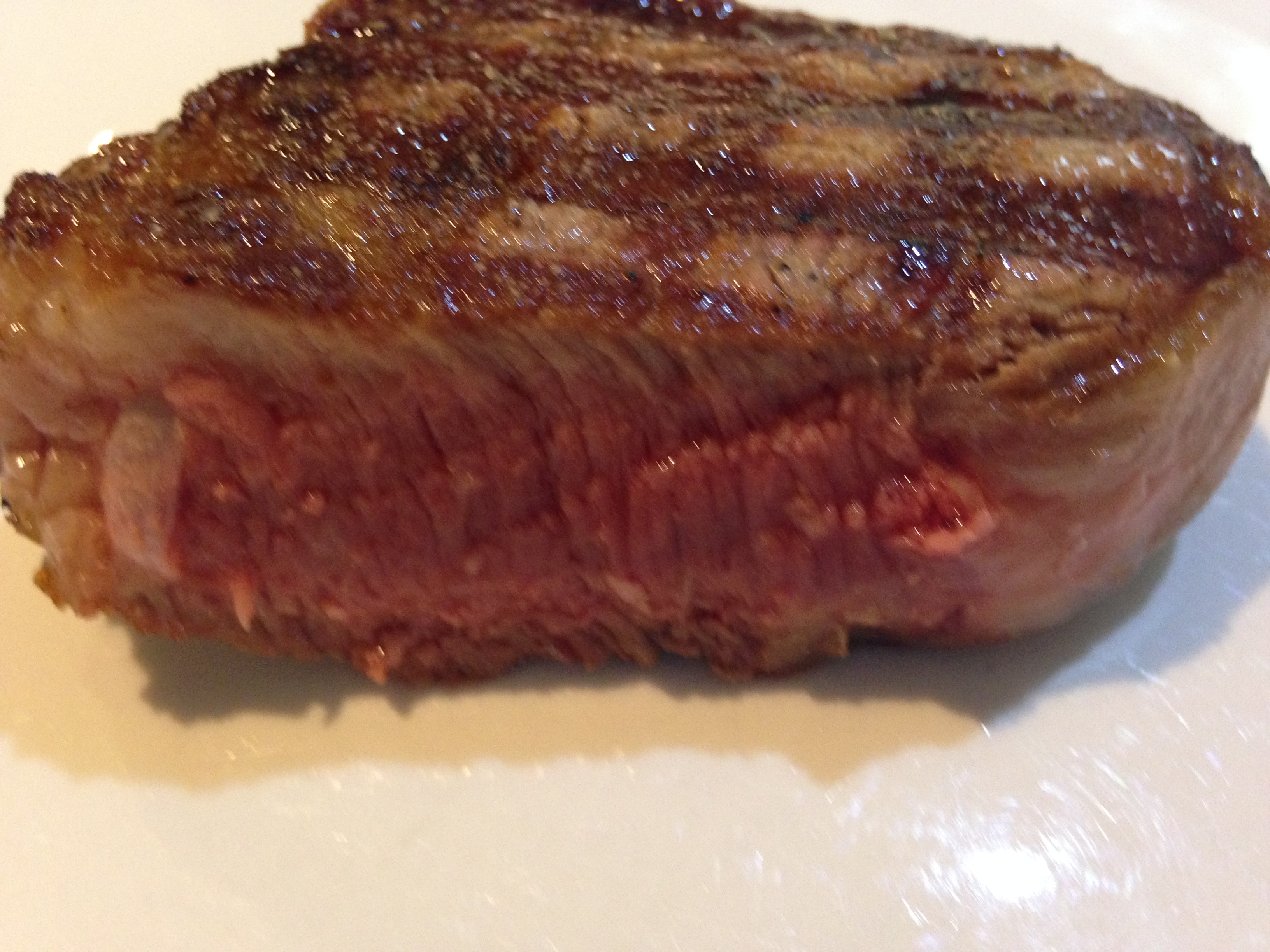
Tuesday brought a mild, late-autumn day, so we were able to enjoy a meal of char-grilled scotch fillet and some simple salads. The beef was incredibly flavoursome – thank you Ashburton Meats.

Scotch bbq 3

I had another big task on my agenda for Wednesday – taking my father into the centre of Melbourne for he and I to lodge the formal paperwork required for us to be empowered to implement the will of my late mother. This loomed as a mental and logistical challenge, including the fact that, these days, Dad needs to be taken to appointments in a wheelchair. Happily, it all went smoothly but I was glad that the evening meal would comprise what was leftover from Monday. (As Julian commented, it was very tasty but ‘gluttonous’, so we had modest portions and made it stretch.)

On Thursday morning, I spent two hours at Strathdon Aged Care with the fortnightly cooking group that I support. I was on my feet and busy the whole time, so I returned home badly in need of nourishment and a grandpa nap. No such luck – Dad needed to be collected from a luncheon at Melbourne University (a cousin drove him there). Maggie did the driving, and I relaxed, enough to look forward to preparing a dinner of veal meatballs, using a recipe of ours that was inspired by one of our travel experiences. It was delicious and there was enough leftover to provide a working-day lunch for Maggie and, combined with some pasta, a weekend lunch for me.

We had invited our friends and neighbours, Janet and Gary, to have dinner with us on Friday evening; we share a meal with them several times a year, either at one of our homes or at a nearby vegetarian Indian restaurant. As well as the pleasures of the food and company, there was some business to be done: introducing their small dog to our home – she will be spending a fortnight here when they go overseas – and making arrangements for us to live in their home while our WC is refurbished from top to, ahem, bottom.

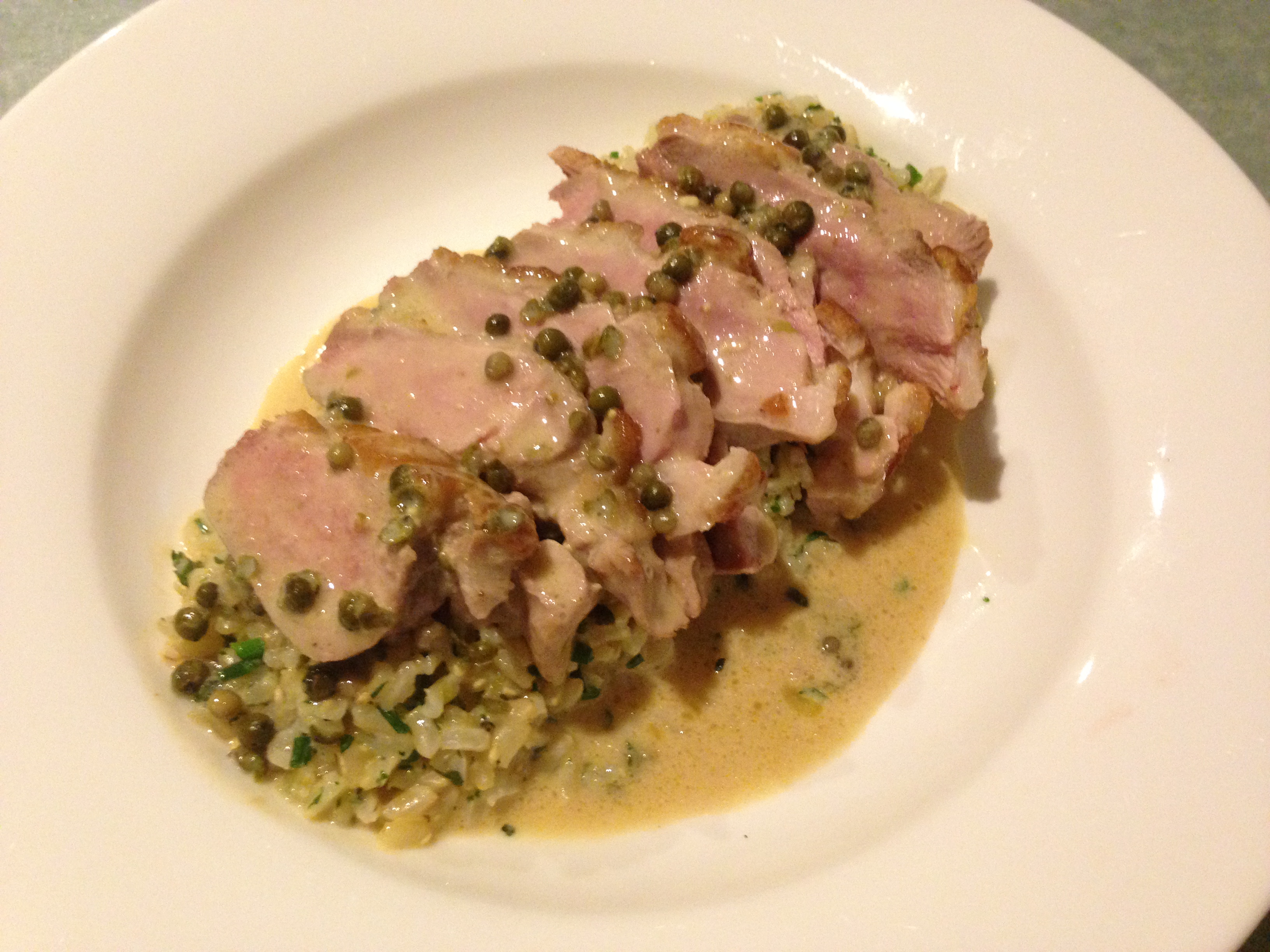
By our ambitious standards, the menu was straightforward (oh dear, my brain was still recovering from the day with Iris): an entree of stuffed mushrooms, followed by our favourite duck dish and some baby (Dutch) carrots and finishing with a platter of cheese and fruit. Maggie had bought the two cheeses at Stocked – a piece of the amazing La Luna and, on recommendation, a flavoursome hard cheese from Tasmania – and we accompanied them with grapes, strawberries and quince paste. Yum!

Duck breast 6

Saturday, the second-last day of autumn, brought a fresh north-westerly wind that was scheduled to give way to a wintry blast by mid-Sunday. Happily, the wind eased later in the day and we were able to use the Weber to cook a small piece of pork belly and a parcel of carrot and beetroot. (I am embarrassed to admit that we have yet to take photos of these two items, despite the fact that we cook them at least once a month.)

The pork is marinated knee-deep in a slurry of star anise, Chinese five-spice, garlic, dark brown sugar, grated ginger and white pepper, all mashed by mortar and pestle and then combined with soy sauce and rice wine. The parcel is made with foil lined with baking paper. We add chunks of peeled carrot and beetroot, a splash of white wine, a glug of olive oil, seasoning and sprigs of thyme; then we seal the parcel and bake it for about 40 minutes. Steamed bok choy completed this feed of sweet and tender pork.

In European traditions, apple and pork are often partnered in a meal; much of our cooking is influenced by such traditions. So, we made some tarte tatin to have for dessert on Saturday evening. The recipe that we have now adopted for this classic of French cooking is traditional with respect to the apple filling, but we have replaced a semi-sweet shortcrust pastry with a thin layer of batter that comes out of the oven as a delicate layer of biscuit. Here is how it looked on the plate:

Tarte tatin 6


The forecasters were close to the mark for Sunday’s weather. Showers arrived during the afternoon, soon followed by a wind-shift that brought cold air from the Southern Ocean. As I draft this post, it is noon on Monday, the ‘apparent’ (wind-chilled) outside temperature is about seven degrees Celsius and there are 20mm in the gauge from overnight rain. Last night’s meal of roast beef was very timely and there was enough for a repeat dose of anti-freeze tonight. The season for roasting and braising has arrived!

Posted in Cooking, Home life | Tagged , , , , , | Leave a comment

Poulterer’s pie.doc ver 2

About 15 months ago, I wrote a post about a dish to which Maggie and I had given the sobriquet ‘Poulterer’s Pie’, a pun on the well known lamb dish Shepherd’s Pie. We had modified the recipe for a chicken pie filling and then topped it off with a layer of mashed potato, before baking it in the oven to add a bit of colour and crunch to the potato.

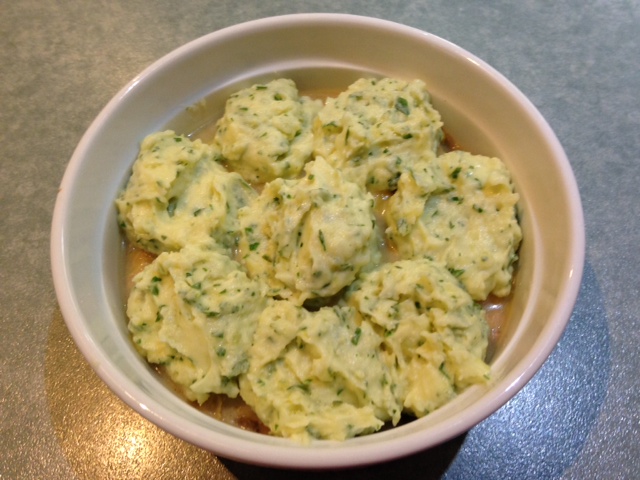
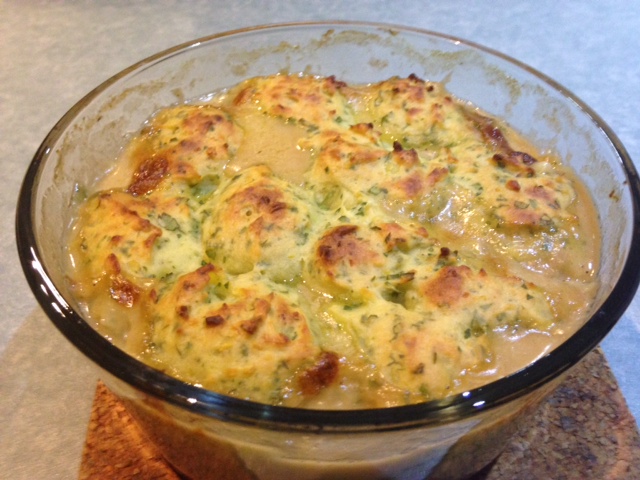
A few months later, we returned from travels in six countries of Central Europe keen to reproduce some of the meals we had enjoyed along the way. One of these was beef goulash, which we made at home with a base of braised beef and a topping of dumplings. The result was very tasty and, when we made it again recently, it occurred to us that those dumplings might go well atop that chicken pie filling. They did, so here is the recipe, with the recipe for the chicken component refreshed, the dumplings replacing the layer of mashed potato and some before-and-after photos.

Ingredients

50g butter
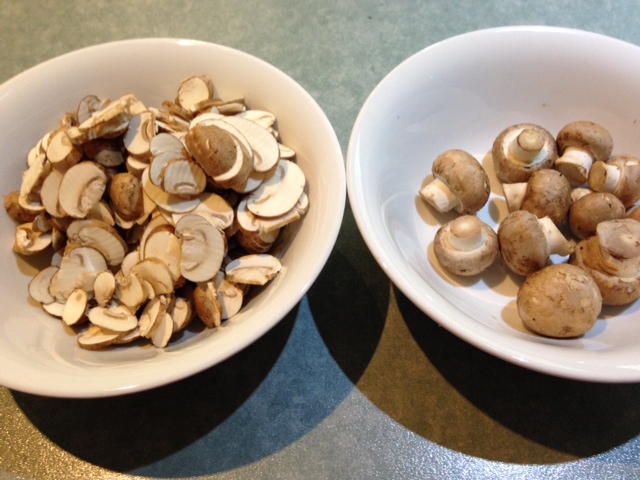
200g small Swiss Brown mushrooms, thinly sliced (2-3mm)
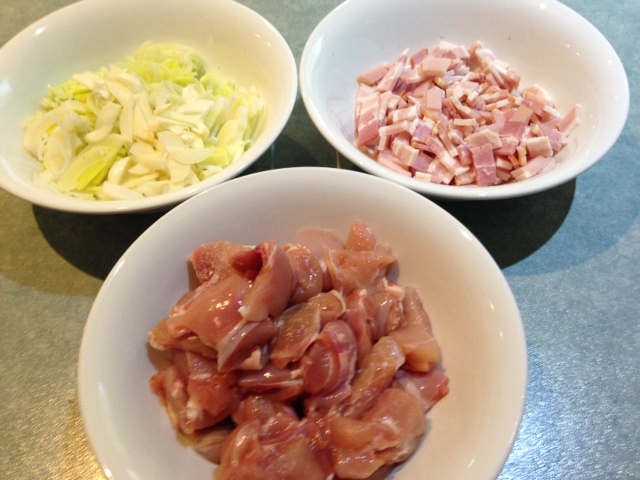
3 long rashers bacon, trimmed and coarsely chopped
600g chicken thigh fillets, chopped
1-2 leeks, white part only, halved lengthways and thinly sliced
30ml plain flour
250-300ml chicken stock
1 tbsp (20ml) brandy
60ml cooking cream
2 tsp strong Dijon mustard or 3 tsp standard
2 tsp fresh thyme leaves
500g potato suitable for mashing, eg Dutch Cream
30g butter
90ml milk
2/3 cup self-raising flour
4 tsp chopped parsley

Poulterers pie 1   Poulterers pie 2

Method

  1. Melt 30g of the butter in a non-stick pan over medium heat. Add the mushroom slices and sauté for 6-8 minutes until they have just begun to caramelise. (To start, I put a lid loosely on the pan for a couple of minutes to help soften the mushrooms using their own steam; otherwise, it seems that you need to add more butter to the pan.) Remove mushroom slices and set aside in a large bowl or deep plate.
  2. Add bacon to the pan and cook, stirring, for 3-4 minutes until cooked through but not browned. Add to the mushrooms. Add 10g of butter to the pan and cook the chopped chicken in 2 or 3 batches – to prevent stewing the meat – until lightly browned all over. Add to the mushrooms and bacon.
  3. Melt remaining butter, add leek and sauté for 5 minutes until leek softens; add resting juices from other ingredients if the pan is a little dry. As the leek cooks, it will loosen and incorporate the caramelised bits from the base of the pan.
  4. Add flour and cook for 1 minute over low heat. Add 250ml of the stock, bring to the boil and simmer for 2 minutes.
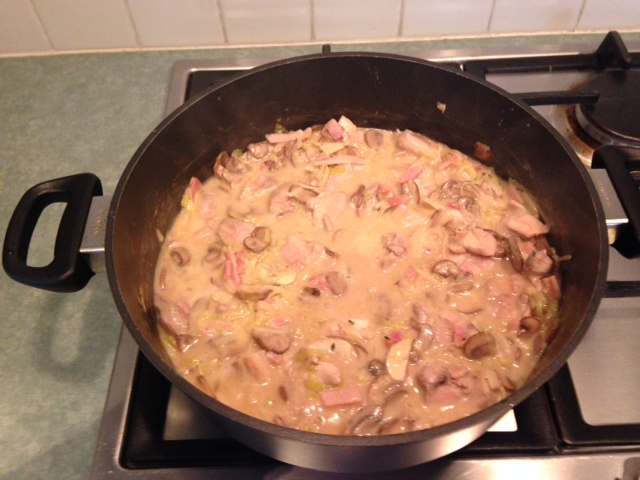
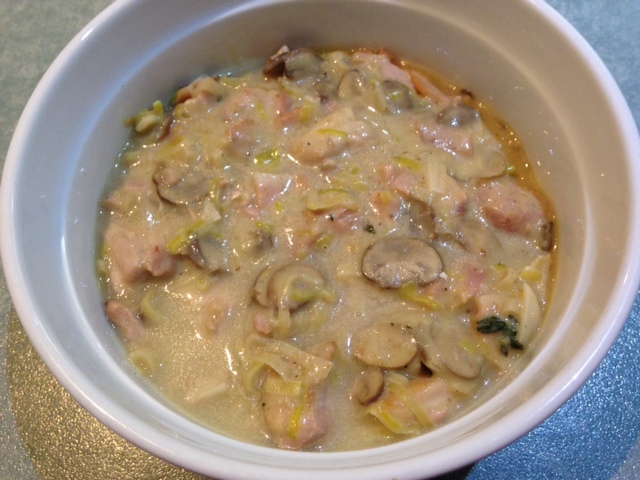
  5. Return bacon, mushroom and chicken to the pan over medium heat, return to the boil then simmer for 4 minutes. Add cream, brandy, mustard, thyme and a generous grind of black pepper then cook for a further 4 minutes, adding extra stock if the sauce is too thick. Remove from the heat and tip into a baking dish no smaller than 20cm x 20cm.
  6. Preheat oven to 160C.
  7. As the chicken is nearing its completion, peel the potato, cut into chunks and cover with plenty of salted, cold water. Bring to the boil and cook for about 12 minutes or until just tender.
  8. Drain the potato, return to the pan, add the butter then, when it has melted, add milk and mash until smooth. Add the flour and parsley and stir to combine well. Use a dessert spoon to scoop up portions of the dumpling mix and distribute the dumplings on top of the chicken mix.
  9. Place dish in oven on the second-highest rack and bake for about 25 minutes or until the dumplings have browned well.

Poulterers pie 3   Poulterers pie 4

Poulterers pie 5   Poulterers pie 6

A note about the photos: we cooked a larger amount of the chicken mixture, so we used two round baking dishes, and then, forgetfully, took a photo of the Pyrex dish just out of the oven instead of the white souffle dish.

Posted in Cooking | Tagged , , , , | Leave a comment

Notre bisque: risqué peut-être?

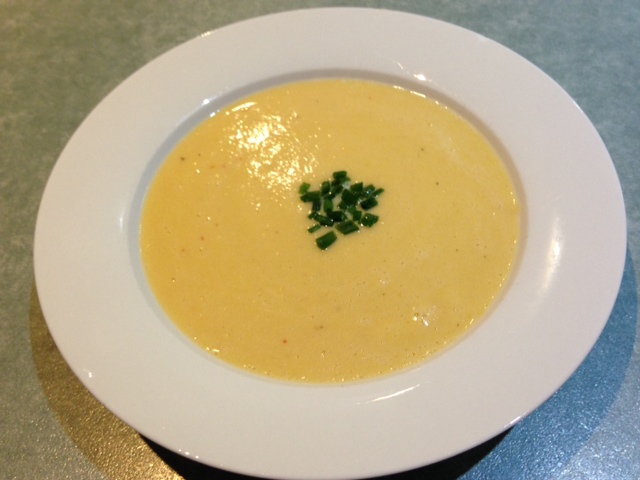
I have a vivid memory from childhood of Mum preparing bisque using a packet of dried ingredients imported from continental Europe. I was intrigued by how some water and cream could convert the packet’s contents into a premium soup. In 2010, I finally got around to trying my hand at making bisque from scratch. I began with a recipe from Doyle’s Sydney seafood restaurant, to which we have made several modifications.

Bisque 4

This dish originates from the Atlantic coast of France and evolved as an appealing way of using crustacea that were not of a marketable appearance but were quite edible. The seafood would be used whole to make a stock, which was then drained to provide the base for a soup. Ultra-traditionalists would then crush the heads and shells and incorporate them in the dish, much as they would in seafood crepes. (Several years ago, we made the latter and produced a dish that Maggie and my late mother consumed with delight, whereas my system couldn’t cope with the over-the-top richness.)

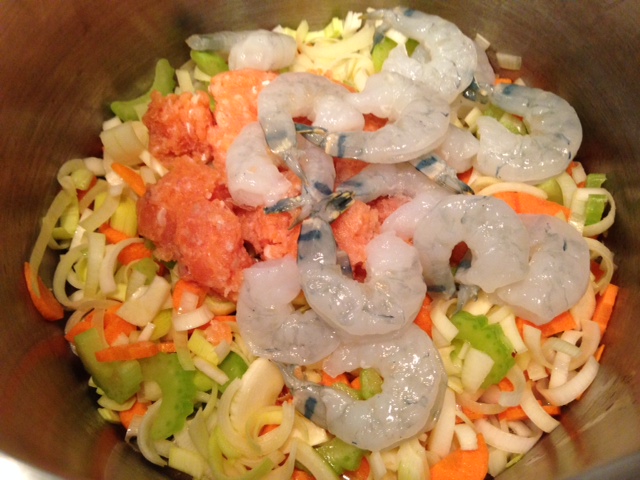
Our version of bisque is much simpler and varies from the traditional bisque in several ways. We use off-the-shelf stock, add the aromatic vegetables to the mix and use some fish as well as prawns.  Sacré bleu! So, it could be somewhat risky to serve this to a French guest. That said, it is so delicious that my son, Julian sent me a rare text message of food praise after he and Sara had “downed” – as in ‘went down a treat’ – a bowl each.

Ingredients

20g butter
250g Atlantic salmon (or another full-bodied fish), coarsely diced (we sometimes use minced salmon, bought at a good price if a convenient fishmonger carries it)
250-300g of raw prawn meat (you must choose a prawn with a flavour that you enjoy; in our case, that rules out those known as ‘banana’ prawns in Melbourne)
1 each of a small onion, leek, medium carrot, stick of celery and garlic clove
¼ tsp chilli flakes
2 tsp tomato paste
125ml dry white wine
200g Nicola potato, peeled and cut into chunks
750ml fish stock
500ml vegetable stock
salt and pepper
50ml thick cream

Bisque 1

Method

  1. Roughly chop onion, leek, carrot, celery and garlic.
  2. Melt butter in heavy-based saucepan over low heat. Add all vegetables except potato to pan, stir to warm then add fish, prawns and chilli flakes. Cook, stirring regularly for 7 minutes.
  3. Add tomato paste, white wine, potato and stock and bring to boiling point. Simmer for 35 minutes, stirring occasionally. Adjust seasoning and cool partly.
  4. Stir in cream and blend in batches in food processor.

Bisque 2   Bisque 3

Posted in Cooking | Tagged , , , | Leave a comment

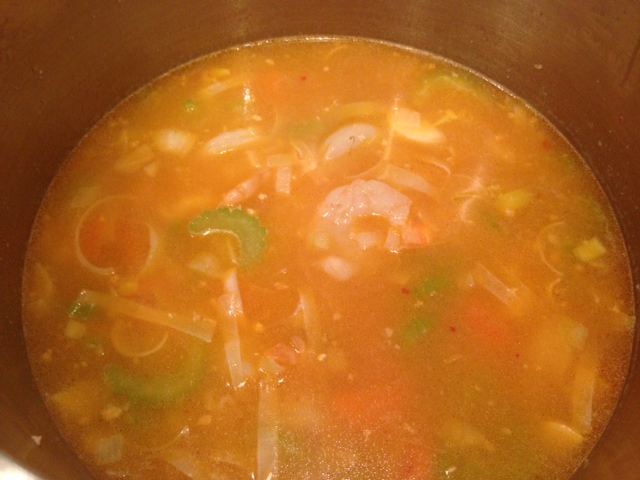
Minestrone: nutritious, comforting and in demand!

In many different parts of the world, chicken noodle soup or its local equivalent is regarded as the quintessential comfort soup, to be dispensed to those suffering from any one of various ailments, ranging from the common cold, through end-of-weekend ennui, to mild depression.

As a child, my preferred soup of a Sunday evening was cream of tomato, but I understand the appeal of chicken noodle soup. Maggie makes her version of it a few times each year and it is very happily received by her daughter’s household.

As a mature, well, older adult, my go-to soup for the last 20 years or so has been minestrone. Yes, there are pasta noodles, vegetables and chicken stock in the mix, but that is about all it has in common with the folksy cure-all. I never tire of minestrone’s variety of flavours and textures, and a richness that is balanced by the feeling of well-being that comes from its combination of comfort and nutrition. I like it, a lot, and I am no orphan in that regard!

Over the last five years, we – Maggie trimming and chopping, me fetching carrying stirring pouring and timing – have made and distributed hundreds of litres of minestrone to four generations of family members. To my parents, struggling to feed themselves adequately in their own home; to Maggie’s widower uncle, missing the pleasure of preparing meals alongside his wife; to Maggie’s soup-aholic daughter and son-in-law; to our grand-daughter Iris, a gourmand at 16 months – “chunky, please Pop, so I can feed myself tidily”; and, in-house, for me, because there are weekday lunchtimes when no other food appeals quite so much as a warm bowl of minestrone and toasted sourdough bread. And, just recently, to two of Maggie’s work colleagues and their grievously-ill husbands.

Of course, there are thousands of recipes for making a minestrone soup, including a vegetarian take on our recipe (no bacon, use vegetable stock). A few days ago, I found a recipe that included mostly green or white vegetables and only a splash of red. I will try that soon.

And note: I never add parmesan to a bowl of minestrone, unlike 10CC in their 1975 hit song. If the soup needs an extra dash of saltiness, I prefer actual salt to the texture of melted parmesan. And the washing up is easier!

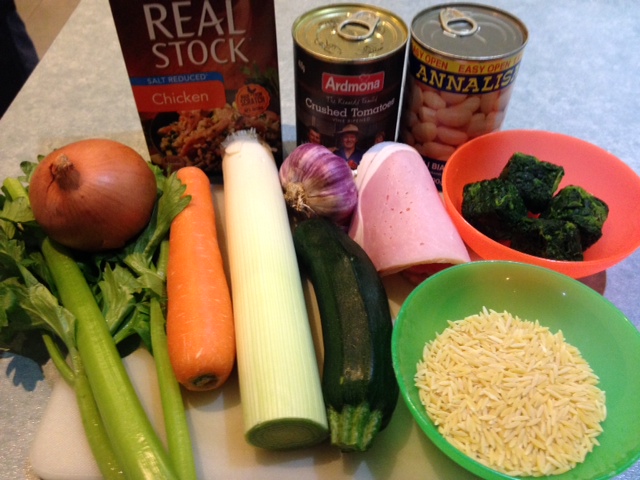
Ingredients

2 tbsp olive oil
3 long or 6 short rashers bacon, trimmed and chopped
1 carrot, peeled and chopped
2 brown onions, chopped
2 sticks of celery, chopped
1 leek, chopped
2 cloves garlic, finely chopped
2 medium zucchini, grated
600g tinned tomatoes, peeled and chopped (if using fresh tomatoes, supplement with 1 tbsp tomato paste)
1½ litres chicken stock plus ½ litre water
1½ cups shredded spinach leaves (or frozen equivalent)
100g rice-shaped pasta
400g can cannellini beans or butter beans, rinsed
1 tbsp chopped basil

My goodness - look at all those lovely ingredients

My goodness – look at all those lovely ingredients

Method

  1. Prepare bacon, carrot, onions, celery, leek, garlic, zucchini and tomatoes. (It is a matter of personal choice as to how you chop the vegetables – coarse or fine both work well.)
  2. Heat oil over low heat in a large saucepan and sauté bacon, stirring, for 2 mins
  3. Increase heat to medium, add carrot, onions, celery, leek and garlic, and cook, stirring occasionally, for 8 mins
  4. Add zucchini and tomatoes, stir for 2 mins and add stock and water.
  5. Bring to the boil and simmer for 25 mins (30 minutes if you prefer your vegetables completely soft).
  6. Add spinach and pasta, and simmer for 15 mins, stirring occasionally to prevent the pasta from sticking to the base of the pan
  7. Add beans and basil, and simmer for 5 mins

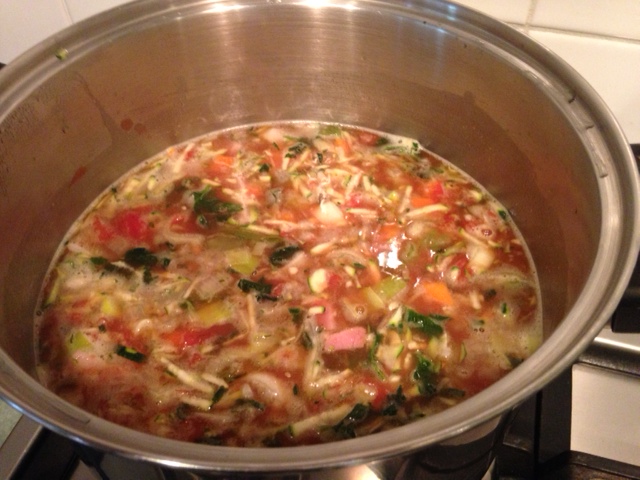
Minestrone 2   Minestrone 4

Look - no parmesan!

Look – no parmesan!


Posted in Cooking | Tagged , , , | Leave a comment

Veal braised with leeks: an enduring favourite

As I have said before, Maggie and I cook with veal more frequently than the average household. Our collection of favourite recipes currently includes nine veal recipes but there would be another half-dozen dishes we have prepared and quite enjoyed.

Of all these dishes, the one that was the first we cooked together, a little over 10 years ago, remains a firm favourite and has not been altered since 2006. As the list of ingredients implies, it is a relatively simple dish, but deceptively so. Something about the method transforms these ingredients into a delicious and satisfying meal, enhanced by accompanying the veal and its sauce with some clean, fresh vegetables.

Veal leeks 5

Ingredients

4-6 veal loin chops
1 large leek
30g butter
100ml cream
150ml chicken stock
1 tbsp brandy
2 tsp green peppercorns

Veal leeks 1   Veal leeks 2

Method

  1. Place the cream, stock, brandy, peppercorns and a generous pinch of salt in a saucepan and simmer vigorously until the mixture has reduced by about one-third.
  2. Meanwhile, season chops with salt and pepper. Remove most of the green portion of the leek, divide the white portion in half lengthways and cut each half into slices.
  3. Melt 15g of the butter in an ovenproof pan, add the chops and sauté for a few minutes  on each side until just beginning to brown. Transfer to a warm plate.
  4. Sauté the sliced leek in the pan juices and the remaining butter until the leek has begun to soften, about 5 minutes.
  5. Place the chops on top of the leek.
  6. Heat oven to 160o
  7. Pour the reduced sauce over the chops and cover the pan with a lid or foil.
  8. Bake for 35-40 minutes, or until the chops are nearly tender, then bake uncovered for a further 10 minutes.
  9. The dish could be varied by cooking some mushrooms and bacon/pancetta with the leeks, or by adding some fresh, chopped spinach to the sauce before it is baked. However, Maggie prefers that we stick to the original recipe, so we do!

Veal leeks 3   Veal leeks 4

Posted in Cooking | Tagged , , , , | Leave a comment

Delicious lemons, fresh from the tree

Many of you will be too young to remember the song with the chorus line “Lemon tree, very pretty, but the fruit of the poor lemon is impossible to eat”, written in the 1950s and recorded by several well-known artists, ranging from Peter Paul & Mary to Bob Marley.

The song itself is an allegory of the bitter-sweet qualities of romantic love, using the contrast between the aesthetics of a lemon tree in full bloom and the intense tartness of lemon flesh. However, as we all know, the lemon actually has many virtues, which are reflected in the variety of its uses in the kitchen.

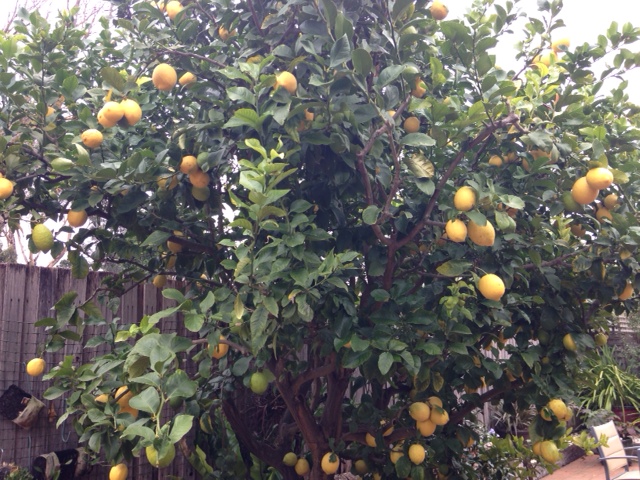
Maggie and I are blessed with an old war-horse of a lemon tree as the centrepiece of our kitchen garden. It is probably around 50 years old and was in a state of sad neglect when we bought our home in 2005. Fortunately, it responded well to a blend of generous nurture and a one-off dose of very tough love; most years, we receive a bountiful supply of large, juicy lemons.

Lemon tree

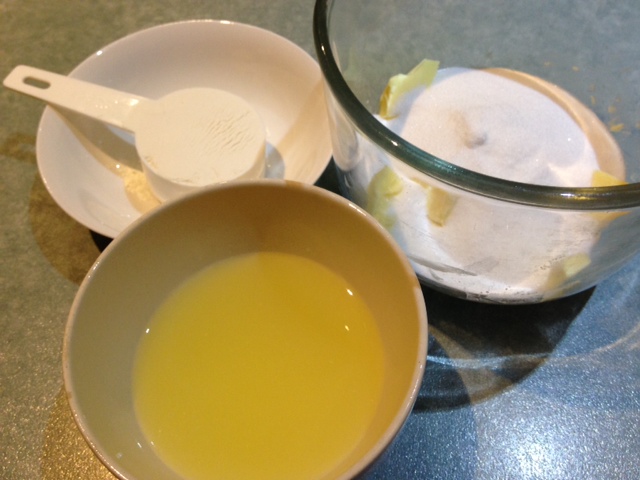
We use lemon in the kitchen several times a week, in the forms of: juice; grated or peeled zest; and the skin or the flesh of pieces of the preserved lemon we make for ourselves. The most ‘lemony’ dish of the wide range of savoury and sweet destinies of our lemons is lemon delicious pudding. It is a firm winter favourite.

This old-fashioned dessert tastes naughtier, in dietary terms, than it actually is, due to the slippery texture produced by the air in the beaten egg whites. Here is how we make it.

Ingredients

2 large lemons
60g butter, softened
1 cup caster sugar
2 tbsp (40ml) milk
3 eggs separated
4 tbsp (80ml) self-raising flour
1¼ cups milk, extra

Lem delish 1   Lem delish 2

Method

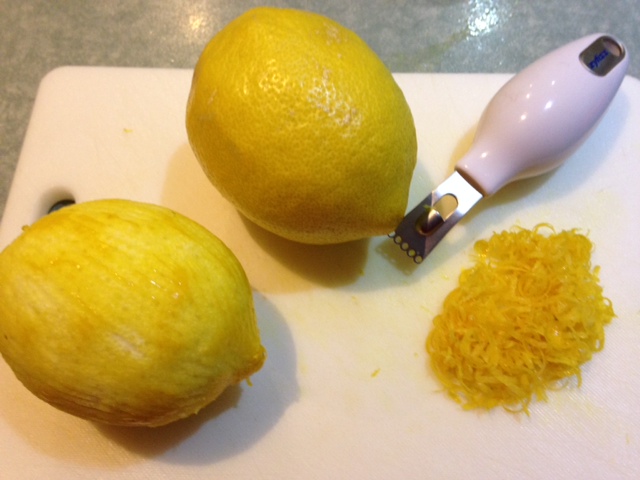
  1. Zest one lemon and juice both (you need about 2/3 of a cup of juice).
  2. Cream the butter with the sugar and the 40ml of milk in an electric mixer, then add egg yolks and mix well.
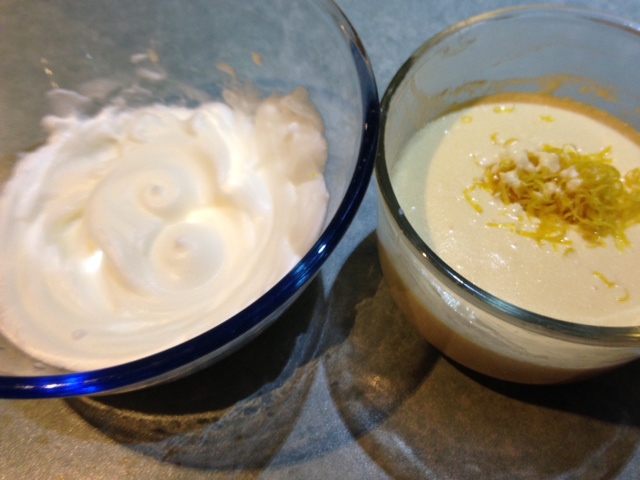
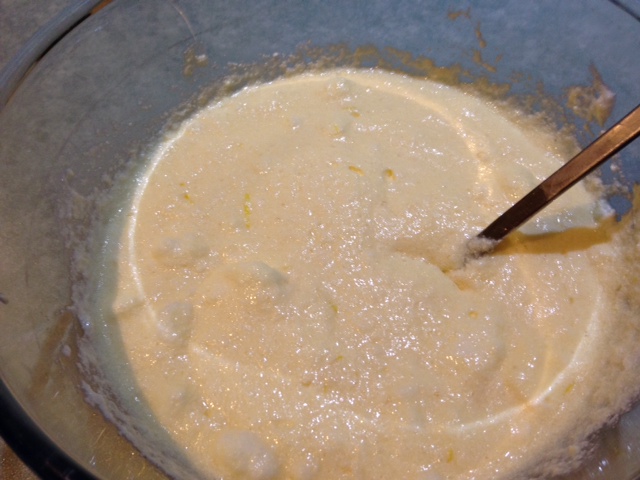
  3. Add about 1/3 each of flour and extra milk alternately to make a smooth, runny batter. Beat in lemon juice. Fold in lemon zest by hand.
  4. Lightly butter a 2 litre ovenproof basin (or divide between two smaller basins) and heat oven to 170oC
  5. Whisk egg whites until firm and creamy, and fold gently into the batter.
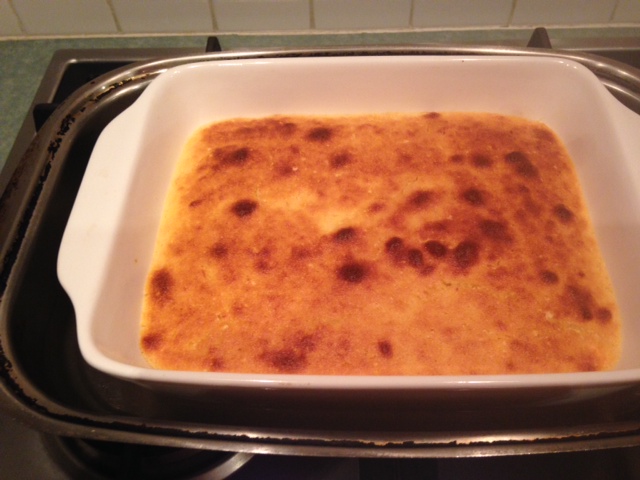
  6. Pour into prepared basin; stand basin in a baking dish and pour boiling water into dish until halfway up the sides of the basin.
  7. Place in oven and reduce thermostat to 150oC (the initial cooking time at 170 will stimulate the rising agent in the flour and help to trap the air bubbles in the egg white)
  8. Bake for 35 to 40 minutes until golden brown and slightly firm to the touch, cool a little and serve as is or with cream or ice-cream.

Lem delish 3   Lem delish 4

Lem delish 5   Lem delish 6

Lem delish 7

Posted in Cooking, Home life | Tagged , | 1 Comment

How to please your palate prior to, ahem, a procedure

A mild ‘gross-out’ alert applies to what follows. However, if you or someone you care about is scheduled to have a c****oscopy, as I did recently, I might be able to help you get through the preparations without your palate going into a coma.

I will spare you the details of what you eat – now there’s a euphemism – and what else happens on the day immediately before the procedure. No, it’s the previous day when a bit of creative cooking can help you to eat with a smile on your face.

The list of ‘foods allowed’ provided by the hospital included: white bread products; plain cereals; ripe bananas and stewed peeled pale fruits; white rice and white pasta; cooked peeled carrot; minimal margarine; well cooked lean white meats; eggs; and low fat cheese. But definitely, no full cream dairy products and no dark-coloured foods.

On the day before this day of limited options, I poached three trimmed chicken thigh fillets – you could substitute pieces of a firm white fish – in water to which I had added some diced peeled carrot (x 2), some sprigs of thyme and parsley, chopped celery and salt and pepper. When this was cool enough to handle, I strained the liquid into a bowl, placed the pieces of chicken and carrot in the liquid and discarded the other solids.

Next morning, after a night in the fridge – the bowl, not me – I deglazed the chicken fat from the surface of the liquid, removed the carrot and chicken and used the flavoursome liquid to cook some white rice. Meanwhile, I mashed the carrot and diced the chicken; beat and seasoned a couple of eggs, added some pieces of the chicken and cooked an omelet in a little margarine in a non-stick pan. So, for lunch, I had a dish of tasty rice tossed with mashed carrot and pieces of chicken omelet.

Next, a plan for dinner, in the knowledge that Maggie would be sitting down to a mouth-watering plate of leftovers from a couple of nights earlier, when we had roasted a whole piece of porterhouse (sirloin) beef, served with some delicious vegetables.

I decided to make something akin to a dish of carbonara. While some broken lengths of spaghetti were bubbling away, I heated the rest of the diced chicken and mashed carrot in a little bit of the poaching liquid I had set aside. I added the cooked pasta to the pan, then a beaten egg which I stirred into the dish off the heat. Okay, it didn’t look especially pretty but it tasted good and filled me up, ahead of my day on Starvation Row.

I began and ended this day with a bowl of corn flakes, pieces of ripe banana and non-fat milk. For snacks, I had crumpets (bulkier than bread), lightly cooked to reduce the need for a slather of margarine, then lightly flavoured with Vegemite or seedless jam, also permitted.

So, my palate didn’t recoil unduly in horror and, two days later, I got the all clear from the specialist and Maggie took me home to a nice roast beef sandwich.

Posted in Cooking, Home life | Tagged , | Leave a comment