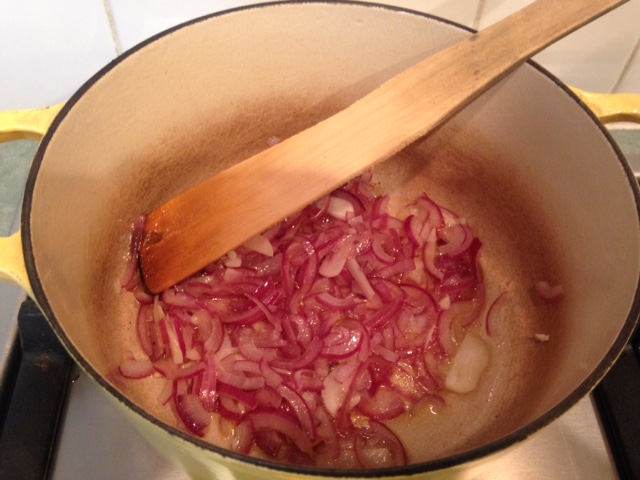
Pomegranate molasses: sticky, not tricky

Now, here’s a happy coincidence. A message from food heaven, you might say, or a ‘circle of life’ event.

Just a few days after we had purchased a pomegranate for the first time, our Greek neighbour, Sula came to our door bearing two large orbs picked fresh from her pomegranate tree.

Embarrassed by such riches, I began another web search for recipes featuring pomegranate. You know how it goes. By the time I had typed the first “a” in the word, a list of options appeared and one of them was ‘pomegranate molasses’. Hmm. I’d seen that mentioned in various food articles and recipes, so I decided to have a little look at what came up.

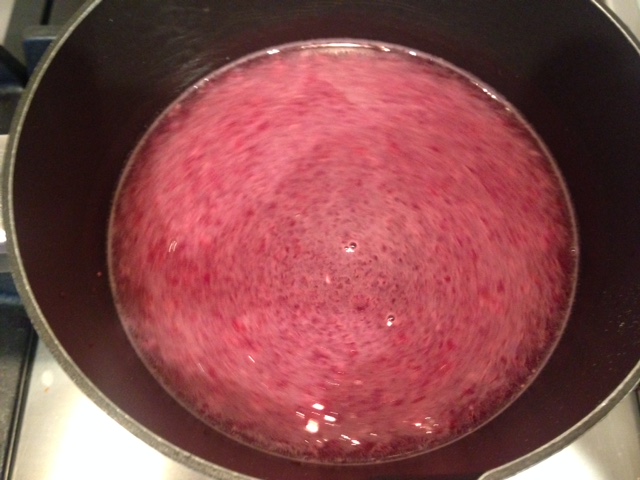
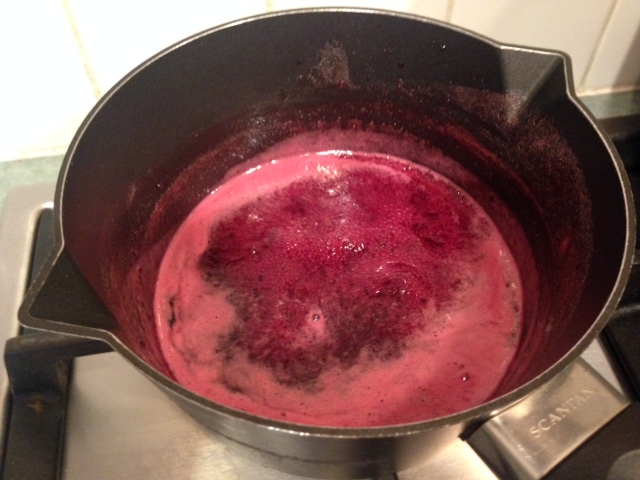
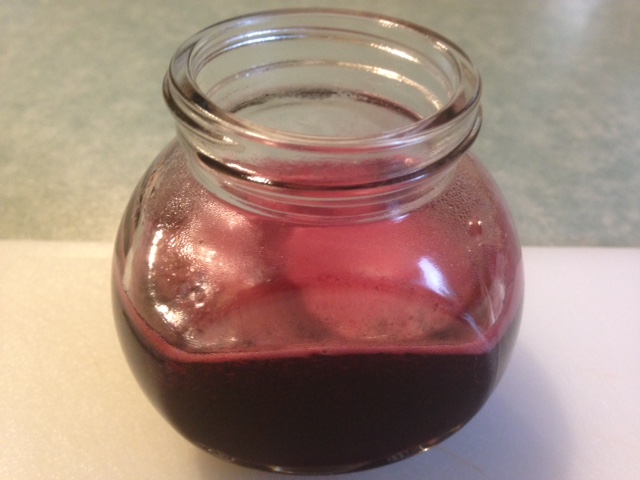
Soon enough I found a recipe for making pomegranate molasses at home. It was surprisingly simple. So, late last week, before The Horseradish Incident, we converted Sula’s gift to a rich, dark, thick syrup.

We haven’t yet decided what we uses we will make of it but the likely choices include in glazes – think poultry and pork – braises and dressings.

And here’s the virtuous circle closing. Sula loves pomegranate molasses but has never made it herself. So, today, I will cross the street, give her the recipe and a sample and show her our photos to help explain how it’s done.

Pom molasses 2   Pom molasses 3

Pom molasses 4   Pom molasses 5

Pom molasses 6   Pom molasses 7

Posted in Cooking | Tagged , | Leave a comment

It just arose …

… last week, in our garden.

Rose 2

I guess that’s how our warm, dry autumn looks through rose-coloured glasses!

Posted in Home life | Leave a comment

So, this is what generational change tastes like!

A couple of weeks ago, Maggie and I had a couple of novel experiences.

The first: we sat down to a fancy meal prepared by my son, Julian.

And it was good, very good in fact. A tasty rendition of a chicken biryani; whole green beans stir fried with long pepper segments; and a salad – made according to a recipe by Yotam Ottolenghi – of roasted cauliflower, slices of celery, chopped roasted hazelnuts, pomegranate seeds, herbs and a tangy dressing.

The salad delivered new and attractive sensations to our palates. We found it quite inspiring and told Julian so. Maggie was so enthusiastic that we had to stop at a market on our way home so she could buy a pomegranate for us to use.

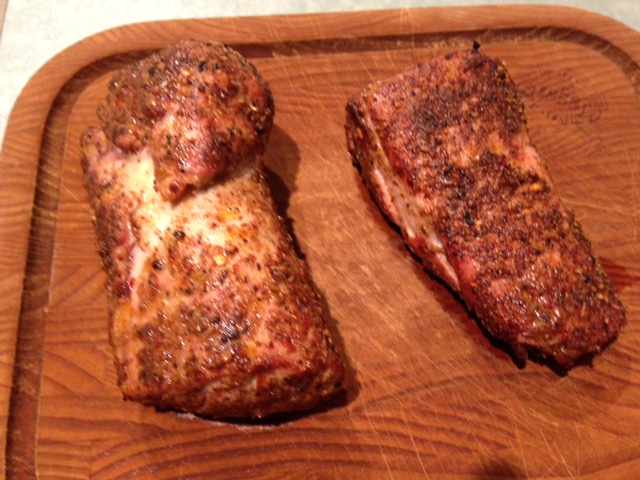
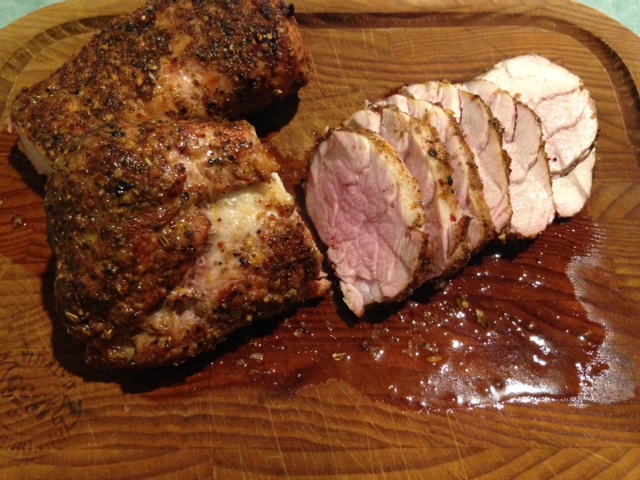
A few days later, Google helped me find the recipe, which had been reproduced in the New York Times. We made the salad to accompany pork fillet which we had coated in berbere spice and roasted in our Weber Q. We were very happy with how the salad turned out, albeit with some modifications to the recipe: less heat when roasting the cauliflower; substituting our vinaigrette for the recommended dressing; and, for us, no coriander leaves.

Pork cauli 3

Pork cauli 1   Pork cauli 2

Thanks to Julian, I had contracted the Ottolenghi bug! (And there I was, the father who had always assumed that he would teach his son about cooking.)

With lemons starting to ripen on our tree, I went searching again to see what new uses we might make of them. The Ottolenghi recipe we chose was for a tomato-based salad, including some roasted slices of lemon. The salad was refreshing and what we most liked about it was the lemon component, so much so that we found ways to use the leftover slices in side-dishes for two subsequent meals.

We will make another batch of the roasted lemon soon and, when we do, I’ll share some photos and some tips on how to get the best result.

Posted in Cooking | Tagged , , , , | Leave a comment

This horse kicks like a mule

Although my blog posts often include suggestions about ingredients or cooking methods, I’m not one of those helpful writers whose cooking tips appear neatly at the foot of the relevant post.

Until now.

Up front.

Do NOT mince fresh horseradish on your kitchen bench while you are drying hot chillies in your oven! Or tears will be shed, and well before bedtime. As they were in our house last weekend.

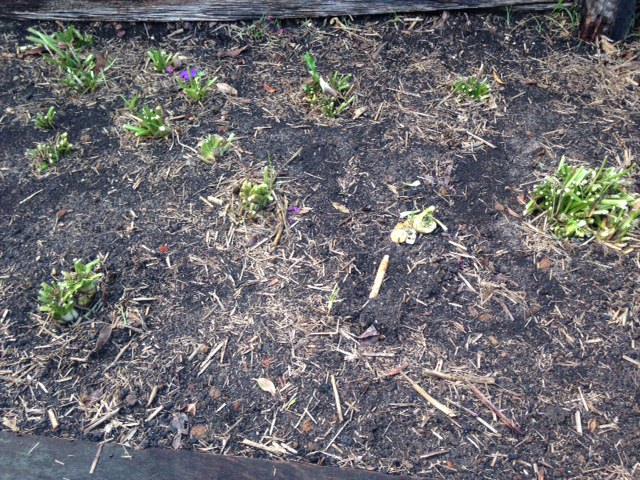
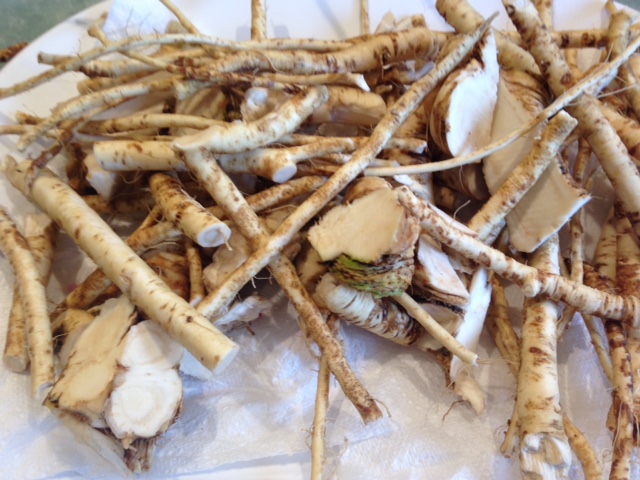
After a dry and warm first two months of our 2016 autumn, as confirmed by our latest water bill, we have finally received enough rain to help loosen up the clay component of the soil where we grow our crop of horseradish. Knowing that plenty of showers were forecast for Friday, we removed all the leaves a day ahead to expose the soil. By Saturday morning, the weather was clear again so, before a further downpour due on Sunday morning, we got to work digging up the horseradish roots.

In patches, it was still heavy going and the extent of the root system was much greater than in previous years, so we stopped when we had gone about one-third of the way. We will try to dig up the balance within the next couple of weeks.

Horse 1   Horse 2

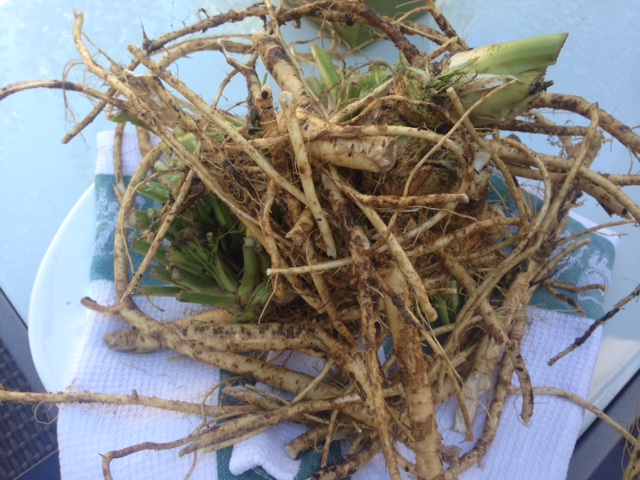
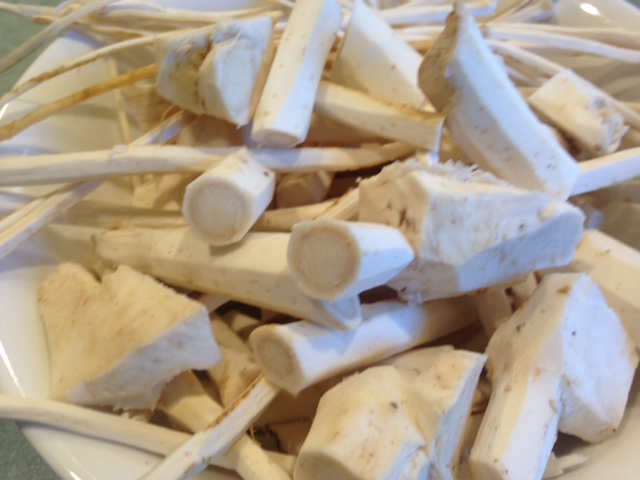
Once I had finished digging, Maggie took the harvest of roots and crowns, washed them a couple of times, drained them on some old towels, put the crowns aside for replanting and peeled and cut the roots in readiness for her to process through our electric mincer.

Horse 3   Horse 4

Horse 5   Horse 6

Meanwhile, I had resumed the time-consuming task of drying the last batch from this year’s chilli crop in our oven.

Bad timing!

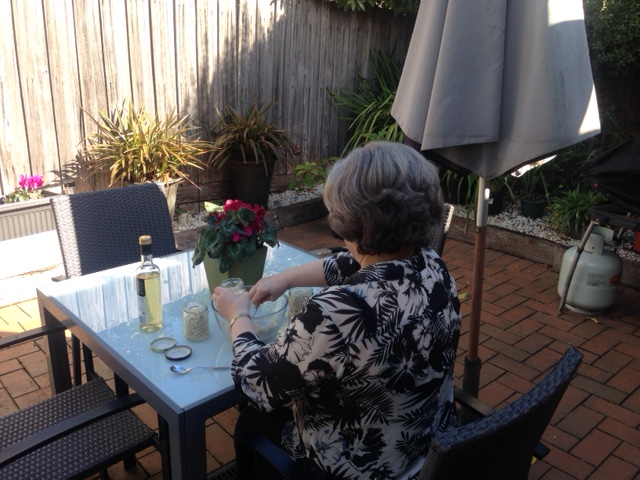
Even with the protection of her contact lenses, the combination of the vapours from the horseradish and chillies was too much for Maggie and she had to grab some tissues and retreat to our bathroom! I opened up the house to the fresh wind, while Maggie took the minced roots and white vinegar outside to complete the work of putting the horseradish into jars to be stored in our refrigerator.

Horse 7   Horse 8

The whole exercise will have to be repeated two more times but, with some luck and better management, Maggie should get through it without being reduced to tears.

Horse 9

Posted in Cooking | Tagged | Leave a comment

Chicken reduced for tarragon redux

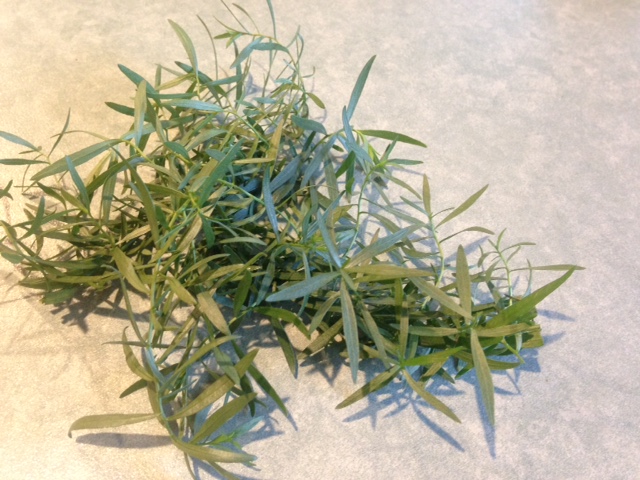
A few weeks ago, I reported that we had prepared a dish of Tarragon Chicken according to the recipe in Mastering the art of French cooking.

We made it again last weekend, using a smaller chicken, known variously as spatchcock or poussin. At this second time round, we were familiar enough with the method that we felt comfortable to pause and take some photos along the way.

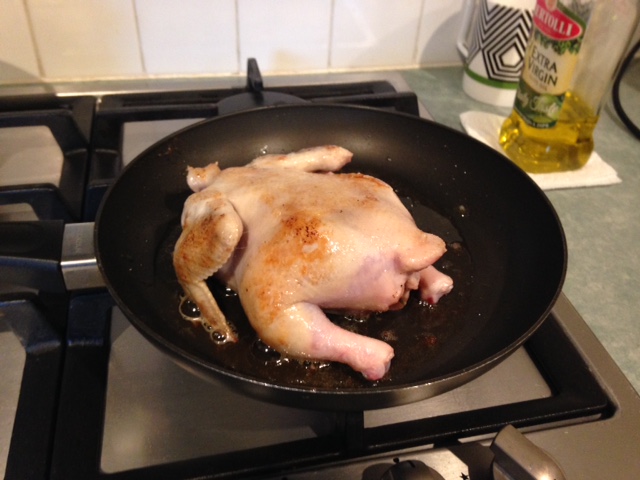
One advantage of using the smaller fowl is that it was easier to handle it as we browned all areas of the skin in a pan.

Poussin 1   Poussin 4

Poussin 2   Poussin 3

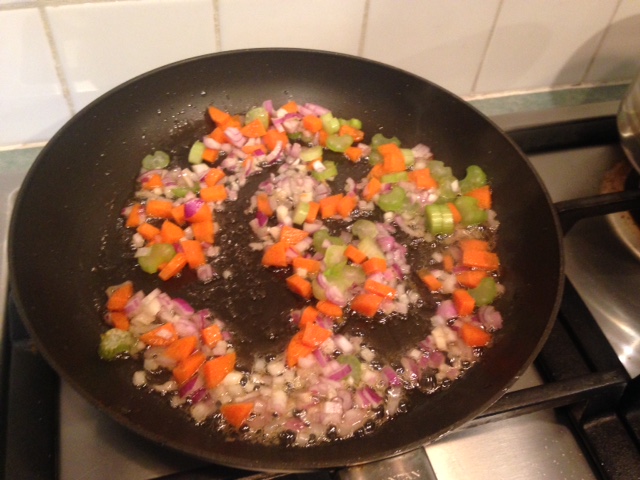
We sautéed the three aromats – onion, carrot and celery – for longer before they went in the pot under the chicken, to compensate for the shorter cooking time. And we added a drizzle of chicken stock to compensate for the fact that a spatchcock is quite lean, so there is very little fat to render and keep the dish moist.

Poussin 5

To prepare the sauce, you remove the cooked bird and add about 1 cup of stock per kilo of chicken, let it bubble for a few minutes then strain it through a sieve and pour the liquid back into the pan. It is thickened using a thin paste of corn starch and a fortified wine; the recipe specified Madeira or Port – we preferred a medium-dry sherry-style wine or apera.

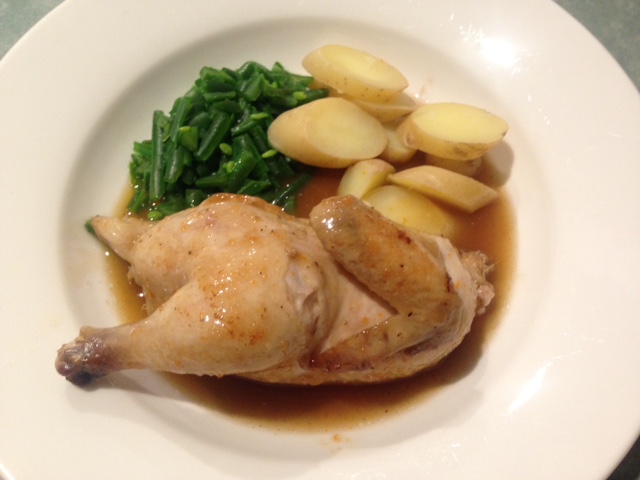
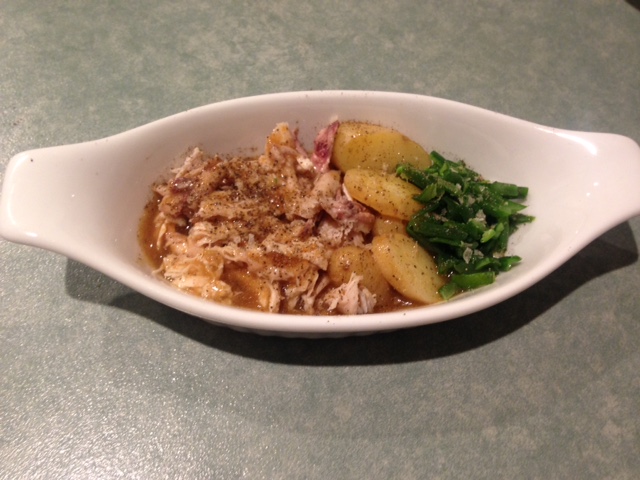
The dish was just as delightful as at our first attempt and, from this one small chicken, we had an evening meal each and a work-day lunch for Maggie.

Poussin 6   Poussin 7

Posted in Cooking | Tagged , , , , | Leave a comment

California Dreaming

I am currently on vacation …

… from reality. Well, a large portion of it, at least. Especially the bits that dominate the evening news bulletins these days: tax avoidance and corruption in high places, the overwhelming refugee crises, the litany of terrorist attacks, bleaching of the Great Barrier Reef’s coral communities, drug-fuelled violence on the streets of my city, the US Presidential Primaries, etc, ad nauseam. Where’s the mute button on this thing?

Until further notice, the less I know about what is happening in my own country, and elsewhere around the globe, the less likely I am to be afflicted by profound pessimism about the future of our planet, and the more able I feel to do things that benefit my family and my immediate community of friends, neighbours and colleagues.

My choice of holiday destination would surprise people who know me reasonably well, or lead them to conclude that my medications need to be reviewed!? After all, from my mid-20s to my mid-40s, I was a vigorous and, sometimes, pioneering optimist, working in various ways to improve the well-being of the environment, the communities in which I lived and socially or economically disadvantaged people. However, I have steadily lost hope on all these fronts, despite an improved level of personal happiness.

Happily, the corner of reality to which I have retreated still includes travel. Which is preceded by Planning to Travel, our favourite parlour game, and Spending on Travel, which is not quite so much fun (but let’s not talk about that!)

Our next international journey will be from mid-August to mid-September this year, a trip we began to plan towards the end of July 2015. That might sound a bit extreme but, if we hadn’t made some early decisions, we wouldn’t have secured a cabin-with-verandah for the 7-night canal-and-river cruise we will be taking from Amsterdam to Basel in the last week of August.

Closer to the time, I will preview this trip in more detail. Now, let me tell you about the result of our latest whirl of the Planning to Travel wheel.

Much as we love travelling in Europe – this year’s visit will be our sixth in eight years – we had begun to think that it was about time we made a journey to North America. For Maggie, that would have to include some time in the Canadian Rockies: think Banff, Lake Louise. So, we grabbed some brochures and trawled the internet, aiming to find a way to fulfil this ambition and then link it with other destinations of interest.

We’ re not skiers, nor are we hikers, but we are big on scenery, learning as much as possible about the places we visit, and the comfort, security and fringe benefits of a guided tour. So, we were tempted by an Insight Vacations tour that commenced in Vancouver, spent more than a week in the mountains and then gave us the option of a train journey to Toronto, including a visit to Niagara Falls. From there we could go to the icon-rich cities of New York and Washington, before flying home, perhaps stopping over in Hawaii.

We slept on that for a while and returned to the ‘to be done’ list for this year’s trip. You know how it goes – hotel bookings, Dubai stopover, currencies, car hire, insurance.

Then, last week, we revisit the concept for our first visit to North America. Maggie was concerned that it might be overly complicated, loaded with too much ‘getting to’ and ‘getting from’. So, I suggested we look at what lies to the south of Vancouver, including Oregon and Northern California. We have various reasons to want to visit Portland, Oregon and there are many attractions in and around San Francisco which appeal to us.

So, we have a plan: a version of the Insight tour which returns us to Vancouver; a train ride to Portland; ditto to San Francisco; and some day trips to such places as Napa Valley, redwood forests and Yosemite. Preferred dates? Sometime that will present us with the vibrant colours of the northern fall.

California Dreaming indeed, 50 years since I first heard the song of that name by the Mamas and Papas!

From Rome (2008) ...

From Rome (2008) …

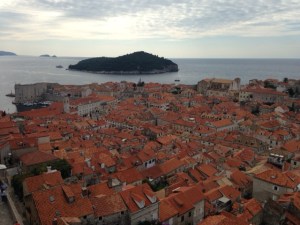
... to Dubrovnik (2015)

… via Dubrovnik (2015) …

... to Amsterdam (2016) ...

… to Amsterdam (2016) …

… and beyond

Posted in Travel | Tagged , , , , | 3 Comments

Catch-a-chicken story could be a bestseller

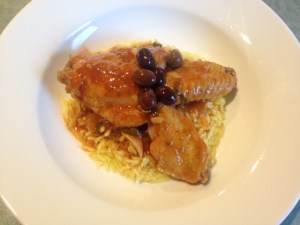
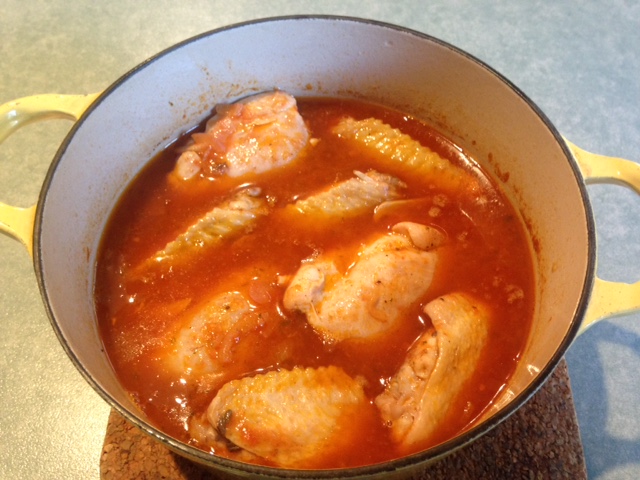
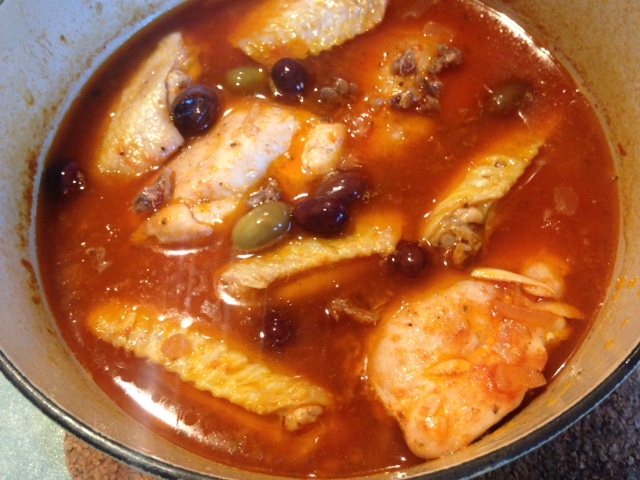
A few posts ago, I reported that Maggie and I had made a rich tomato sauce according to the recipe in Mastering the art of French cooking, and that we anticipated using it in dishes such as beef goulash and chicken cacciatore. We made the latter last weekend and it was stunningly delicious, far and away our best-ever rendition of this popular Italian dish.

In our recipe collection, I have given the dish the nickname that appears in the title of this post. You might think that is a play on words or, more precisely, the sound of words. Yes, but my playfulness does not end there. Cacciatore is an Italian word that means ‘of the hunter’. It is not limited to a braise in a tomato-rich sauce. It could be an open-air grill over a rustic fire and it could involve meat-on-the-bone from any number of animals that might be caught by a ‘hunter’. So, to make chicken cacciatore, first you must ‘catch’ your fowl.

The recipe that we have followed in the past appears below. It has served us well but it has gradually fallen down the pecking (groan) order of our repertoire as we have added dishes inspired by our overseas travels or the capabilities of our Weber Q. For this week’s occasion, we made some changes which, in cahoots with our French tomato sauce, took it to a new level. As follows.

Chicken pieces: we used skinless chops (thighs with the outside bone removed) and skin-on middle segments of wings (to make the texture luscious), about 2:1 by weight (we only used 750g in total)
Cooking the onion and garlic: we sauteed these for a good 10 minutes until just before they began to caramelise
Adding the liquids: we added the wine and let it bubble and reduce for a couple of minutes. Then we added the vinegar, stock and about 170ml of tomato sauce (equivalent to about 350ml for the full-sized recipe), brought them to the boil and let them simmer for about 10 minutes, to intensify the flavours
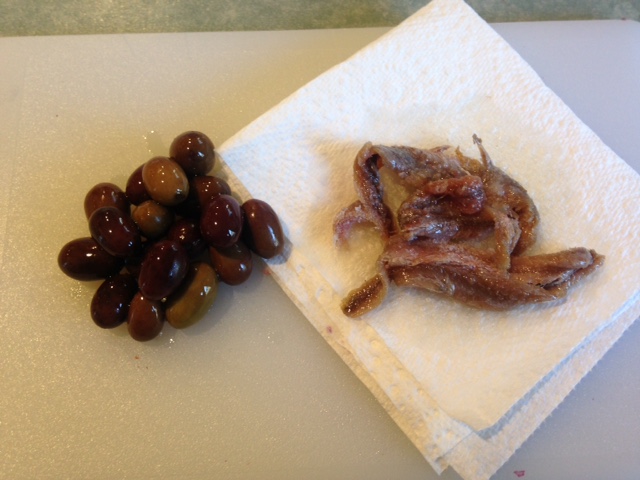
Olives: we happened to have some ‘ligurian’ olives in the fridge, so we used those. Maggie cut the pips out before they went in the pot. You could use any olive you like, provided it is one you LIKE
Finishing the dish: once it was cooked, we removed the chicken pieces and kept them warm in the oven. Maggie then used a soupspoon to deglaze the sauce and thickened it slightly using cornstarch
Side dishes: we had basmati rice cooked in a 50:50 mix of water and chicken stock, infused with saffron; and a lightly-dressed green salad

It doesn’t look all that special in our photo, but the experience of eating it was utterly delightful. I can’t wait to do it again; ditto for making goulash using the tomato sauce!

Cacciatore 8

Ingredients

1½ kg of chicken pieces (thighs, wings and drumsticks)
2 tbsp olive oil
salt & pepper
1 large onion, chopped
2 cloves garlic, finely chopped
1½ cups chicken stock
¾ cup dry white wine
1 tbsp white wine vinegar
400g peeled tomatoes, chopped or 250ml of tomato passata
<1 tsp sugar
4 anchovy fillets, coarsely chopped
25g roasted olives or 50g black olives, pitted and chopped
tomato paste (if required)
1 tbsp chopped fresh basil

Cacciatore 2   Cacciatore 4

Cacciatore 6

Method

  1. Use sharp knife to remove tip section of wings (tip is safe to feed to pets) and trim any large pieces of fat from the other pieces of chicken. Heat olive oil and brown pieces in batches. Put pieces in a bowl and season.
  2. Preheat oven to 150C (fan-forced).
  3. Sauté onion and garlic for until soft. Add stock, wine, vinegar, tomatoes and sugar and bring to boil. Add chicken pieces, bring back to boil, cover with lid and transfer to oven.
  4. After 30 minutes, add anchovy and olives. Adjust seasoning and add a little tomato paste to suit your own taste. Return to oven and cook for a further 30 minutes. (If you remove the lid for the last 20 minutes, the sauce will become rich and thick.)
  5. Remove from oven. When cool enough, refrigerate overnight or until fat has solidified on surface.
  6. Skim off fat, gently reheat and stir through basil. Serve with pasta or rice, sprinkled with some chopped parsley.

Cacciatore 3   Cacciatore 1

Cacciatore 5   Cacciatore 7

Posted in Cooking | Tagged , , , | Leave a comment

Dark notes produced at jam session

Who doesn’t like raspberries, save for a few people who are allergic to them and other related fruits? My late sister loved raspberries and would often eat a whole punnet at one sitting. I like them too and, in Melbourne, the supply of fresh berries is usually plentiful from mid-Spring until mid-Autumn. The local season used to peter out soon after Christmas but has been extended by the development of new varieties; we also have convenient late-season access to fruit grown in the cooler climate of Tasmania.

As in other fruit-producing parts of the world, there is a long-established tradition of converting some of the seasonal bounty into jam, both commercially and in family kitchens. Raspberry jam is very popular and is a fund-raising staple at school fetes and the like. Personally, I prefer to make a jam based on equal amounts of raspberries and blackberries. A case of ‘shiraz palate’, perhaps? Certainly it has an attractive complexity and a dark, brooding colour reminiscent of a full-bodied glass of my favourite red wine variety.

I call it Dark Berry Jam. I only make one batch of the jam a year, using just 500g of each fruit. That produces enough for our own needs and for two special friends – the husband of my favourite cousin and a woman in her late 80s whom Maggie met through her work at a girls’ school.

So, now we have our annual supplies of Fig & ginger jam and Dark berry jam. Soon, it will be the season for Seville oranges, and I will be able to make a batch of marmalade to complete the suite of spreads for our weekend breakfast treat of tea and toast in bed.

Ingredients

500g raspberries
500g blackberries
¼ tsp tartaric acid
80ml lemon juice
1kg sugar

Method

  1. Place the berries in a large pan with the tartaric acid and lemon juice. Bring to the boil, reduce the heat and simmer for 5 minutes.
  2. Add the sugar and stir over a low heat until the sugar dissolves. Increase the heat and boil rapidly, uncovered, for 15-20 minutes or until a small spoon of jam jells on a chilled saucer within 30 seconds.
  3. Pour into sterilised jars and seal.

Dark berry jam

Posted in Cooking | Tagged , , | Leave a comment

In digest: week ending 28 March 2016

It has been the week of Easter on our calendar, although it will be early May before our Greek neighbours roast the traditional lamb on a spit! In Australia, the religious elements of Easter are observed by a declining number of residents. The standing of the mainstream Christianity is at a low ebb, especially the Catholic church. So, for most of us, Easter is a secular occasion, devoted to picnics, sport, family reunions, house and garden projects or one last warm-weather vacation.

And shopping: department store ‘mid-season’ sales; countless kilograms of chocolate, some of which has been on display since 26 December; Easter or ‘hot cross’ buns, of which a growing number are infused with yet more chocolate; prawns, our national festive food of choice; and, even for many who never go to church, fish on Good Friday.

At Easter time in our home, we foreswear the temptations of chocolate and sugary buns, and we never eat fish on the Friday. I experienced a reverse epiphany when I was 12 years old, and decades of being browbeaten by family members into attending church have left Maggie with a light streak of hostility. So, at her insistence, aided and abetted by my irreverence, it is our custom to have a meal of roast beef on Good Friday. This year it was ribeye on the bone, with plenty of marbling – moist and tasty.

On Saturday, content with our observance of tradition, we returned to the task of utilising our copy of Mastering the art of French cooking – this falls under the heading of ‘house and garden projects’ – and prepared a dish that has been on my wish-list for a couple of months: Tarragon Chicken.

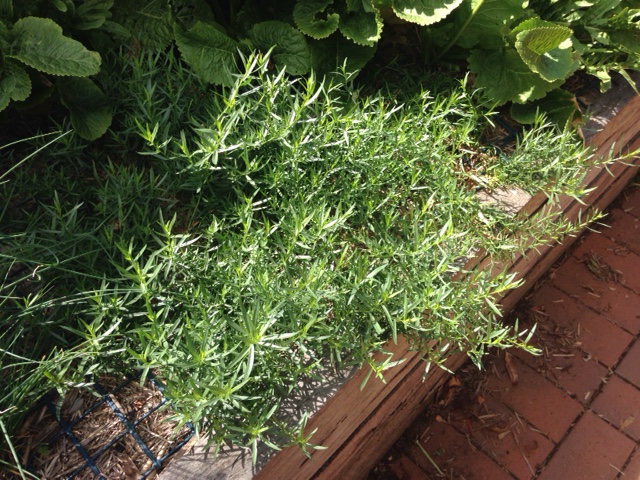
I have written before about the damage done to my culinary proclivities by my first failed attempt to prepare an edible meal of tarragon chicken. And of my more recent conversion to growing and using fresh tarragon at home in a variety of dishes. Indeed, Maggie and I were already acquainted with the compatibility of chicken and tarragon – we used to prepare a paste from butter, garlic, pepper, tarragon and prosciutto and push it between the skin and breasts of a chicken before it was roasted. But this recipe, from Julia Child and her collaborators, was positioned in my mind, for better or worse, as something of a culinary Everest. Okay, perhaps I exaggerate, un petit peu.

Well, I am happy to say that we were thrilled with the result. The recipe worked well, we were comfortable to make some minor modifications along the way, the experience felt like an adventure and the result was elegant, flavoursome and beautifully sauced. As only French food can be.

(As we make our first attempt at some of the recipes from Mastering … we are not stopping to take photos of the preparation or method, such is the need to give our full attention to executing the recipe. So, until the encore …)

Tarragon 1601   Chicken tarragon

Then, on the Monday of the Easter weekend, a holiday in Australia, we prepared food for a table of six, with long-standing friends of Maggie’s joining us for lunch. The main course was some pieces of boneless lamb leg, which we roasted in our Weber Q about an hour after we had massaged the meat with a paste of grated garlic, chopped rosemary leaves, olive oil and pepper.

Lamb lunch 160328   Lamb lunch 160328 1

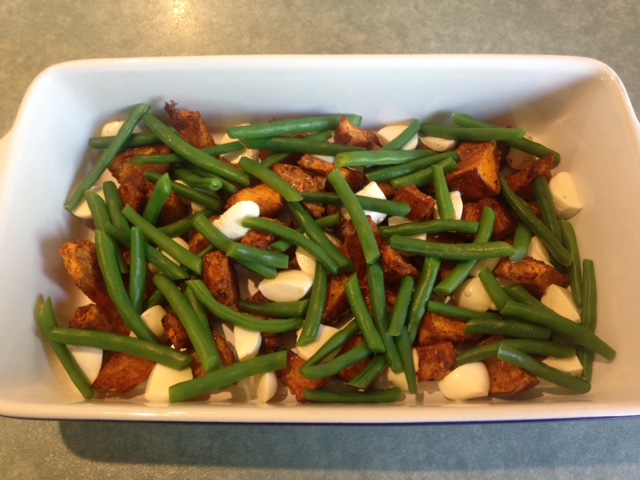
The side dishes included a couple of the usual suspects and a room-temperature salad, comprising: small skin-on pieces of roasted pumpkin, tossed in baharat an hour before being slowly roasted with some olive oil; green beans, blanched for just under three minutes and cut in half; pieces of bocconcini, tossed with the warm pumpkin to soften them; and a light dressing of homemade vinaigrette.

The three colours of this salad match those of the national flag of the Republic of Ireland, which was commemorating the 100th anniversary of the Easter rising against British rule. For me, descended from a poor Irish woman, Eliza Bridget McManus, this was a happy coincidence. Sláinte mhaith!

Posted in Cooking | Tagged , , , , , , | Leave a comment

Baked salmon with a savoury filling

I had a birthday recently, so Maggie suggested that I select a special dish for dinner. I suspect she was hoping for something that approximated pepper steak. It turned out to be a case of “be careful what you wish for”! Or, so she feared; not big on fish, my wife!

Although our recipe collection’s title for this dish is a little bland, I think it is quite an interesting way to prepare Atlantic salmon, with dinner party qualities. We only make it every couple of years but, based on the variations I introduced this time, it might appear on our dinner table more often in future.

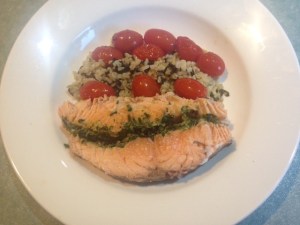
Salmon baked 8

Perhaps I could indulge myself and give it a French name, say ‘Deux filets de saumon appariés, farcies aux herbes et cuite au four’.

Ingredients

2 lemons
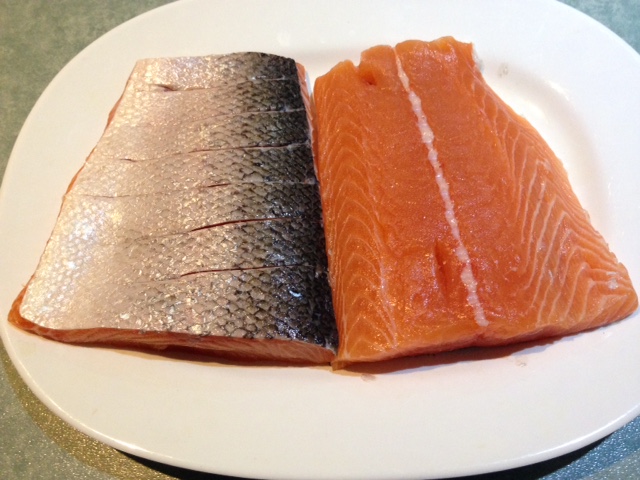
2 x 600g fillets of salmon, skin on, bones removed (ideally, the fillets will be similar in size, taken towards the tail end and from opposite sides of a whole fish)
salt and pepper
¼ cup capers (optional)
2-3 cloves garlic, peeled
8 anchovy fillets
rind of ¼ of a preserved lemon
2 handfuls of fresh herbs, eg parsley, chives, basil, tarragon, dill
pepper
30ml olive oil
olive oil, extra for glazing

Method

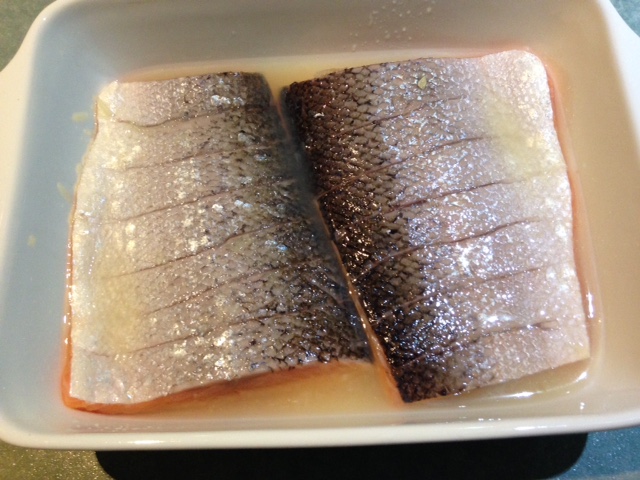
  1. Grate the lemon rind of one of the lemons and set aside. Juice the lemons and pour juice into a dish wide enough to hold both salmon fillets.
  2. Score the salmon skin with a sharp knife at 2cm intervals and place the fillets in the lemon juice for 15 minutes, turning after 10 minutes. Remove fillets, pat dry with paper towel and season with a little salt and pepper.
  3. Preheat oven to 180C.
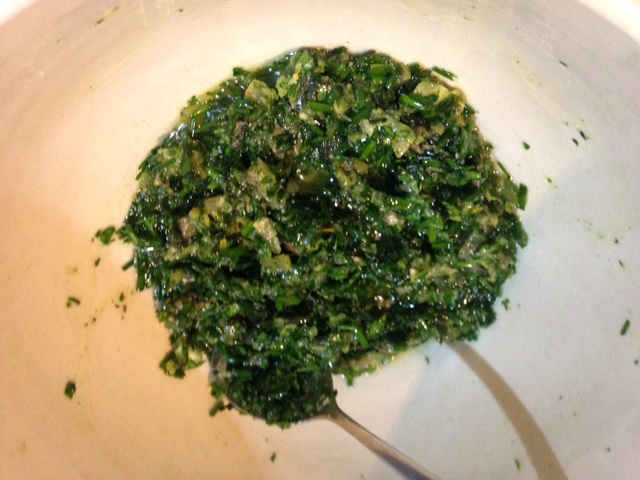
  4. On a chopping board, squash the capers, if using, with the flat of a knife. Place garlic, anchovies, preserved lemon and herbs on the same board and chop all ingredients finely, mixing as you go. Tip into a bowl and combine with lemon zest, several grinds of pepper and the olive oil to make a thick paste.
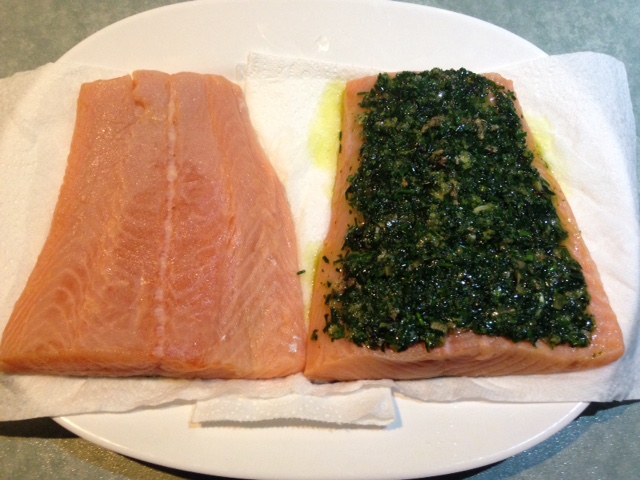
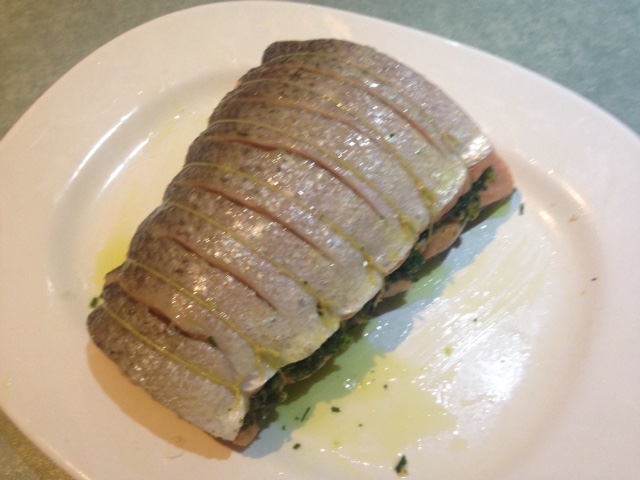
  5. Lay the salmon fillets side by side, flesh side up, spread paste over one fillet and place the second fillet over the other with the skin side up. Gently secure the fillets together with kitchen string.
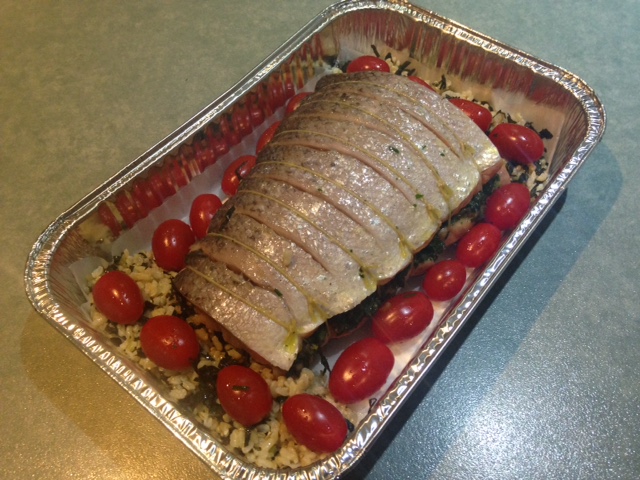
  6. Place on a sheet of baking paper in a large shallow baking dish, brush with some olive oil and season well. Bake for about 25 minutes, turning after 15 minutes.
  7. Allow to cool slightly. Using a sharp, serrated knife, slice into 6 to 8 portions.
So, to the variations. We excluded the capers, on the basis that we don’t use them often enough any more to warrant having some in our fridge; this allowed the herbs to shine brightly. And I placed some well-cooked brown rice and cherry tomatoes around the base of the ban; starch and tomato, in some form, are both natural partners for this dish.

Any leftovers make a superb topping for an open sandwich on a light rye bread or similar, as I am enjoying this weekend.

Salmon baked 1   Salmon baked 2

Salmon baked 3   Salmon baked 4

Salmon baked 5   Salmon baked 6


Posted in Cooking | Tagged , , | Leave a comment