Garlic, herbs & lemon: all very veal-friendly

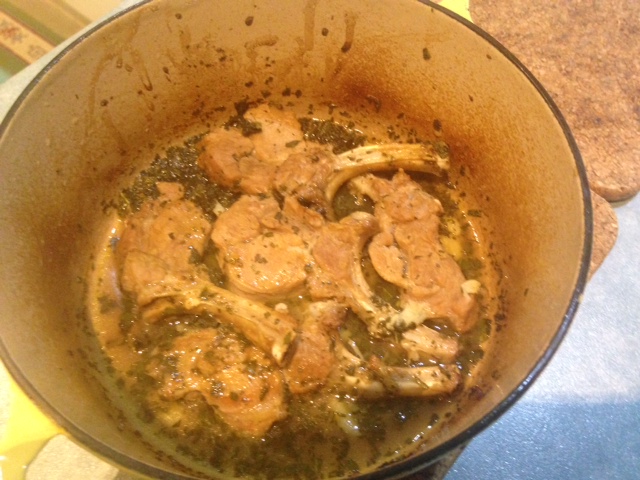
There are at least ten veal dishes in our cooking repertoire; this one is the seventh to appear in a blog post. We first made this dish in 2012, the year we bought a whole calf and took the opportunity to test several new veal recipes. This one was inspired by some appealing but typically casual instructions in Maggie Beer’s book. Her dish involved veal shanks; one of our modifications was to use veal neck chops.

Veal herb lemon 6

The recipe is simple enough but it produces a very satisfying dish. Although the recipe specifies neck chops, you could probably use any cut of veal on the bone; this time, we made it with cutlet-style pieces that Maggie cut from a rack.

Ingredients

4 veal neck chops
3 sprigs rosemary (leaves only), chopped
1 sprig thyme (leaves only), chopped
10 sage leaves, chopped
10 individual cloves of garlic, peeled and sliced thickly
2 tbsp verjuice
100ml veal stock (or chicken stock)
1 small piece preserved lemon (skin only), chopped

Method

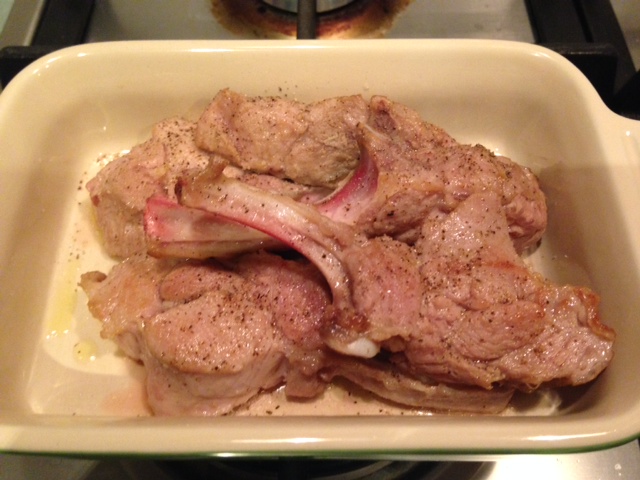
  1. Gently brown the chops in a little olive oil in an enamelled cast iron casserole. Set chops aside.
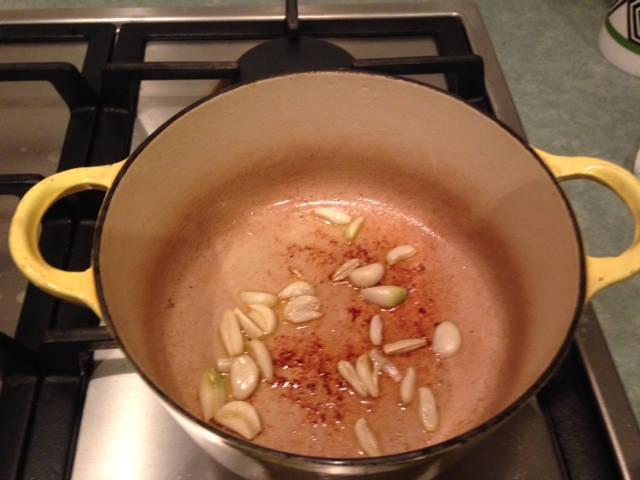
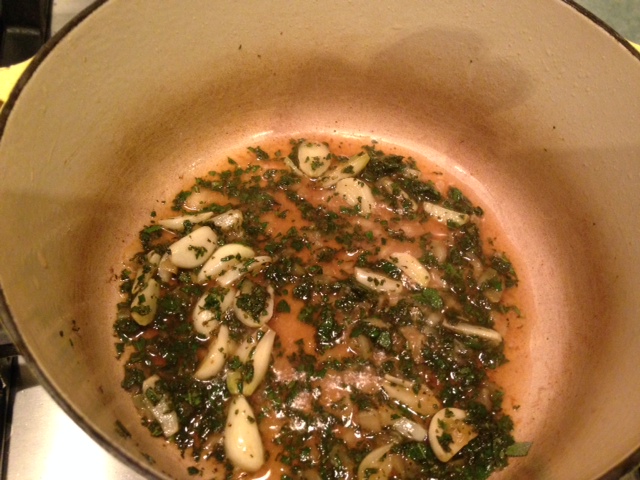
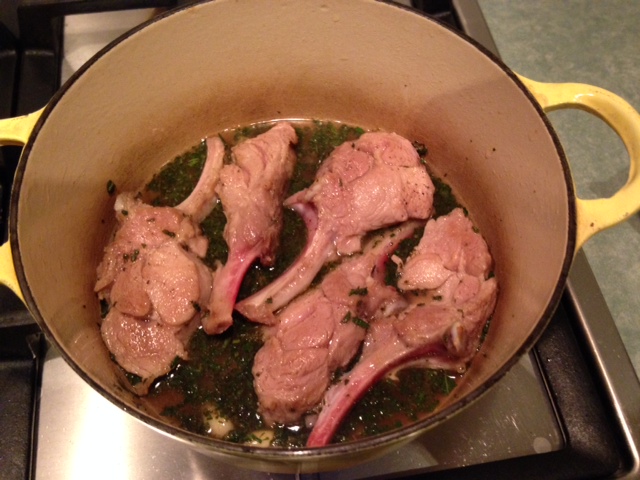
  2. Add chopped garlic to the pan, and cook, stirring, for 2 minutes; add herbs and cook for a further minute. Deglaze the pan with verjuice. Add stock and preserved lemon, stir well; add veal chops and any resting juices. Turn chops to coat well and bring the dish to a simmer. Put the lid on the casserole and place in an oven pre-heated to 150C. Reduce oven temperature after 10-15 minutes if the liquid is simmering rapidly.
  3. Cook for about 1 hour, turning chops once or twice, and adding a little water if the sauce is drying out.
  4. When the veal is nearly tender, remove casserole lid and bake for a further 10-15 minutes to caramelise the meat.

Veal herb lemon 1   Veal herb lemon 2

Veal herb lemon 3   Veal herb lemon 4

Veal herb lemon 5

Posted in Cooking | Tagged , , , | Leave a comment

Barossa Valley visit: the wines

Virtually all of the alcohol that Maggie and I imbibe comes from wine; the occasional exceptions are our homemade limoncello and, for Maggie, a gin & tonic in summer. We like wine, both as a companion to food and, depending on the style, as a beverage in its own right.

At home, we mostly drink inexpensive wines; ‘quaffers’ as they are known in Australia. But when we travel, we happily spend more on wine. Enjoying quality wines made in other countries or Australian wine regions is one of the main types of experience we seek as travellers. Food, culture, history, sightseeing and meeting people from other countries are also important to us.

So, while we were in the Barossa, we drank local wines before and with our meals; and we  purchased bottles to take home from most of the winery cellar doors we visited. Just ten bottles, plus two half-dozen cases that were freighted to us after we returned home.

In telling you about these wines, I will also share some observations about my own association with wine, and the history of both the Barossa Valley and the Australian wine industry.

White wines
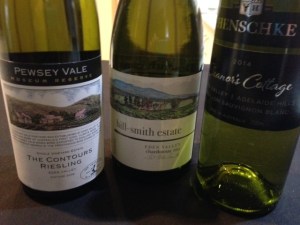
White wines - old faves, new styles

White wines – old faves, new styles

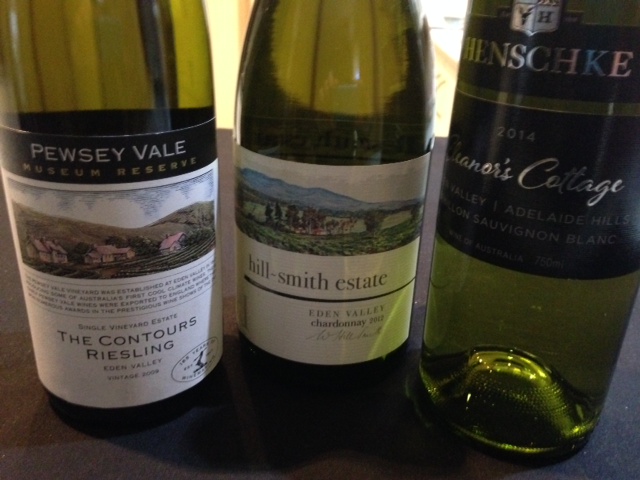
Pewsey Vale 2009 ‘The Contours’ Riesling
Well before I drank alcohol in any other form, my parents introduced me to wine, to be consumed as part of a substantial meal. The wines that they drank were mainly dry riesling or medium-to-full-bodied shiraz and virtually all of it was from South Australia. Most of the riesling came from the Eden Valley, immediately to the east of the Barossa and one of three Australian regions responsible for some of the world’s best riesling wines. Pewsey Vale was a regular guest at our dinner table. This one was given five years of bottle-ageing before being released in September 2014. It will age well for many more years but, having tasted it at the Yalumba winery, we won’t let it live much longer!

Hill-Smith Estate 2012 Chardonnay
This is another wine made by Yalumba from fruit grown in the Eden Valley. There, in a climate cooler than the Barossa’s, chardonnay can be made in a crisp and elegant style. 

Henschke 2014 Eleanor’s Cottage
This wine symbolises how much the wine industry has changed since I first drank wine. It is a blend of semillon grown in the Eden Valley and sauvignon blanc grown in the Adelaide Hills. The latter region did not exist when I was a teenager and there were few, if any, sauvignon blanc vines planted in Australia; ditto for chardonnay. Many other producers in the long-established regions now grow or buy fruit from some of the newer regions – many of them having a cool climate – in order to cater for a consumer market that has expanded and diversified dramatically over the last few decades.

Red wines
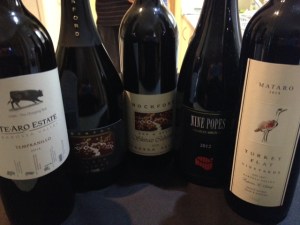
Barossa Reds: more than shiraz

Barossa Reds – more than shiraz

Tearo Estate 2014 Tempranillo
For much of its history, most of the grape varieties grown in the Barossa Valley were chosen for the production of brandy spirit, sherry and port styles of wine, and table wines comparable to the great wines of Bordeaux, Rhone Valley and the Rhine. The vast influx of European migrants and the internationalisation of Australians’ wine awareness has stimulated the planting of new varieties, including some that better suit the flavours of Mediterranean food. Tempranillo, the great Spanish red variety, is one of these.

Charles Melton 2012 Nine Popes
Year in, year out, this is the benchmark for an Australian wine made from grenache, shiraz and mataro (mourvedre), the style made famous in the southern Rhone appellation Chateau neuf du pape.

Turkey Flat 2014 Mataro
A rare thing – a single variety mataro wine. Mataro ripens well in the Barossa’s warm climate but most of it is blended with shiraz and grenache. We now have a mission to cook food that will warrant opening our bottle.

Rockford Black Shiraz
Sparkling shiraz is a wine style that is unique to Australia. As with sparkling white wines, the quality varies from ‘cheap and cheerful’ to ‘how good is this’. This one has been  a personal crusade for Robert O’Callaghan and he has produced a wine that inspires words of reverence. You won’t find it a liquor store – you have to make a pilgrimage.

Rockford 2012 Rod & Spur
The blending of shiraz and cabernet sauvignon is another Australian gift to wine lovers. At the quality end of the market, it has become less common in recent times, partly due to the lust of well-heeled consumers for single variety wines. This, my favourite Rockford wine, shows just how well the two major red grapes of France can work together.

Fortified wines
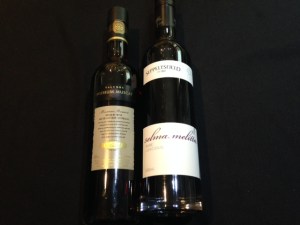
Fortifieds - a long tradition

Fortifieds – a long-lived Barossa tradition

Yalumba Museum Muscat
Although the fruit for this wine would have been grown elsewhere in the south east of Australia, it is a style that reflects the long Barossa tradition of producing fortified wines.

Seppeltsfield Selma Melitta
By agreement with the European Union, the words sherry and port no longer appear on the wonderful fortified wines made using fruit grown in the Barossa Valley from Spanish and Portuguese grape varieties. This would once have been called a sweet sherry, but don’t make the mistake of thinking it doesn’t belong in this post.

Penfolds Specials
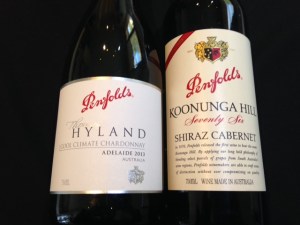
Wines 4

After our ‘Grange’ tour of Magill Estate, our guide encouraged us to consider a couple of special wines, one of them being sold at a ‘special’ price, the other, a wine that is only released at the cellar door.

2013 Koonunga Hill Seventy Six
The first wine with a Penfolds Koonunga Hill label was made in 1976, using leftover parcels of very good quality shiraz and cabernet. From 1977 onwards, the quality of the wine was dropped back to a level that, while still acceptable, allowed it to appeal readily to consumers who could not afford a premium wine but still wanted a wine with dinner table virtues. On this basis it was very successful, so much so that other varieties were progressively added to the Koonunga Hill range. From the 30th anniversary of the original release, a more refined and complex wine than the standard Koonunga Hill shiraz-cabernet has been produced each year and given the name ‘Seventy Six’.

2013 Thomas Hyland Chardonnay
Penfolds introduced the Thomas Hyland range about 15 years ago. I believe the company was aiming to offer a wine that could compete in the busy $20-$25 range, sitting below Penfolds renowned Bin range but above Koonunga Hill. It never really took off – most of the Koonunga Hill wines over-deliver on value and the Thomas Hyland wines were clearly inferior to their Bin counterparts; a case of ‘neither fish nor fowl’. So, the brand is being discontinued and sold off at cellar door at a 50% discount. Lucky us!

There were several other wines that we tasted and enjoyed, but didn’t purchase; some, because they are widely available near our home; others because, sometimes, you have to say “no”. These wines included: Yalumba 2013 ‘The Virgilius’ Viognier (Yalumba’s winemaker has made it her personal mission to make viognier in an elegant style, with great success); Charles Melton 2014 Rose of Virginia, the most luminously-coloured rose made in Australia, using pinot meurnier fruit; Turkey Flat 2015 Rose, more than 90% grenache but parcels of four other red grape varieties; Rockford 2014 Alicante Bouchet, another rose, made from the unusual grape of the same name; and last, but definitely not least, Rockford 2011 Basket Press Shiraz.


Posted in Travel, Wine | Tagged , , , , , , , , , | Leave a comment

Barossa Valley visit: stunningly delicious lunch

The dining highlight of our three-day visit to the Barossa Valley was lunch at fermentAsian, a restaurant that specialises in the flavours of South East Asia, applied to local ingredients.

The chef, Tuoi Do is Vietnamese and the sommelier and maitre d’ is her husband, Grant Dickson. They met in Singapore, when Grant was there for a music gig. Ah, ain’t love grand?

They opened the restaurant about four years ago, partly to provide Grant’s colleagues in the wine industry – he worked at Rockford – with a local option for enjoying good quality South East Asian food. Tuoi Do had never cooked commercially before but, within 18 months, she had been crowned Best Chef in South Australia!

The quality of the cooking is matched by the extensive list – more than 70 pages at last count –  of food-friendly wine, saki, spirits, beers and more. Some of them are well-established favourites, many others are rarely seen on Australian tables. The list is not strait-jacketed by local loyalty; rather, it has the breadth, quality and in-the-know curios that remind you that the Barossa is still one of the world’s major wine regions.

Everything about the food was profoundly satisfying – appearance, quality of ingredients, flavours, textures, balance of salt sour and sweet and anything else you could wish for. fermentAsian does not serve so-called typical Barossa Valley food, but what it does provide, is exactly the quality of dining experience you would hope for in such a region.

Here is a quick account of what we ate:

Ferment 1   Ferment 2
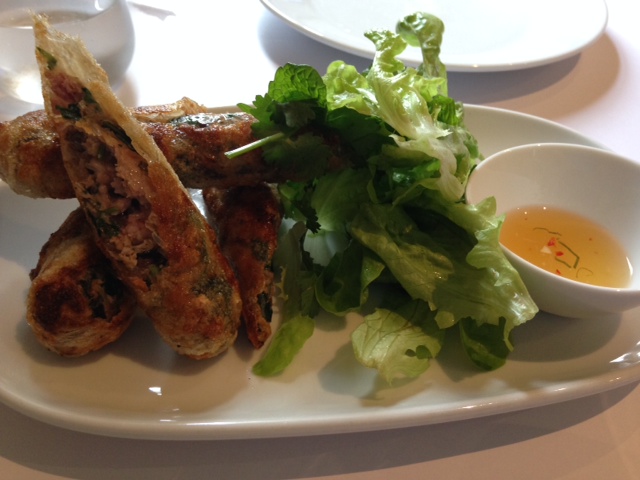
Nen Ha Noi (Hanoi spring rolls), followed by Diep nuong hanh va ra thom (spiced scallops with shallots & herbs)

Ferment 3   Ferment 4
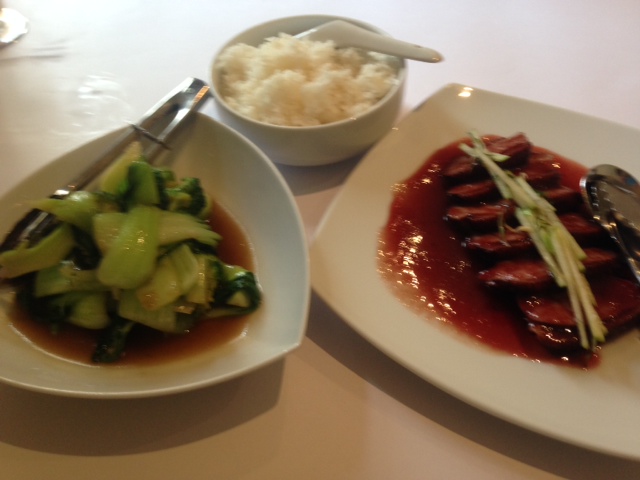
Chim vut vol goji (grilled quail with gojiberries and herbs), followed by duck breast with a spicy plum sauce, Asian vegetables and jasmine rice

Ferment 5   Ferment 6
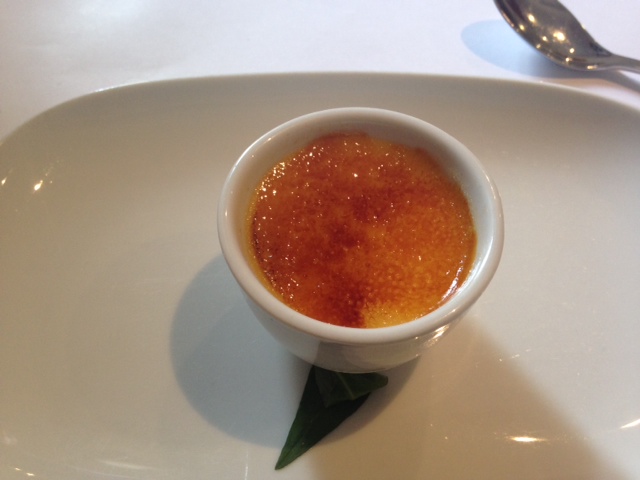
Lime brulee for Maggie and, for me, tapioca with orange & Szechuan pepper ice cream

Stunning!

Posted in Eating out, Travel | Tagged , , | 1 Comment

French onion soup: a winter’s tale

French onion soup is a dish that is very appealing during winter – rich, thick and served piping hot – but its virtues find less favour in warm weather. In our home, it is made alternately with pea and ham soup, another winter warmer.

FO soup 6

In the 1960s, with French food in the ascendancy around Melbourne, French onion soup appeared on more restaurant menus than there were chefs who knew how to prepare it. Based on our experience in the northern winter of 2009/10, this could be true of the soup’s homeland today; a case of tourists’ appetites overwhelming local culinary capacity.

I am pretty much redundant when it is cooked in our kitchen – it is Maggie’s recipe and she has the contact lenses that come in handy when slicing so many onions! However, she does enlist the input of my palate before she finalises the seasoning.

We have given it the moniker ‘FO soup’ but there is nothing faux about the end result. It’s really delicious!

Ingredients

1 kg brown onions
90g unsalted butter
1 tsp salt flakes
1 tbsp (20ml) sugar
2 tbsp plain flour
1 cup white wine
1¾ litres beef stock
2 tbsp brandy

FO soup 1

Method

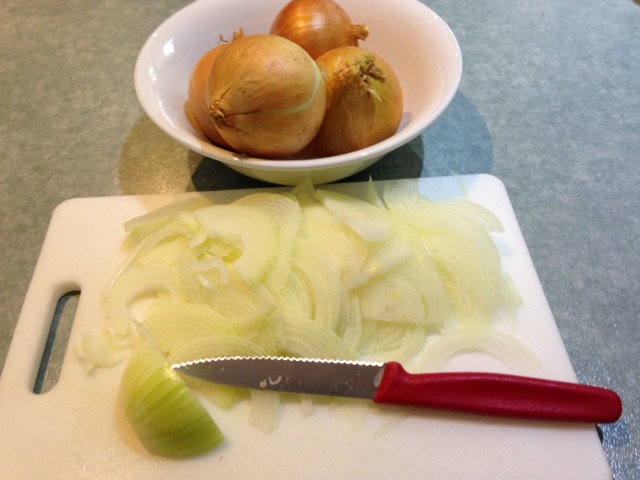
  1. Peel and halve onions and cut into fine slices, discarding any woody cores
  2. Melt butter in a large pan, add onion and salt flakes and cook gently, stirring occasionally, until the onion is deep gold and soft (this will take at least 15 minutes).
  3. Add sugar and cook until the onion is beginning to caramelise and is light golden brown in colour.
  4. Add plain flour, cook for 2-3 minutes. Then add the wine, stock and brandy. Bring to the boil, stirring to integrate the flour with the liquids. Cover and simmer for about 1 hour. Adjust seasoning to taste.
  5. Serve with slices of bread stick which have been lightly toasted, then topped with grated Gruyere cheese and placed back under the griller until the cheese begins to melt. Place pieces of the toast in warm bowls and ladle the soup over the top..

FO soup 2   FO soup 3

FO soup 4   FO soup 5


Posted in Cooking | Tagged , | Leave a comment

Barossa Valley visit: heart of the region

Although the morning wind was chilly, the forecast for our last full day in the Barossa Valley promised the mildest weather of our visit. On the first two days, we had explored all the outer districts of the region; on this fine day we would focus on the region’s heart.

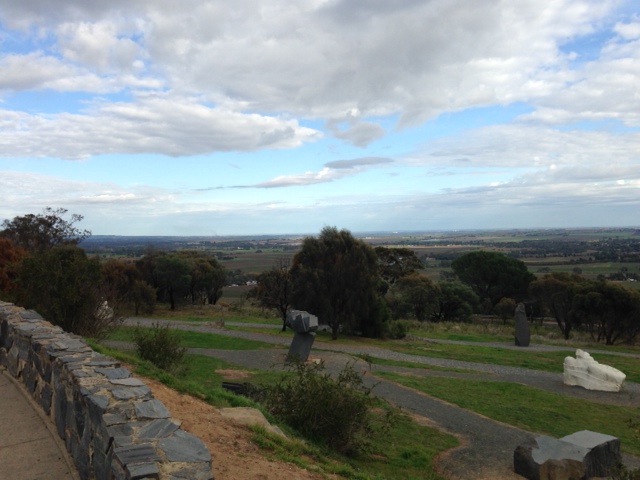
We had booked a table for lunch at a restaurant in Tanunda. Prior to that, we wanted to visit two particular wineries but their cellar doors would not be open until 11am, so we began with a visit to Menglers Hill lookout and sculpture park.

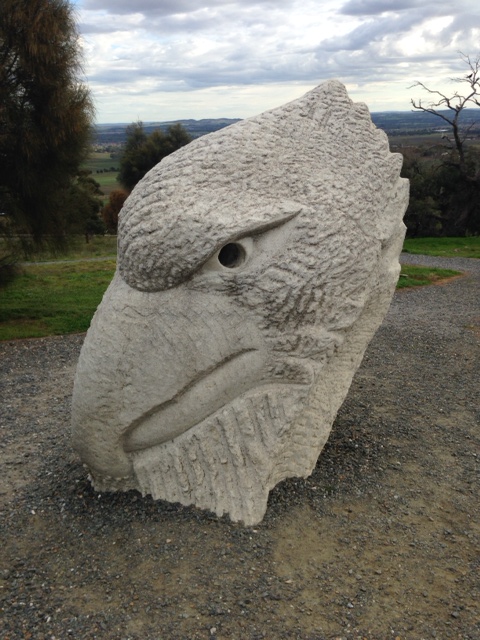
This is a frequently-visited spot, due to its ready accessibility compared to other lookouts in the region. The view across the valley is lovely, varying according to season, weather and time of day; it was green, windy and with even-but-dull mid-morning light for our visit. The sculpture park – dating from an international gathering of sculptors in 1988 – is moderately interesting, but the experience would be much richer if more information about the works was provided; our visit to ‘the Whispering Wall’ was exemplary by comparison. The site as a whole felt a little neglected  but, with the right weather, a picnic hamper and plenty of good company, it might come to life.

Lookout 5   Lookout 2

Lookout 1   Lookout 4

It was still well before eleven o’clock, so we did some exploring by car, making good use of my, ahem, map-mis-reading expertise. The cellar door at the Turkey Flat winery was already open, so we added that to our itinerary. Turkey Flat makes one of the best rose-style wines in Australia; it is widely available, so we didn’t need to add it to our luggage for the flight home. However, we did buy a bottle of their single-variety Mataro (Mourvedre), which is usually blended with Grenache and Shiraz to make the southern Rhone valley style of wine that is known famously as Chateau neuf du pape.

From Turkey Flat, it was a short drive to the winery of Charles Melton. He is so devoted to the Rhone tradition that he calls his GSM blend ‘Nine Popes’. Having spent Christmas Eve 2009 in Avignon – home town of the nine actual Popes – and visited a nearby Rhone winery, we just had to buy a bottle; besides, it did taste fabulous.

Melton 1

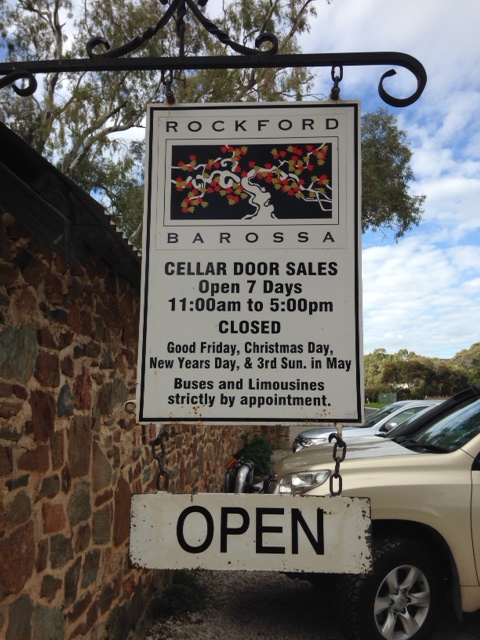
And then it was time for me to introduce Maggie to Rockford, established more than three decades ago by Robert ‘Rocky’ O’Callaghan. If you are one of those depraved or deprived people who like wines that taste as if they were made by an corporate bean-counter, don’t bother visiting Rockford – the wines will be too ballsy and hand-hewn for your palate. Every wine in their range is distinctive and most of them make their buyers want to hold a dinner party, from sunset ’til late, just so they can open some bottles of Rockford and share them with good friends.

In truth, my own love affair with Rockford had ebbed over the last ten years or so, partly for budgetary reasons; I had also allowed it to become an innocent victim of my mute protest against the over-hyped, high-alcohol style of wines that were being produced in the Barossa region to pander to American wine critics and their fawning readers. Happily, the cellar-door crew at Rockford, supported by Maggie, have forgivingly but firmly brought me back into the fold. Geez Louise, the wines tasted bloody good!

Rockford 2   Rockford 1

It was time for lunch and the people at Rockford assured us we were in for a treat.

We had set aside the middle of our third day for the premium dining experience of our time in the Barossa. We didn’t fancy a close-to-winter-soltice road trip for an evening meal; for day one, we had an early start and lack of local knowledge; and the Grange tour was booked for 1pm on day two. By the end of our first day, we had been told of two restaurants renowned for fine-dining excellence; we chose the one that gave us an a la carte menu and food that differed markedly from what we cook at home.

I will write a more detailed post about our lunch at fermentAsian (say it quickly to pick up the wine industry pun), where we had a wonderful meal infused with the Vietnamese heritage of the chef and accompanied by wines from the amazing – and much awarded – wine list put together by her Australian husband. Here are two photo-teasers:

Ferment 2   Ferment 6

By the end of our fermentAsian experience, our palates had had a hectic day and our brains were a little travel weary. We returned to our room at the Novotel, rested, freshened up and went out for one last exploration.

We drove south to Lyndoch, to visit Chateau Yaldara, which had been established in 1847. We knew nothing of its wines but we were keen to see the old buildings and large rose garden, as described in the regional guide we had found in our room at the Novotel. Unfortunately, the guide had been published before a Chinese company acquired the property in July last year. We found no evidence of an operating winery, nor any signs pointing the way to the rose garden.

Update: More evidence of my declining map-and-guide-reading skills: the winery with lovely old buildings and the rose garden is Barossa Chateau and it is still very much operational. Thank you to the Barossa Visitor Information Centre for alerting me to this. The other information about Chateau Yaldara is pretty much correct.

So, we turned around and drove north to the Jacob’s Creek Visitor Centre.

I remember the original Jacob’s Creek wine fondly, a blended red wine produced by Orlando Wines at a reasonable price; easy to drink but with enough character that you could serve it to dinner guests without blushing. Since then, it has become a ‘global’ brand, killing off the Orlando name along the way. So, I shouldn’t have been surprised that this so-called Visitor Centre had a very ‘corporate’ look; even the the display of information about the company’s history lacked character. Yes, it was late in the day and our palates were still infused with the flavours of our wonderful lunch, but the wines that we tasted were a bit lean and mean for our liking.

When we returned to our room at the Novotel, the mild afternoon was lingering and the breeze had abated. So, we set ourselves up on the deck and whiled away the best part of an hour, sipping wine and taking in the scenery.

Novotel 4   Novotel 3

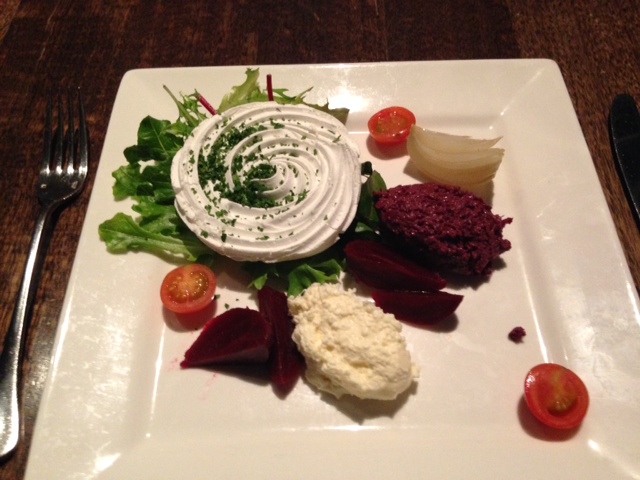
We only needed a light dinner, so we shared half a dozen fresh Coffin Bay oysters and two entrees – stuffed zucchini flowers with a green chilli cream, and herb meringue with a piquant tapenade. Most of the food we had been served in the Novotel’s restaurant had been satisfactory; this meal was particularly good and a fine way to end a wonderful Barossa Valley visit.

Novotel food 2   Novotel food 1

There will be two further posts about our time in the Barossa – one about our lunch at fermentAsian, the other about the wines we took back to Melbourne.

Posted in Travel, Wine | Tagged , , , , , | Leave a comment

Barossa Valley visit: Williamstown and Magill Estate

After a pleasant evening and a comfortable night’s sleep, we woke to the prospect of a warmer day, with less wind-chill factor. We took our breakfast in the resort’s restaurant, seated by the window with a grand view across the valley.

View from our breakfast table

View from our breakfast table

Our plans for the day’s touring were built around an appointment we had made to visit the iconic Penfolds Magill Estate, located only 7km from Adelaide’s CBD; this was locked in for 1pm. It would take about one hour to drive to the winery, so we identified some sights we could take in en route.

Our first destination was a lavender farm. There are many lavender farms in Australia but this would be a first for us. Our route to the farm took us from a point east of Lyndoch – a town at the southern end of the region – along a windy and well-made dirt road; we saw hundreds of magnificent Red Gum trees. When we reached the farm, we could clearly see that it is a shadow of its former self; even the interpretive material has fallen by the wayside. The contents of the farm shop were brighter, with a wide variety of goods for all ages and interests; Maggie bought a brooch – her travel memento of choice – with lavender emblems. So, not a memorable visit but nor was it a waste of our time.

Lavender 2   Lavender 3

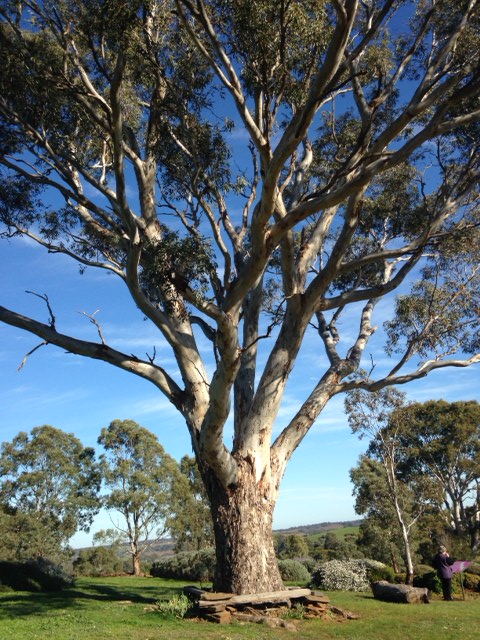
Mighty gum tree

Mighty Red Gum tree at the lavender farm

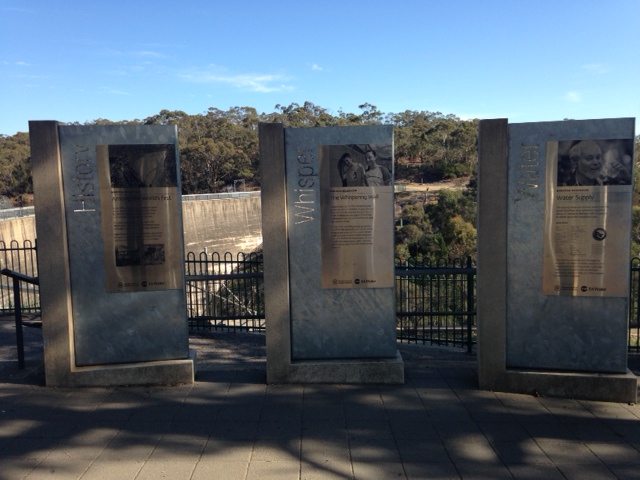
Next, to what has become known as The Whispering Wall, a dam that was built at the beginning of the 20th Century to help provide safe drinking water for the region’s growing population. The main wow factor here is being able to say something not at all loudly and then have it heard at the other end of the wall. And you don’t even have to be right next to the wall, as I learnt when Maggie picked up a cheeky remark I made to someone on my end of the wall! There was a small interpretive display adjacent to the car park which explained both the ‘whispering’ phenomenon and the dam’s weighty significance in the history of Australian engineering. So, a very satisfactory experience and I only got us lost twice on the way to the dam.

Whisper wall 1   Whisper wall 2

It was then only a short drive to Williamstown, at the south-eastern extremity of the Barossa Valley, with a climate that is not so warm as the region’s main wine-producing areas. We tasted some evidence of this difference at a local winery and then took the proprietor’s advice to have a late-morning coffee at Bar 41, reputed to serve the best coffee in the region. Indeed, the coffees were delicious, as was a freshly made apple cup cake. I was feeling unsure about the balance of our drive to Adelaide so I asked for, and received, some very detailed directions.

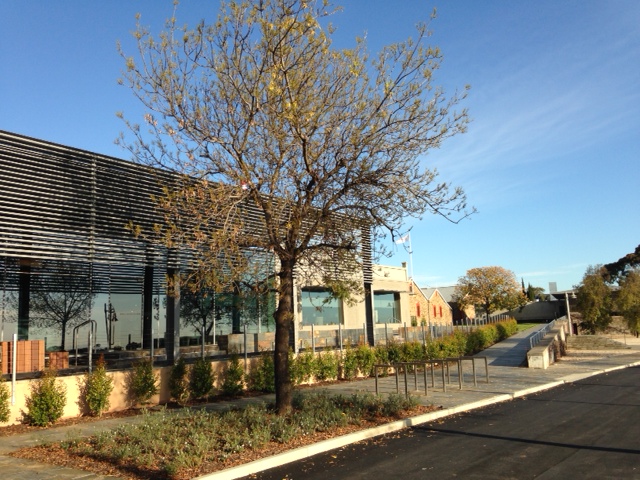
After a winding and scenic drive, we reached the outskirts of Adelaide. I then guided Maggie to within a couple of kilometres of Magill Estate, which we eventually reached on the dot of 1.00pm, after, ahem, a couple of unremarkable wrong turns. Magill Estate was settled by English migrants, the Penfold family, in 1844, when Adelaide was still a small town. From here, the business prospered and later expanded into the Barossa Valley, where its winery and main vineyards have been based for many years. Over the last few decades, as Penfolds became the most famous wine producer in Australia, the original property was treated with benign indifference but, more recently, it has been returned to an updated version of its former glory, with a magnificent new cellar door and a restaurant that is currently ranked as the best in South Australia.

Our travel package included what is called the ‘Grange Tour’, in honour of Australia’s most prestigious wine. Over two hours, on a sunny winter’s afternoon, we had the peak winery experience of our lives. For the first hour or so, our exclusive guide took us through the main heritage buildings and gave us a detailed account of their part in the Penfolds story; this included the underground ‘drives’ and Bin rooms (as in Bin 28). Then we were taken to a lavish room within the modern cellar door facility, provided with a gourmet-cheese platter and guided through a tasting of six of Penfolds most important wines, concluding with the 2010 Grange. And, yes, it was superb. Afterwards, we spent a brief time in the main tasting area, which is tastefully furnished, warm, vibrant, with gentle acoustics and in harmony with the balance of the property. We ordered two half-cases of wine – costing a total of less than 25% of one bottle of Grange – to be freighted to our home.

What a great day of touring!

Magill 3   Magill 1

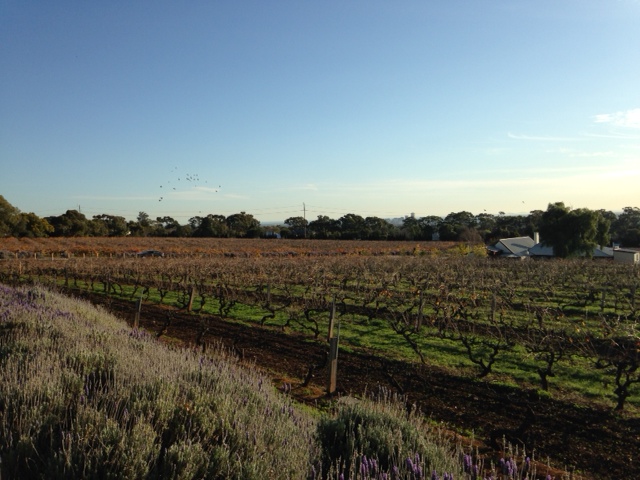
Old shiraz vines, 7km from Adelaide CBD

Old shiraz vines, 7km from Adelaide CBD

Posted in Travel, Wine | Tagged , , , , | Leave a comment

Barossa Valley visit: from Henschke to Seppeltsfield

This is the first in a short series of posts about our recent visit to the Barossa Valley, Australia’s most famous wine region.

We had identified the Barossa as somewhere we would like to explore together one day. Maggie had only ever been there for a few hours, so she was keen; and I had fond memories from two previous visits – scenery, riesling and a particularly idiosyncratic winery – so I was up for it. Then Maggie spotted a package deal through Flight Centre, offered at a budget price that reflected the low season that kicks in for the southern half of Australia after the June long weekend. So, we went.

Our first day started with an early plane flight to Adelaide and, by 10am, we were in our rental car and well on our way to the Eden Valley, a smaller but significant wine region immediately to the east of the Barossa. Eden Valley is quite high in altitude, which lends itself to the production of riesling wines that age well. and to the long slow ripening of shiraz grapes. However, the region is sparsely populated, so much of the fruit grown there is taken to a winery in the Barossa to be processed. The main exception to this is Henschke.

The Henschke family has been making wines commercially since the late 1860s and their riesling and shiraz wines have been renowned for as long as I can remember. Indeed, Henschke riesling was one of the first wines to which I was introduced by my parents, usually to accompany a dish of scallops or whiting. So, you can imagine my disappointment when we arrived at the cellar door and were told that their riesling was sold out. However, we did taste a range of other white wines – some made from fruit grown in the Adelaide Hills, where sauvignon blanc and chardonnay both perform better than in the Eden Valley.

Cellar door at Henschke

Cellar door at Henschke

It was a cold morning and we had been up for several hours, so we needed to eat something warming and substantial. The cellar door staff pointed us in the direction of Roaring 40s, a relaxed diner much awarded for its pizzas. A short drive took us down to Angaston, and we were soon seated and ready to order. We were tempted by several of the pizzas, but chose the one with half-a-dozen locally-made smallgoods, thinking it would be a good introduction to the flavours of the Barossa. It was delicious, one of the best pizzas we had ever had. One small pizza shared, a glass of in-house aged red wine each and we left very satisfied.

Pizza

Angaston is one of five small towns in the Barossa and used to be famous for the production of dried fruits under the Angas Park brand; alas, the factory and associated shop closed a couple of years ago as new owners moved to rationalise and centralise their production facilities. But Angaston is still famous as the home of Yalumba Wines, the oldest family-owned winery in Australia, and that was our next destination.

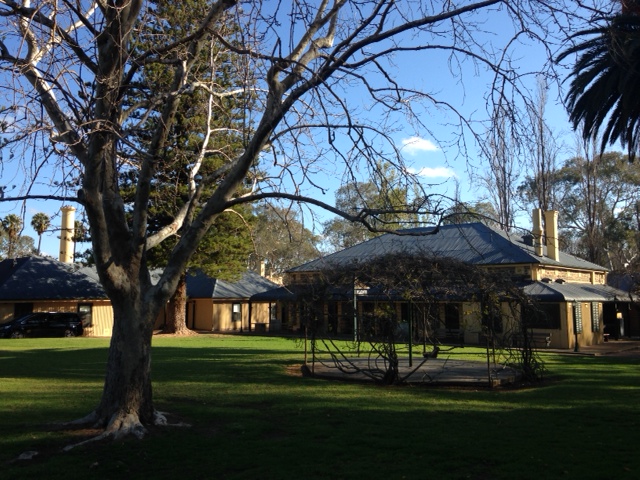
In the afternoon of a sunny winter Thursday, outside school holidays, it was peaceful and quiet at Yalumba. After admiring the gardens and well-maintained old buildings, we had an unhurried wine-tasting, provided by a friendly and knowledgeable member of staff. We had come to taste white wines and we were not disappointed, taking away an aged Pewsey Vale riesling – another of the wines my parents favoured – and a modern chardonnay, made from fruit grown in the cooler Adelaide Hills; Maggie added a liqueur muscat, you know, just to make up the numbers for a three-pack.

Heritage is valued at Yalumba

Heritage is valued at Yalumba

From Yalumba, we headed west in search of the famous Maggie Beer farm shop. A map-reading lapse on my part – now a recurring theme when we visit wine regions – took us past the turn-off and we were soon in the location of Seppeltsfield, the birthplace of the Seppelt wine brand, established in 1851.

I had visited Seppeltsfield more than a decade earlier and had vivid memories of its many heritage buildings, some dating from the late 1860s. However, the property was sold in 2007 – the separated Seppelt brand is now based in Victoria – and the new owners have since invested heavily in a modernisation program – including a glossy, up-to-the-minute restaurant – to attract a larger number of visitors and encourage them to spend well while they are there.

Seppelts 1   Seppelts 2

Call me old-fashioned, but I prefer the look and feel of Seppeltsfield as it was. I understand the need to provide facilities and services that compete in the contemporary market but it feels a bit overdone to me; perhaps a few years of ageing will soften the edges. The overall setting is still quite special, including the Seppelt family mausoleum on the far eastern edge of the property. And the premium sherry-style wines, now made under the new ‘Seppeltsfield’ brand, still have the benchmark qualities of their predecessors.

Seppelts 4   Mausoleum 2

As the shadows began to lengthen, we retraced our steps towards Maggie Beer’s establishment, where we had a badly-needed pot of refreshing tea. Maggie Beer is a much-loved and influential figure in Australian food and cooking. Although it is many years since she closed her restaurant, she continues to produce a wide range of pates, condiments, preserves, ice-creams and cooking ingredients which are sold at the Farm Shop and distributed widely around Australia. Cooking demonstrations are held regularly in the purpose-built facility, which was also the setting for the popular The cook and the chef television series.

Maggie Beer 1   Maggie Beer 2

We returned to the main road that runs through the Barossa, headed south and soon came to Tanunda, the region’s largest town and home to the main Visitor Information Centre. We picked up a regional map and some dining-out tips and went looking for our accommodation, the Novotel Barossa Valley Resort. Unfortunately, I gave my directional instructions to Maggie based on the old map I had brought from home. I got us lost. At least three times! So, we got to see much of the western half of the valley, which was quite scenic in its own way and also illuminating for the extent of new vineyards. So, a case of the proverbial ill wind?

Happily, we did find our way to the Novotel just before sunset – it was along a windy, narrow road that would have challenged us in the dark – and we were soon taking advantage of our spacious room and the resort’s food and beverage facilities.

Posted in Eating out, Travel, Wine | Tagged , , , , , | Leave a comment

Crazy for apple pudel

I don’t know what it’s like in other parts of the world but, here in Melbourne, there is a craze for owning a dog that is a poodle crossbreed. A large part of the appeal is the coat, which doesn’t shed; as well as the high intelligence for which poodles are renowned. Thousands of otherwise sensible people are willing to pay a lot of money for such a dog. Trust me, I know how much Sara and Julian paid for Stevie – as in Nicks – our labradoodle grand-dog.

Stevie, guarding our horseradish patch

Stevie, guarding our horseradish patch

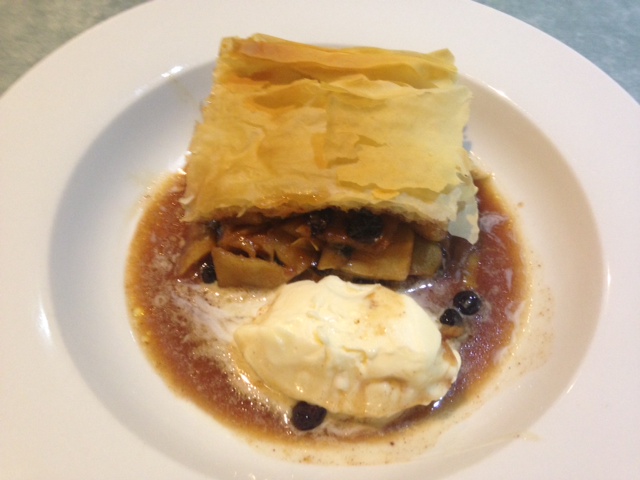
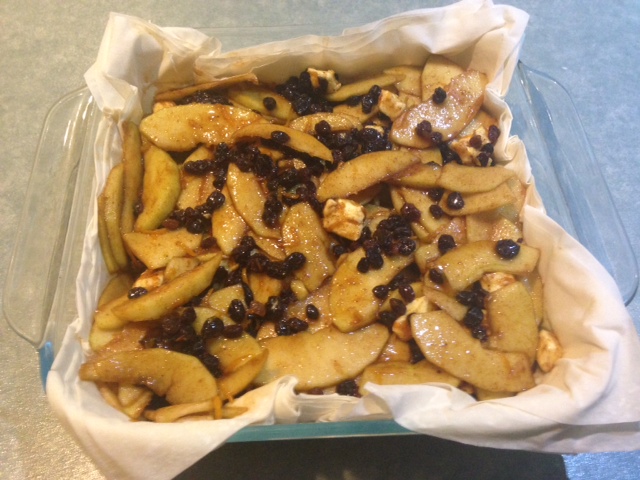
But I digress. This post is about food, not dogs; not even cute Stevie-dogs. Specifically, it is about apple pudel, a cross between apple pie and strudel. All the pleasures of a strudel but much easier to prepare, bake and serve.

Apple pudel 4

Ingredients

about 650g Granny Smith apples, peeled, cored and thinly sliced
30ml each of lemon juice and orange juice
zest of one orange
80g currants, covered with boiling water and soaked for 10 minutes
120g dark brown sugar
1½-2 tsp ground cinnamon
1-1½ tsp ground ginger
50g butter, chopped
10 sheets filo pastry
spray can of olive oil (in lieu of melted butter)

Method

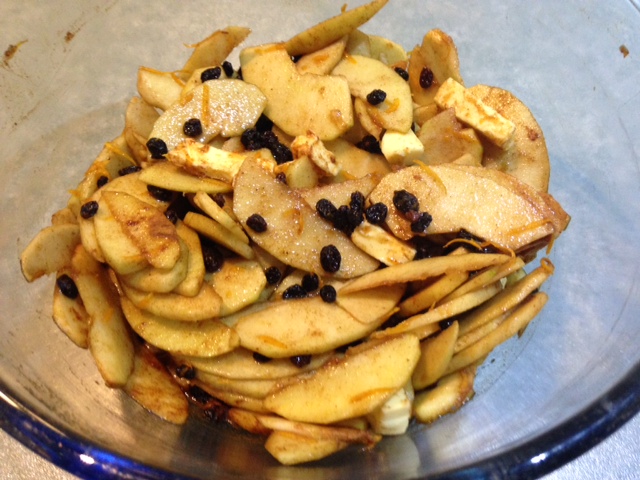
  1. Place apple slices and juices in a large bowl and stir well.
  2. Drain currants, return to soaking bowl, add orange zest, stir and leave for 5 minutes. Add to apple in bowl.
  3. Add sugar and spices to bowl and stir well. Add butter and stir well again. Set aside for 10 minutes, stirring again a couple of times.
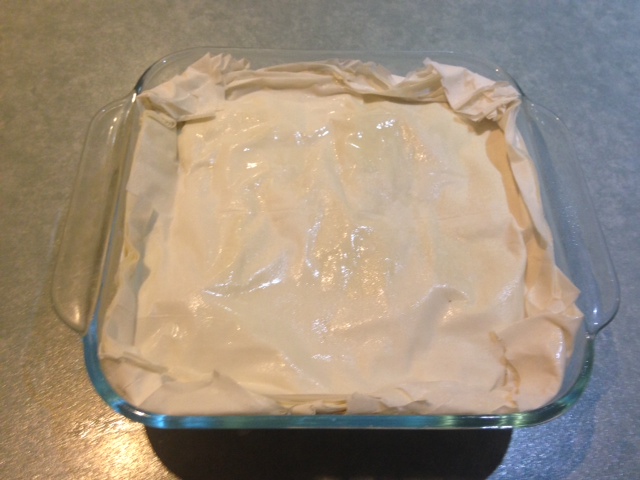
  4. Line a 20cm x 20cm baking dish with six (6) sheets of the pastry, as follows: place first sheet flat on bench, spray left-hand third lightly with olive oil, fold to lie on top of middle third, spray balance of sheet; place second sheet on top of first sheet with right-hand third overhanging, spray the overhang, fold in and spray balance of sheet. Repeat twice to produce an approximate square, 9 sheets thick (do the math!). Lift sheets into baking dish and push filo edges against the four sides.
  5. Add apple mixture to the baking dish and spread evenly.
  6. Use four sheets of the pastry to cover the apple, as follows: spray first sheet, fold in half, spray upper surface. Repeat three times; trim excess length and place sheets on top of apple mixture; tuck edges in.
  7. Place dish in a cold oven, turn heat to 150C and bake for 30-35 minutes after it reaches 150C

Apple pudel 1   Apple pudel 2

Apple pudel 3   photo

Posted in Cooking | Tagged , , , , | 1 Comment

Duck braised with sherry, verjuice, quince paste & walnuts

This is one of two recipes we use to prepare a dish of braised duck (the other one was posted last year). It began as a recipe by leading Melbourne chef Andrew McConnell, but we have made several significant changes to the original concept.

What's not to like, a lot?

What’s not to like, a lot?

Ingredients

2 premium quality Duck marylands
4 French (brown) shallots, peeled and finely chopped
40ml medium-dry sherry
2 tsp verjuice
20g fig or quince paste
140ml chicken stock
½ a fresh bay leaf or 1 dried leaf (yes, a fresh bay leaf is more intense than a dry one)
15g toasted walnut kernels, finely chopped

Method

  1. Heat a heavy-based non-stick pan until it is hot, then lower the heat.
  2. Place duck pieces skin-side down in the pan, cover 90% with a lid – this reflects both heat and duck fat back into the pan. Turn duck after 5 minutes and cook for a further 3 minutes. Transfer duck to a plate.
  3. Preheat oven to 140C.
  4. Heat a smallish flameproof casserole over low heat, add about 30ml of the rendered duck fat, add the shallot and sauté for 6 minutes.
  5. Add the sherry to the pan and let it bubble gently. Stir the verjuice and fig paste to combine well and add to the pan (if you add the paste whole it can be fiddly to integrate it with the contents of the pan).
  6. Optional step: if there are duck remnants on the base of the pan from step 2, you could use the stock to help remove them before you proceed to step 7.
  7. Add stock and bay leaf to the pan, stir well, add the duck pieces and bring to the boil over medium heat. Cover with a lid and transfer to the oven.
  8. Cook for 80 minutes, turning duck pieces after 40 minutes then again after 70 minutes. Reduce oven temperature a little if the sauce is bubbling stronger than a gentle simmer. Turn oven off, remove casserole lid and leave duck in oven for 10 minutes to gently glaze the skin.
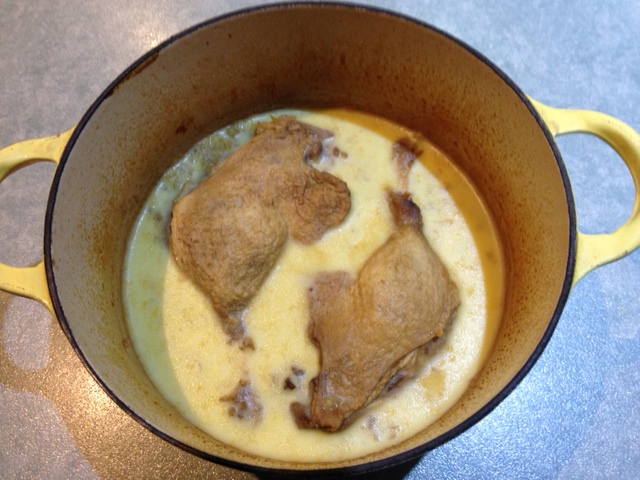
  9. Remove casserole from the oven and, when the contents are sufficiently cool, cover again and place in the fridge overnight. Next day, it will be easy to remove the duck fat from the chilled surface of the dish. (Check out the photo below, for the sake of your arteries!)
  10. Heat casserole gently on the cook-top. When the contents are heated through, transfer the duck pieces to a warm plate. Add the walnut to the sauce and stir it through to thicken the sauce slightly.
  11. To serve, spoon sauce over duck.

Duck braise walnut 1   Duck braise walnut 2Duck braise walnut 3   Duck braise walnut 4


Posted in Cooking | Tagged , , , , , , , | Leave a comment

Deliciously easy braised veal cutlets

Of all the veal dishes we cook, this is probably the easiest. The preparation time is short, the method is simple and it doesn’t take long to achieve a delicious result.

Veal mush port 5

The only tricky bit is acquiring the correct cut of veal. Many butchers sell veal shanks, for slow braising, and veal escallops, for making schnitzel and veal parmigiana. Far fewer offer other cuts of veal on a regular basis. Once you find a butcher that sells a wide variety of cuts of veal, you still have to make sure that you are given the correct meat for this recipe.

I call them ‘cutlets’ because, as is the case with lamb cutlets, they are cut from a ‘rack’. But, at some butchers, they might be called ‘chops’ or they might only be available as a rack. (In the latter case, it is ridiculously easy to divide the rack into cutlets with a sharp, straight-edged knife, as Maggie is always happy to do.) In fact, our preferred supplier of veal uses the term ‘cutlets’ for the cut we use to make our veal chops Dijonnaise, even though it looks more like a t-bone than a cutlet.

Anyway, once you have your cutlets, the rest is a doddle, as follows.

Ingredients

4-6 veal cutlets
15ml olive oil
15g butter
leaves from a rosemary sprig, finely chopped
2 cloves garlic, peeled and sliced
¼ cup dry white wine
1 tbsp tawny port or Madeira
½ cup veal stock
4 kipfler potatoes, cut into 1cm pieces
8-10 Swiss Brown button mushrooms, cut into 2-3mm slices
salt and pepper

Veal mush port 2   Veal mush port 1

Method

  1. Heat oil and butter over medium heat in a flameproof casserole that will hold all the ingredients snugly. Seal the cutlets well, then add garlic and rosemary and allow them to sizzle for a minute.
  2. Add wines and let the liquid bubble for a minute, then add the stock and mushrooms. Bring liquid back to the boil.
  3. Place lid on the casserole and transfer it to an oven pre-heated to 150C. Bake for about 60 minutes or until the meat is falling-off-the-bone tender. Add the potato pieces after the first 30 minutes of baking.
  4. How easy was that?

Veal mush port 3   Veal mush port 4

Posted in Cooking | Tagged , , , | 1 Comment