Long-distance travel plans

Don’t you enjoy that feeling of the uplifted spirit that you experience when you have booked and confirmed the last of your flights and tours for an overseas trip? You know, the one that is closely followed by “Thank God for credit cards!”

The excitement and anticipation associated with international travel is especially strong for Australians. Our country is a long way from Europe, the Americas, northern Asia and Africa. A case in point: for our trip to Europe earlier this year, 30 hours elapsed from when we locked our front door to when arrived at our hotel in Paris! Not that we’re complaining but the logistics do make up quite a project, even with the help of a competent travel agent.

Anyway, Maggie likes few things better than a travel project – you should see the folios she compiles – and, last night, she put the final jigsaw piece in place – a flight from Dubrovnik to London – for a month overseas in September/October next year. We will fly to London and spend a few days there before taking a week-long Insight Vacations coach tour of some of the sights of England, Scotland and Wales. Then we will fly to Zagreb to join another Insight tour, mainly of Croatia, including several nights on that country’s Adriatic coast. The flight back to London will give us the opportunity to catch up with faraway friends over dinner at a renowned restaurant, Bibendum, before we head to Singapore for a three-day stopover on the way home to Melbourne.

Meanwhile, we will continue to explore various corners of our home state, Victoria.

Our next trip will take us to the north east, with two nights in the King Valley and two nights in the Kiewa Valley. The area around these two districts is renowned for its beautiful scenery, winter ski fields and summer bush-walking. I have fond memories of hiking in the high country in my ‘teens; Maggie has not-so-fond memories of frequent visits to the ski slopes in her 20s and 30s, which left her with permanent damage to a knee.

But I digress.

Over the last 25 years or so, the region has also become highly regarded for its wines and fresh foods, as well as restaurants that do fine things with the local produce. Much of this activity has evolved from the long-established presence of Italian migrants and their descendants, reflected in Italian grape varieties and the farming of chestnuts, goats and the like.

We will head off next Tuesday, the first Tuesday in November, Melbourne Cup day, a public holiday in Melbourne and an opportunity for many citizens to take Monday off and make a long weekend of it. So, there will be only light traffic for our journey and the hotel rooms that were fully booked from Friday evening to Tuesday morning will be freshly cleaned for our arrival.

Travel and food stories will ensue.
Posted in Travel, Wine | Tagged , , , , , , | Leave a comment

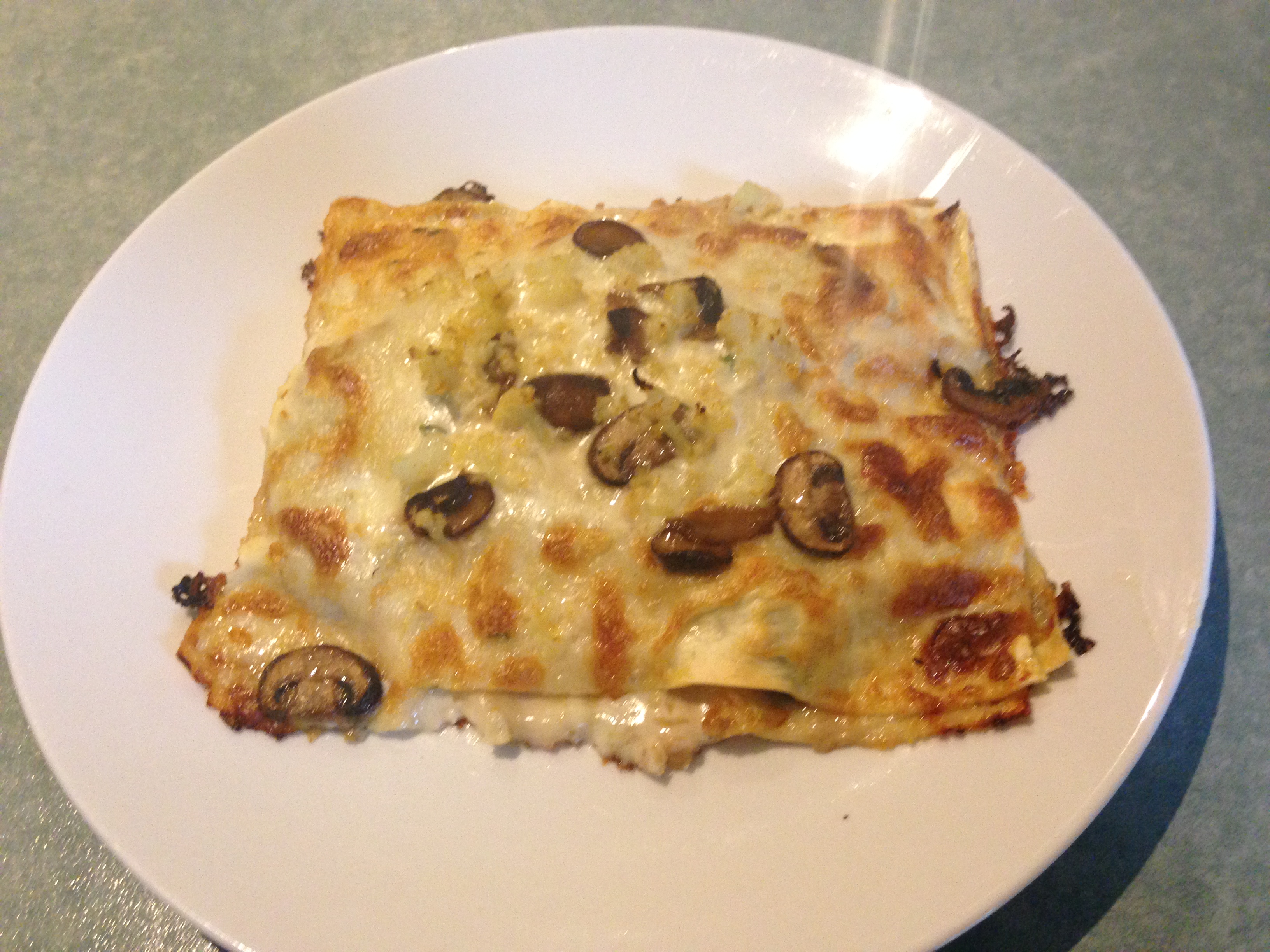
Fresh lasagne with cauliflower, mushrooms and hazelnuts

We’re not big fans of cauliflower cooked plainly and then served as is. However, we do eat it regularly enough – in a potato mash, along with mild English mustard, to accompany a beef dish; as the main ingredient in a souffle, as described in a recent post; and as one of the vegetables in a Thai red curry of chicken or pork, as will be described in a future post.

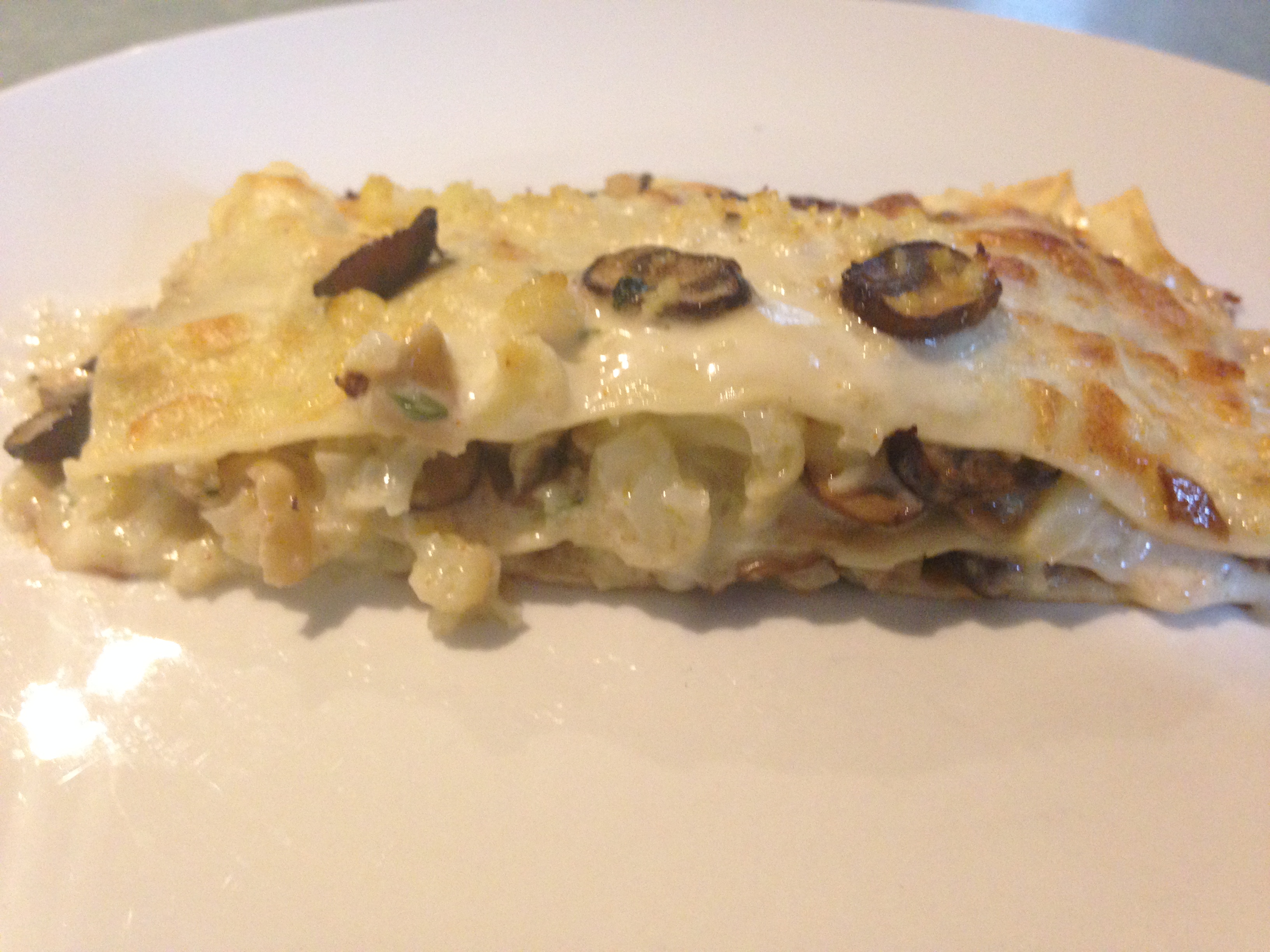
This innovative lasagne dish is a fourth way we cook cauliflower, inspired by a Patrizia Simone recipe and enabled by a pasta machine we bought in order to cook some of the dishes in Patrizia’s book.

Open lasagne 4

Based on instinct, experience and the limitations of our domestic kitchen, we have made some significant changes to the original recipe. Having just made it for the third time, we now feel settled on our version of the recipe.

A couple of comments.

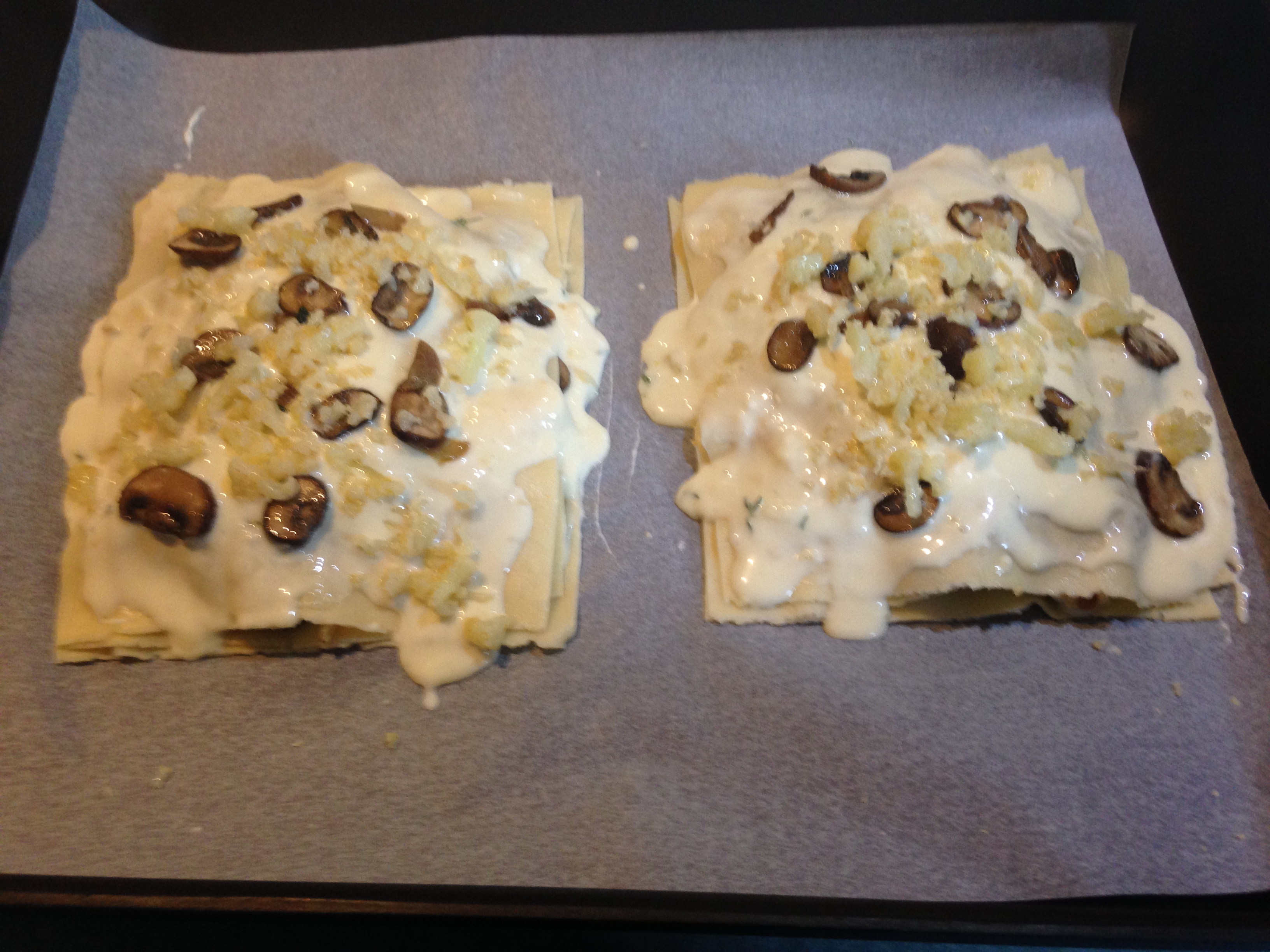
Firstly, this is a rich dish, plenty for three middle-aged adults. When we cooked this over the weekend, we over-sized the sheets of lasagne and made only two stacks. I ate a whole stack and later felt a combination of guilt and physical discomfort.

Secondly, Taleggio and Gruyere ‘pongy’ cheeses – apologies for being so technical – so, if that doesn’t appeal to you, I imagine you could substitute some Camembert or similar.

Ingredients

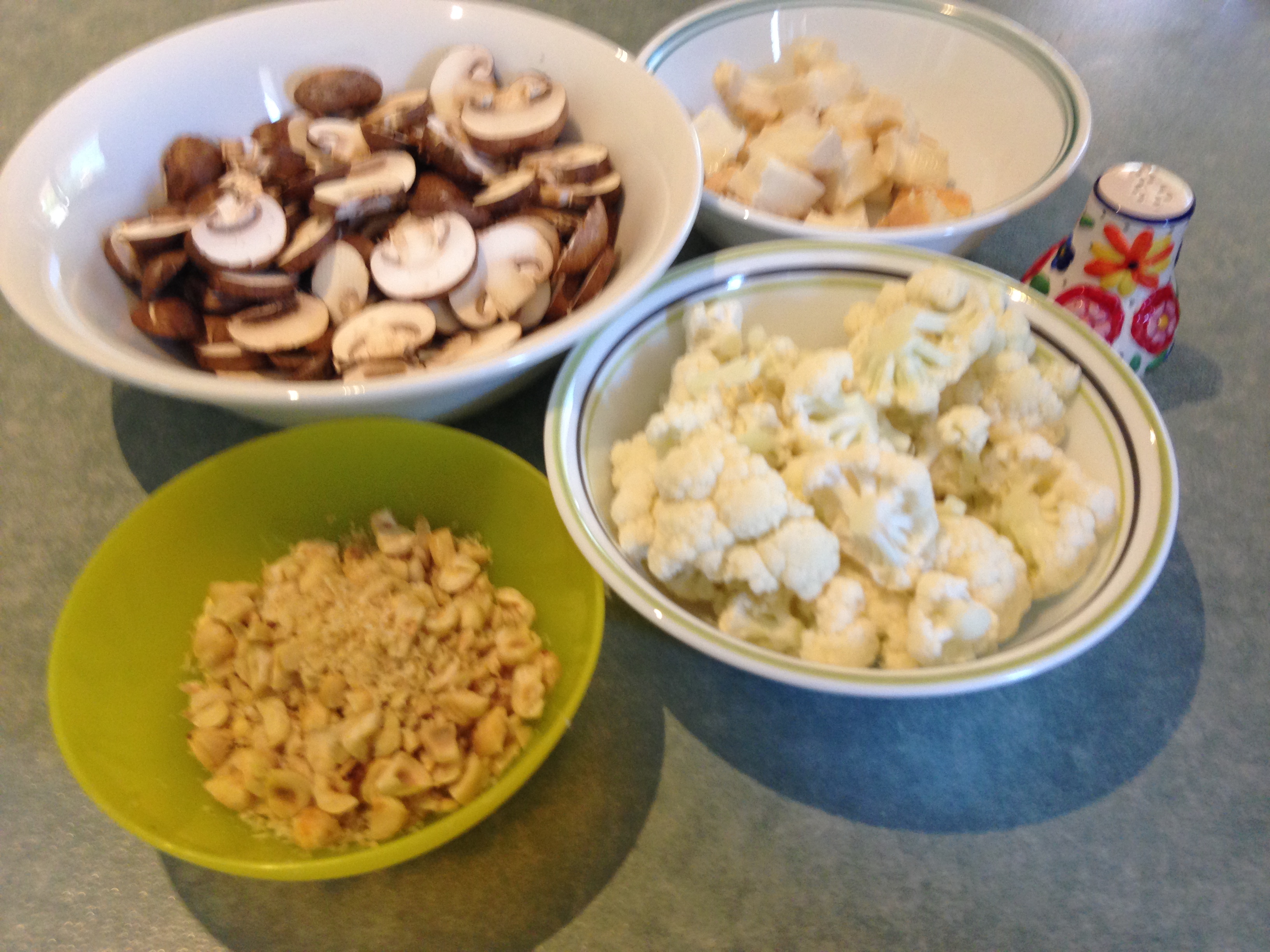
200g cauliflower, cut into small florets
olive oil
cayenne pepper or chilli flakes
salt and ground white pepper
200g small Swiss Brown mushrooms, thinly sliced
2-3 cloves of garlic, peeled and finely sliced
leaves from 4 sprigs of thyme
50g roasted and peeled hazelnuts
125ml cooking cream
150g Taleggio cheese, diced; or Gruyere cheese, grated
fresh pasta dough made with 200g flour and 2 eggs

Method

  1. Cook the cauliflower in boiling salted water for 6-8 minutes or until tender. Drain well.
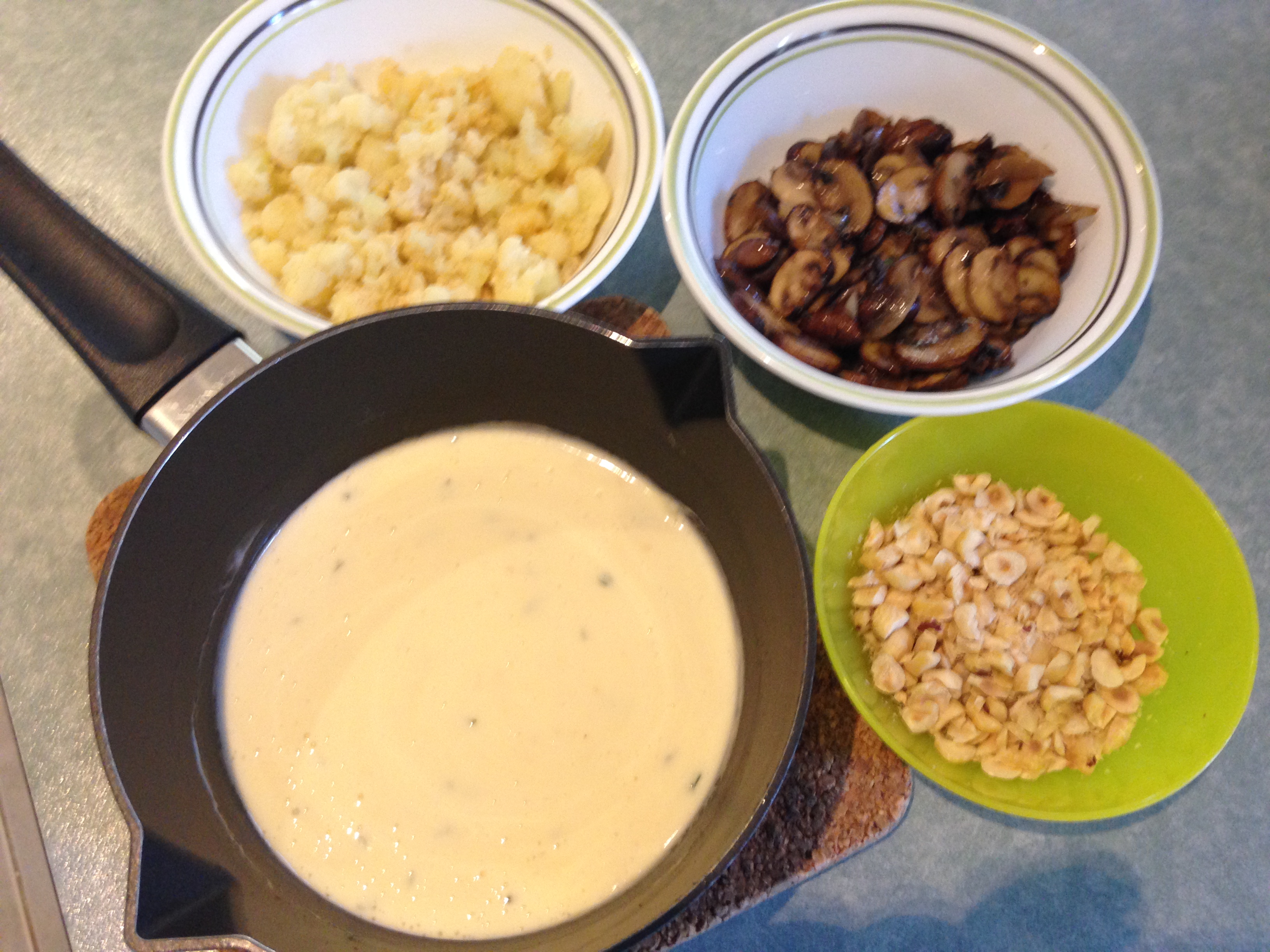
  2. Heat 15ml oil in a frying pan over medium heat, add cauliflower, sprinkle with a little cayenne or chilli and sauté for 5 minutes, transfer to a bowl and lightly season with salt and pepper.
  3. Heat 20ml of oil in the pan and add the sliced mushrooms. Cover 90% with a lid and alternately steam the mushrooms in their own liquid and take lid off to toss the mushrooms with some tongs. Add the garlic when the mushrooms have begun to soften, put the lid to one side and continue to toss until the garlic is soft and the mushrooms are just beginning to brown. Sprinkle with thyme leaves, season and transfer to another bowl.
  4. Chop the hazelnuts roughly, with most pieces about ¼ of a nut in size.
  5. Heat the cream gently in a non-stick saucepan. Add the Taleggio and stir until it has melted and combined with the cream. Remove pan from the heat, add the remaining thyme leaves and mix them in.
  6. Heat oven to 180C
  7. Prepare the pasta dough for making lasagne. Cut 9 pieces approximately 10cm square and cook in three batches in plenty of boiling salted water for 3 minutes. Transfer to a bowl of cold water then drain on a tea towel.
  8. Assemble three stacks of lasagne, directly onto a large sheet of baking paper in a roasting pan, as follows: 40% of the cheese sauce, 50% of the nuts, 40% of the cauliflower and 40% of the mushrooms on each of the first and second pieces of lasagne; remaining sauce, cauliflower and mushrooms on top of the final piece of lasagne.
  9. Bake in the oven for 20-25 minutes, until the top layer is just golden brown.

Open lasagne 1   Open lasagne 2

Open lasagne 3   Open lasagne 5

Posted in Cooking | Tagged , , , , | Leave a comment

A fish dish to celebrate our baby kipflers

By traditional Melbourne standards, our home and the land on which it sits are modest in size. The garden plots in front of the house are ill suited to growing edible plants, including their exposure to the harsh summer sun; so we have established a variety of hardy, flowering plants – Australian natives, roses and sasanquas.

At the rear of the house, there is an attractive paved area – home of the Weber Q and much used for al fresco wining and dining on mild afternoons and evenings. Along the fence sides of the paved area there is a series of raised beds. One bed juts out, to hold an elderly and revered lemon tree. The remaining raised beds tally to no more than 15 square metres; five of these are given over permanently to seven different herbs.

So, we have to be selective as to what we do with the balance of our arable land; it has taken us many of the nine years we have lived here to both improve the suitability of the soil and learn which edible plants give us the most pleasure and best value for our money, time and effort. In 2013, we decided that we would allocate about 5 square metres to a crop of potatoes, to be planted towards the end of winter for a late-Spring harvest.

We chose the kipfler variety – small, nutty-flavoured potatoes that just need some gentle boiling before being served alongside some not-too-robust protein that has also been cooked with a light touch. The result was thrilling! Around 6 kilograms of firm, tasty and – proud parent alert! – cute baby potatoes.

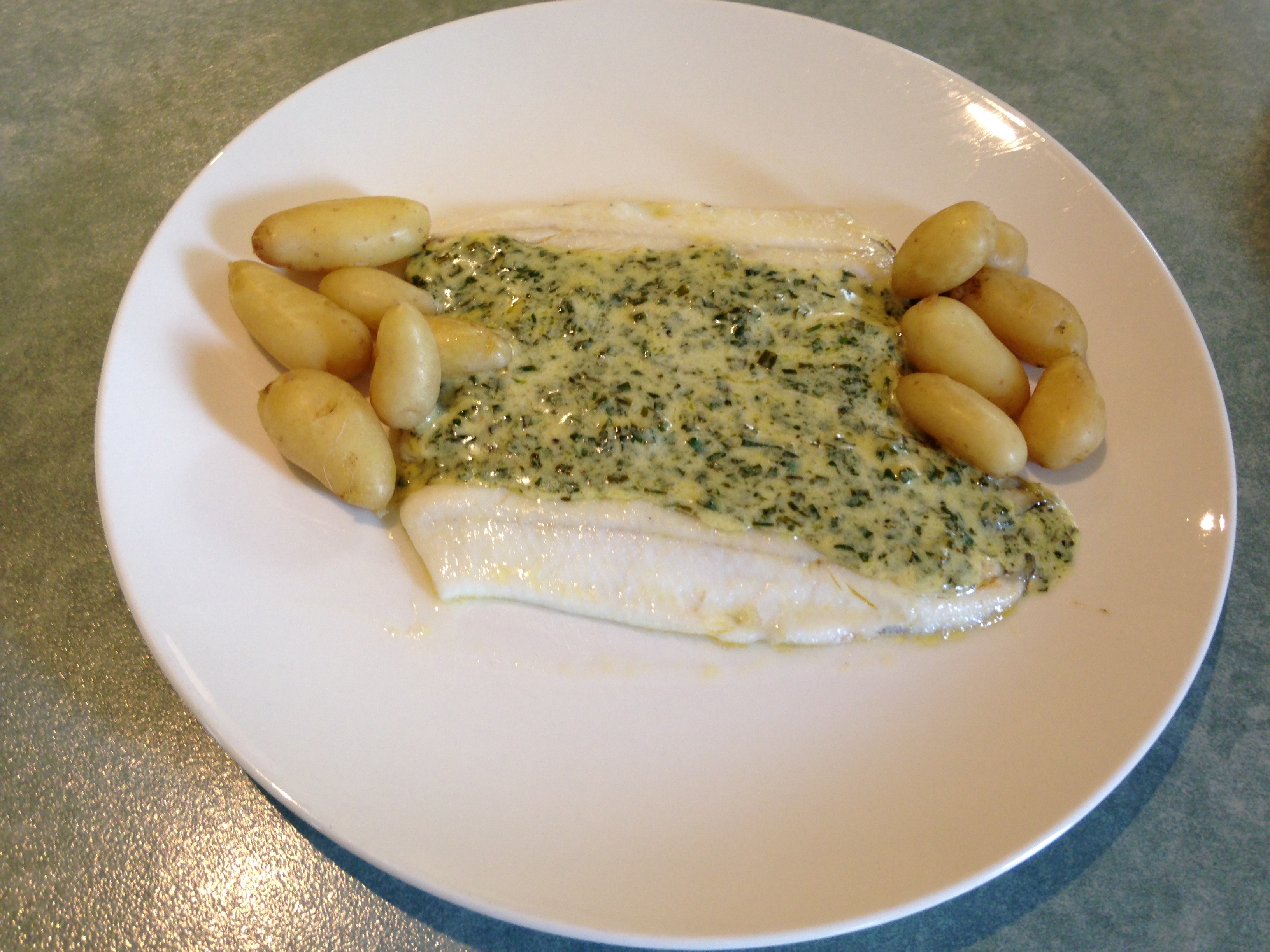
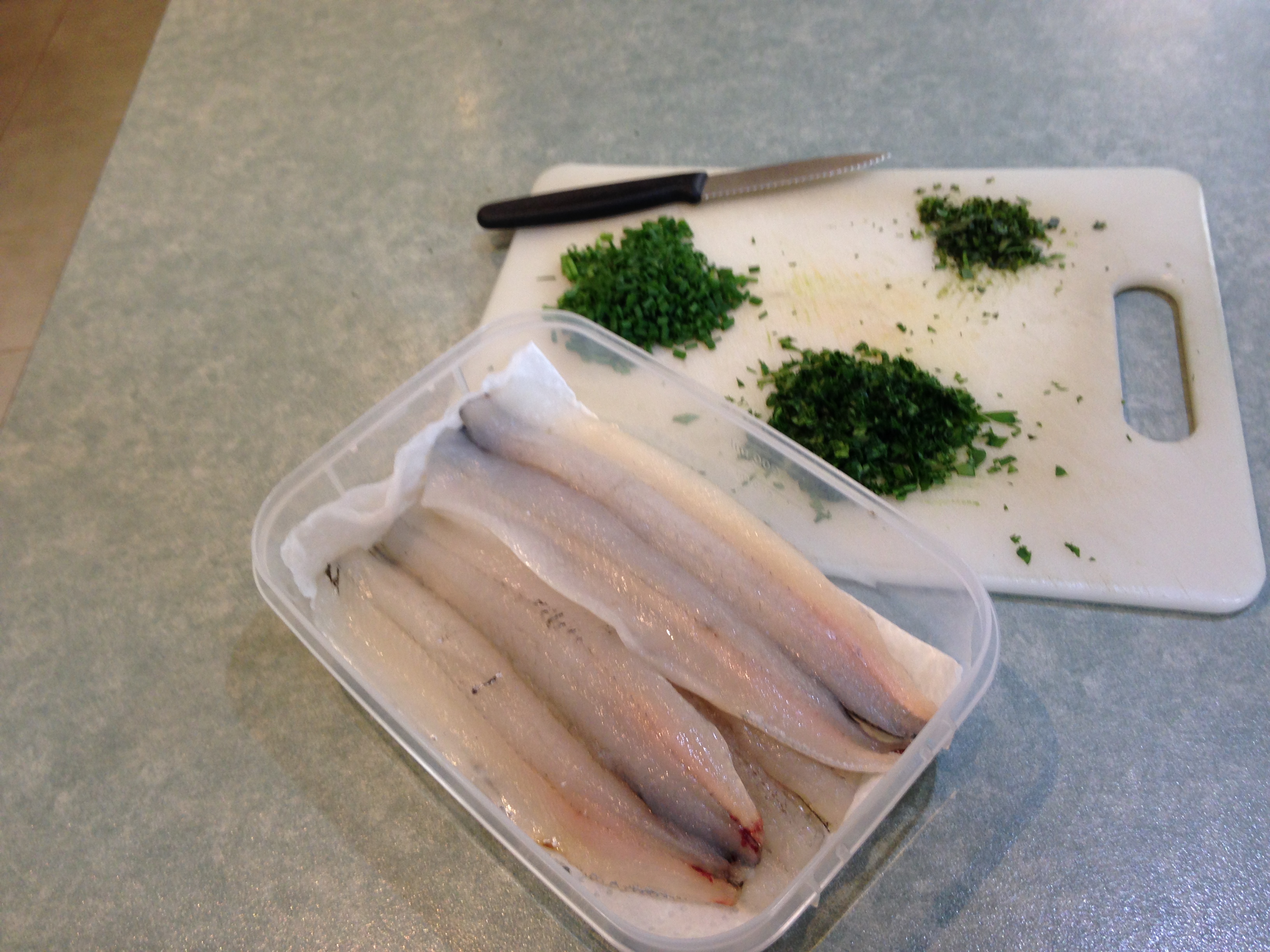
At the weekend, Maggie dug the first of five rows of potatoes from this year’s crop and, as had been the case in 2013, we chose to serve them alongside some pan-fried white fish. Last year, it was King George Whiting, our favourite fish to cook in a pan; this time, the better-value buy was garfish; just three slender fish, filleted and butterflied.

Kipfler crop 1   IMG_0394

I prepared them for a light Saturday lunch in a meuniere style – a knob of unsalted butter, no oil, melted in a pan over medium heat, cooked skin-side up then a scant minute on the skin. The fillets were transferred to two plates in an oven heated to 75C then turned off.

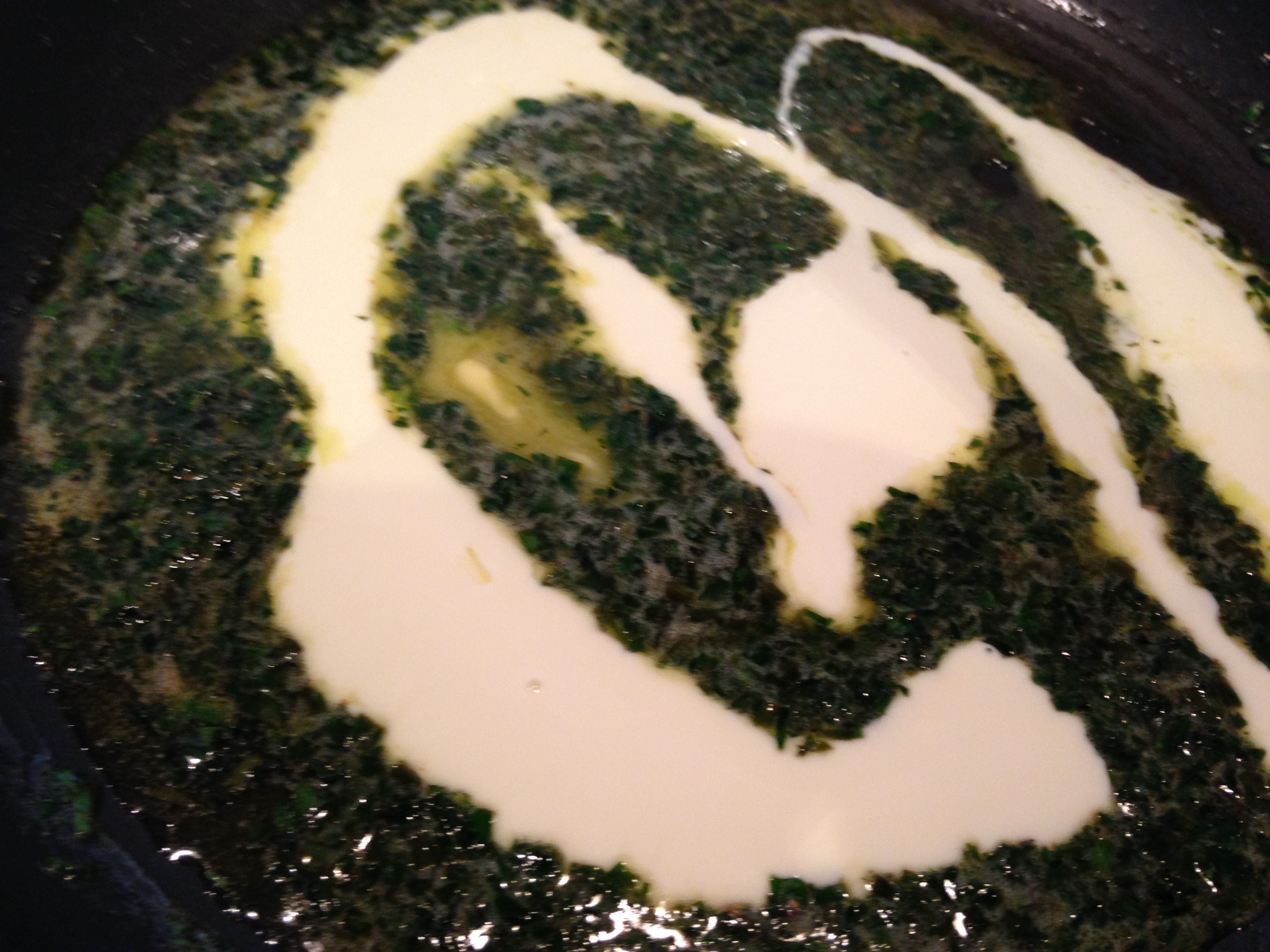
I added another knob of butter off the heat, then some freshly-picked herbs Maggie had chopped – parsley, chives and a little tarragon; add the herbs to a hot pan and they will leap out in all directions! Then, over gentle heat, a couple of teaspoons of lemon juice and a similar amount of the Australian riesling wine I had chosen to accompany our lunch, a pinch or two of salt and some ground black pepper. Finally, some cooking cream. This last ingredient is not traditional but I prefer the texture of the resultant sauce and the way it stays with the fish when served. Voila!

Garfish 4

Garfish 1   Garfish 2

Garfish 3


Posted in Cooking, Home life | Tagged , , , | Leave a comment

Our favourite piece of barbecued steak

One kilogram of scotch fillet from Ashburton Meats. Maggie cuts off one steak, 4cm thick, about 320g.  The remaining piece is set aside for a roast beef meal.

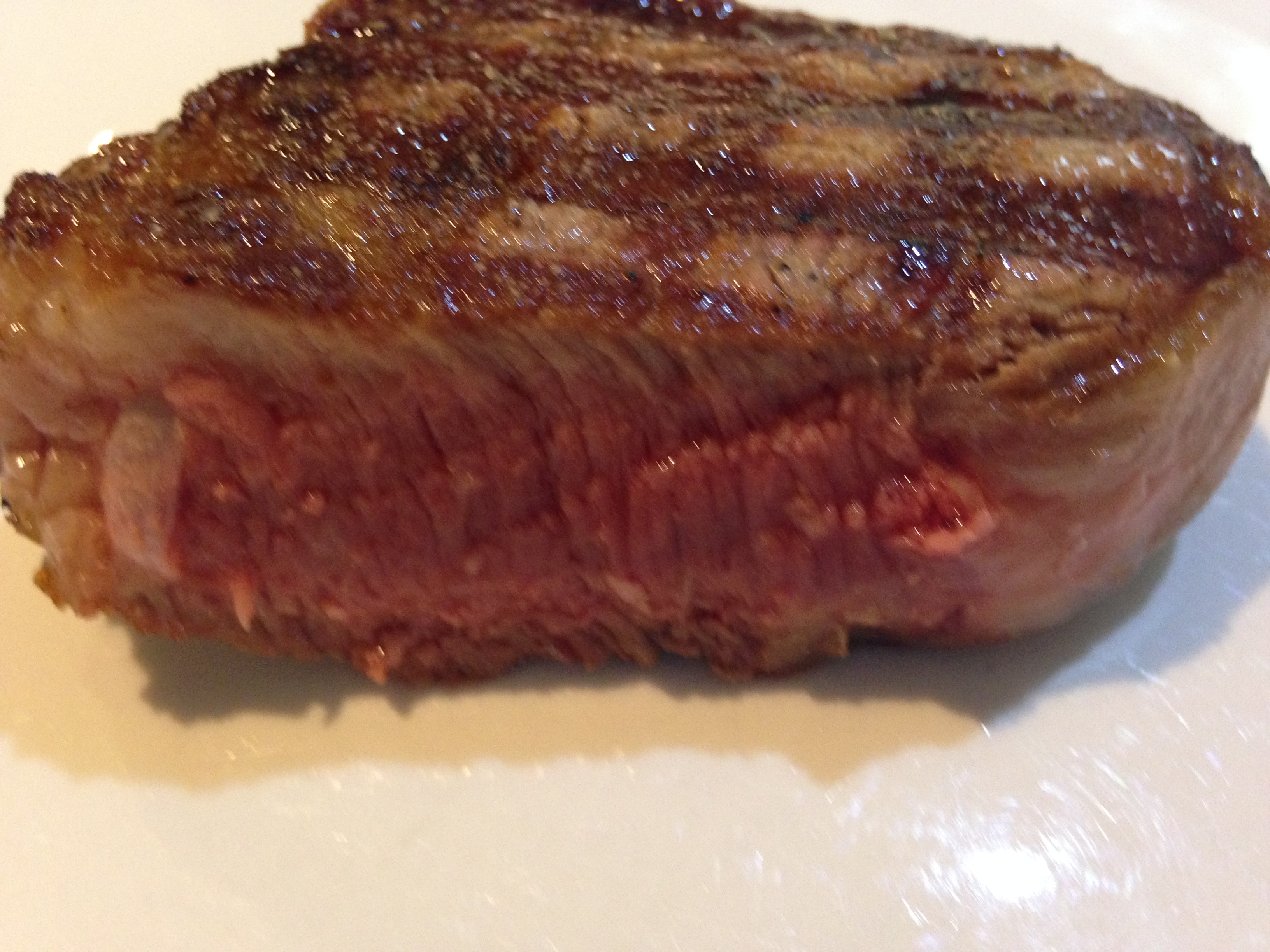
The steak comes to room temperature; the Weber Q heats up to at least 300C on maximum flame. The steak goes onto the grill plate, the lid goes down and the timer is set for 6 minutes. Then, the steak is flipped and cooked for a further 5 minutes, to produce a medium-rare result.

The steak is transferred to a plate, seasoned with WHITE pepper and salt on both top and bottom and rested for 10 minutes.

Maggie divides the steak into two portions, taking the rarer portion, if applicable.

Scotch bbq 1   Scotch bbq 2


Scotch bbq 3   Potato salad creamy

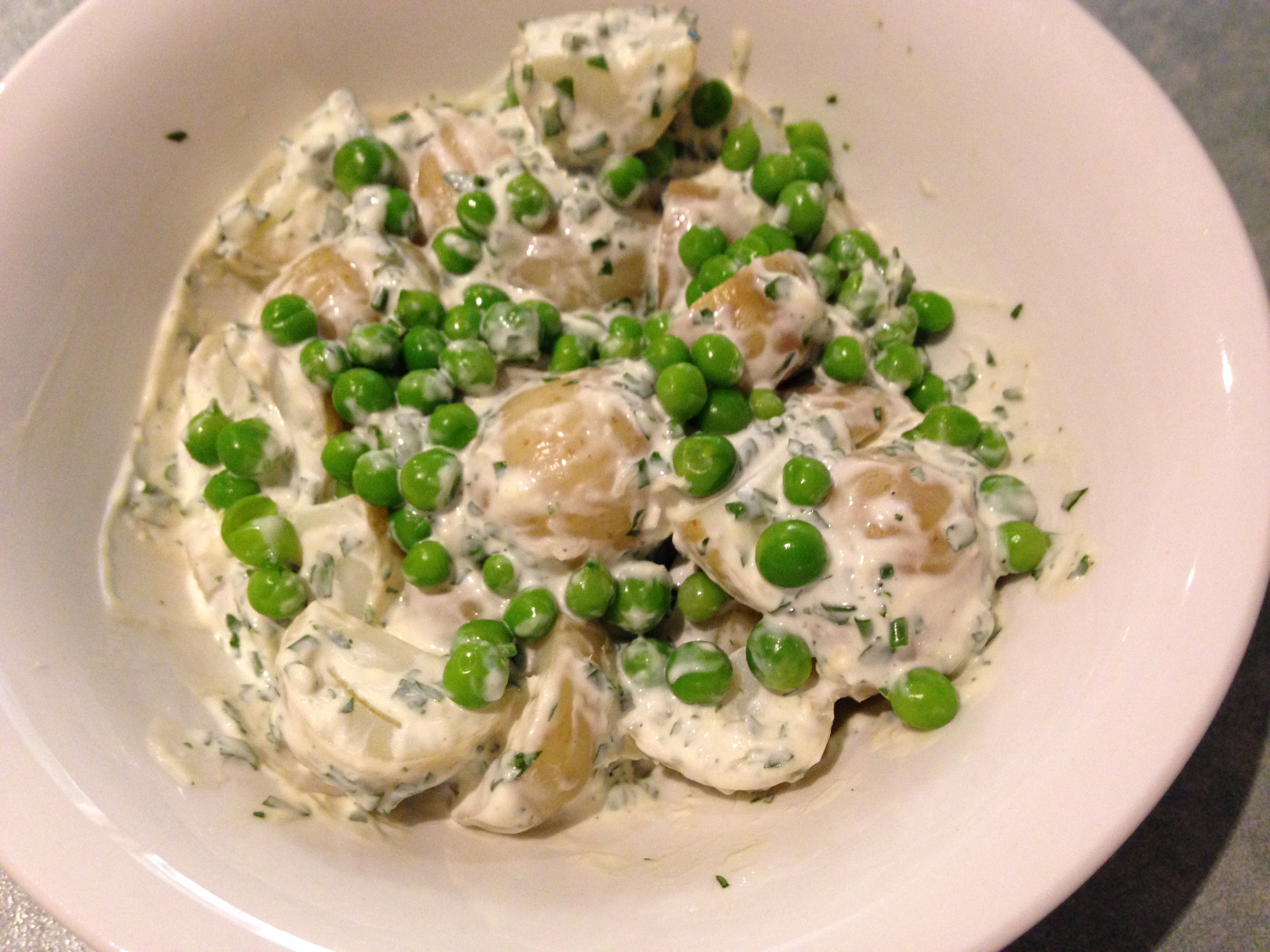
This time we completed the meal with some wilted spinach, leftover roasted tomatoes and a creamy potato, herb and pea salad.

I won’t insult your intelligence by giving you the salad recipe. However, should you so desire, …

Posted in Cooking | Tagged , , | Leave a comment

Steak diane

Steak diane is the kind of dish our parents used to prepare and serve in the 1960s to impress friends or special guests. With robust flavours and a rich sauce, it belongs on a depths-of-winter menu. So, (a) what is it doing on a blog in 2014? and (b) why did we cook it around the midpoint of Spring?

Steak diane

Well, firstly, we think this dish is timelessly classy, provided the pieces of steak are of sufficient quality. In the ’60s, that meant eye fillet; nowadays, we are able to buy tender, flavoursome rump steaks from our butcher.

As for winter, our beef menu was crowded with attempted reproductions of dishes enjoyed when we were in Europe during our Autumn. Besides, as is well known, Spring in Melbourne can bring almost every type of weather, from snow on nearby hills to a warm drought.

The recipe is provided with the consent of Sydney food critic, Terry Durack, one of our favourite writers.  We have made some minor modifications along the way. Mashed potato, green beans and carrots make perfect partners or you could serve it with some potato wedges and a green salad.

Ingredients

2 pieces of eye fillet or quality rump steak, about 180g each, firmly hand-pressed between two sheets of cling wrap
10ml olive oil
10g butter
30ml brandy
50ml beef or chicken stock
30ml Worcestershire sauce
2 tsp Dijon mustard
salt and pepper
60ml cream
1 tbsp snipped chives
1 tbsp finely chopped parsley

Method

  1. Heat the oil and butter in a non-stick frypan over medium heat and sear the steaks for 2-3 minutes. Turn and briefly cook the other side. Season and keep warm.
  2. Add brandy to the pan and reduce it over medium heat.
  3. Reduce the heat to low and add the stock, Worcestershire sauce, mustard, salt and pepper, stirring with a wooden spoon.
  4. Stir in the cream, herbs and any juices from the resting meat. Cook the sauce for about 5 minutes, then add the steaks to gently warm them and coat them in the sauce.
Posted in Cooking | Tagged , , | Leave a comment

Chocolate, almond and hazelnut torte

I think of this as a special occasion cake for grown-ups, including those who are intolerant of gluten. Yes, it’s full of other things that can kill you if you over-indulge habitually. Fortunately, one small piece provides plenty of pleasure, so the cake can be shared with a sizeable group of friends or colleagues, to celebrate a birthday, an imminent wedding or just catching up over a leisurely lunch.

Choc cake 5

As the almonds and hazelnuts make up more than 25% of the cake by weight, they must be in good condition. We use our second refrigerator for storing nuts, especially raw ones, to slow down the process of the nut oils going rancid.

Ingredients

125g dark cooking chocolate
2 tsp instant coffee powder
2 tbsp brandy
100g butter
100g caster sugar
75g blanched almonds and 75g roasted hazelnuts, ground fine but not to a powder
3 eggs, separated

Method

  1. Grease an 18cm round springform cake tin and line base generously with baking paper.
  2. Place chocolate, brandy and coffee in a bowl over simmering water until melted and smooth, stirring gently to combine ingredients.
  3. Add butter and sugar. Mix well until butter has melted, then remove from the heat. Add ground nuts and mix very well. Allow mix to cool partly. Preheat oven to no more than 160C (see step 7, below).
  4. Beat the egg yolks gently and stir into the chocolate mix.
  5. Beat egg whites until firm (but not stiff). Lighten chocolate mix with a spoonful of egg white, then fold in rest of whites and spoon mix into prepared tin.
  6. Bake for about 40 minutes. The cake might still test just a little gooey in the centre when it is ready to take out of the oven.
  7. A crust might have formed on the surface of the cake; this might indicate that you should set the oven temperature 5 or 10 degrees lower next time.
  8. After a few minutes, carefully remove the ring section of the cake tin and rest the cake and its base on a cake rack. When the cake is almost completely cool, use a long, thin spatula or similar, to ease the cake off the baking paper and tin base and carefully transfer the cake to a serving plate.
  9. Serve with thick cream and, perhaps, some deeply-flavoured berries or cherries, if available.

Choc cake 1   Choc cake 2

Choc cake 3

Posted in Cooking | Tagged , , , | Leave a comment

Pasta with tuna, rocket and preserved lemon

This is a recipe for one of those ‘that tin of tuna has been sitting in the pantry for a while and I made sandwiches with the previous tin’ moments followed by ‘I really feel like a bowl of pasta, so I wonder if …’

It’s not the prettiest plate to grace our table but the flavour is punchy, it combines two items not favoured by Maggie – tuna and pasta – and makes effective use of a home-grown product – preserved lemon. The recipe produces enough for me to have it for lunch on two days, usually while Maggie is at work or is in her “I just feel like an egg on toast” space.

Tuna rocket pasta

There is plenty of salt in the ingredients, so the pasta cooking water should be less salty than usual.

Ingredients

60ml olive oil
1 small-to-medium red or brown onion, finely chopped
2 cloves of garlic, finely chopped
3 anchovy fillets, coarsely chopped
¼ small preserved lemon, flesh discarded, peel rinsed (or zest and juice of a lemon)
185g tin of tuna, scantly drained
2 loosely-packed cups of coarsely chopped rocket
140g ribbon pasta, eg linguine or fettuccini
black pepper

Method

  1. Drain the tuna by partly opening the lid and tipping the tin on its side for a couple of minutes; don’t use paper towel or the dish will be too dry. Place the tuna in a wide bowl and use a fork or your fingers to break up all the lumps into small pieces.
  2. Heat 20ml of the olive oil over low heat, add the chopped onion and garlic and cook until soft (4-6 minutes).
  3. Finely chop the preserved lemon peel (if using), add to pan with chopped anchovies and cook for 2 minutes. Add tuna to pan and stir. Add remaining 40ml of olive oil and the chopped rocket, stir and cook for 1 minute then remove from heat. Add lemon juice and zest (if using).
  4. Meanwhile, cook your pasta according to the packet instructions. Drain but reserve a little of the cooking water.
  5. Add pasta to tuna sauce and toss to combine, season with freshly ground black pepper to taste and add a little pasta cooking water if too dry.
  6. Serve immediately.
Posted in Cooking | Tagged , , , | Leave a comment

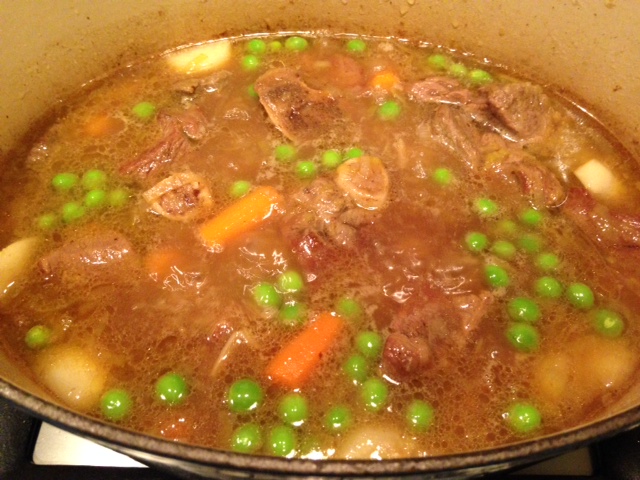
Navarin of lamb

Autumn is a very attractive season in some parts of Melbourne, with leaves changing colour on the introduced deciduous trees that line many main thoroughfares and local streets in older suburbs.

If I could only spend one season per year in Melbourne, I would be tempted to choose Autumn but I would always come back to Spring. I imagine that this would be the case in many other cities across the globe, beginning with Rome and Paris.

Spring brings green leaves to Melbourne’s deciduous trees, as well as flowers to native plants of all shapes and sizes. It is also the season of major sporting events in and around the city, including a horse racing carnival that runs for four weeks, peaking with a $5 million race that, year in year out, is in an excuse for all manner of festivities in every corner of Australia. True fact!

Maggie and I embrace all these elements of a typical Melbourne Spring. However, we are also focused on pleasures of the culinary kind – the asparagus season and the availability of flavoursome, tender Spring lamb.

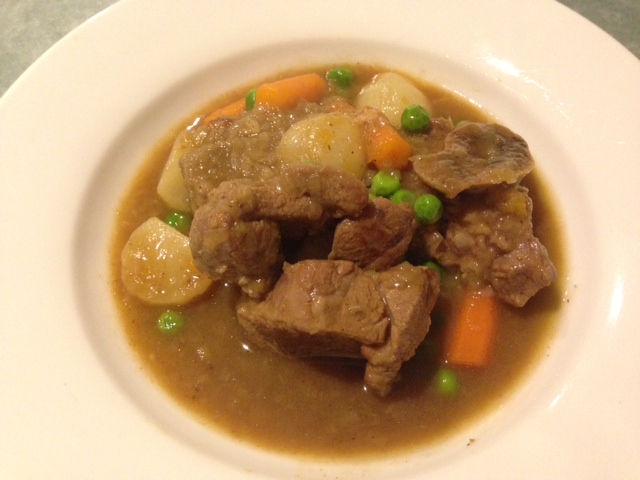
The season brings variable weather, so we cook lamb indoors and out; on the bone, diced, minced or boned and rolled; braised, pan-fried or barbecued; elegant or neanderthal. And the most elegant dish that we prepare is known as Navarin of lamb, a French ragout that takes its name from an 1827 sea battle against the Ottoman empire. (Don’t you just love Wikipedia?)

Lamb Navarin   Lamb Navarin plate 2

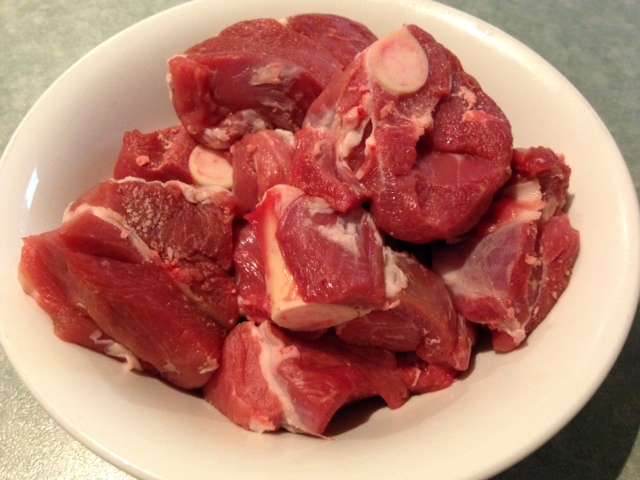
We prepare Navarin of lamb according to a modified version of a recipe we found on www.taste.com.au. And, on the advice of our butcher, we use what are called here, round-bone lamb chops, one of the cuts from the shoulder of lamb. They can be grilled successfully when the meat is genuine lamb but they are especially suitable for braising.

The other traditional feature of the dish is to braise the lamb with a selection of young seasonal vegetables. We like to include leeks, baby turnips and small carrots, with fresh young peas as a side dish or added to the pot about 10 minutes before serving.

Ingredients

1kg round bone lamb shoulder chops, trimmed of excess fat and skin
30g butter
1 leek, trimmed, halved and sliced crossways
2 garlic cloves, halved lengthways and thinly sliced
3 tsp plain flour
2 cups beef stock
4 sprigs thyme
1 bay leaf
6 sprigs of parsley
1 turnip, peeled and cut into chunks; or 4-6 whole, trimmed baby turnips
½ bunch Dutch carrots, peeled and cut into 6cm sections

Method

  1. Cut lamb into pieces, about 2 bites in size, retaining bone sections. Season with salt and pepper. Melt 10g butter in a large, heavy-based saucepan over medium heat. Add half the lamb and cook for 4 to 5 minutes or until lightly browned. Remove to a plate. Repeat with remaining lamb.
  2. Melt remaining butter and add leeks and garlic. Sauté for 4 minutes.
  3. Add flour and cook, stirring, for 1 minute. Add stock and stir well to combine with flour.
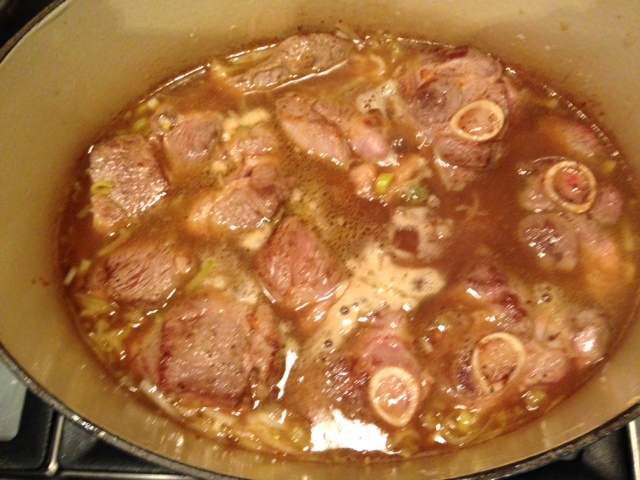
  4. Add thyme, bay leaves and parsley (Maggie encloses the herbs in muslin for the sake of tidiness). Return lamb and juices to pan. Bring to the boil. Reduce heat to low. Cover with lid and simmer on the cook-top for 45 minutes.
  5. Add turnip and carrot. Adjust seasoning, cover and simmer for 30 minutes or until vegetables are just tender.

Lamb Navarin 1   Lamb Navarin 3

Lamb Navarin 4   Lamb Navarin 5

Posted in Cooking | Tagged , , , | Leave a comment

Post preview

Okay, it’s not quite 10am on Wednesday. Maggie has long ago left for work, fuelled by my fresh hand-squeezed orange juice – navels are still in season, just – and a short black coffee; the pots and pans from yesterday’s cooking have been washed and dried; a load of towels, washed and on the line; my hair washed, for good measure; and a simple apple cake baked and on the cake rack.

We have a busy couple of days ahead. Maggie will be serving lunch tomorrow to a group of friends she gained from a previous job. I will give her a hand to prepare individual smoked trout and spring/green onion filo tarts before I head off to the other side of Melbourne to catch up with a mate from my enviro-activist years. Bro and his wife have made their lifestyle better than carbon neutral, including solar power, rainwater tanks and an electric car. I have been tempted by the offer of a photo-op with the car and the apple cake is my way of saying “well done”!

Meanwhile, I am editing the drafts of my father’s memoirs. The task of making them coherent and printable is close to overwhelming.

So, who knows when I will have time to share some more recipes? When I do, here are some of the dishes I will share:

Navarin of lamb, Monday evening’s dinner

Lamb Navarin

Pasta with tuna, rocket and preserved lemon, my light lunch on Tuesday

Tuna rocket pasta

Chocolate, almond and hazelnut torte, for Maggie’s guests on Thursday

Choc cake 5

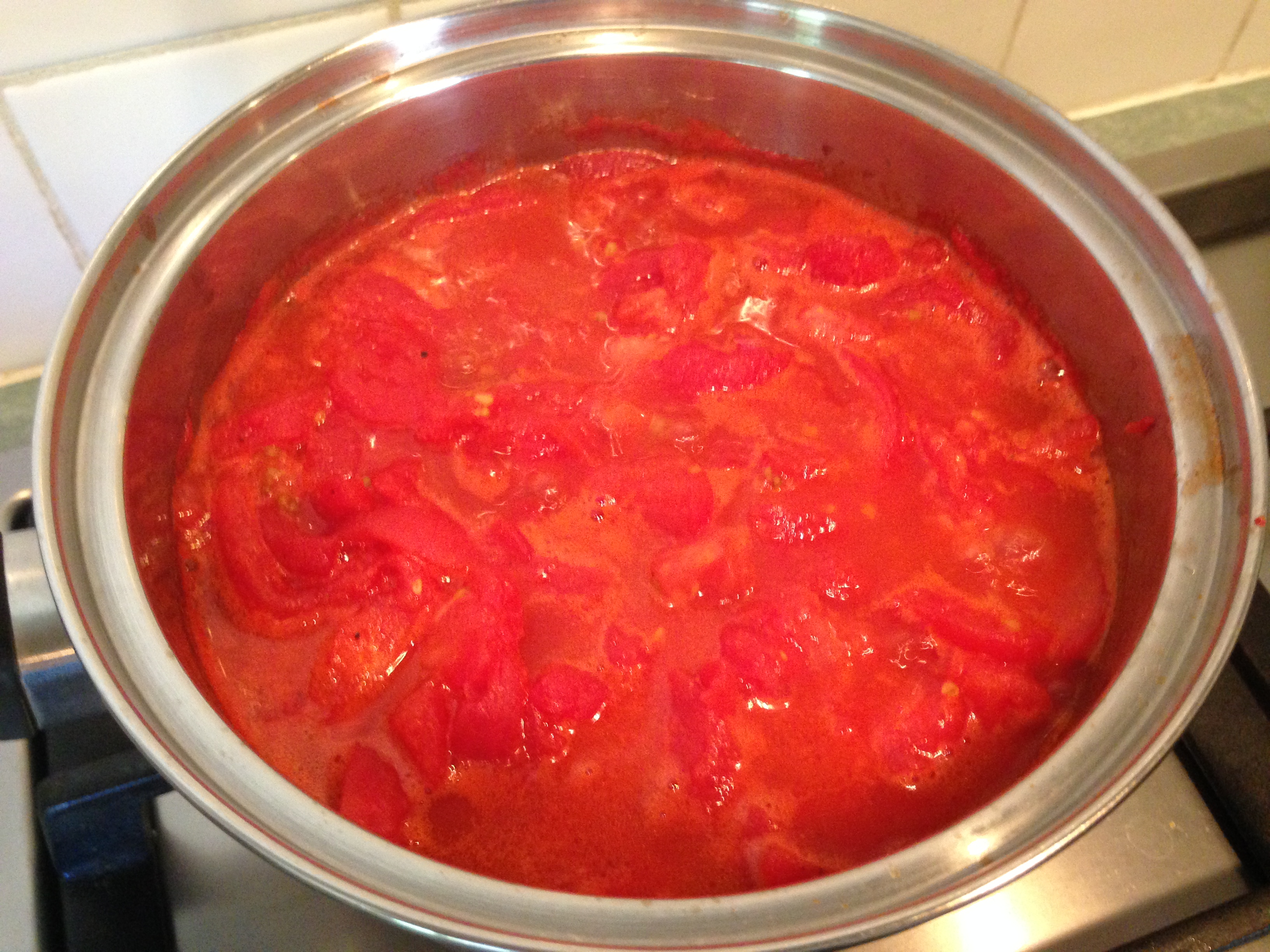
Here also is the simple sauce of cooked and reduced tomatoes that Maggie makes for using with dishes such as veal parmigiana, which we ate for dinner last night.

Tomatoes

And tonight we will be going seriously retro, even by our baby-boomer standards! We will be preparing a meal with steak diane as its centrepiece.

Finally, the opinion of one of our regular recipe testers on her bowl of the cream of white asparagus soup: “I was momentarily transported to heaven.” Nice one, Janet.

Posted in Cooking | Tagged | Leave a comment

Spring chicken

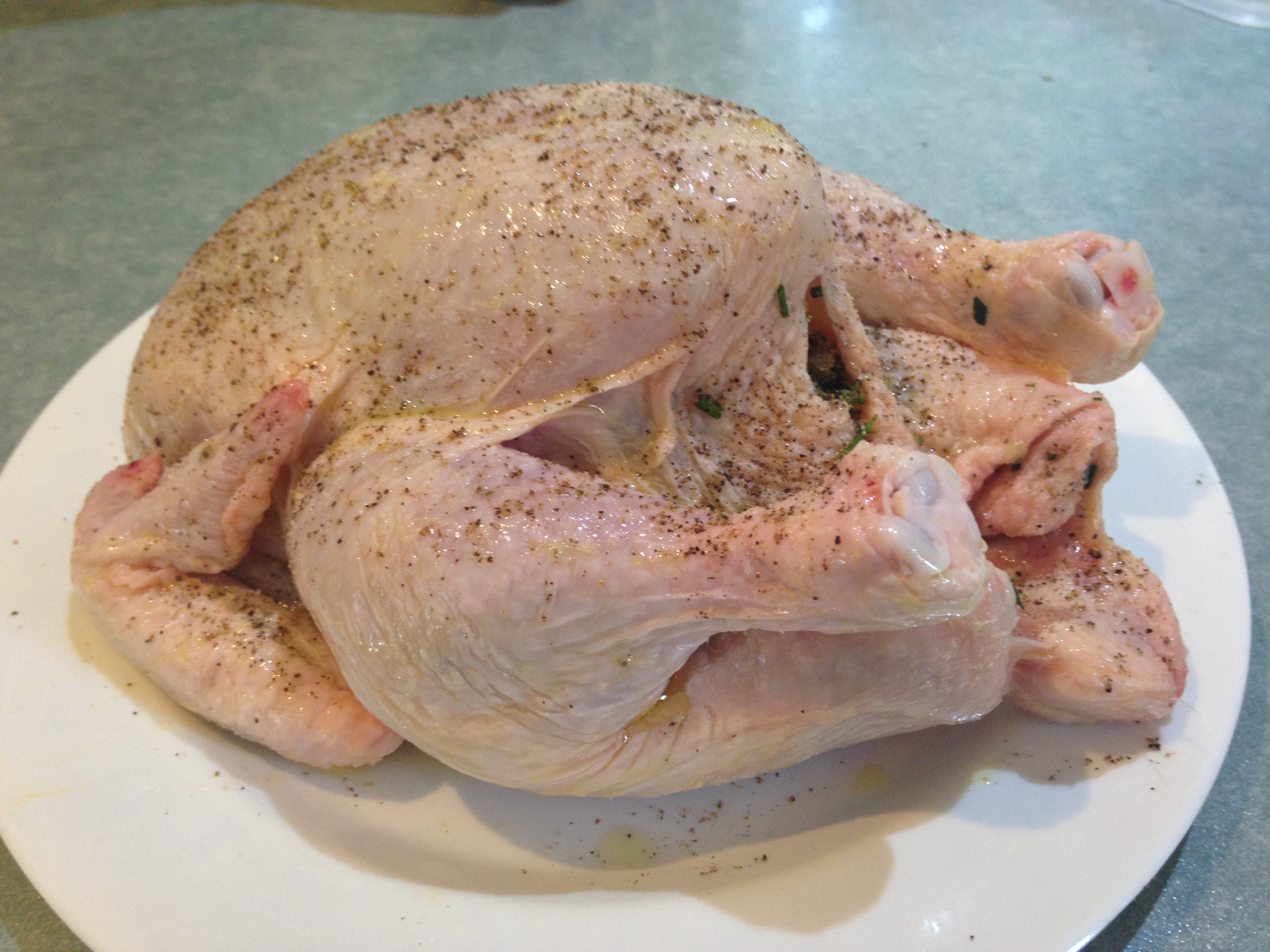
There is not much that is remarkable about roasting a chicken, is there? You buy a free-range or organic bird from a reputable supplier, get it to room temperature, add some flavourings inside or out, brush the skin with some oil and pop it into an indoor or outdoor oven for an hour or so.  Then you carve it and serve it with your preferred sides.

That said, Maggie and I feel blog-worthy pleasure if we roast a chicken in mid-Spring, when our herb garden is at its peak. So it was that, on Saturday, we bought a Bannockburn chicken and prepared a stuffing that was light on breadcrumbs and big on chopped herbs.

We took some sprigs from our rosemary, sage, thyme and parsley plants and snipped some fresh chives. Maggie chopped them using her easy-on-the-wrists mezzaluna knife and added them to a lesser quantity of sour dough breadcrumbs in a mixing bowl. Then we added a small amount of roughly-chopped prosciutto, a teaspoon of Dijon mustard, a long grind of black pepper and an egg yolk (the white makes the stuffing too heavy after cooking). Once this was all mixed well, we added just enough olive oil to give the stuffing a light gloss.

Before the stuffing went into the cavity, Maggie rubbed it generously with the flesh of a piece of our home-made, home-grown preserved lemons. Then she rubbed the outside of the chicken with olive oil and seasoned it generously before it went into the Weber Q just after we had lit the gas. (This is my preferred technique for cooking a stuffed chicken, to ensure that the meat nearest the cavity cooks properly; it sounds anal but it works!)

Chook roast 1   Chook roast 2

We served the chicken with some roasted Dutch carrots and baby turnips bought that morning at the Collingwood Farmers’ Market, and a dressed salad of shredded baby cos leaves and diced avocado.

Our tarragon plant has recently emerged from its long hibernation and will find its way to a chicken cavity in the next month or so, among a variety of destinies for what the French call “the king of herbs”. More of that anon.


Posted in Cooking | Tagged , , , | Leave a comment