In-digest: week ending 16 August 2015

With just over three weeks left ’til we fly to London, Maggie and I have been quite busy crossing off items on our ‘to-do’ list. However, we still made time last week to prepare some delicious meals.

We began with pork belly, using a modified version of a recipe by Australian chef Neil Perry. This is our favourite way of cooking pork and the result is very flavoursome, with crisp crackling and tender, juicy meat. We usually partner it with some steamed bok choy, Basmati rice and, in Weber season, a beetroot and carrot parcel.

We use the same ingredients as Neil Perry to prepare the marinade, except for the addition of 2 to 3 tsp of grated ginger. However, our method varies in a few ways.

Method

  1. Use a mortar and pestle to smash the garlic and star anise with the brown sugar and ginger to form a paste. Add the five spice, pepper, soy sauce and wine and mix thoroughly.
  2. Place the pork in a glass or ceramic dish that will hold it snugly. Spoon enough of the marinade down the sides of the dish to ensure that all of the flesh is sitting in the marinade. Cover and refrigerate for 24 hours (or longer, if that’s how your timings work out). Any leftover marinade can be safely frozen for subsequent use.
  3. Remove the dish from the fridge at least one hour before you roast the pork. Transfer the pork to a plate and discard the marinade. Rub salt on the skin of the pork and into the score marks.
  4. It will take about 1-1¼ hours to cook the pork and crisp up the skin, cooking at about 180C in a fan forced oven on the second highest shelf. However, we prefer to do this in our Weber Q in roasting mode, turning the pork skin-side down for the last 20 minutes.
  5. Rest the pork for 15-20 minutes before slicing to serve.
  6. For the best eating experience, cut the pork into slices that are no wider than 1cm

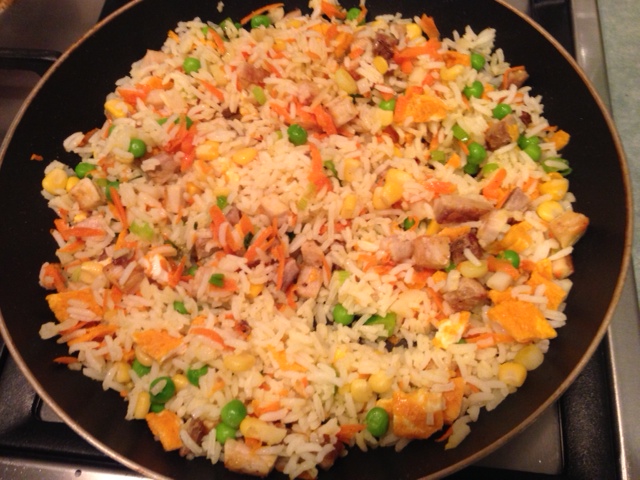
We usually cook a piece of pork belly weighing about 700g. This gives us leftovers to go into a dish of fried rice (see below) or, in Maggie’s case, a workday lunch.

Pork belly 1   Pork belly 2

Pork belly 3   Fried rice

Over the next few days, we made a few other favourite dishes: chicken and leek casserolelemon & yoghurt cake, to share with Maggie’s work colleagues; a pot of minestrone, to share with Iris; and cauliflower soufflé, a perfect late-winter dish.

On Thursday, we went down to Ashburton Meats, to collect ingredients for a planned dinner party; and to Eat Fish, to buy some seafood to cook for Thursday’s evening meal. After a brief negotiation – I was putting the case for calamari – we settled on a couple of fillets of fresh, wild-caught barramundi.

As readers from Australia and south-east Asia would know, barramundi is a species found in freshwater or in waters where ocean and rivers meet. It is native to Northern Australia and to other tropical locations adjoining the Indian Ocean. It often appears on restaurant menus, usually steamed – very popular in Thai cuisine – or with a crispy skin, with Asian or tropical flavourings. It might seem a little sacrilegious, but we decided to use our fillets – skin removed – to make a mild fish curry.

The result was very, very satisfying – Maggie is still talking about it! I drew on elements from two different recipes. My version still needs a bit more work before it will be ready to codify; that will have to wait ’til later this year.

Fish curry

We had invited our friends Janet & Gary to join us for dinner the next evening. The main course was beef short ribs, marinated overnight and cooked according to a recipe we adopted last year. This is definitely a dish for the winter months – long cooking, rich flavours!

We served it with a mash of potato and cauliflower, and a dressed salad of toasted walnuts and baby spinach leaves. The mash goes particularly well with beef. When making it, I use two parts spud to one part cauli and add the latter about 9 minutes before the potatoes will be ready. As there is no starch in cauliflower, you must drain the vegetables very well before you add some dairy – butter, sour cream and a small amount of milk. I added mild English mustard this time to complement the ground pepper component of the marinade for the ribs.

For dessert, we served some fresh berries with lemon sorbet – light and refreshing.

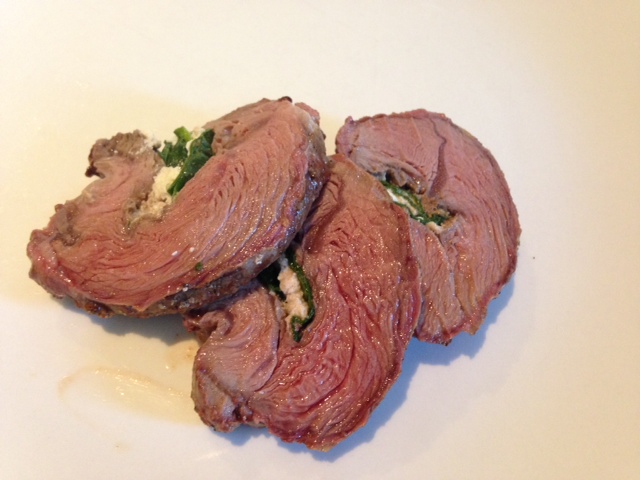
Come Sunday, we had our mildest weather conditions since early in June, when we were last able to use our Weber Q. Trusting the forecast, we had taken an 800g piece of boned lamb leg out of our freezer on Friday.

We decided to add some flavours to the inside of the piece, so Maggie used a sharp knife to cut an incision down the middle of the meat’s inner surface, and then sideways in both directions to make something like a book opening. Next, we smeared the middle section with Dijon mustard – trust me, it goes well as a lamb flavouring for cooking purposes – then a layer of leftover baby spinach leaves, some crumbled fetta and another spinach layer. Maggie folded the side flaps over the top of the spinach, brought the two long edges together and secured them with kitchen string. The result was as tasty as it looks, and there is enough left over for another meal during this coming week.

Lamb roast stuffed

Posted in Cooking | Tagged , , , , , | Leave a comment

Wise chefs from the east give us a tip

Two singles and a double – that’s how many word-plays there are in the title of this post.
I just … can’t resist … the temptation; I probably should apologise, or blush.

So, let me talk sensibly for a while.

Last year, Maggie and I spent three weeks in Central Europe: a week of independent travel in Austria – Salzburg then Vienna – followed by two weeks on an Insight Vacations tour. Our travel experiences included various delicious dishes made with beef or veal. Upon our return, we found or adapted recipes for most of these dishes and cooked them at home, with only one failure – svickova omacka, a traditional Czech dish of poached beef with a creamy sauce.

The only dish we didn’t get to cook before the end of cooking-in-the-oven season, was Tafelspitz. Tafelspitz is a traditional Viennese dish made from the triangular end of a whole piece of beef rump; tafel means ‘tip’ in English. Vienna, of course, is the capital city of Austria or, in German, Österreich, which is the modern version of an old word -pair which meant ‘eastern domain’, as Vienna and its environs would have seemed to German-speaking peoples many centuries ago.

As for the ‘wise chefs’, well the recipe that we used to plan our first attempt at preparing Tafelspitz, was written by Londoner Simon Hopkinson, and he took his inspiration from a book written in 1953 by a famous Viennese chef who, in turn, had waxed lyrical about the version of the dish that was served at a particular Viennese restaurant.

Staying in Vienna for just a little longer, here is the plate of Tafelspitz which I ordered for our last meal before we flew out bound for Dubai and home.

Plate of Tafelspitz, Gasthaus Pfudl, Vienna

Plate of Tafelspitz, Gasthaus Pfudl, Vienna, May 2014

I ordered it on the basis that it is such a traditional dish and we had enjoyed a previous meal at this restaurant – Gasthaus Pfudl – and despite the fact that Maggie had been served an unappetising rendition at a fixed-menu hotel-dinner in Cracow, Poland. The version that I ate was very satisfying and I enjoyed it more than I had anticipated.

For our first attempt at making Tafelspitz, we followed Simon Hopkinson’s recipe by and large, so I will just provide a general description of the ingredients and method.

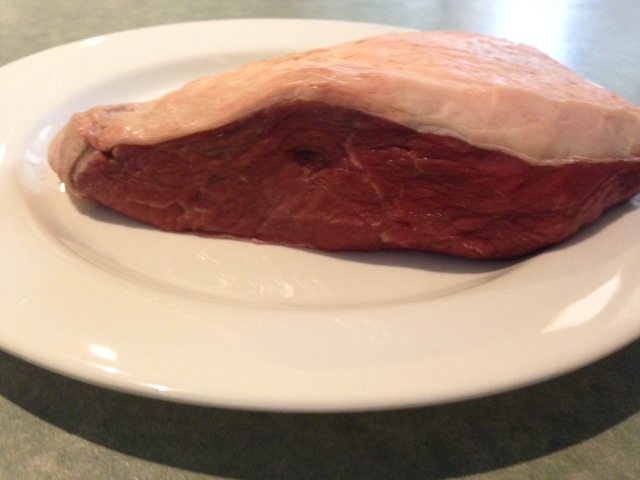
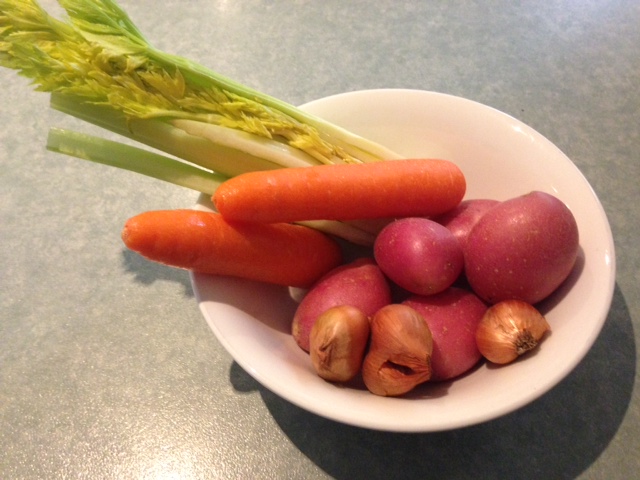
Starting at the tip, the recipe called for a piece that weighed at least 1kg; ours weighed about 700g, including a thick layer of fat. So, we scaled down the amount of other ingredients – raw pig’s trotter, brown onion, carrot, celery, flat mushroom, salt, bay leaf and clove.

Tafelspitz 2   Tafelspitz 1

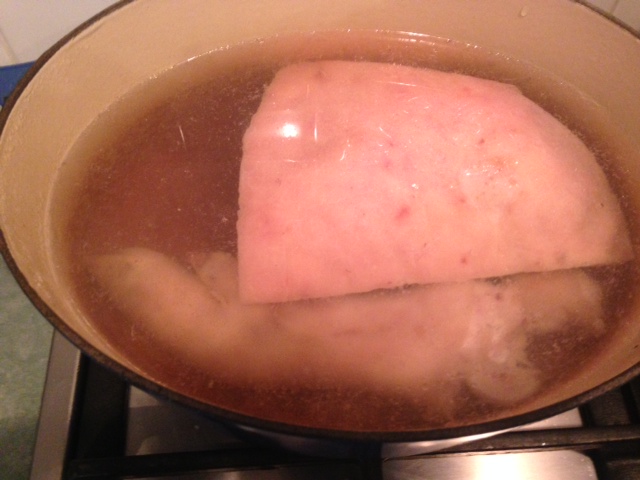
We put a generous amount of boiling water in our Le Creuset pot and added the tip and the trotter. Once they had simmered for about 15 minutes, we added the other ingredients, brought it back to a simmer, put the lid on and placed the pot in an oven heated to about 140C. The temperature has to be such that the liquid barely bubbles.

Tafelspitz 3   Tafelspitz 4

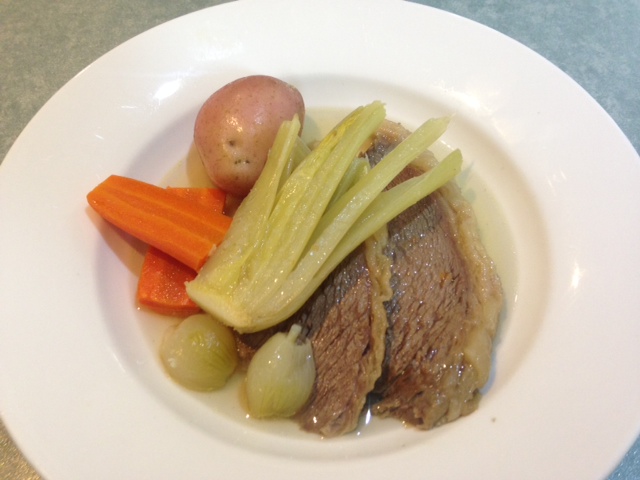
After no more than an hour, we took the pot out of the oven, removed the meats and strained the liquid through a colander and then through a fine sieve.The beef was returned to the pot, along with the strained liquid, and brought back to a simmer. We then added pieces of peeled carrot, a trimmed celery heart and peeled (French/brown) shallots, brought it back to a simmer and returned it to the oven. 20 minutes later, we added some small, whole Desiree potatoes. The recipe said to peel the potatoes; we left half of them unpeeled and, based on the result, would not peel any of them next time.

Tafelspitz 5   Tafelspitz 6

After another 20 minutes, the vegetables were more than ready and the meat was very tender. We transferred the meat and vegetables to a warm plate and Maggie removed some of the fat from the surface of the liquid; next time, we would remove most of the layer of fat before we began to cook it.

While the dish was in the oven, Maggie made an apple and horseradish sauce, the traditional condiment for Tafelspitz. At the table, we needed to add a generous pinch of salt. The meat was tender and flavoursome, bearing in mind that this dish is lighter in style than a traditional Australian meal of beef. There were sufficient leftovers to provide us both with a week-day lunch.

Plate of Tafelspitz, our house, Mount Waverley

Plate of Tafelspitz, our house, Mount Waverley, August 2015

So, we were happy with the outcome, we had already made some minor modifications to the recipe and we’ve identified some further changes for our next attempt. We have also decided that, for a dinner shared with friends, we would use two pieces about the size we obtained from our butcher; the smaller piece took less time to cook than the recipe advised. This afternoon, I have deglazed the cold leftover liquid and boiled it down to about two-thirds of its volume, producing a pleasant beef stock for future use.

All in all, a top tip experience!

Posted in Cooking, Travel | Tagged , , , | Leave a comment

mwlpc.org.au

Welcome to the home page of the Mount Waverley Lemon Preservation Co-operative. Our humble organisation is dedicated to the preservation of lemons, all lemons, irrespective of variety, colour, size or shape. All fresh lemons, that is. Members of the MWLPC have no truck with lemons that have been picked by a machine, waxed, boxed and transported across state or international boundaries before being stacked on a shelf like so many blocks of Lego.

Let me introduce the foundation members of our co-op. Firstly, there is Maggie, a paid-up member of the Salters and Packers Union (that’s an Australian industrial relations pun, folks). Maggie is responsible for cutting the lemons into quarters lengthways, salting the pieces and packing them tightly into a glass jar.

I am known as Maggie’s Chief Squeeze. My duties include picking the lemons from our tree, then washing them to remove any dust or wasp droppings. However, my main contribution is to squeeze the bejesus out of those almost-special lemons that have been selected to be preserved as the vitro, in which the lemon quarters will spend the rest of their lives.

If you would like to join the MWLPC, membership is free. All you need is your own supply of fresh lemons and a willingness to follow the co-op’s authorised procedures. Here is an example of what co-op members strive to achieve:

Preserved lemons

We began to make preserved lemons in 2008, a couple of years after we moved into our home, which came with an old lemon tree at the rear of the property. Initially, we used Stephanie Alexander’s recipe from The Cook’s Companion.

Stephanie recommends that you use 250g of salt for 10 medium-to-large lemons. Having done it many times, we no longer bother to weigh the salt; Maggie works by sight and feel. In her recipe, Stephanie advises you to press down hard on the fruit to release as much juice as possible.  This is important; otherwise, you will have to squeeze lots of lemons to have enough juice to cover the lemon quarters.  Even so, you will still have to make some extra lemon juice, a good use of lemons with damaged skin.

A further lesson from our experience is that you will have to top up the fluid level in your jars with more lemon juice a few times over the first month or so, as the salt dissolves, thereby lowering the liquid level. An unsightly but non-toxic white mould will form on any exposed lemon skin.

Stephanie adds fresh bay leaves, cloves and cinnamon sticks to her jars of salted lemons; we prefer fresh bay leaves and black peppercorns.

Over the years, we have found more and more ways to use our preserved lemons: when roasting lamb or poultry; in couscous; when cooking fish; virtually anything in which tangy lemon works well. For example, when roasting a whole chicken, we use the flesh to rub the bird’s cavity before adding some herbs or stuffing, then drape thin slices of the skin on the breasts for the last 20 minutes in the oven. The results are quite different to what can be achieved using a fresh lemon, mainly because the flavour is more intense, the skin is soft and the tartness of the juice is gentler.

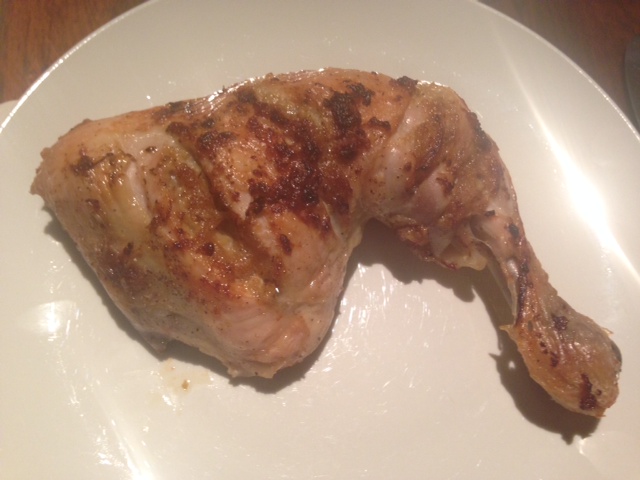
In 2011, we began to roast two or three chicken Maryland pieces at a time for an easy mid-week dinner. Before we cook the chicken, Maggie slashes the pieces on both sides, prepares a paste of finely chopped preserved lemon flesh (no skin), grated (or crushed) garlic, pepper and olive oil and presses the paste into the slashes. We roast the pieces on a bed of stems of fresh marjoram (oregano gives the same result) in a lightly oiled baking pan for 35-40 minutes at about 180C.

Lemon preserved 2   Lemon preserved 3

Lemon preserved 4

Posted in Cooking, Home life | Tagged , , | Leave a comment

Into the closet: folio 1

I was going to say No. 1 but, as you will soon discover, that would have been an unfortunate pun; ditto for No. 2.

We recently renovated one of the rooms in our home. It is the smallest room, known variously in these parts as the toilet, little (boys/girls) room, dunny and, on house plans, W.C., as in Water Closet, not Fields. My American daughter-in-law, Sara, calls it the ‘bathroom’, the name we use for the room with the bath or shower. So, our granddaughter will receive ‘potty’, as distinct from ‘toilet’, training.

I could go on but enough technical talk already!

With a shiny new, ahem, ‘appliance’, new floor tiles and a fresh paint job, we decided that the room was worthy of some decorative elements. After a bit of thinking and discussion, we settled on a rolling series of photos from our travels, mounted and framed by a craftsperson.

We have begun with our visit to France in the northern winter of 2009/10. Here are the seven photos we selected.

Group 1

View from the Eiffel Tower across Trocadero to La Defense

View from the Eiffel Tower across Trocadero to La Defense

Snow falling outside our hotel window, day 5 in Paris

Snow falling outside our hotel window, fifth morning in Paris

The Thinker, under snow, in the garden of Musee Rodin

The Thinker, under snow, in the garden of Musee Rodin

Group 2

Lit up like a Christmas Tree, December 2009

Lit up like a Christmas Tree, December 2009

Supper spoils from a local charcuterie

Supper spoils from a local charcuterie

Group 3

Hilltop town of St Paul de Vence, Cote d'Azur

Hilltop town of St Paul de Vence, Cote d’Azur

Lunch, shucked to order, St Tropez

Lunch, shucked to order, St Tropez

This will be a series of very occasional posts, as we will be in no particular hurry to move on to the next group of photos. We will just savour these until we are replete.

Posted in Home life, Travel | Tagged , | Leave a comment

Cheap(ish fish)thrills

For more than two decades, Atlantic Salmon have been grown in controlled environments off the coast of Tasmania. For a few years, the retail price of the salmon was quite high but, as production volumes grew, the price gradually fell to a level below that of many long-established popular wild-caught fish varieties.

The availability of fresh salmon, with its high Omega-3 oil content, vibrant colour and multiple cooking-style options, has been a boon for consumers; ditto for the supply of cured or smoked salmon at prices well below what our parents’ generation had to fork out for products imported from Scandinavia and Scotland.

In our home, we use smoked salmon in various ways through the year; asparagus & hollandaise sauce or eggs which have been scrambled or poached are perfect partners and it works well in a carbonara-style of pasta sauce. We prepare fresh salmon in three ways: raw, thin slices with a herb and tomato salsa; cutlets flavoured with our homemade baharat; and this recipe, adapted from one published many years ago by a Tasmanian salmon producer.

The recipe specifies salmon trimmings or mince. If, as we do, you know a fishmonger who supplies either of these, it will be at least 25% cheaper than a piece of filleted salmon. If not, buy fillets and cut them into a small dice.

Ingredients

20g butter
½ cup chopped spring (green) onions
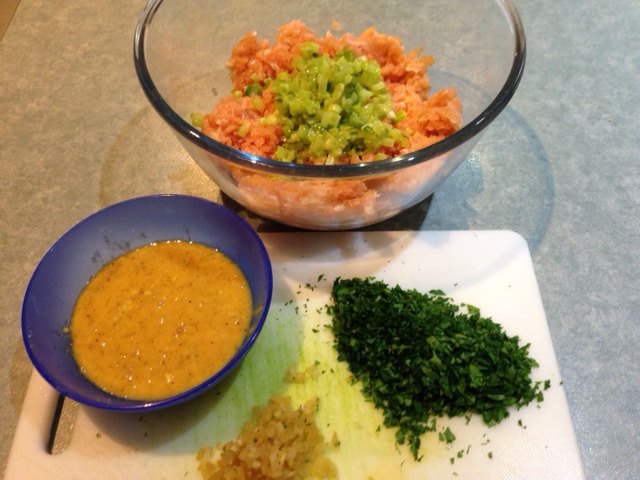
2 sticks of celery heart, finely chopped
500g of salmon mince or trimmings
1½ cups fresh breadcrumbs
1/4 cup finely chopped parsley (a small amount of dill could be included)
zest of a whole lemon or 2 tsp finely chopped rind of preserved lemon
1 egg
1 tbsp Dijon mustard
1 tsp sea salt flakes
½ tsp ground black pepper
½ tsp Tabasco sauce
vegetable oil

Salmon croq 1

Method

  1. Melt butter in a wide pan, add spring onions and celery and sauté gently for about 5 minutes or until softened; allow to cool briefly.
  2. Place salmon in a large mixing bowl.
  3. Add onion mixture, breadcrumbs, parsley and lemon and mix well.
  4. Place the egg, mustard, salt, pepper and Tabasco in a small bowl and beat to combine. Add to salmon mix, stir and then use your fingers to combine thoroughly.
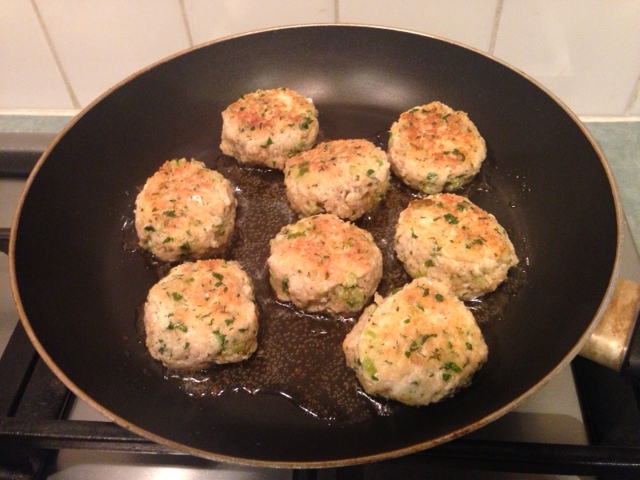
  5. Form the mix into about 15 croquettes (rissoles). I use a dessert spoon to help form the croquettes.
  6. Heat a knob of butter and 1 tbsp oil in the pan over medium heat. In batches of 5-6, sauté croquettes for about 2 minutes on each side, reduce heat and cook through (another 3-5 minutes, depending on size).

Salmon croq 2   Salmon croq 3

In warm weather, the croquettes work well with a tossed, tomato-rich salad. In cooler weather, I might serve them with a tomato-based pasta-style sauce; on a bed of cous cous and rocket with some tomato relish; or, as I did this time, combined with cooked spiral pasta and passata as a pasta bake topped with a light sprinkling of dry mozzarella cheese. Another version of the recipe, which I use to prepare a light lunch with friends, reduces the quantity of breadcrumbs by half and adds an extra egg to produce the filling for a very tasty pie made using fillo pastry.

Salmon croquettes 2   Salmon croq 4

Posted in Cooking | Tagged , , , | Leave a comment

In-digest: week-and-a-bit ending 2 August 2015

Thai, French, Italian, English, Filipino, Chinese, Euro-Turkish-Indian crossover and au naturel – we have prepared and eaten dishes from all of these cuisines over the last week or so, with varying degrees of success and enjoyment. The variability of the results was instructive, and mostly a result of using recipes for the first time without really knowing how they would work or what the result was meant to taste like.

To begin though, a meal of pork Thai red curry, which we cook a few times every year using a red curry paste we make at home according to a published recipe. We first made the paste after we returned home inspired by a cooking class we took in Siem Reap, the Cambodian city close to Angkor Wat. (And we will continue to make our own paste – it works and none of the commercial equivalents contain any shrimp paste, probably due to food safety regulations.) On this occasion, we steamed some bok choy and carrot batons to add to the dish just before serving. Delicious.

Thai pork curry

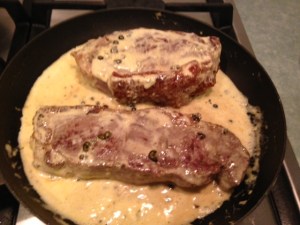
The first new recipe we attempted was for porterhouse steak with a green pepper sauce, written by renowned English food writer Simon Hopkinson. (Simon is one of the owners of Bibendum restaurant in London, where we will be dining early in October.)

The recipe called for two very thick pieces of porterhouse, with plenty of marbling. We found what we were looking for at Gary’s Quality Meats – one of five butchers at Prahran Market – who supplies beef from the Cape Grim brand. (Cape Grim, in NW Tasmania, is reputed to have the world’s cleanest air, not that the cows necessarily notice or, for that matter, help to achieve this result.)
Porterhouse green pepper 1

Having been removed from the fridge an hour beforehand, the steaks were cooked side-by-side in a hot pan over medium heat on their fatty edges – one of the reasons for choosing thick pieces – then cooked on each of the main sides for a few minutes in the rendered fat. While the meat was seasoned and resting, the fat was discarded and we made the sauce, beginning with butter and crushed garlic, then some brandy, green peppercorns and cooking cream. The steaks and their resting juices were returned to the pan briefly before serving. It proved to be a delicious winter’s Saturday night dinner dish, including some comparatively unremarkable vegetables; and, equally unremarkably, there was enough left over for a second meal a few days later.

Porterhouse green pepper 2   Porterhouse green pepper 3

The following evening, we used another first-time Simon Hopkinson recipe, for a dish he calls “fragrant duck ‘pilaf'”. The grain ingredient was, in fact, a pulse – mung dal – which is often used in the preparation of dishes of dal in the Indian sub-continent; and here in Mount Waverley as well!

To begin, we placed three duck legs (aka marylands), which we had bought from John Cester’s at Prahran Market, skin-side down in a non-stick pan, turned them when golden brown, transferred them to a plate a few minutes later and tipped out all but 2 tsp of the rendered fat. Some butter, chopped onion and sliced garlic went into the pan over moderate heat; when they had begun to colour, we added some ground cumin and chilli flakes, then the mung dal, chicken stock, fresh mint leaves and some peeled slices of lemon skin. When it reached a simmer, we added the duck legs – jointed by Maggie – and their resting juices, put the lid on and baked the dish for about 40 minutes in a moderate oven.

Duck pilaf 1

Despite the fact that we’d used less mung dal than the recipe specified, it still dominated the dish, overwhelming the pieces of duck. We are very fond of duck – there are five duck dishes in our repertoire – so, if we were to use this recipe again, we would reduce the quantity of dal by around half. But we like the overall concept.

While we were at Prahran Market, we also went to Neil’s Meats, where we now buy most of the veal we cook with. We came away with some beautiful escallopes, which yielded an evening meal and lunch each of veal parmigiana; and two cutlets, which will soon become a meal cooked according to our Dijon-inspired recipe.

Maggie works from Monday to Wednesday each week, so I often take the opportunity to prepare something that doesn’t appeal to her so much. This usually involves a soup – I have twice as many favourites as Maggie – or fish, ditto. Last week, it was a batch of salmon rissoles, to provide me with lunch over the following days. I am writing a post about the rissoles, which are made using fresh minced salmon, so I won’t take up any more of your time here.

Meanwhile, I was thawing out a fillet of hapuka – a firm, white-fleshed fish – ostensibly for it to be made into a fish curry, to which I have converted Maggie. Then I made a fateful decision to use a recipe for an adobo (Filipino) style of dish, which I had clipped from our Saturday newspaper. I didn’t know how the dish should work out; I lacked the correct form of chilli and blindly tried to compensate; and the piece of fish was too thick for the dish. I scored my dish 1 out of 10 and we have binned the recipe. But, next time we are in Manila …

We returned to form a couple of nights later when we had pizzas for dinner. We used to make our own pizza dough but, for the last couple of years, we have been buying good quality bases made by a respected pizza business and carried by Toscano’s, our preferred greengrocer.

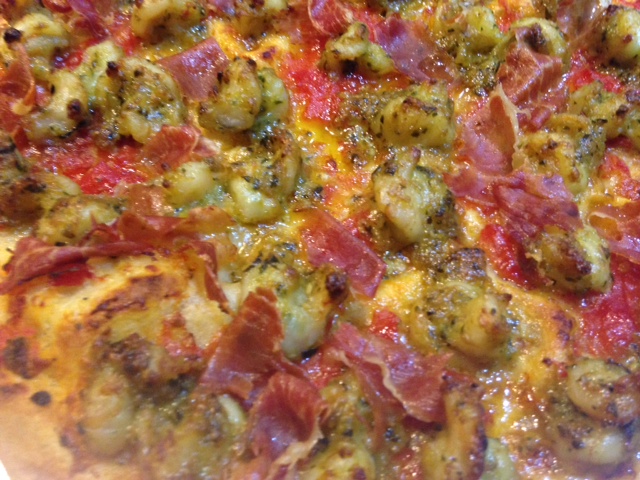
Of the two pizza toppings we added to the bases, one – shown in the lefthand photo – was a Margherita-style combination of chopped basil combined with Maggie’s cooked-down peeled tomatoes, some slices of prosciutto and portions of bocconcini. The other pizza began with a lesser amount of the tomatoes; then a dozen or so peeled prawns which had been halved lengthways, briefly fried (to reduce their water content) and tossed in basil pesto; and torn pieces of the prosciutto; the second photo is a close-up of this pizza.


Pizza 1  Pizza 3

Towards the end of the week, we visited Camberwell Market with delicatessen items and fresh, quality seafood on our shopping list. There are two fishmongers there; we prefer Kingfisher Seafood, having experienced a bit of inconsistent quality from its competitor. As planned, we bought a handful of cooked tiger prawns from South Australia, to be combined with some avocado and a cocktail sauce and served on a bed of shredded iceberg lettuce for lunch; and a bag of local mussels, as Maggie was craving a meal of our Nice-inspired mussel dish. Not so planned were the six Sydney Rock oysters and 10 large Tasmanian scallops; we were assured that the latter were dry, ie not plumped up with water, and with good flavour.

The oysters became a savoury late-afternoon snack, served simply with a squeeze of lime and a modest grind of black pepper. Maggie transferred the scallops to a container lined with kitchen paper and put them at the back of the fridge for the night.

Now for the item of English cuisine – roast lamb. The only cut of lamb that we roast is a section of whole boneless leg, which we buy on a regular basis and split into three pieces, two for roasting and one to be diced, minced and made into croquettes with feta, herbs and spices.

On this occasion, the piece – about 650g – was too small to stuff and roll, so Maggie simply cut a series of slits through the thin upper layer of fat and filled them with grated garlic, then seasoned the whole piece with olive oil, salt and pepper. We roasted it for just over 35 minutes, sitting on a piece of baking paper in a baking tray, then wrapped it in foil to rest while we roasted some Dutch carrots, pieces of parsnip and chunks of potato. The potato chunks had been boiled for 4 minutes – to ‘set’ the starch – then tossed with olive oil, seasoning and chopped rosemary leaves. A shallot and tomato ‘pie’ and some fresh peas cooked with sprigs of mint completed the meal. The flavour of the lamb was as good as we could remember – thank you Ashburton Meats – and there was enough left over for a weekday lunch each.

Next day, we used the scallops to prepare a light lunch. There are three scallop dishes in our repertoire. In one, the scallops are seared in a little oil, one minute each side and served with a dressing of mayonnaise blended with anchovies, dill and pepper. A second dish, inspired by a childhood memory of mine, is to cook them briefly in butter and then build a meurniere-style sauce from the pan juices up, with dry white wine, a little lemon juice, lots of herbs, seasoning and cream.

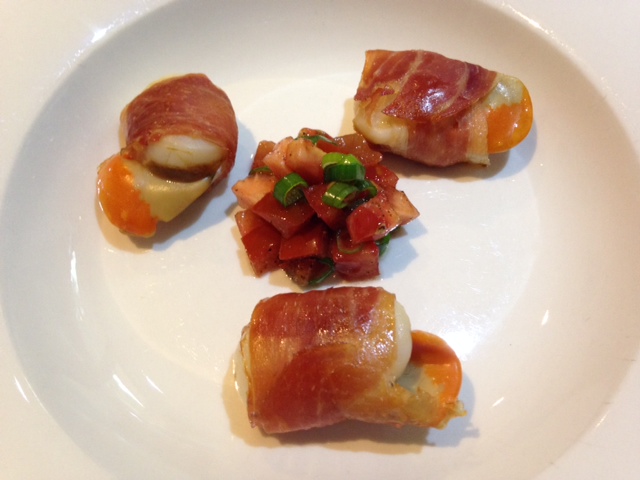
Our third method produces this pretty dish, as it turned out last Saturday. It’s not too difficult and, provided the scallops are of good quality, the result is delicious.

Scallops proscuitto

Maggie used a small sharp knife to remove any dirt – hardly necessary in this case – and wrapped each one in some prosciutto; say, about one and a half times around the scallop. Meanwhile, I heated the oven to 190C and warmed a non-stick baking dish for a few minutes. (We are in the depths of a long, cold – but not lonely, by George – winter in Melbourne, so we need to de-chill baking trays etc in order to maintain oven temperatures and get timings right. I’m serious!)

Once the oven was ready, I sprayed the baking dish lightly with olive oil, distributed the wrapped scallops evenly on the base and put the dish in the oven, quickly. After 4 minutes, we turned the scallops, baked them for a further 4 minutes and served them on warmed plates. They were accompanied by a salsa comprising chopped ripe tomato, sliced spring (green) onions, a dash of sweet chilli sauce and salt and pepper.

In the past, we have prepared this dish by grilling the wrapped scallops. We now think that baking produces a superior result; this was certainly one of the best feeds of scallops that we have ever eaten at home. Our scallops – thank you, Kingfisher Seafood – were about 5cm long; for smaller ones, the total baking time should be reduced to 6 minutes. But you must insist on ‘dry’ scallops; unless you want a scallop stew, that is.

For Saturday evening’s dinner we cooked the dish that Maggie had set her palate on – our steamed mussels Nicoise. As I have written about this dish before, I won’t go into details. Except to say: it is now officially the second favourite recipe in our repertoire; and Maggie was so excited when she was taking a photo of the finished dish that it is a bit blurry but still very colourful!

Nice mussels 11

On Sunday, we dug up this year’s crop of horseradish for Maggie to clean and put through our mincer. She ended up with about five jam jars’ worth, two to give away to fellow-enthusiasts and three to be stored in white vinegar in our fridge.

The last meal of the week was the Chinese classic, Sang choy bow, made using pork mince according to our slightly modified version of an Australian Women’s Weekly recipe. The result was fresh, crunchy and delicious.

Sang choy bow

Now, I know there’s a lot of protein in this post – and we probably do eat more protein than the average Australian – but our diet does actually include plenty of fresh fruit, vegetables and herbs, as well as rice, pasta etc. In any given fortnight, we will, between the two of us, consume three punnets of strawberries, one rockmelon, one pineapple, a dozen apples, half a dozen bananas, at least a dozen oranges and several lemons from our tree. As for the vegetables, many of them are prepared somewhat plainly, without any significant chef-ing, so they often go unreported and hidden from the camera lens. So sad!

And some of the fruit finds its way into delicious desserts. In the period covered by this post, we have made a baked Italian apple cheesecake, crepes with lemon & sugar, and hazelnut meringues to go with fresh strawberries.

Posted in Cooking | Tagged , , , | 1 Comment

Mushroom & leek soup

As a child, the only edible mushrooms I knew about came buttered and stewed, in a tin, and were eaten as a side dish with a grilled piece of steak. Sad but true!

Even as an adult, cooking mostly vegetarian food in my 20s and 30s, I rarely bought any fresh mushrooms, and the few that I did buy were of the slightly bland, white-skinned variety that was mass-produced in contrived environments.

Eventually, in my mid-40s, I began to take mushrooms more seriously. Although I am hardly a connoisseur, I at least look for opportunities to avail myself of their savoury qualities, either on their own or as a significant ingredient in a complex dish.

The original recipe for this soup came via Maggie’s daughter, a self-confessed soup-aholic. I have enjoyed it from the very first time I made it and I have barely altered the recipe over more than a decade of preparing a pot of it several times each year.

I made a batch last week, expecting to serve some at home and capture it on my i-Phone before I ate it. However, it was put aside to be taken to Healesville and shared with Julian, Sara and Iris for lunch. Everyone enjoyed it, although some of Iris’ serve didn’t quite make it to her mouth; she is determinedly independent but, at 18 months, is still a few weeks short of mastering her use of a spoon! (And that’s another photo I wish I had taken.)

And, in a first for me, Julian commented on the ‘umami’ element of the soup’s flavour. I have only recently heard of this fifth flavour being added to the long-recognised salt, sweet, bitter and sour. So, I learnt something from my son, a not-infrequent event, as I age and he hits his straps.

Ingredients

40g unsalted butter
1 large leek
1-2 cloves garlic
1 stick of celery
375g mushrooms, coarsely chopped
1 zucchini, chopped (optional, but only use with well-flavoured mushrooms)
1 tbsp chopped parsley
4-6 sprigs of thyme
generous grinding of pepper
1 thick slice dense bread, torn into small pieces OR one large potato, peeled and diced
1 litre salt-reduced chicken stock

Mushroom soup 1

Method

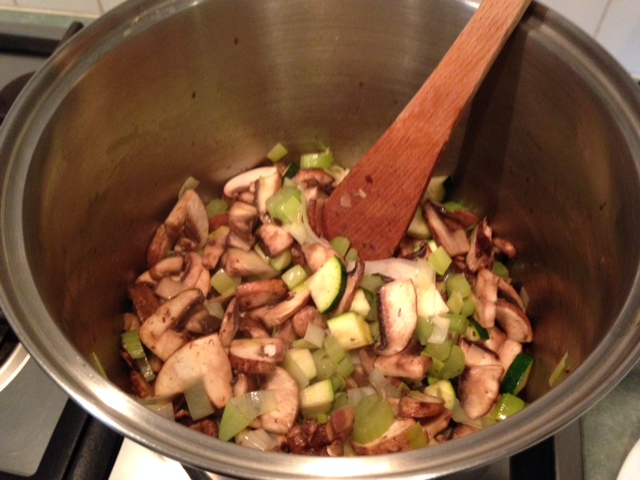
  1. Heat butter in a large saucepan over low heat
  2. Coarsely chop leek, garlic and celery, add to pan and sauté for 5 minutes
  3. Add mushrooms, zucchini and potato (if using) to the pan and cook, stirring occasionally, for 6 minutes.
  4. Add parsley, thyme, pepper, bread (if using) and stock, bring to the boil and simmer for 25 minutes. Cool slightly and remove thyme sprigs.
  5. Place the soup in a blender and blend until it is smooth.
  6. Return soup to saucepan, adjust seasoning and reheat.

Mushroom soup 2   Mushroom soup 3

Mushroom soup 4

Posted in Cooking | Tagged , , | Leave a comment

Crepes, Susan?

The title-pun of this post is in honour of my most enduring – some might say longest-suffering – friend. She lives more than three hours away by plane. Which is a pity, because, if she lived nearby, I’m sure she and her husband would come over for dinner and enjoy Maggie’s crepes for dessert. As we just have.

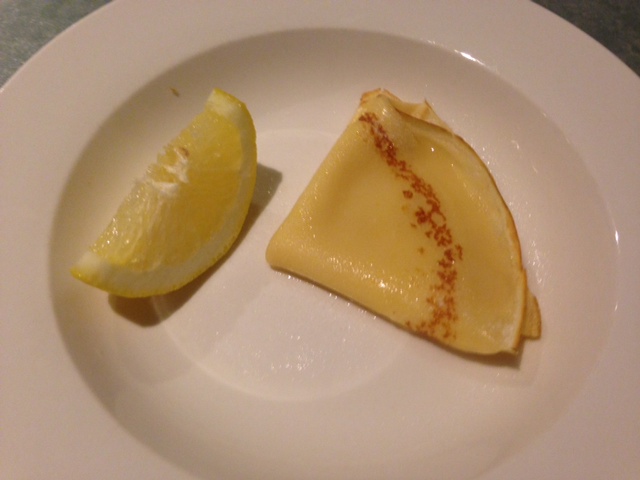
For an elegant and light dessert, it is hard to go past crepes. As any visitor to France knows, crepes can be served with many different flavourings, including a savoury filling, but we prefer to keep it simple most of the time, with a squeeze of fresh lemon juice and a sprinkling of caster sugar delivering a delicious result.

Crepe 3

This recipe will produce about 12-15 medium-sized crepes. Maggie uses a lightweight, non-stick pan pan, 20cm (8″) in diameter.

Ingredients

180g plain flour
2 cups milk
40g butter
pinch of salt
2 eggs, lightly beaten with 200ml of the milk
extra butter for greasing the crepe pan
caster sugar
lemon wedges

Method 

  1. Place the butter, salt and 300ml of the milk in a saucepan and heat gently until the butter has just melted. Remove from heat.
  2. Place the flour in a large bowl, add the egg/milk mixture and combine thoroughly with the flour using a fork.
  3. Add the warm butter/milk mix a little at a time, making sure that the consistency of the batter remains smooth and even. Complete the mixing using a whisk to produce a smooth batter free of lumps. Cover with plastic wrap and chill for 1 hour.
  4. Heat a light, non-stick frying pan over medium heat and brush with a little butter. (A heavier non-stick pan would hold the heat better, so use that if your wrists are strong!) Ladle 2-3 tablespoons of batter into the pan and promptly tilt and swirl the pan to spread the batter evenly.
  5. After 1 minute, lift the outer edge of the crepe and flip, then cook for a few seconds on the other side.
  6. Transfer to a plate, squeeze some juice and sprinkle some caster sugar over the crepe, fold twice and add a bit more juice and sugar before serving.
  7. Crepes can be made in batches and kept warm in a 100C oven; or frozen between layers of plastic wrap then reheated in a microwave oven. The batter will keep for a few days in a fridge but will need to be brought back towards room temperature to allow you to recombine any solidified butter.

Crepe 1   Crepe 2

Posted in Cooking | Tagged , | 1 Comment

Fifty sleeps …

… ’til our next international adventure.

I had to pinch myself this morning when I discovered that it is nearly nine months since I wrote a brief post about the trip we have booked for this coming September. And, yet, the calendar tells me that we still have 50 sleeps before we fly out of Melbourne, bound for London.

To recap.

We will spend three days exploring London independently, before taking a brisk week-long Insight Vacations coach tour of some of the sights of England, Scotland and Wales. Then we will fly to Zagreb to join another Insight tour, mainly of Croatia, including several nights on its Adriatic coast, rich in cultural history and scenery. A flight back to London will give us the opportunity to catch up with faraway friends over dinner at a renowned restaurant, Bibendum, followed by another full day of sightseeing. Finally, we will fly to Singapore for a three-night stopover on the way home to Melbourne.

So, subject to the impact of jet-lag, we will have a total of four free days in London. Our sightseeing wish-list reflects the fact that we are not especially interested in the current royal family, nor their ancestors; if we see the Tower of London or any of their palaces, it will be as passers-by. At this stage, our preferred options include Trafalgar Square, St Paul’s Cathedral, British Museum, Kew Gardens, London Zoo, Covent Garden, Savoy Hotel, Fitzroy Square (Bloomsbury), the National Gallery, Madame Tussaud’s, Sherlock Holmes Museum and a couple of the famous retail stores. And some good quality pub meals, of course!

I’m looking forward to sharing the highlights of this trip through a series of posts.

Posted in Travel | Tagged , , , | Leave a comment

Pig on a roller-coaster

We rarely cook pork without using spices to add piquant notes which complement the sweet and savoury qualities of good quality pork. I have previously written about two of the ways we do this – here and here.

In this substantially modified version of a Karen Martini recipe, four distinct, strong and contrasting ingredients are combined to make a rub, without the presence of any mollifying agents such as salt, oil or sugar.

The impact on the tongue is something of a culinary roller-coaster ride – startling, thrilling and, once your palate has settled, an experience you will look forward to repeating.

Ingredients

1½ tbsp fennel seeds
1 tbsp black peppercorns
2 tbsp orange zest
3 sprigs rosemary, leaves finely chopped
2 or 3 thin pork steaks or medallions, about 250g in total
10g butter
50 ml orange juice
1 tsp sweet sherry
100 ml chicken stock
salt flakes for seasoning

Method

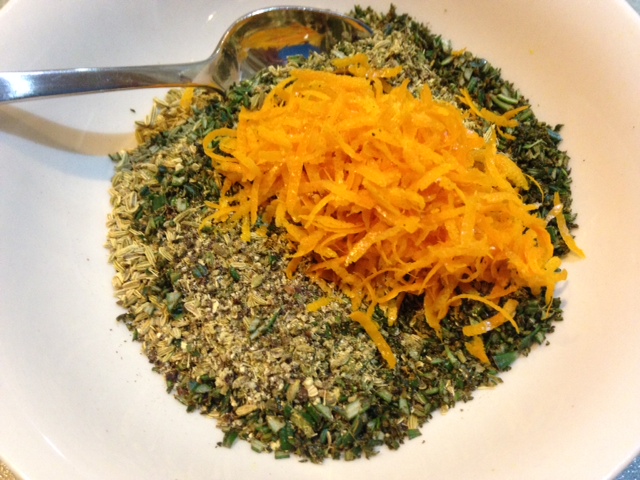
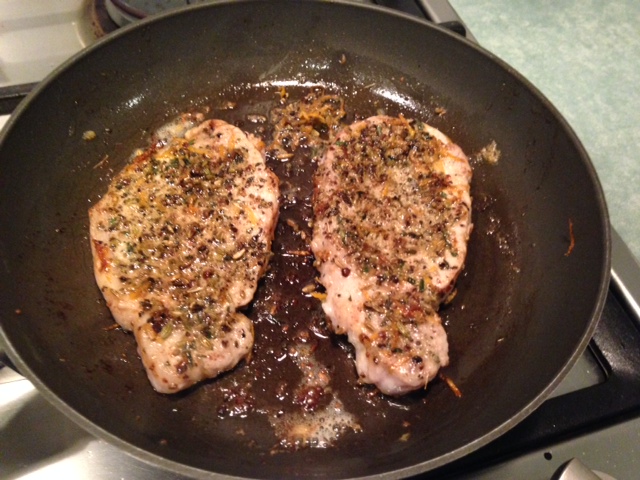
  1. Combine fennel seeds, peppercorns, orange zest and rosemary leaves in a blender until you have a coarse powder. Press one quarter to one third of the mixture onto the chops and set aside for 30 minutes. (The leftover rub can be stored in a container in your freezer.)
  2. Heat butter in a small heavy-based pan over medium heat and brown pork for 3 minutes on each side. Transfer to a warm dish.
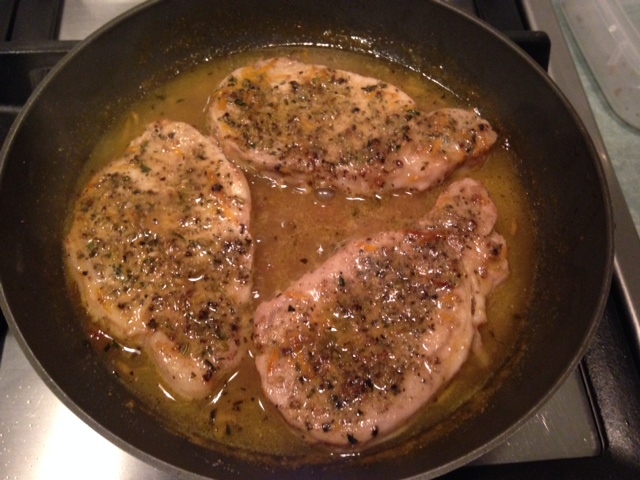
  3. Add orange juice and sherry, bring to a busy simmer and reduce by half. Add stock, return to a simmer and cook for 5 minutes. Adjust seasoning. (At this point, we sometimes use some cornflour or similar to thicken the sauce a little more.)
  4. Return pork to pan, heat through and serve.

Pork with rub 1   Pork with rub 2

Pork with rub 3

Pork with rub 4   Pork with rub 5

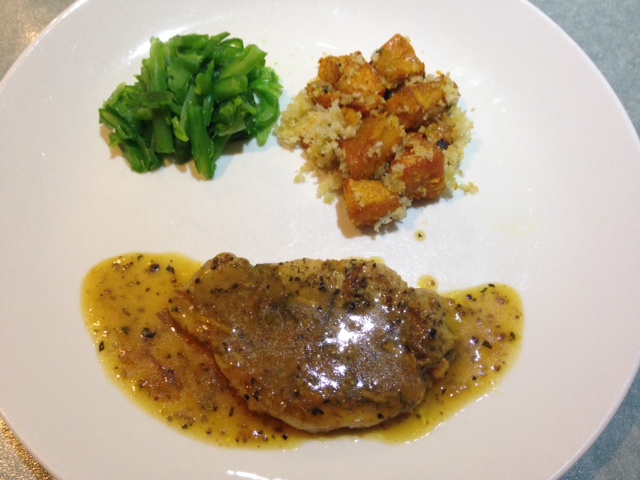
For side-dishes, we usually choose a plain green vegetable, eg fresh beans, and one of the orange-coloured vegetables, eg carrot, sweet potato; regular potatoes do not work with the flavours of the spiced pork and its gravy.

This time, I took some peeled and cubed Jap pumpkin, sprinkled it liberally with salt to reduce its water content, dried it off, tossed it in olive oil, added some thin slices of garlic and roughly chopped sage leaves and baked it for about 30 minutes. Then I sprinkled it with some coarse bread crumbs and baked it for a further 15-20 minutes. I also steamed some whole baby beetroot until al dente tender, peeled them, cut them into chunks and dressed them with a combination of sour cream, Dijon mustard and finely-chopped (minced) pieces of toasted walnut. All very tasty and satisfying.

Pork with rub 6

Posted in Cooking | Tagged , , , , , | Leave a comment