Paris: Picasso pleases but there were problems in paradise

Last September, Maggie and I made our fourth, and probably last, visit to Paris. We had booked to stay in our favourite hotel in Le Marais district for four nights, sandwiched between our river cruise and our visit to First World War battlefields.

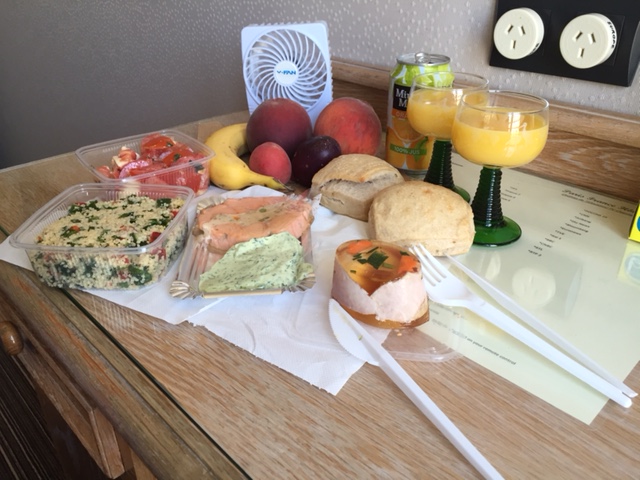
On our first evening, we chose to dine casually in our room, feasting on a selection of goodies from the some of the fine local shops. “Where is the wine?” my friends would ask. Well, I was still suffering from a bug I had picked up somewhere between Melbourne and Amsterdam, so our ‘aperitif’ was a spritz of orange juice and mineral water.

Eating rough: take-out food from a Parisian epicerie

Eating rough: take-out food from a Parisian epicerie

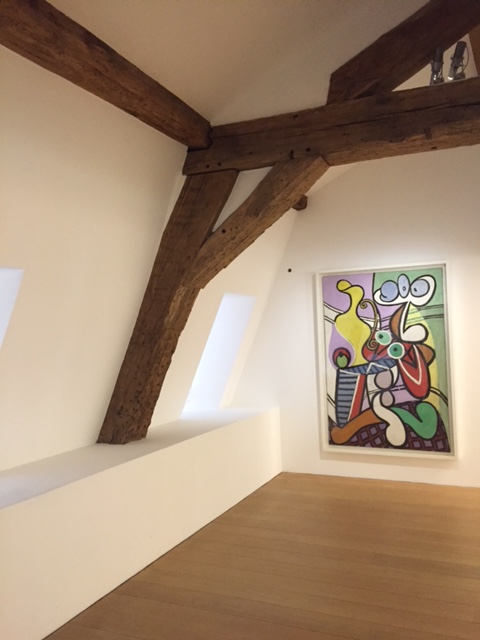
The next morning, we set off for the main objective of our time in Paris – a visit to Musee Picasso, located within a pleasant walking distance of our hotel.

This was something we had waited nearly seven years to accomplish. The museum was closed for renovations when we visited Paris in December 2009 and September 2011; and it was due to reopen a few months after our brief visit to Paris in April 2014.

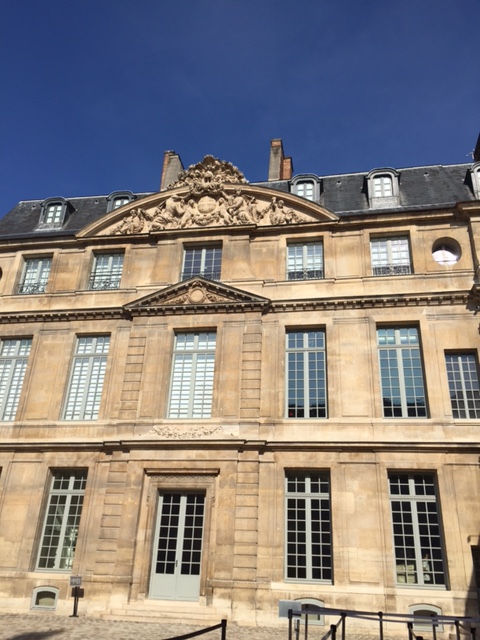
The museum is home to a vast collection of works by Picasso, as well as works by some of his contemporaries that formed part of his estate. The collection is housed in a handsome building dating from the mid-17th century, which has been renovated twice in the 40 years since it was acquired by the City of Paris for this purpose. You can learn more about the history of the building and how the collection came to be in public hands here.

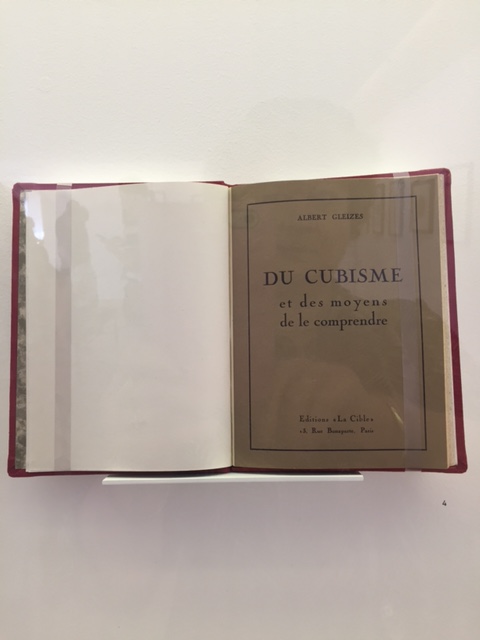
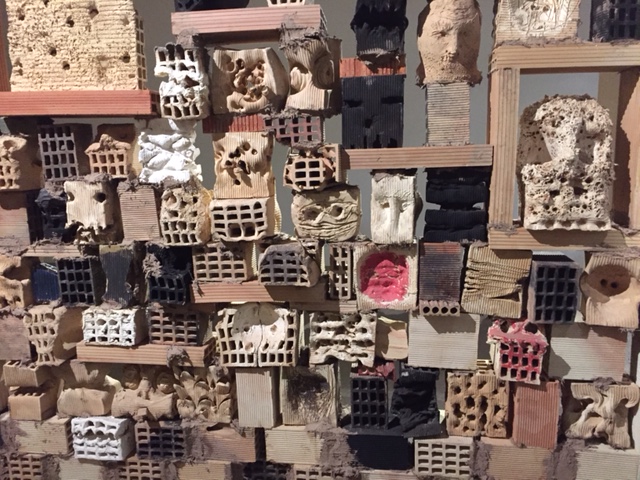
The following selection of our photos shows original elements of the exterior and interior of the museum building; examples of the highly detailed and excellent interpretive material accompanying the exhibited works of art; and a small selection of the exhibits.

Overall, it was one of the great art museum experiences of our six visits to Europe since 2008 and well worth the wait!

picasso-1

picasso-28      picasso-29

picasso-5      picasso-7

picasso-19      picasso-22

picasso-3    picasso-4

picasso-10   picasso-11

picasso-12      picasso-16

picasso-24    picasso-26

We spent the balance of our time in Paris strolling around hitherto unexplored parts of Le Marais; shopping for Maggie’s favourite perfume, Fragonard; taking our wonderful day trip to Monet’s garden at Giverny; dining out locally, including a surprisingly stodgy dinner at Pramil, a restaurant at which we had dined very well on two previous occasions; and a sad visit to the Trocadero district, where we discovered that the prices at our favourite cafe had climbed very steeply since April 2014!

pramil-2   pramil-3

The escalation in prices became a recurring theme of our visit. However, the greater sadness was a noticeable decline in the volume of the sound of people being oh so happy to be in Paris.

In the aftermath of the terrorist attacks, we had expected to come across a highly visible presence of armed police and soldiers. We saw little of that but, in a way, the flat ‘vibe’ was actually more alarming. We had read that there had been a 20% decline in the number of Americans visiting Paris; that would help to explain what we observed. Our hosts assured us that it was all business as usual but even they seemed a little subdued.

So, is fitting that I conclude this post with a grey image of the Eiffel Tower, devoid of the usual milling throng of tourists at its base.

eiffel-tower

Au revoir Paris!
Rick Grounds

Posted in Travel | Tagged , , , | Leave a comment

Back in the saddle

A few weeks ago, I told my small body of regular readers that I would be taking an indefinite break from blogging. At the time, I had too many challenges in my life and I needed to devote more of my time and effort to tackling them. In some cases, the challenges were also eroding my desire to write.

This week, I am happy to report that some of those challenges have been resolved and I am ready to return to blogging, hence the three short cooking posts I published yesterday.

However, I am still struggling with two chronic problems.

The first is my left hip, which is afflicted with severe osteo-arthritis. Late last year, I went from finding it frustrating and, occasionally, very painful, to feeling miserable, with constant low-level pain, reduced functionality and tiredness, punctuated daily by several moments of sharp pain. However, there is light at the end of the tunnel. In just 26 sleeps I will be in an operating theatre having my hip replaced, followed by a period of rehab. (Bet you’re hoping I don’t share too much of that experience!?)

The other chronic problem is less amenable to a permanent solution. For more than 40 years I have suffered from depression. A prescription medicine and occasional psychotherapy help me to enjoy life most of the time, but I remain more vulnerable than most people to experiencing the blues. Happily, one of the main triggers for me going downhill has been resolved in the last couple of weeks, and that has helped to rekindle my enthusiasm for writing.

So, between now and going under the knife, I will try to publish some further posts about our travels in France last year. Beginning with our visit to Musee Picasso in Paris.

Posted in Blog stuff, Home life | 2 Comments

Plum job puts some spice in our life

We had a ton of tomatoes, our neighbours had a surplus of satsumas. Plums that is. And they kindly shared the feast of fruit with their friends. Like us!

Normally, I would convert these fleshy, red plums into one of my plum cakes and stew the balance to have with muesli and yoghurt of a morning. However, this year’s supply was delivered when Maggie was in a mood to make savoury condiments, so she hit the internet to find a recipe or two for me to appraise.

plum-chutney-3

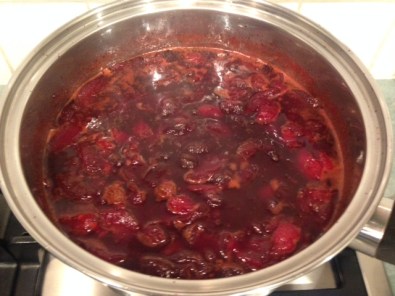
You can read the one we decided to follow here. Over the following fortnight, she made three batches and we made some modest modifications along the way. Firstly, we took up suggestions from some of the recipe’s reviewers: add some ‘plum’ tomatoes, known as Roma in Melbourne (we peeled them first); simmer without a lid; and more ginger (we made it 80ml and used what is known here as ‘naked’ ginger).

plum-chutney

We also discovered that you need to be mindful of the flavour of the plums when you add the cayenne pepper – the ‘fruitier’ the plum, the more cayenne it can handle, so perhaps use half a teaspoon if your plums have a mild flavour.

What else? We were casual about how many plums we used in each batch but it was probably a good 10% more than specified. Maggie put all the ingredients in her pan at the same time, cooked them over gentle heat until the sugars were dissolved and then cranked it up to a busy simmer. To finish, she mixed about 15ml of cornflour with some cold water and stirred it into the chutney to thicken it a little more. And, for Australian readers, ‘raisins’ translates as sultanas.

So far, we have found the chutney to be a pleasing partner for roast poultry and baked pork ribs. Before long, it will be put to the duck test!

plum-chutney-2


Cheers!
Rick Grounds

Posted in Cooking | Tagged , , , | Leave a comment

‘s a lot of tomatoes in those tarts

Each summer, Maggie and I grow ‘cherry’ tomatoes in pots, one plant per pot. This season, the crop began slowly – plenty of small, green tomatoes but none of them were ripening. Maggie even wondered if we had planted them too late. Offended – preparing the pots is my job – I assured her that was not the case!

Then, in the second week of January, the fruit began to ripen and, before long, Maggie was cropping at a rate of 20 or more per day. We had three bowls of them in a corner of our kitchen, sorted according to ripeness, and tomatoes were being distributed to grandchildren and friends, and still the supply kept coming. It was as if some sort of hybrid of the Pied Piper and the Sorcerer’s Apprentice had taken control of our cherry tomato plants!

Alright, that sounds a bit hysterical, but the bounty did stretch our culinary ingenuity, that is, until I remembered a dish that we hadn’t made for a decade or so – tartlets of caramelised shallots, feta cheese and cherry tomatoes.

tartlet-2

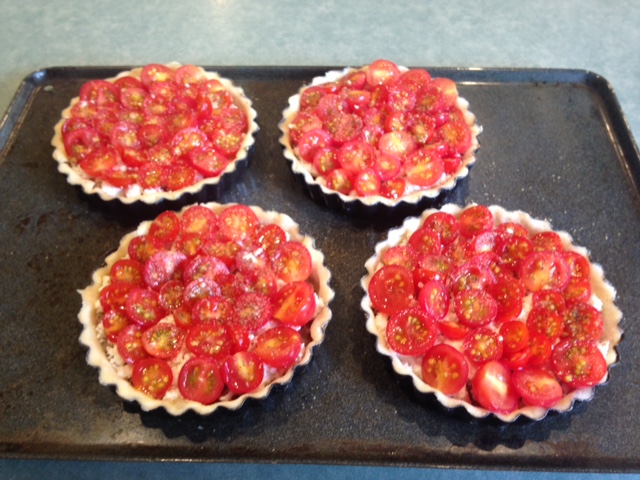
We cooked four tarts, using loose-based, non-stick, flan tart pans that were 11.5cm or 4.5 inches in diameter. The shortcrust pastry was made according to our recipe for quiche lorraine, with quantities reduced by about 10%.

Maggie peeled about 200g of (French) shallots, halved them lengthways and sliced them finely, then added them to a pan in which I had melted about 20g of butter, over a gentle heat. (You need a generous knob of butter but not as much as when you sauté onions for a quiche; the latter is almost like ‘poaching’ the onions.) As the shallots began to cook, we added a generous grind of pepper and a couple of pinches of salt.

Once the shallots had softened, Maggie added 15ml of sweet sherry and 1 tsp of sugar. When the sherry had been absorbed, another 15ml was added and the shallots were sautéed until they began to turn golden brown in colour.

There was about 70g of pastry for each tart and I rolled it out a little thinner than I would for a full-sized quiche – you don’t want to overwhelm the tart’s filling. To assemble the tarts, we spread the shallots over the bases, added a layer of crumbled Greek feta – 35g per tart – and then a generous layer of halved cherry tomatoes, flesh-side up. After adding a generous grind of black pepper, we cooked the tartlets for about 25 minutes in a fan-forced oven heated to 165C.

The next photo was taken just before we put the tarts in the oven. The final one shows the profile of the tarts’ filling, with just a small amount of tomato skin scorching by the time the tarts were cooked.

tartlet-1

tartlet-3


Cheers
Rick Grounds

Posted in Cooking | Tagged , , , | Leave a comment

Knowing my onions

I am publishing this short post because I will soon be writing a more substantial post about a dish for which one of the elements is caramelised shallots. However, what Maggie and I refer to as a ‘shallot’ is known by other names in some parts of the world. Why, just 300km from our home, across the state border in New South Wales, it would be called ‘eschallot’. Not that Sydneysiders don’t cook with shallots – that’s their name for our ‘spring onions’!

Confused? Especially you North Americans?

onion-types

In this photo, the green item is the top section of our ‘spring onion’. I think it is called ‘green onion’ Stateside, yes? But, a Google search tells me, ‘shallot’ in New Orleans and sometimes ‘scallion’ in other places.

The two smaller specimens in the centre of the pic? Those are what we call ‘shallots’ or, in some stores, ‘French shallots’ (that’s to help immigrants from Sydney).

At back left is what we call a ‘brown onion’. I think North Americans give it the moniker ‘yellow onion’, as I have discovered in Julia Child’s recipes. And it is also known in some parts as a ‘Spanish onion’

Finally, at back right, is what we call a ‘purple onion’ or, as is the case elsewhere, ‘red onion’.

Our greengrocer also stocks ‘white onions’, which are popular for roasting whole. We have used them in past years, in a veal braise to take advantage of their mild flavour, but not lately.

Capisce? Savvy?

Rick Grounds

Posted in Cooking | Tagged | Leave a comment

Indefinite leave of absence

Just to let my small band of followers know that I am taking a break from blogging.

Reluctantly!

I have a range of challenges in my life at the moment. In the face of these, I can’t summon the energy to write, much as I would like to complete the story of our 2016 travels in Europe.

I hope to return to the blogosphere but I cannot predict when that will be.

Until then …

Cheers
Rick Grounds

Posted in Blog stuff, Home life | Leave a comment

Into the closet: folio 4

A few weeks ago, we updated our ‘loo view’, replacing images from our visit to Spain in 2011 with a selection of photos from the three days we spent in Burgundy in May 2014.

Although we enjoyed several bottles of the region’s famous wines, the main themes of our explorations and experiences were fine dining, scenery and the old heart of the town of Beaune. These themes are illustrated by the images that now adorn the walls of the little room in our home:

Group 1

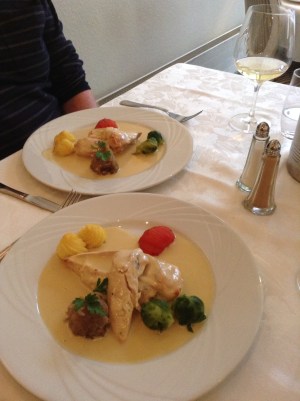
Here are two of the dishes that we both enjoyed during our time in Burgundy and took as inspiration for cooking in our kitchen back in Melbourne: chicken with a mustard cream sauce and a refined presentation of boeuf bourguignon.

la-grilladine-2d

chez-jeannette-3

Group 2

This group comprises a colourful public park in the centre of Beaune; vineyards at Montrachet, some of the most expensive agricultural land in the world; and bunches of lily of the valley, sold on every street corner on the morning of May Day, a very French tradition.

img_4583

img_4586

img_4630

Group 3

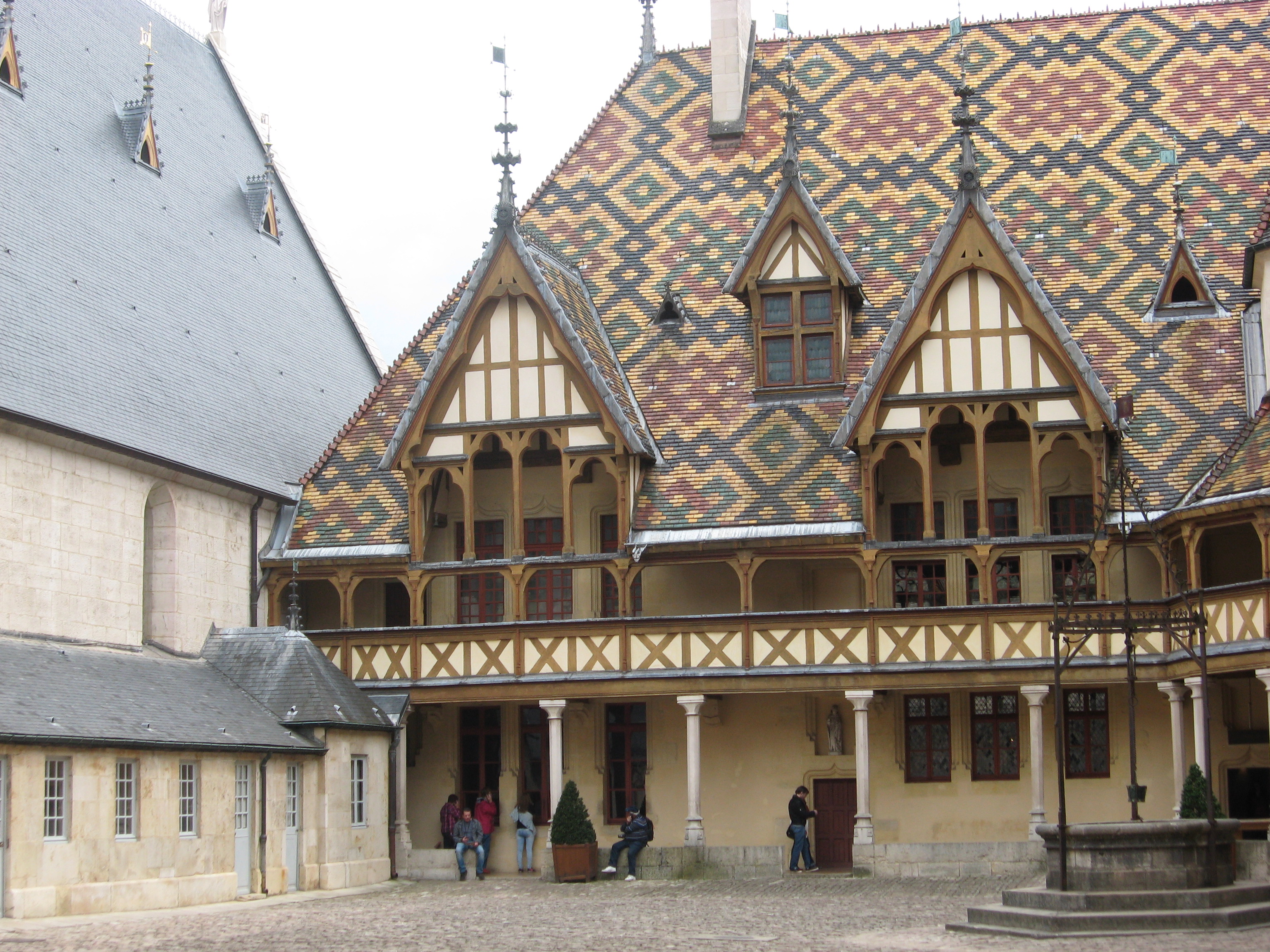
The last pair of photos is of the famous Hotel Dieu, constructed in the middle of the 15th Century by the Chancellor of Burgundy and his wife, as a hospice and hospital for the poor. From its inception to the present day, this facility and its successors have been the direct financial beneficiaries of the sale of wine from an an allocation of fine Burgundian vineyards arranged by the founders.

img_4608

img_4609

Cheers!
Rick Grounds

Posted in Home life, Travel | Tagged , , , | Leave a comment

It’s pickling time again!

Happy New Year everyone!

One of the things we like most about the warmer months is the abundance of fruit available for converting to condiments, ie pickles, chutneys and relishes. In our home, that will always include green tomato pickle and pear & ginger chutney; we tend to make these later in the season, when there is an ample supply of not-ripe-enough tomatoes and the first pears of the new year.

So far this summer, we have made three condiments that we didn’t get around to making in the 2015/16 season: pickled cherries, red tomato relish and spicy peach chutney.

Pickled cherries

The recipe for the pickled cherries leaves their primary fruit flavour largely intact, whilst adding a savoury edge. We have mainly used them with duck, smoked eel and antipasti, and in a festive rice salad to go with ham or poultry.

Ingredients

500g firm, ripe cherries, stems attached (to prevent bleeding)
200g sugar (white or raw)
200ml white wine vinegar
650ml water
1 fresh bay leaf (or 2 dried leaves)
2 long strips orange zest
2 long strips lemon zest
1 stick cinnamon
4 black peppercorns
4 cloves
1 tsp salt

Method

  1. Pack the cherries into sterilised jars.
  2. Bring the remaining ingredients to a boil in a saucepan, stirring until the sugar has dissolved, then simmer for 5 minutes.
  3. Pour the spiced vinegar mixture over the cherries, cover with lids immediately and tip jars upside down to seal.
  4. Leave for a month before eating. When you open a jar for the first time, remove all the solid elements of the pickling medium, eg zest, cinnamon, bay leaf.
  5. If stored in a dark, cool place, the cherries will keep for up to 2 years

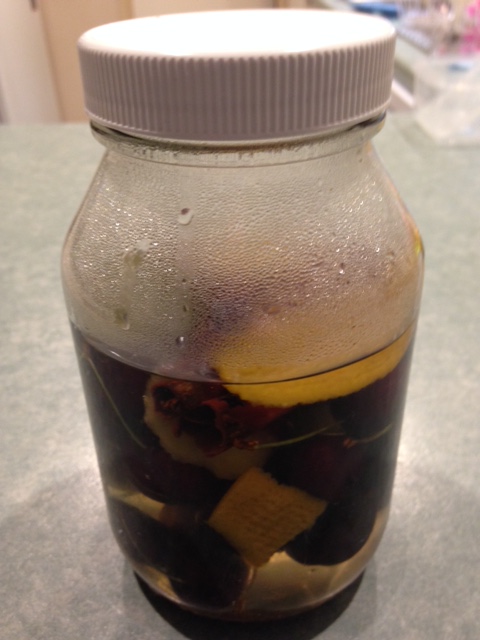
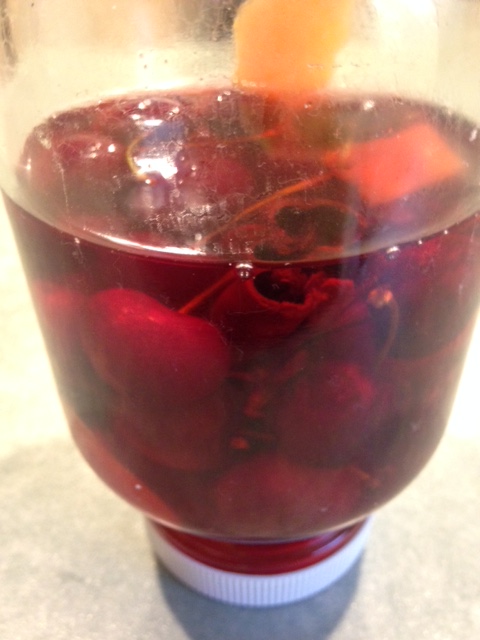
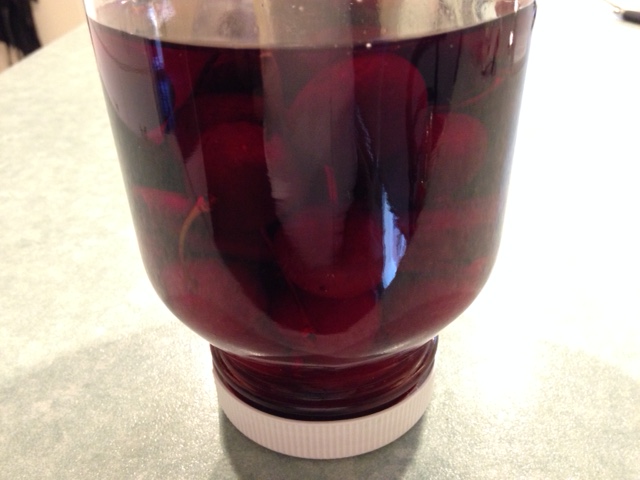
The third of the photos shows how the jar of cherries looks after 24 hours. The last photo was taken three weeks later.

pickled-cherries-1

pickled-cherries-2         pickled-cherries-3

pickled-cherries-4

Tomato relish

Maggie grew up living with her parents in the home of her grandmother, who was an expert in culinary self-sufficiency. Tomato relish was a regular summer product, using home-grown tomatoes. This recipe produces a spicy condiment that matches Maggie’s palate-memory.

Ingredients

1kg ripe tomatoes, peeled and sliced
375g brown onions, peeled and sliced
40-50g salt
330g sugar
3 tsp mild (Madras) curry powder
3 tsp mustard powder
pinch of chilli flakes
400ml white vinegar

Method

  1. Place tomatoes and onions in a large bowl, sprinkle with salt, cover with cling wrap and leave overnight.
  2. Next morning, strain off the liquid. Place the tomato mixture in a large pan, add vinegar and sugar and bring to the boil. Boil rapidly for 5 minutes.
  3. Add spices to the pan and stir. Boil gently for 1 hour, stirring regularly to prevent the relish from catching.
  4. Pour into sterilised jars and seal. Stored in a good fridge, the relish will keep for
    at least 18 months.

tomato-relish

Cheers!
Rick Grounds

Posted in Cooking | Tagged , , , , | Leave a comment

Capital cooking: eating out, in and around Canberra

Maggie and I enjoy visiting Canberra but, to use that well-worn phrase, we wouldn’t want to live there. Like some other cities built from scratch in the 20th century to house national governments and their agencies, it has a reputation for being somewhat soulless and unattractively atypical, economically, socially and, to some extent, physically. Some years ago, it was even described as ‘a waste of a good sheep paddock’, being built, as it was, on land that was once home to flocks of sheep.

For much of each year, there is at least a sense that business is being done, with hotel rooms full on weeknights, and local bars and restaurants crowded with politicians, their staff, journalists, lobbyists, diplomats, public servants, consultants, sundry parasites and more than a little intrigue. Indeed, the city is home to numerous fine dining establishments, most of which have been named at least once in a news story as being where some famous and/or clandestine rendezvous took place.

We had timed our visit so as to arrive the day after the national parliament had risen for the summer recess. Although this left some of the city’s streets looking deserted, it also meant that there was no shortage of tables at our chosen cafes and restaurants. Here is a brief account of where and what we ate.

Clementine Restaurant, Yass

We actually spent our first night in the town of Yass, about 40 minutes on the Melbourne side of Canberra. Yass has a population of about 6,000 but, somewhat surprisingly, it is the home of a very highly regarded restaurant, Clementine.

Maggie had read about Clementine in a newspaper article and, once we had explored its menu, we booked a table and then booked a room at one of the town’s accommodation establishments. (Judging by the number of the latter, we imagine that some business travellers choose to stay in Yass and then drive in to Canberra, where hotel rooms can be quite expensive during the working week.)

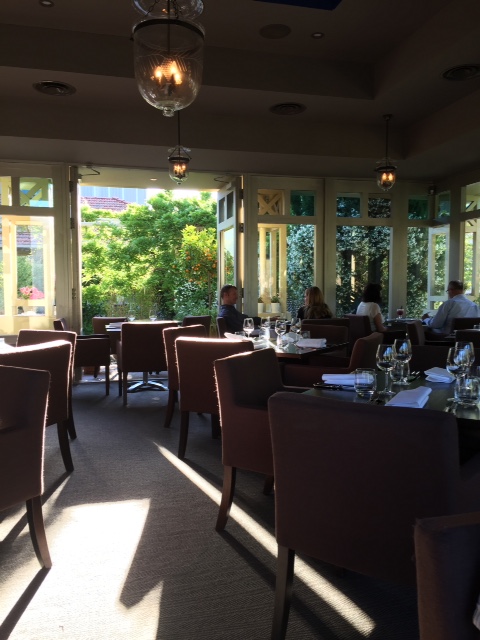
It had been a warm day ‘north of the border’, so we opted to sit at one of Clementine’s outdoor tables and admire the restaurant’s cottage garden in the mild evening air.

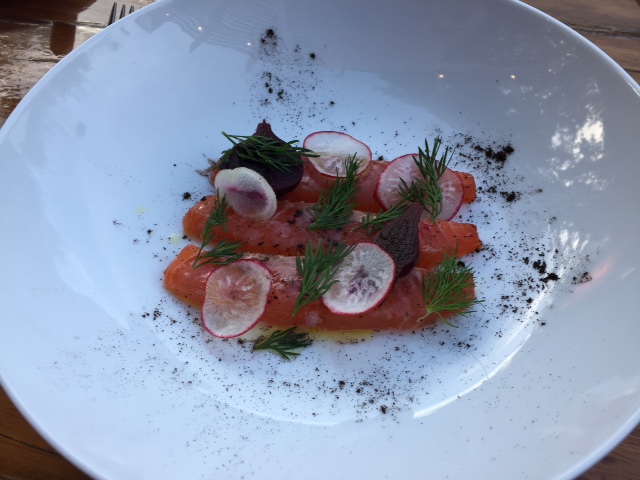
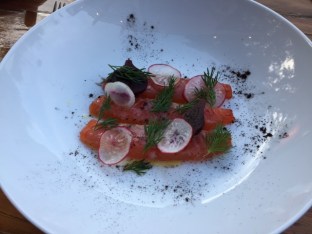
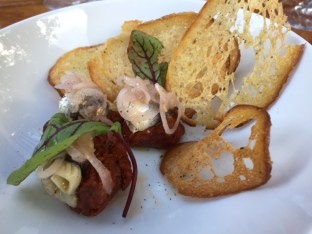
We each selected one appetiser and one entree. Maggie began with cured salmon, pickled beetroot, dill and radishes, a delicate and delicious plate for the ‘knock-the-door-down’ price of $10. For one dollar less, I had a more robust combination of sobrassada, white anchovy, pickled eschallot & crisp toasts; something out of the norm for me and perhaps a little salty, but partnered well by a glass of rose.
1-yass   2-yass

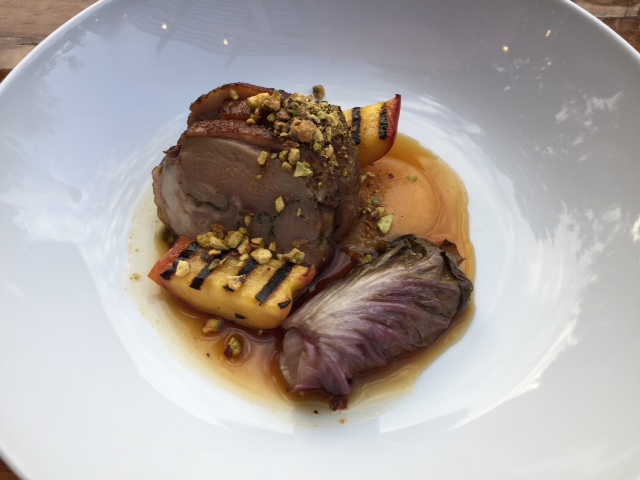
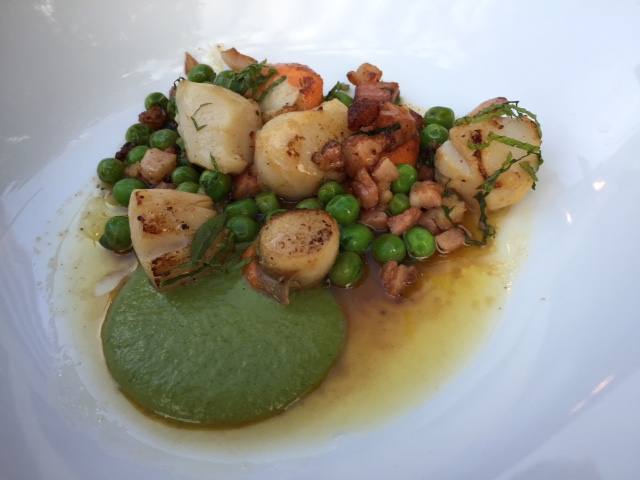
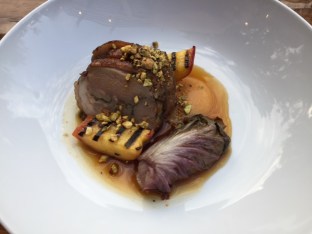
Maggie’s second plate was adorned with roasted duck breast – oh there’s a surprise! – charred peach, radicchio, pistachio and a not-too-sweet orange caramel; close to perfection for a mere $20. For one dollar more, I received a plate of bona fide perfection – pan-fried Tasmanian scallops, sauteed peas, mint, bacon and pea puree. If I have ever been served a better dish of my favourite seafood, it was too long ago to matter.
3-yass   4-yass

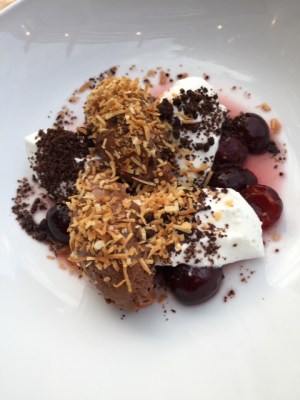
I had arrived at Clementine doubting the need for dessert, having enjoyed afternoon tea at The Roses, the pick of the local cafes. However, Maggie’s enthusiasm and our waiter’s encouragement landed us a shared bowl of soft chocolate mousse, marinated cherries, coconut panna cotta  and toasted shreds of coconut; a steal at $14.
5-yass

Between us, we enjoyed five glasses from an appealing wine list, slanted towards wines produced in the Canberra region. However, it was the chef/owner’s fine skills in the kitchen which made this one of, if not, the best meals we have enjoyed in an Australian rural town. You can learn more about Clementine here, including some delightful photos of the garden and the outdoor space where we dined.

Ottoman Restaurant, Canberra

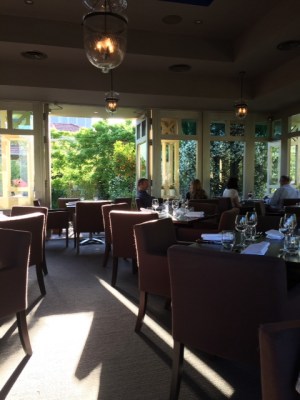
Before we left Melbourne, we had also booked to dine at Ottoman, a long-lived and multi-award-winning restaurant serving food with a Turkish influence. As a bonus, it was only a five-minute walk from our hotel. Our table overlooked an attractive courtyard, populated by roses, jasmine and a workplace Christmas party.
51-otto      52-otto

We decided to place our appetites in the hands of our experienced waiter, subject to a couple of ‘must haves’ and ‘no thanks’. He brought us four appetisers/entrees and two main courses to share.

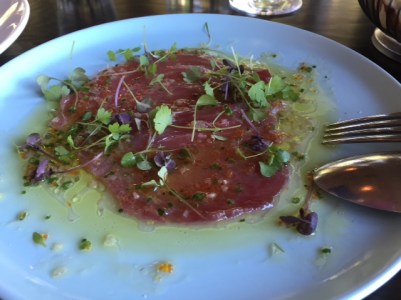
We began with one of the evening’s specials, tuna carpaccio, olive oil, micro herbs and some citrus and pepper elements that I can’t quite recall. I do remember that it was close to sublime.
53-otto

The tuna was soon followed by crispy zucchini flowers filled with goat’s feta & halloumi cheese – tasty enough but I still don’t ‘get’ zucchini flowers; and Queensland king prawns, sautéed with shitake mushrooms & baby spinach, served with lemon yoghurt sauce, a pleasing mix of flavours and textures.

54-otto   55-otto

Our last entree was yufka pastry rolls of shredded duck, onions, currants, pine-nuts & herbs served with a pomegranate & yoghurt sauce. These fell short of expectations, if only because there was too little inside the pastry, and the filling needed a larger component of duck and spice.

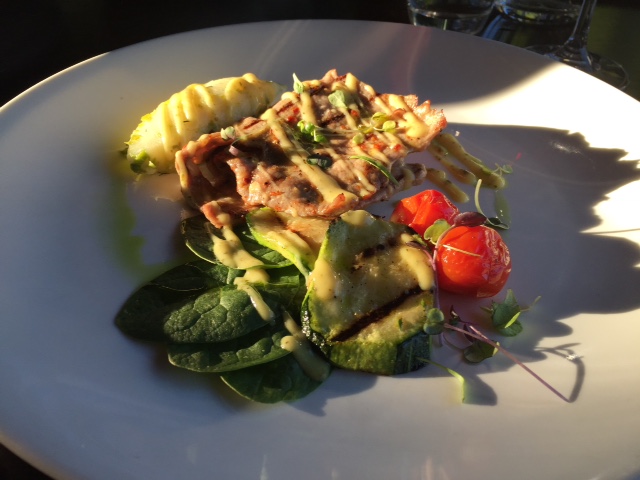
The next dish was thin slices of veal seasoned with mild Aleppo chilli, char-grilled, served with leek & potato skordalia, baby spinach and a mustard sauce. We cook veal in several ways at home but we had always assumed that char-grilling would produce a dry or chewy result. Not so at Ottoman! We enjoyed this dish so much that we are now one sleep away from trying it at home.

56-otto   57-otto

Some of you might be pleased that we put the iPhone away before our last plate – sauteed calf livers, spinach and a jus – arrived at the table. A pleasure for my offal-friendly wife but otherwise a bit more food than we needed; certainly, there was no room for dessert, shared or otherwise. Overall, we’d had a very satisfactory meal, and we would be happy to dine at Ottoman when we make our next pilgrimage to the national capital.

Hotel Kurrijong

On the previous evening, we had dined at our Canberra hotel, the heritage-listed Hotel Kurrajong. The menu was on the pricey side but, despite several typos, it read as an opportunity to have a very good meal in a very attractive setting.

Not so! I should have taken the typos – ‘asaparagus’ for one – as a sign that this hotel dining room had aspirations beyond its abilities. For that is what unfolded; including the service, which was friendly and well-intentioned but noticeably disorganised.

Here is Maggie’s entree of house-smoked duck breast, witlof orange salad and berry vinaigrette. She was happy enough with the flavours, although it lacked the wow factor of her duck entree in Yass. The main shortcoming was actually an excess … of duck fat, which formed an ugly pile by the time she was finished. She followed that with an item listed in the menu’s ‘nose-to-tail’ section; I won’t go there!

32-hotel

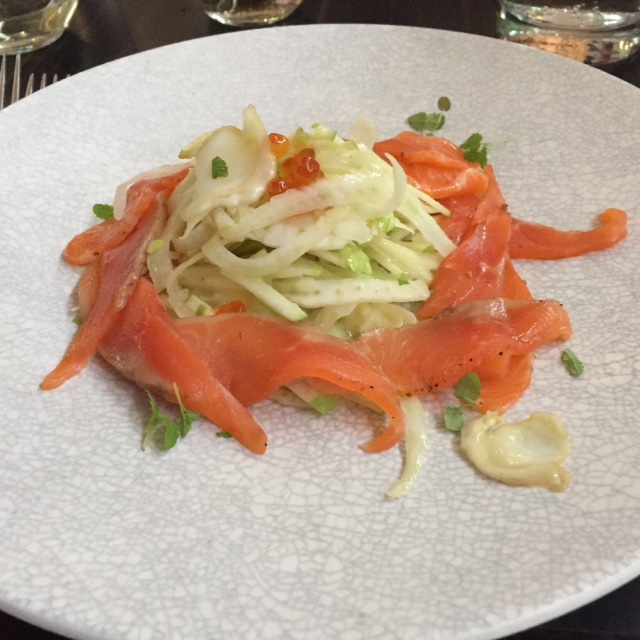
I began with an entree of cured salmon, apple fennel salad and verjus dressing. It was a bit plain, if agreeably fresh, and it was coarsely prepared and presented. That was followed by a ‘New York cut sirloin’, which was overwhelmed by an awful mushroom sauce that failed to disguise the abundance of gristle in the steak. Serve that up in lower Manhattan and you’ll get more than your steak cut!

At least the view into the hotel’s courtyard was charming. We retired there to detox and returned to the scene for breakfast.
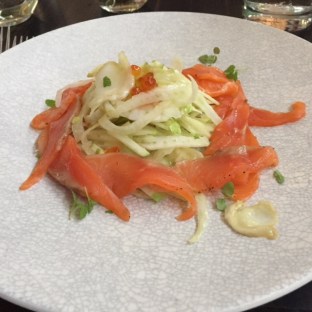
31-hotel   33-hotel

It’s not that the meal was a complete disaster – and, yes, we can be harsh critics – but at the price, it should have been a triumph. We think they’d be better off to dumb the menu down to the level of expertise in the kitchen – in principle, there’s no shame in offering a nice piece of grilled fish, chips and salad option – and make their profits from the bar.

Canberra cafes

Before we entered the Australian War Memorial, we had a good quality coffee at Poppy’s Cafe, a recent and handsome addition to the museum precinct.
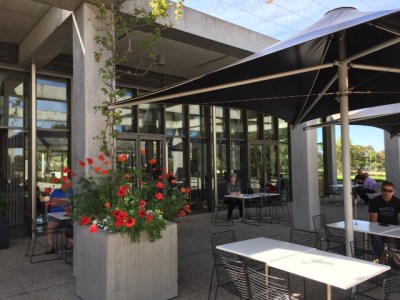
8a-war-mem

And we made two visits to Silo, widely regarded as one of the very best bakery-cafes in the eastern half of Australia. It was recommended to us on our first stay in Canberra and, through five samplings, and counting, of its wares, it has never failed us.

Cheers!
Rick Grounds

Posted in Eating out, Travel | Tagged , , , | Leave a comment

Visit to Canberra: a symphony in five monuments (day 2)

On our second full day in Canberra, Maggie and I visited three more national monuments.

National Portrait Gallery

We first visited the National Portrait Gallery in 2013, soon after it it moved into a purpose-built facility. The gallery houses a wonderful collection of portraits of Australians, as well as some foreigners with a special connection to our country. Most of the portraits’ subjects are well known, but the lesser-known ones are brought to life by well-told back-stories, and the collection as a whole is enlivened by the variety of media and styles, ranging from formal, through quirky to outrageous, in a good way!

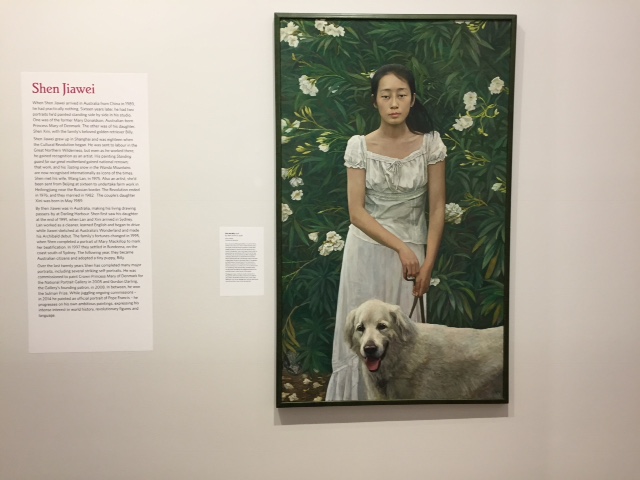
The focus of our visit this time was an exhibition called The popular pet show. You can learn more about it here. The exhibition comprised works by 16 artists, depicting a variety of famous and not-so-well-known Australians with their pets. Many of the works had been produced especially for the occasion and the overall mood was weighted to the quirky end of the spectrum. Here are just four of the many works that delighted us.

Self with friends, 2016 by Lucy Culliton

Self with friends, 2016 by Lucy Culliton

35-pets

Xini and Billy, 2006 by Jiawei Shen

Xini and Billy, 2006 by Jiawei Shen

Self Portrait (the year my husband left), 2008 by Jude Rae

Self Portrait (the year my husband left), 2008 by Jude Rae

National Library of Australia

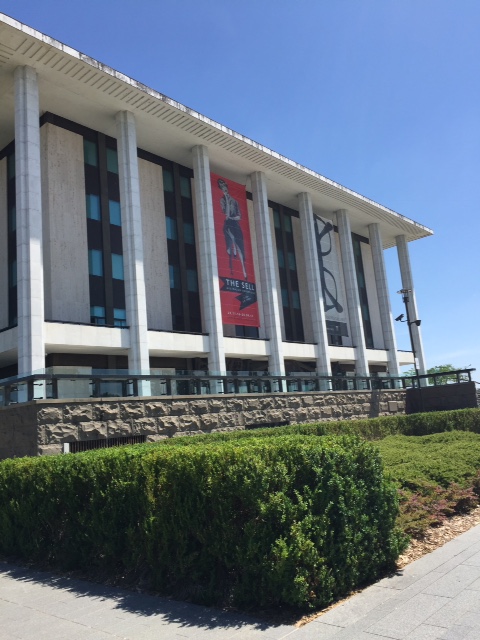
We could happily have spent more time with the pets but we wanted to reach the National Library by 11am, to take a free tour of some of the library’s ‘treasures’. As you can see, the library too is housed in an imposing building.

38-library

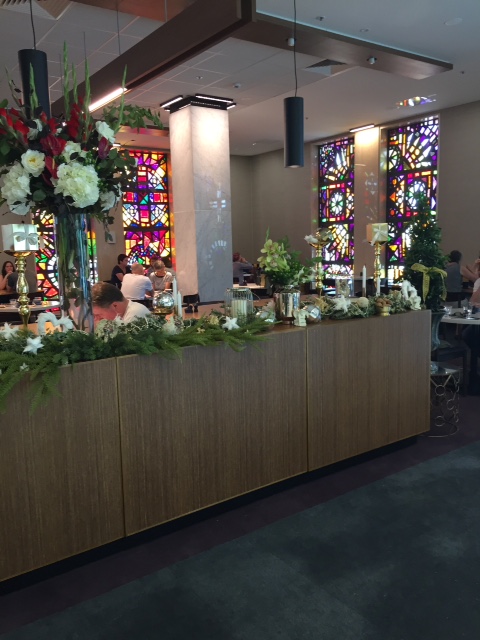
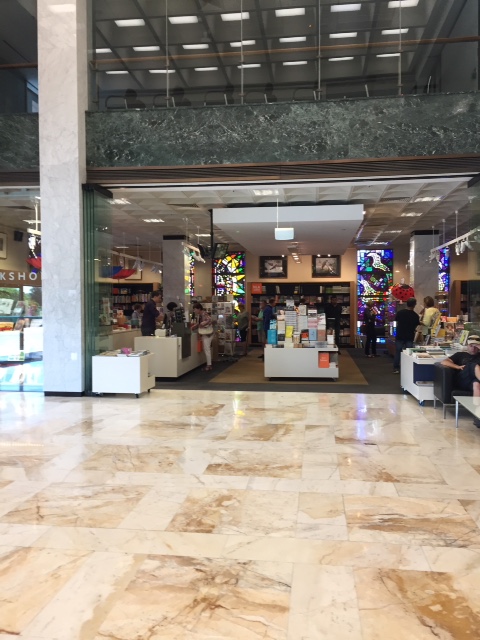
On either side of the marble-floored entry foyer is a cafe and a gift shop. The windows in the cafe are filled with stained-glass created by Australia’s foremost exponent of this art-form, Leonard French. (French is most famous in Australia for creating a stained-glass ceiling in the Great Hall of the National Gallery of Victoria, a building for which the architect was my great uncle Roy Grounds.)

40-library      41-library

Our short tour of some of the library’s ‘treasures’ was, for us, a mixed bag, but it served to introduce us to the fact that the library holds a vast collection of material of historical interest to Australians.

Table made from timber grown in every notable place visited by Captain James Cook

Table made from timbers native to every notable place visited by English naval explorer, Captain James Cook

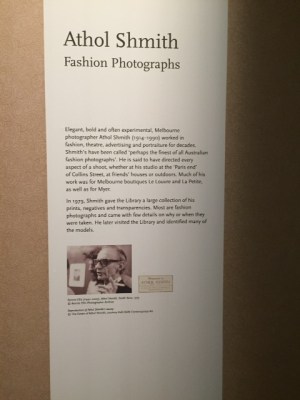
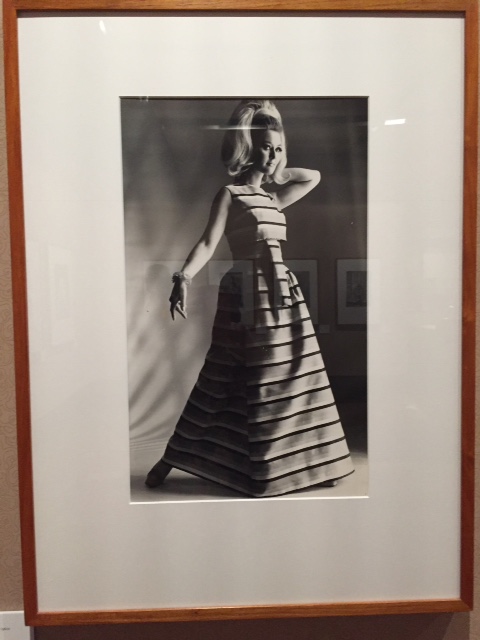
The tour ended at a display of some works by Athol Shmith, Australia’s most renowned society and fashion photographer of the 20th century. Shmith was best known in his home city of Melbourne, but he also undertook a variety of important work at a national level. You can learn more about Athol Shmith here, including his extensive influence on the development of the craft of photography in our country.

47-library      44-library

45-library      46-library

National Museum of Australia

After a light lunch at the National Library’s cafe, we headed to the National Museum of Australia to view A history of the world in 100 objects from the British Museum, the exhibition which was the initial purpose of our journey to Canberra.

Based on our 2015 visit to the British Museum in London, our expectations were high. Possibly, they were too high, which would partly explain my mixed feelings about what we saw this time around.

The collection of 100 exhibits, some including up to half a dozen objects, was ordered chronologically and into defined phases in the development of human civilisation. Fair enough. However, the lighting in the room had been dimmed, as if for a piece of theatre, which made for a strange atmosphere.

The objects were mainly items of art or craft, interesting enough taken in isolation and enlivened by their accompanying interpretive stories. The latter demonstrated the skills and expertise of museum personnel to understand and explain objects as indicative benchmarks of ways of life, social organisation, economic conditions and so on.

However, the limited presence of utilitarian items – tools, machines, etc – made the exhibition as a whole feel unbalanced. Of course, the fact that my feet were tiring, painfully, of visits to monuments may have exaggerated my sense of frustration!?

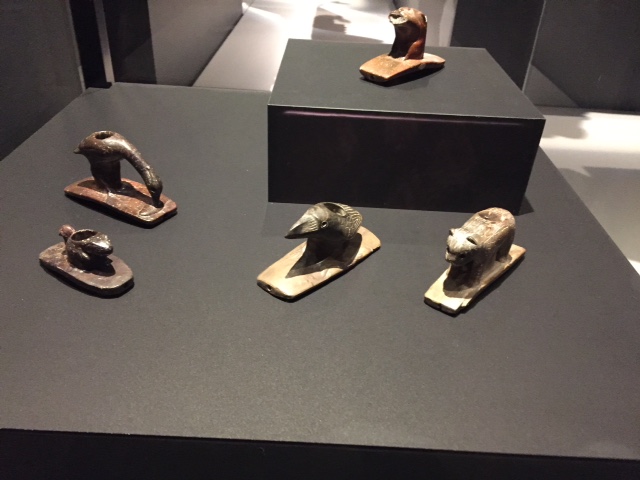
Here is a limited sample of what we saw, beginning with a statue of Rameses I and concluding with two very different images of an Indian rhinoceros: one, part of a famous early-16th century woodcut print by a German artist (he had only one sketch and some travellers’ tales to work from), which was part of a sign pointing to the other, a tricky-to-photograph 21st century hologram.

48a-museum      48b-museum

48c-museum      48d-museum

48f-museum   48h-museum

48g-museum      48i-museum

49-museum      50-museum

The full print of Dürer’s Rhinoceros was one of the 100 exhibits and, in fridge magnet form, we have brought a copy home with us. You can learn more about it here.

The final post from our visit to Canberra will share our dining highlights with you.

Cheers!
Rick Grounds
Posted in Travel | Tagged , , , | Leave a comment