Blue cheese and roasted cauliflower soup

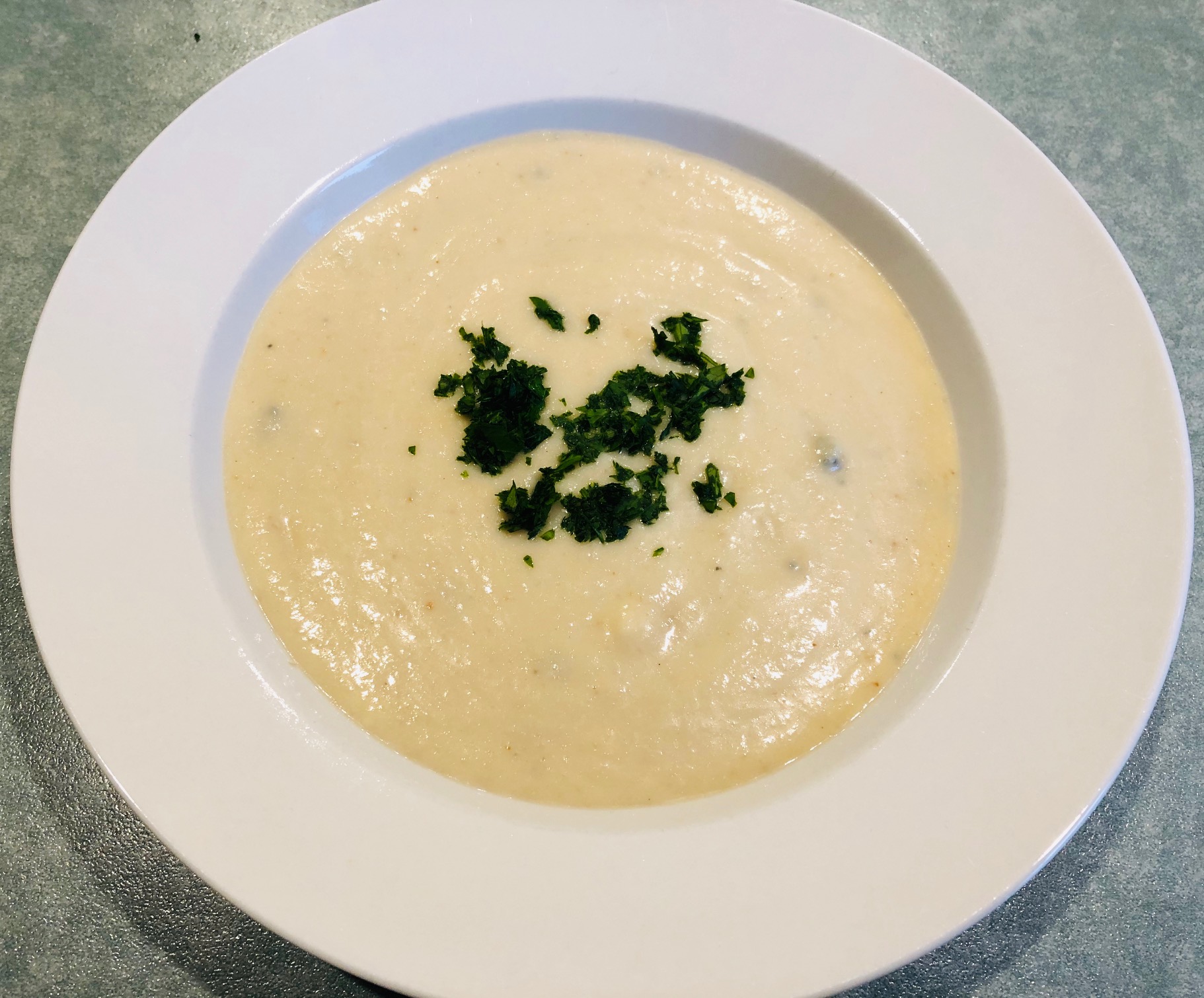
Our bowl of this delicious soup

Just over a year ago, Maggie and I returned from the Northern Territory at the end of a wonderful two weeks of travel experiences, including two days in the Uluru-Kata Tjuta National Park.

The accommodation for our Uluru-Kata Tjuta visit was a hotel – Sails in the Desert – where the main bar offered a smart and varied menu of bar-bites and light meals. One lunchtime, I decided to try a bowl of their soup for which cauliflower and blue cheese were the key ingredients. It was very tasty, without being too rich in flavour or texture.

Once home, I found a recipe which, with a bit of tweaking, produced a similarly delicious result. After some further minor adjustments, this is how I prepare it.

Ingredients

500g cauliflower florets, weighed after trimming
40g butter
2 cups stock (vegetable or chicken)
1½ cups stock, extra
80g blue cheese
generous pinch of white pepper
60ml cream
chopped parsley

Method

  1. Remove the cheese from refrigerator at least 2 hours ahead and chop while it is still firm
  2. Pre-heat oven to 170C
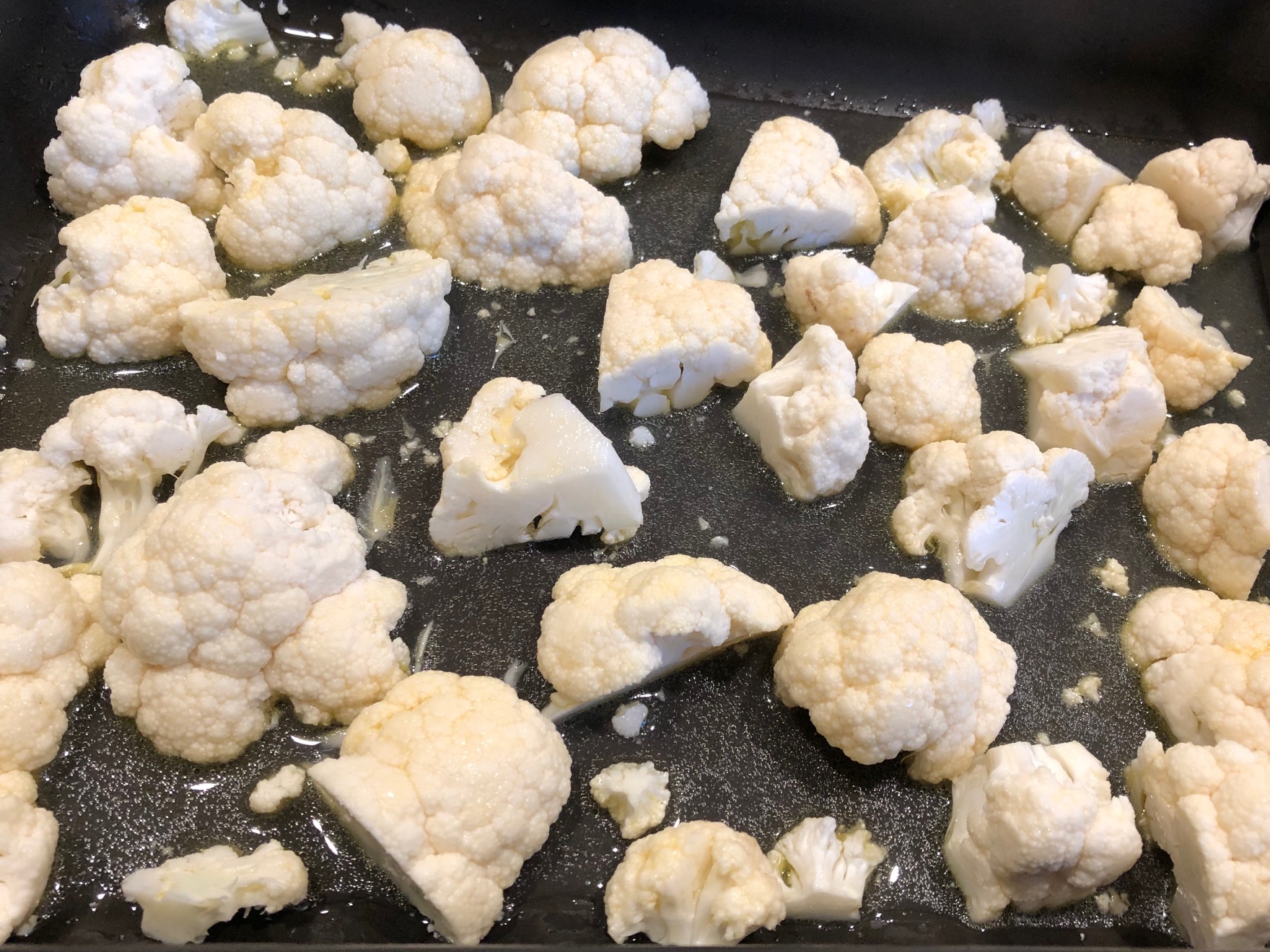
  3. Place the cauliflower florets in a baking pan
  4. Melt the butter with about 200ml of stock and pour it over the cauliflower and put the pan in the oven on the middle level
  5. Bake the cauliflower for about 40 minutes, turning after 20 and 30 minutes, until the florets are tender and caramelised on their edges. During the cooking, add more of the remaining 300ml of stock in batches to prevent the pan from becoming too dry and burning the butter
  6. Once the baked cauliflower is cool enough, transfer it and any pan juices to a food processor. Add as much of the remaining stock as needed to make it easy to process to a smooth puree.
  7. Transfer the puree to a saucepan and add any remaining stock. (If necessary, use some stock to help you remove the puree from the food processor.)
  8. Heat the soup until it comes to a very gentle
  9. Add the blue cheese and stir gently until it has all melted; this might take several minutes. Add the white pepper and cream, stir through and bring the soup back to a simmer.
  10. Serve immediately and sprinkle with parsley, to taste.
  11. Leftovers should be reheated carefully if using a saucepan, to prevent the soup from catching on the base of the pan.


Cheers for now!
Rick Grounds

Posted in Cooking | Tagged , , , | Leave a comment

Two duckadent dinners

Regular readers of this blog will know that Maggie and I enjoy preparing a meal of duck, starting from scratch with fresh duck legs or breast fillets. Happily for us, a supermarket close to our home maintains a good supply of these products, which come from a business called ‘Luvaduck’. Luvaduck was established in the 1960s in a country town located more than 350km from Melbourne.

Recently, the local supermarket was offering a discount on the price of fresh whole ducks. Not ones to resist such a temptation, we bought two. Over the following fortnight, we had four dinners of roast duck, two from each duck.

Now, a meal of roast duck is not something you can prepare in a hurry. After removing the oil glands around the ‘parson’s nose’ and pricking the skin all over with a skewer, you need up to 2 hours for cooking the duck at a low temperature – about 125C in a fan-forced oven – to render most of the fat. Then it is time to tip most of the rendered fat out of your pan, increase the temperature to 170C and roast the duck for a further 40 to 50 minutes, depending on its weight.

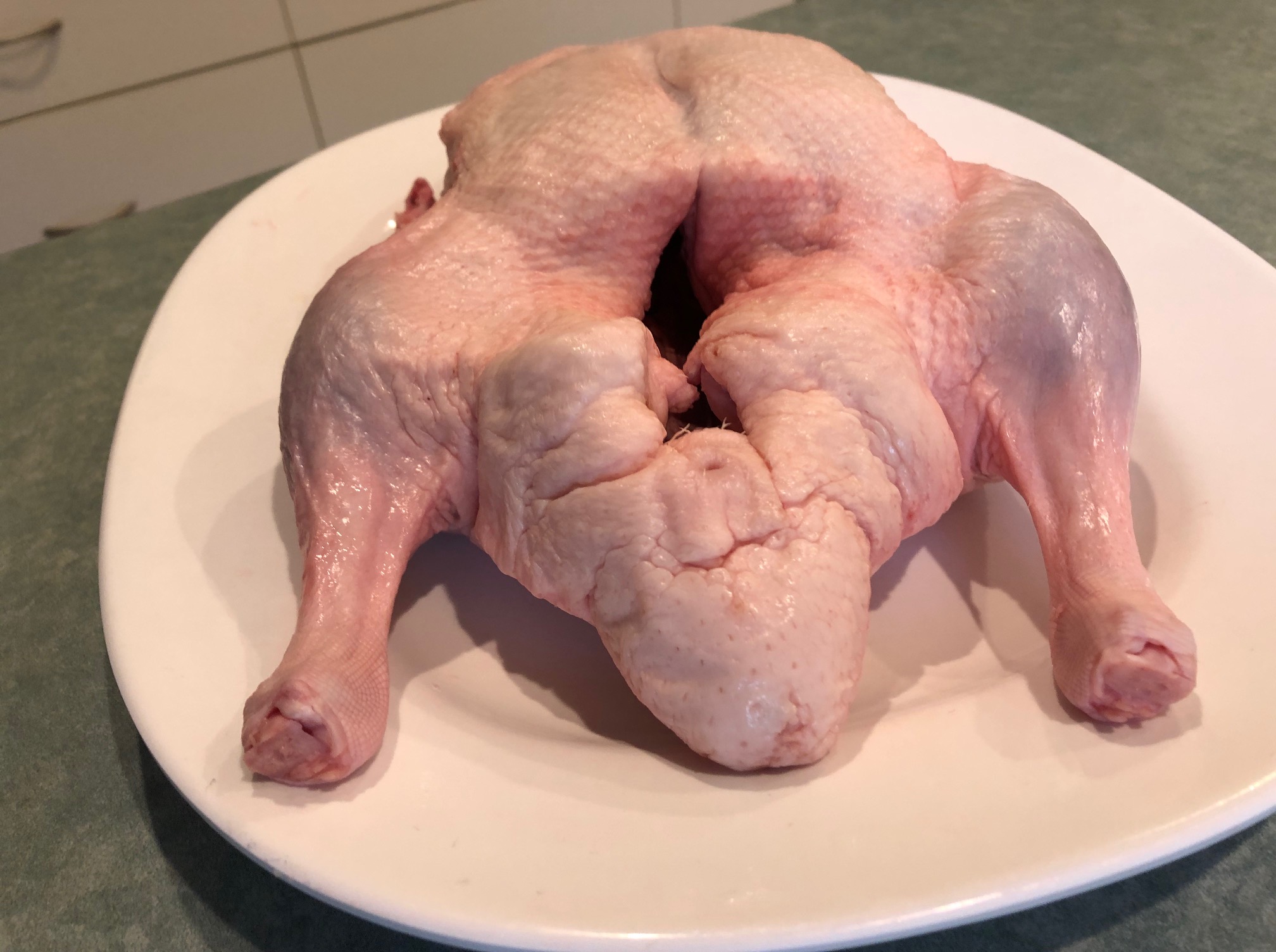
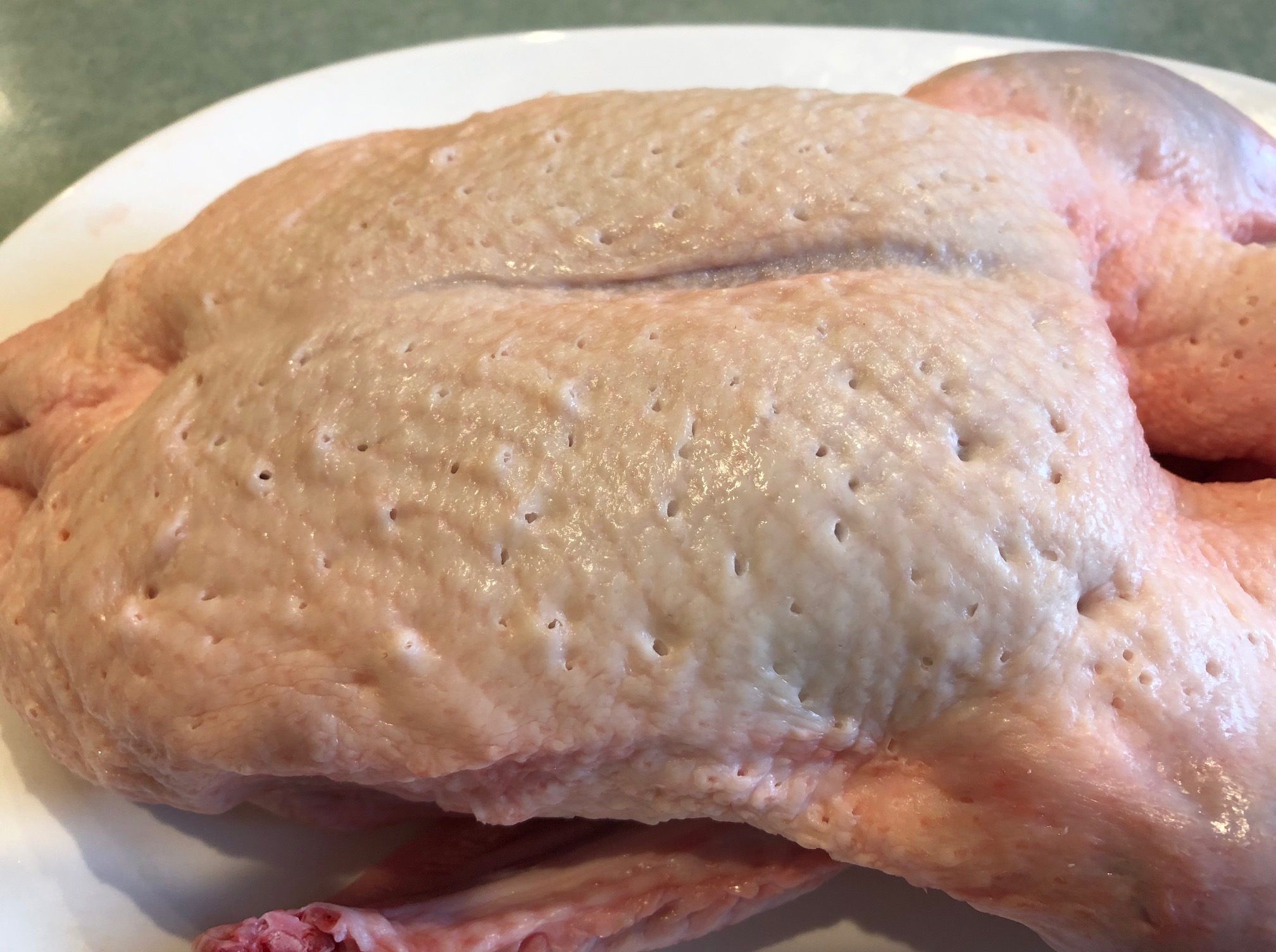
These photos show one of our ducks before and after the oil glands had been removed – not the prettiest of sights it has to be said – and the pricks made in the skin to help the rendered fat exude.


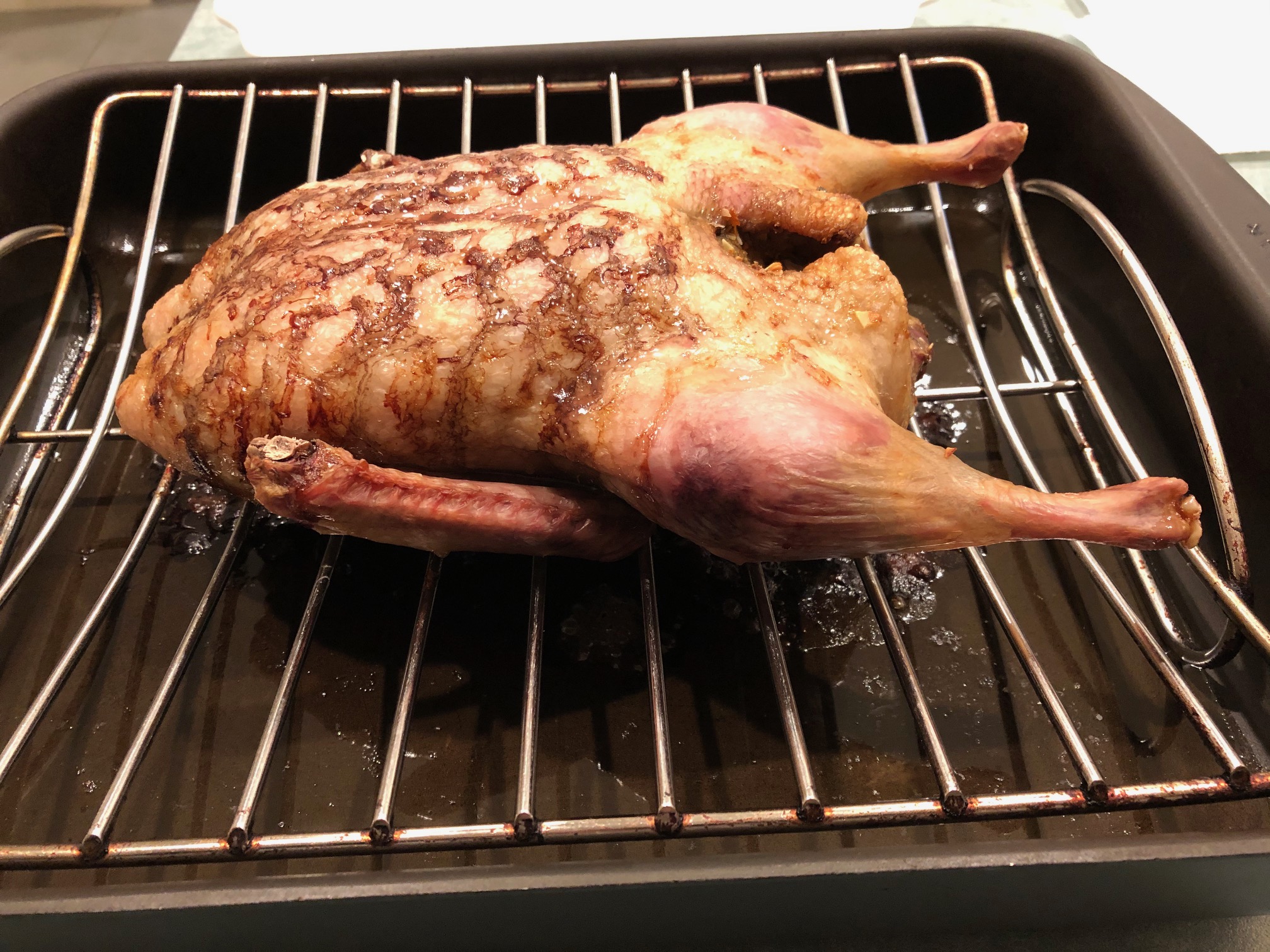
This photo shows you how the duck looks at the end of the first two hours in the oven. Hmm, it’s still a bit on the ugly side!

We flavoured and glazed each duck in a specific way. For the first one, we produced a stuffing that was quite rich in flavour.

Ingredients for rich stuffing

15g butter
2-3 French shallots, finely chopped
15-20g liver pate (a modest quantity), at room temperature
2 tbsp almond flakes, crushed by hand
1 cup fresh breadcrumbs
zest of an orange
30ml finely chopped parsley
20ml (combined) of finely chopped thyme and rosemary
30-405 prosciutto, coarsely chopped
1 small apple, peeled, cored and grated
6 prunes, stoned and chopped
1 egg yolk
salt and pepper

Method for the stuffing

  1. Melt the butter in a small pan and sauté the shallot until soft.
  2. Transfer the warm shallot and butter to a mixing bowl, add the pate and stir to combine well.
  3. Add all the other ingredients to the bowl and mix well. Season generously with salt and black pepper.
  4. Spoon the stuffing into the duck’s cavity before placing the duck in the oven to begin the two hours of slow cooking

To glaze the duck in this case, we just dipped a basting brush into the fat in the bottom of the roasting pan and brushed the top and sides of the duck two or three times during the period of roasting at 170C.

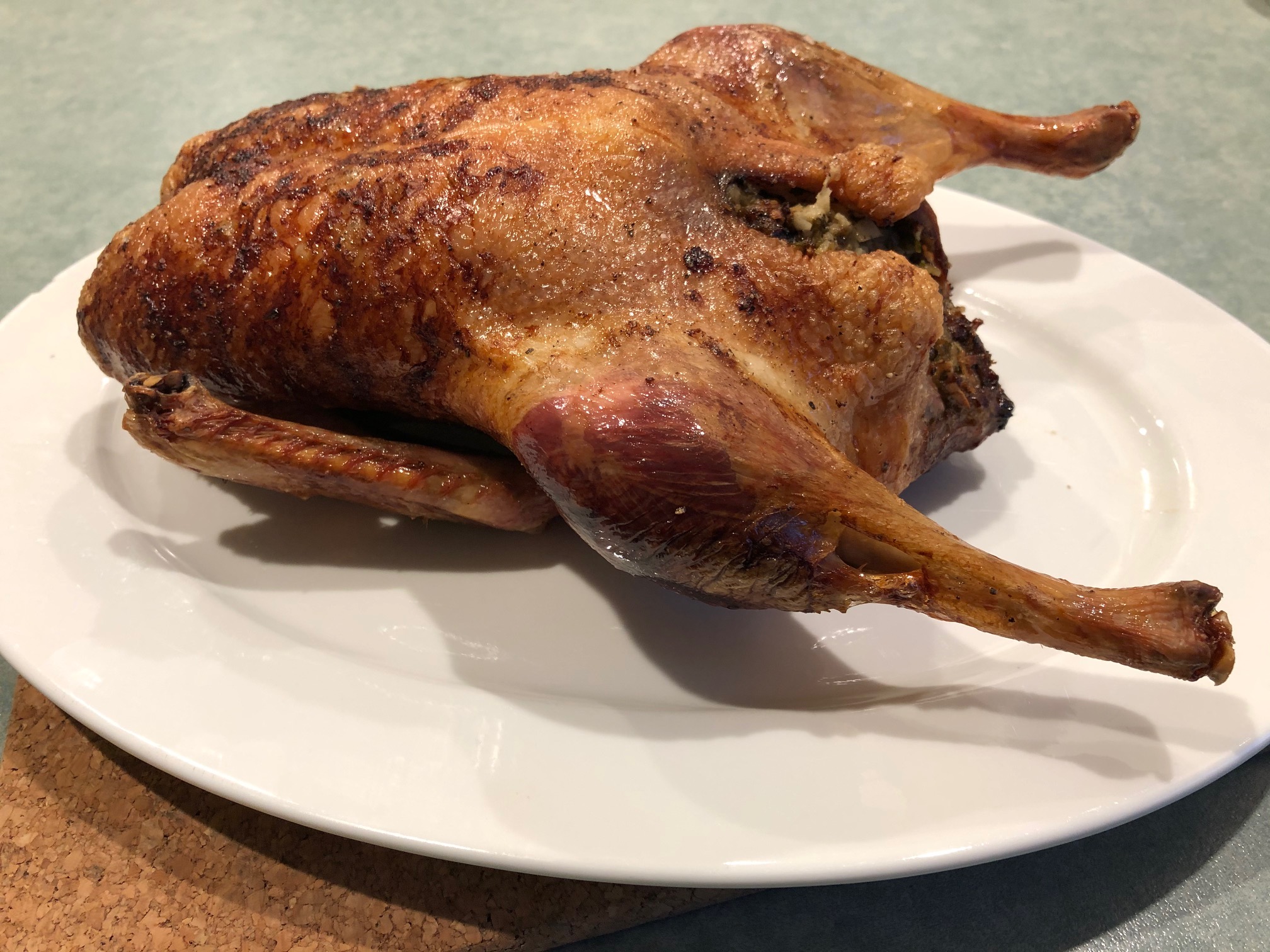
These two photos show our bowl of stuffing and the finished duck, ready to carve.


And here is one of our dinner plates, including some fresh peas and a medley of carrot and beetroot baked ‘en papillote’.


For the second duck, we used a recipe we found on Australia’s largest recipe website. You will find the recipe here. Bear in mind that we used the method described above for how the duck was prepared for and treated in the oven.

As far as the ingredients for the stuffing are concerned, we followed the recipe fairly closely. However, we reduced the volume of most of them, except the almonds and orange zest, and we substituted French shallots for the onion and hand-crushed, toasted almond flakes for the slivered almonds.

In the case of the sauce, we stuck to the ingredient list and method faithfully. However, we found that we needed to use some cornflour to make the sauce thick enough for our liking.

These two photos show the duck after we had brushed it with the sauce and sprinkled it with raw almond flakes; followed by the finished duck.


And here is one of our dinner plates. For this meal, the side dish comprised well-cooked brown rice, tossed with chopped prosciutto and some baby spinach leaves that had been wilted in some butter. In our experience, brown rice matches duck dishes very well, although white rice is probably a better match when the duck is cooked with flavours from South-East Asia.

Cheers for now!
Rick Grounds

Posted in Cooking | Tagged , | Leave a comment

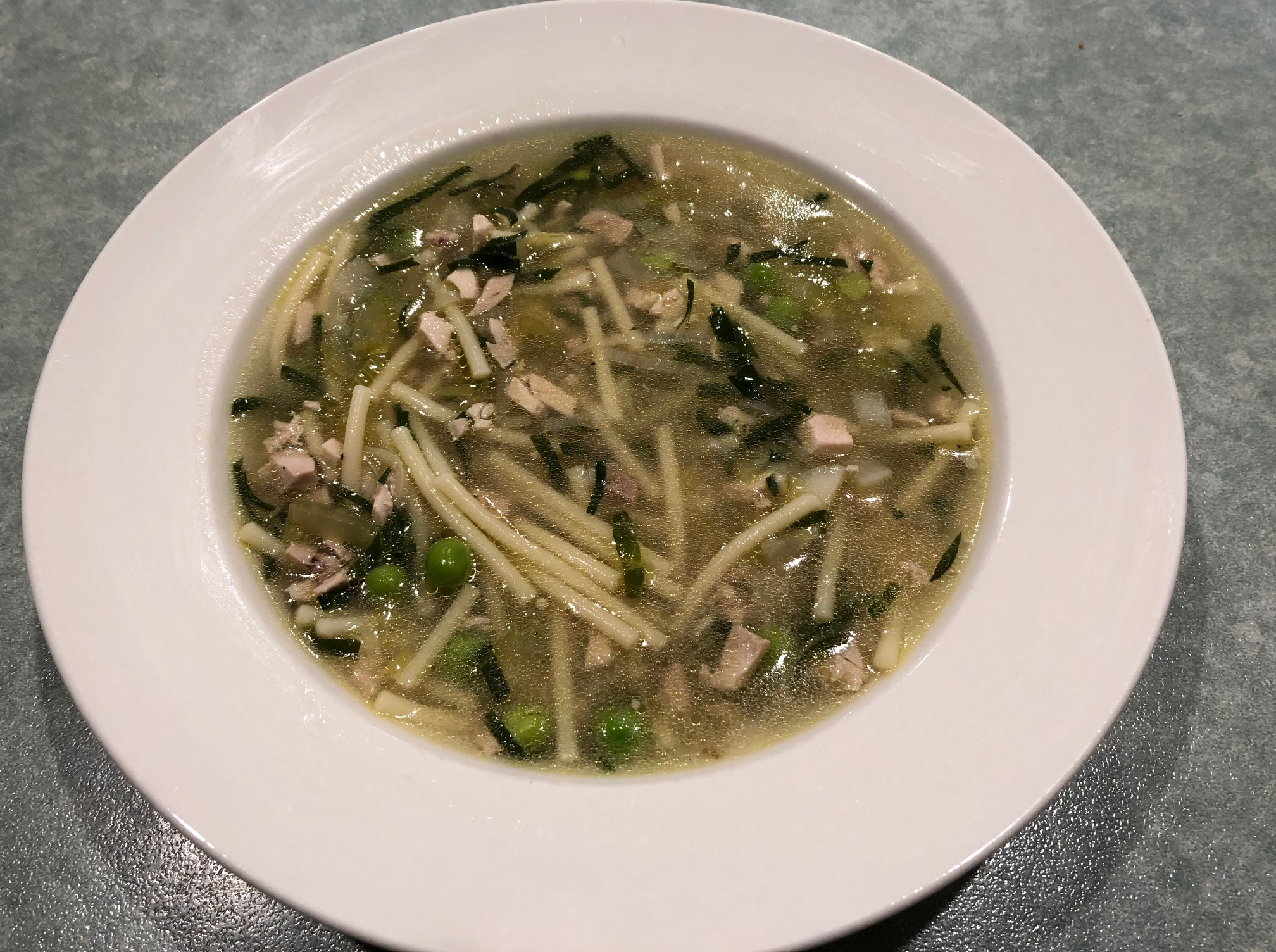
Green and white chicken noodle soup

Classic comfort: a colourful bowl of chicken noodle soup

Who doesn’t like to sit down to a bowl of some variety of chicken noodle soup? Surely, only a hard-hearted soul would not yield to its comforting flavours and textures!

In the Wikipedia entry for chicken noodle soup, a section headed ‘In different cultures’ has 25 entries – including at least one from every continent except Antarctica – plus a sub-section in the United States entry for canned soup.

Over the years, Maggie and I have used two quite different recipes, one for each of us. Maggie’s version was relatively uncomplicated, as she usually made it to cater for the young palates of her daughter’s children.

I preferred a more elaborate production, which was adapted from a recipe by a local chef with both Italian and French heritage. You can find my recipe here.

A few weeks ago, Maggie found another recipe, from a renowned Sydney chef, that she thought might appeal to both of us, including my liking for multiple steps in a cooking method.

The first half of the recipe involves poaching a whole chicken to yield both the stock and the meat for the soup. We by-passed most of that rigmarole, using a blend of a good-quality commercial stock and some stock we had made using the carcass of a rooster or cockerel. (The latter is another story, saved for a rainy day!) And, for the meat, we simply poached some pieces of skinless chicken.

Secondly, we made several changes and additions to the recipe for the soup itself. We were very happy with the end result, so much so that we have it twice more since then. Maggie will take the latest batch to her daughter’s house today, to serve to the now more sophisticated palates of those grandchildren, for a school-holiday lunch.

Here is our recipe.

Ingredients

350-400g skinless chicken breast or thigh fillets
15-20g butter
2 medium-sized leeks, trimmed, halved lengthways and finely sliced
2 long sticks of celery, chopped
½ large turnip, peeled and diced
6 cups (1.5 litres) chicken stock
100g spaghetti, broken into short pieces
100g fresh peas
1 cup shredded baby spinach leaves
salt and black pepper

Method

  1. Well ahead of time, place chicken meat in a saucepan and cover generously with water. Bring to the boil and simmer for 10 minutes. Leave the chicken in the cooking liquid for a further 10 minutes. When the meat has cooled, dice it finely.
  2. Melt the butter in a large saucepan or stock pot, add the leek, celery and turnip, and cook gently for 7-8 minutes to soften the vegetables.
  3. Meanwhile, cook the peas briefly in simmering water, ie a couple of minutes less than you would to serve. Drain and refresh with cold water to prevent them cooking further.
  4. Add stock and chicken meat to the large pan, bring to the boil and simmer for 8 minutes.
  5. Meanwhile, cook the spaghetti in salted, boiling water for about 5 minutes. This part-cooking step reduces the amount of starch released by the pasta into the actual soup.
  6. Add the pasta to the pan and simmer for a further 4 minutes.
  7. Season with salt and pepper, then add the peas and spinach, and cook for 3-4 minutes.
  8. Adjust seasoning, serve and enjoy the colourful mix of green and white ingredients.

Leek, celery and turnip, softening in butter

Poached chicken meat, finely diced

Peas, shredded spinach and part-cooked pasta added to the pot


If you happen to have an egg-white leftover from some other cooking activity, you could continue the colour theme by heating enough soup for two bowls and whisking the white through the hot liquid. This adds a lovely textural element as well.

Cheers for now!
Rick Grounds

Posted in Cooking | Tagged , | Leave a comment

Rooms at the top: our stay in the Umbrian towns of Orvieto and Todi (part 2)

Now to our three days in and around Todi.

Todi’s population is more than 16,000, a tick over 80% of Orvieto’s. However, it looks and feels very different to Orvieto, although not in any ways that mattered to Maggie and me.

Unlike Orvieto, Todi is not located on a train line or major highway, making it slightly less accessible for tourists and its buildings and piazzas, including its (former) cathedral, suffer a little by comparison. These small differences have something of a domino effect – there are far fewer high-end retail stores and hospitality businesses.

On the plus side, the pace of life is slower, the voices are mainly Italian and, by late afternoon, the piazzas are occupied by local families, enjoying the period of transition to evening and catching up with friends over a coffee or a glass of wine while their children play or ride their bicycles. And good, authentic food is not too hard for the visitor to find.

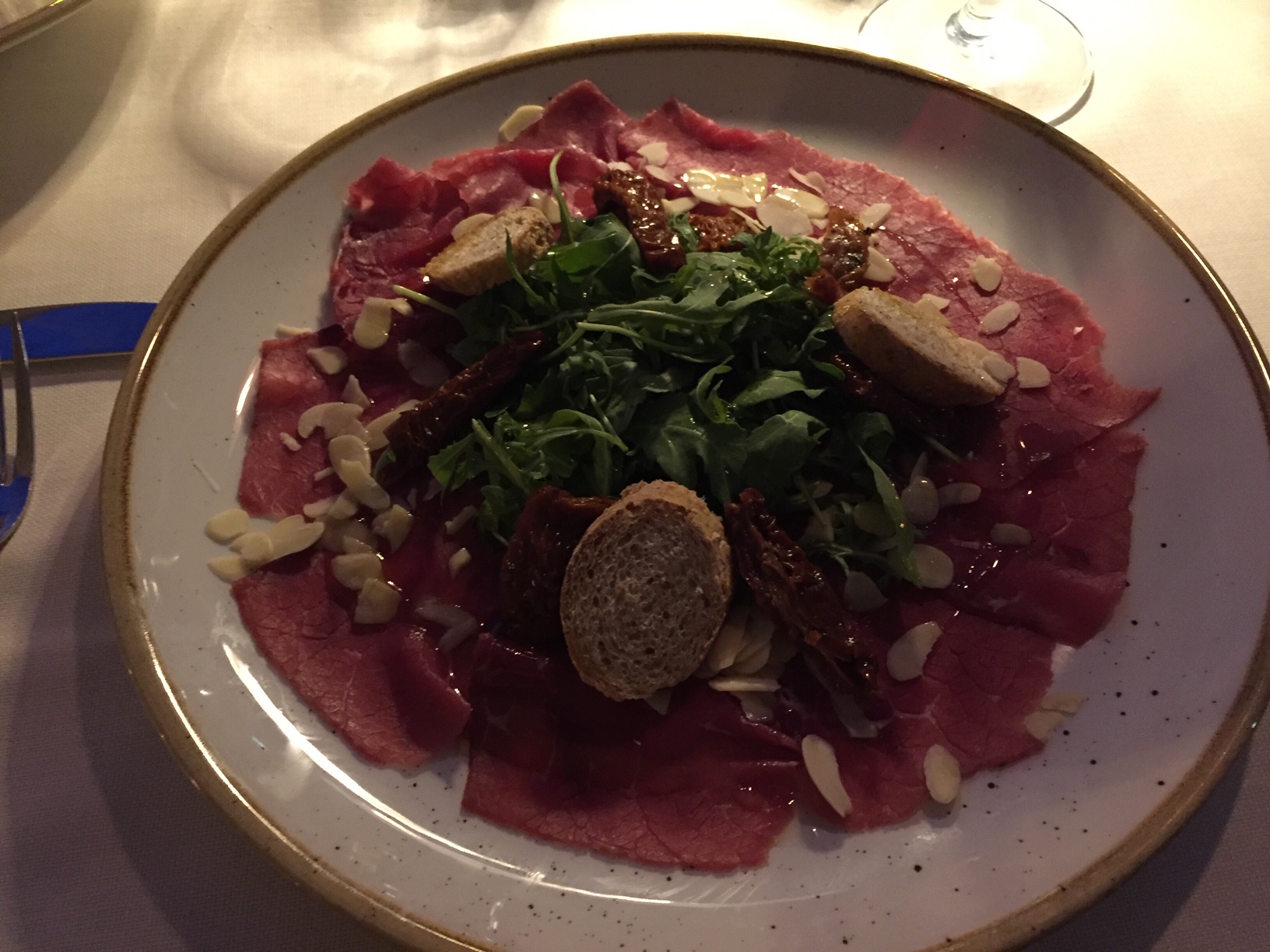
Here is some of what we ate at Vineria San Fortunato, a smart wine bar with an outdoor terrace set below the namesake church.

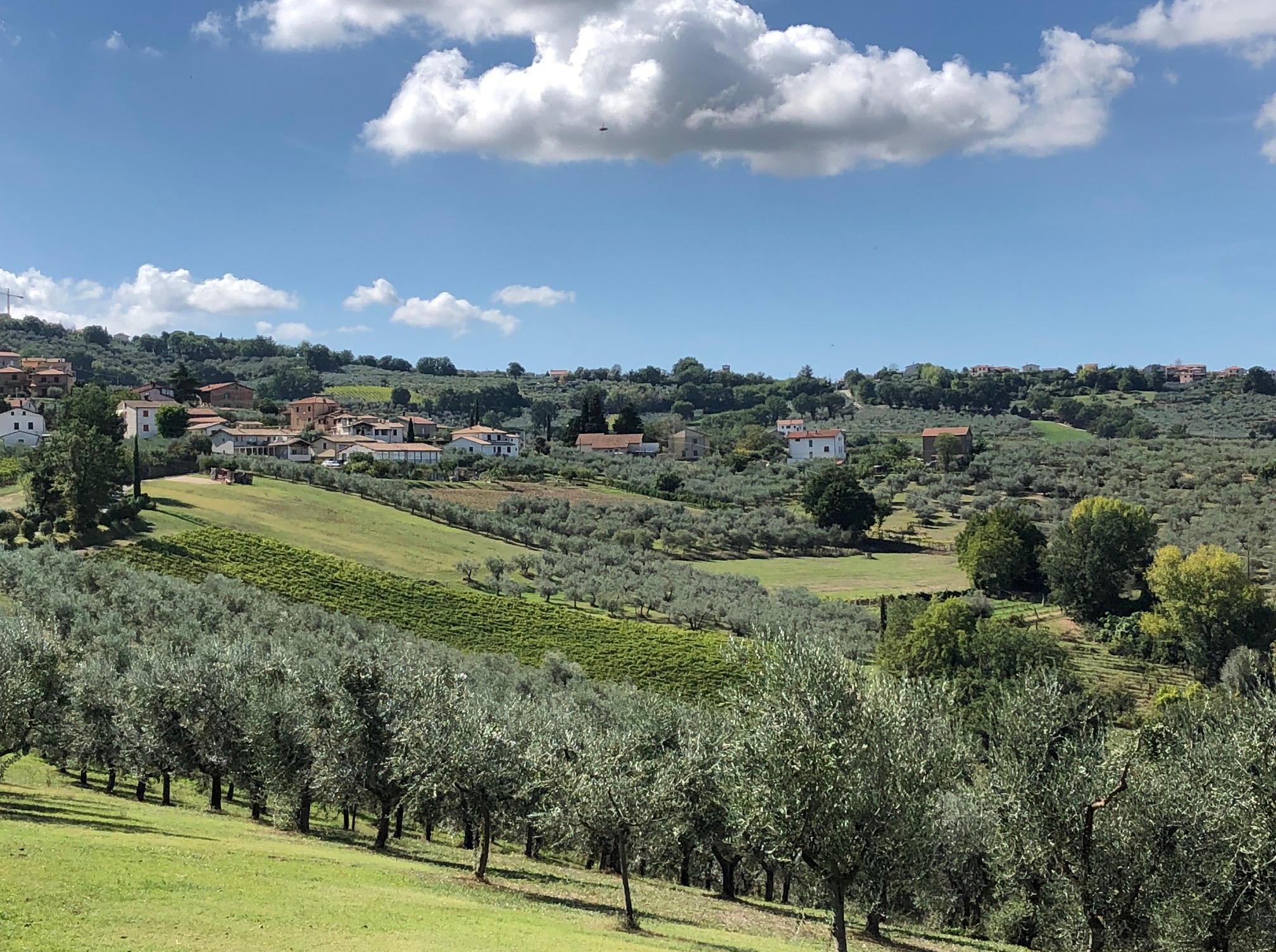
Another distinguishing feature of Todi is the surrounding countryside of gentle hills and valleys, dotted with olive groves, vineyards and more, interspersed with verdant woodlands, and so very typical of what gives the province of Umbria its nickname ‘the green heart of Italy’.


Embedded in this rich agricultural land are 37 villages that have been part of the Commune of Todi for many centuries, as depicted in this medieval ‘map’ displayed in the municipal museum.

This is the idyllic area where we were taken on a winery tour and, in a country house at the edge of one of the villages, for our pasta class.

The next photo looks across the countryside, with the famous town of Assisi lying on the distant slopes, followed by the reverse view, taken from the terrace bar of the hotel where we stayed during a visit to Assisi in 2008!


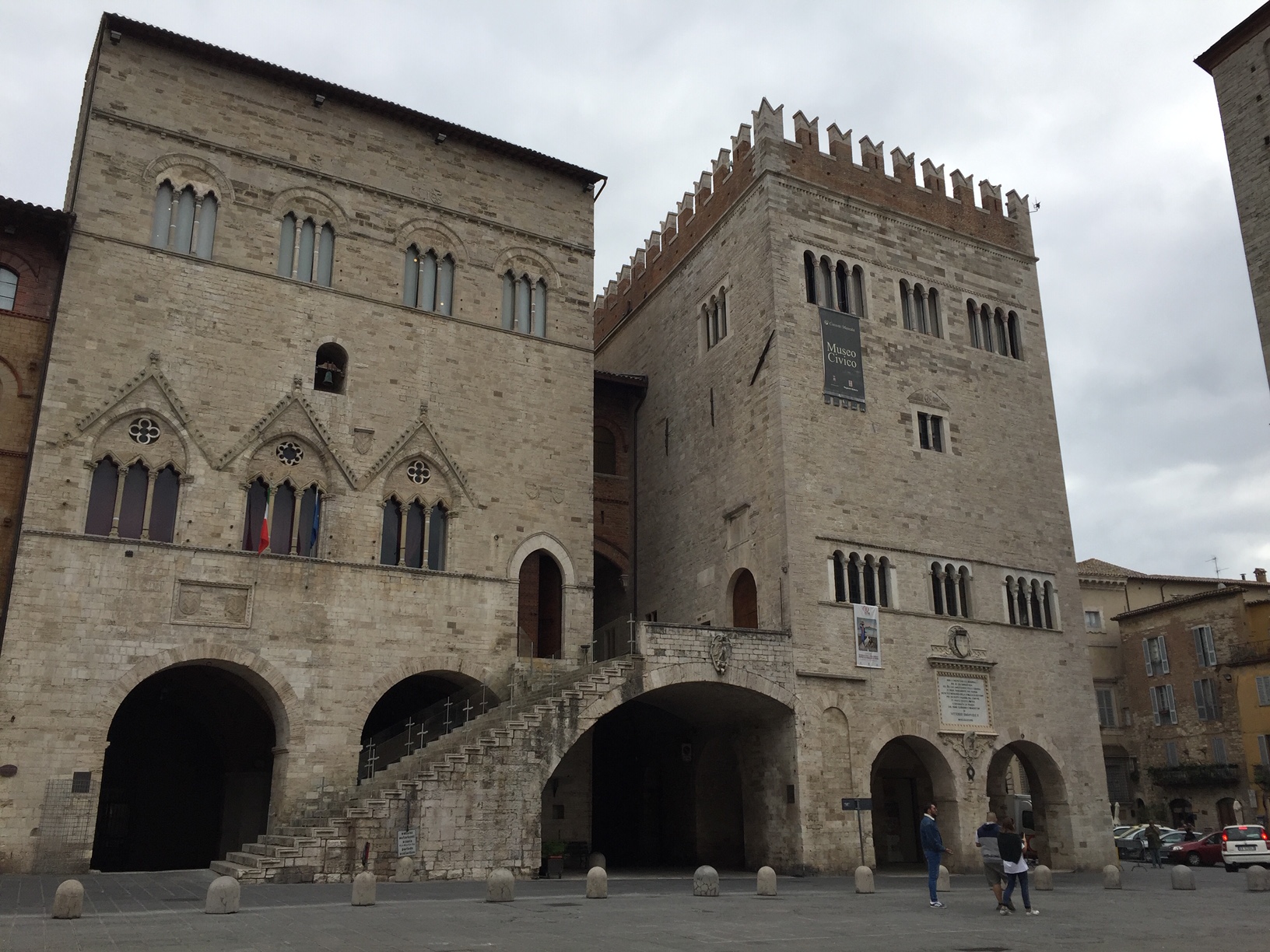
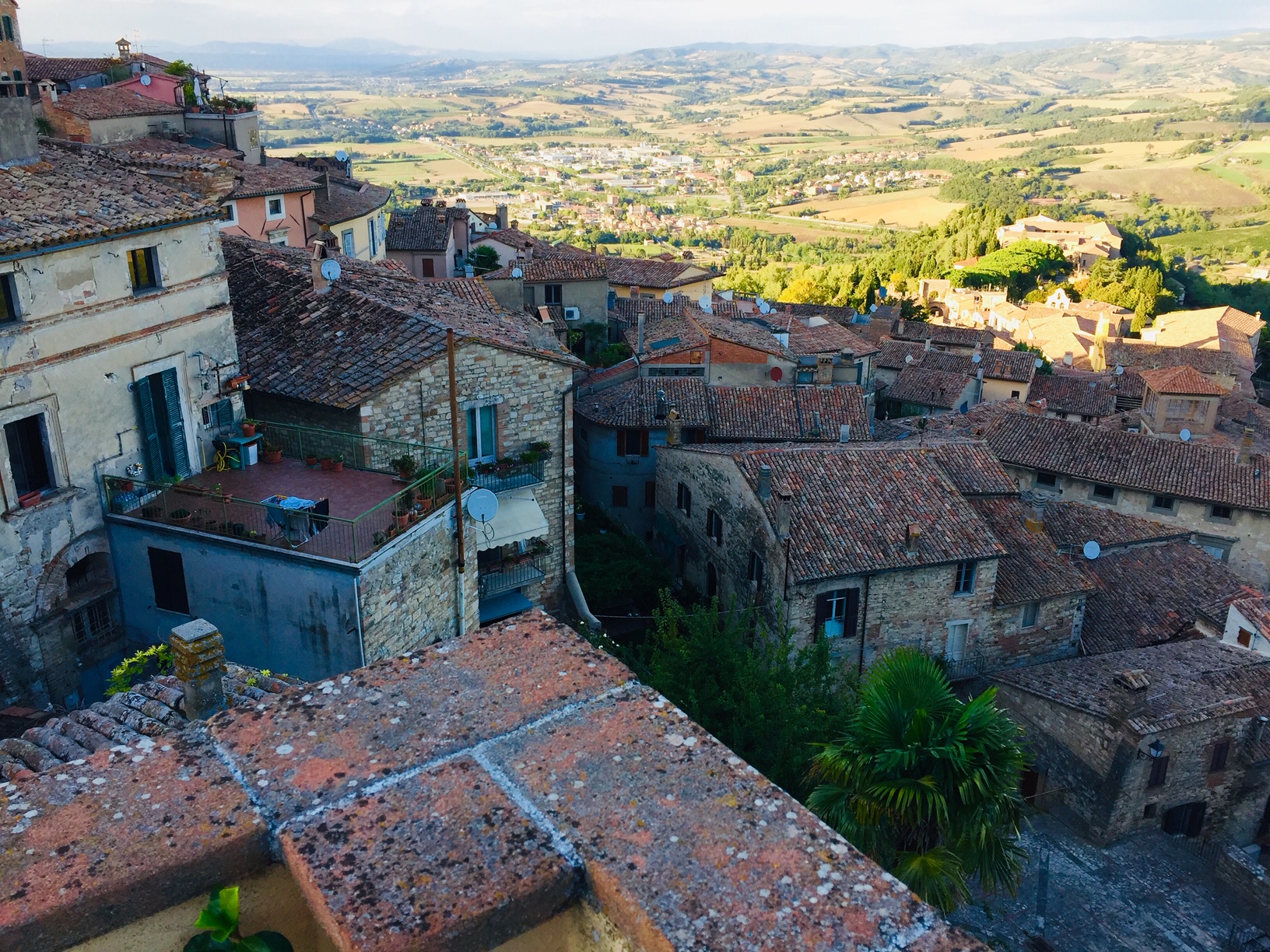
Here are some scenes of Todi itself.


Our accommodation in Todi was Residenza D’Epoca San Lorenzo Tre. In structure and decoration, it was a slightly quirky, period-piece but it offered an expansive, high quality continental breakfast, Italian-style. You can find out more about the hotel here.

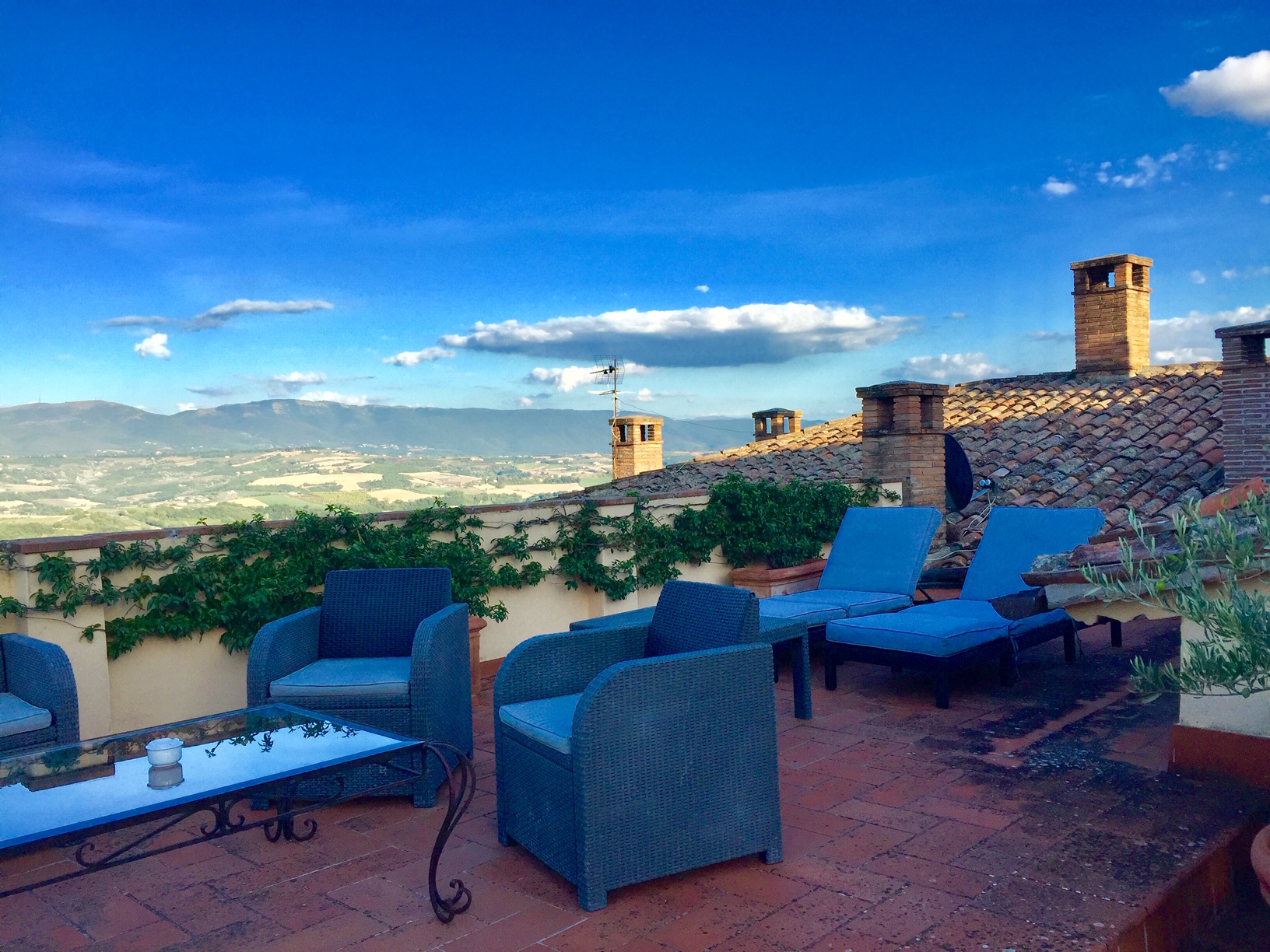
Another delightful feature of the building was its rooftop terrace, replete with comfortable seating and glorious views over-tiled roofs to the surrounding countryside.


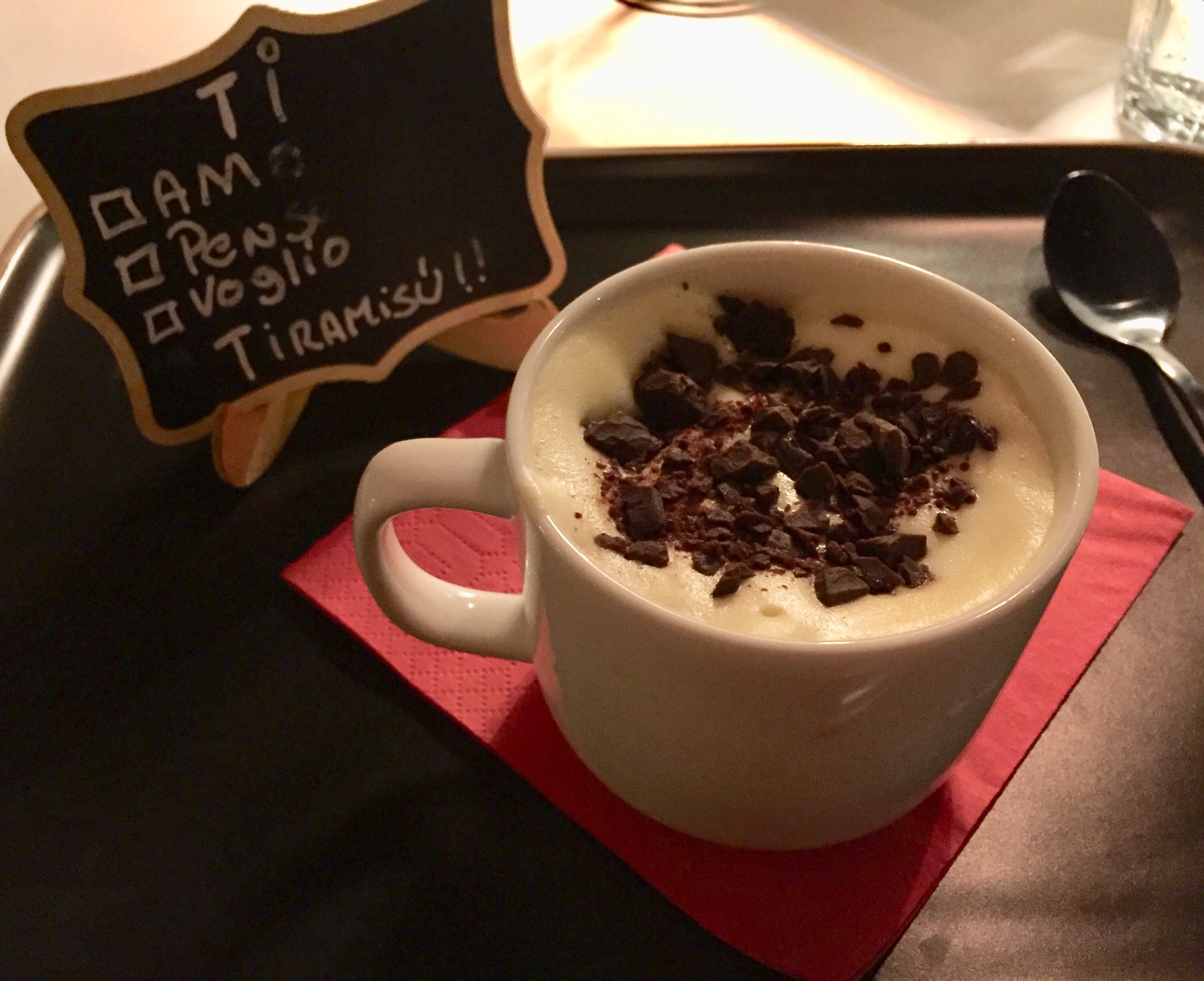
And, for Maggie, no stay in an Italian hilltop-town could be complete with yet another rendition of Tiramisu!

Next stop, Venice!

Cheers for now!
Rick Grounds

Posted in Travel | Tagged , , | 1 Comment

Rooms at the top: our stay in the Umbrian towns of Orvieto and Todi (part 1)


Orvieto’s impressive  Duomo

In these two posts, I will tell you what we saw and did in and around the Umbrian hilltop towns of Orvieto and Todi late in September 2019.

We spent three nights in each of the towns and enjoyed them both very much. However, there are marked differences between the two.

Orvieto has a population of just over 20,000 and is a popular destination for international travellers, who go to view the late-thirteenth century duomo, explore some of the 1,200 underground caves, have a leisurely lunch at one of the numerous dining establishments or purchase items of the ceramic ware for which the district is renowned.

The town is quite accessible, as it lies on the main train and vehicle routes that run from Rome to Florence. In our case, we came by the train from the north, having entered Italy through the alps from France, thence to Milan for an overnight stopover, before taking trains to Florence and then to Orvieto.

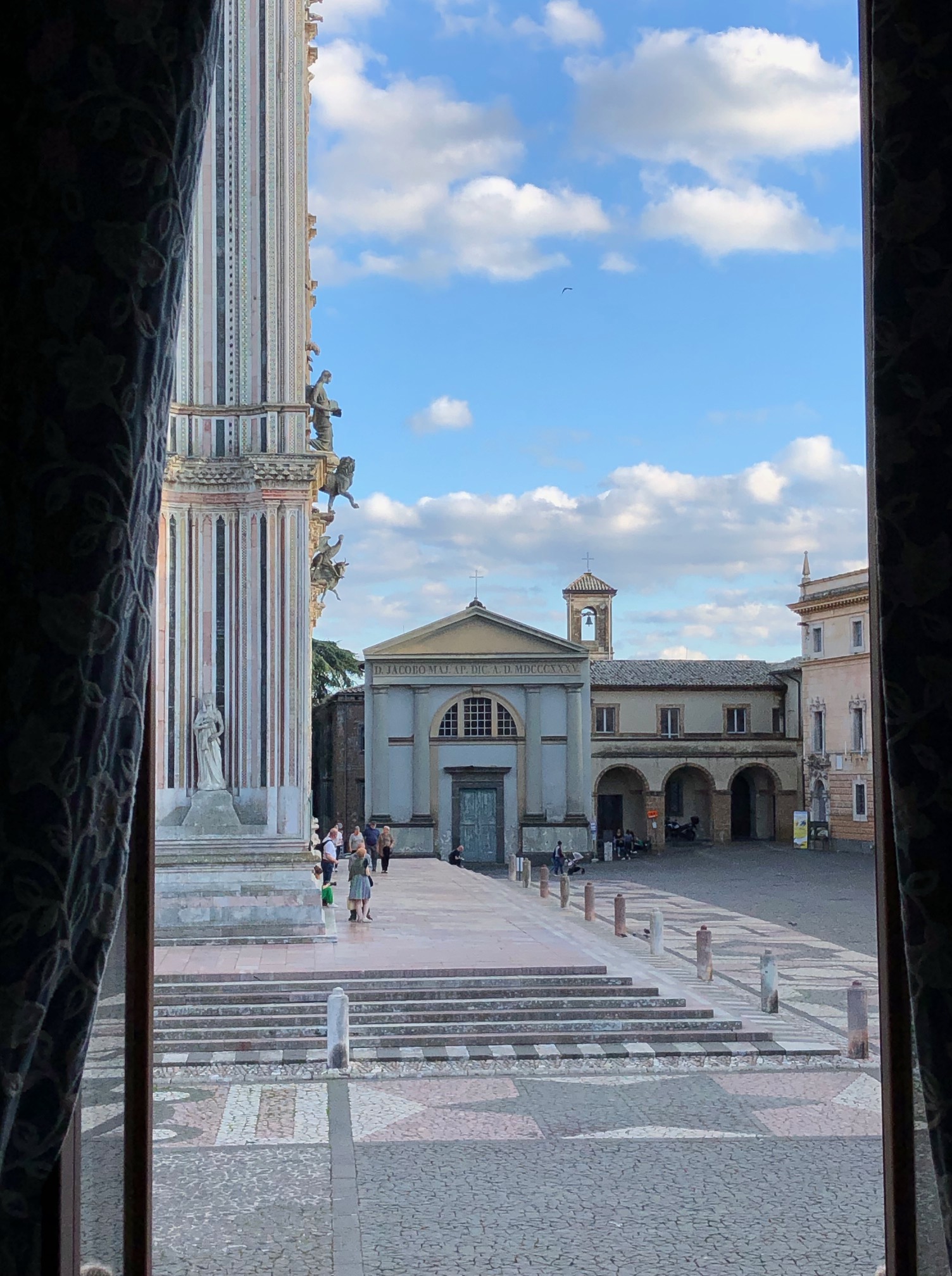
One of Orvieto’s best-known landmarks it its cathedral (duomo), which has a very distinctive external appearance. Our hotel room looked directly across a piazza to the cathedral.


The view from our window

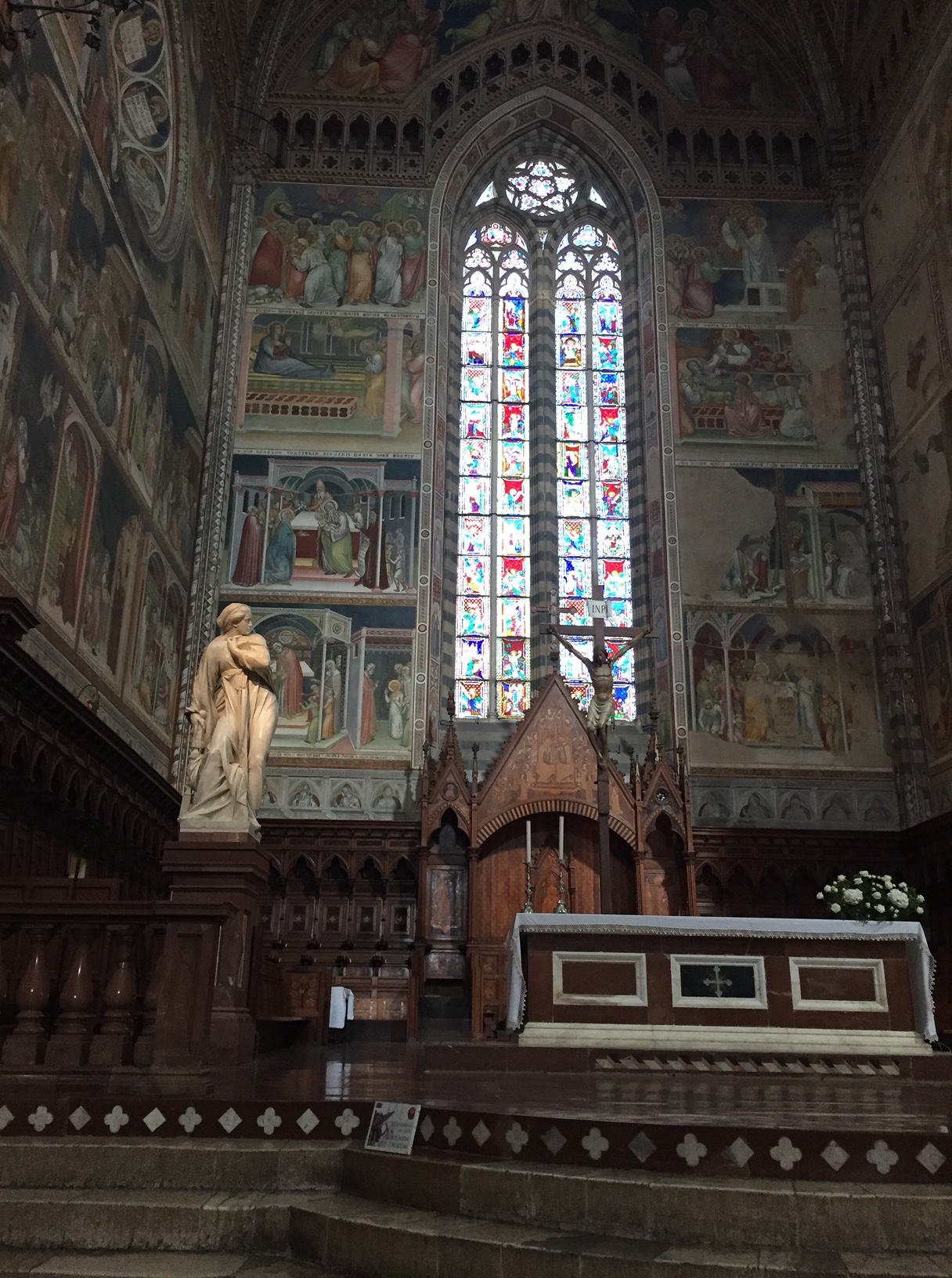
Although we are not at all religious, we do find some places of worship quite interesting to examine and explore. Inside, Orvieto’s doumo had some outstanding features, but it was not at all excessive.


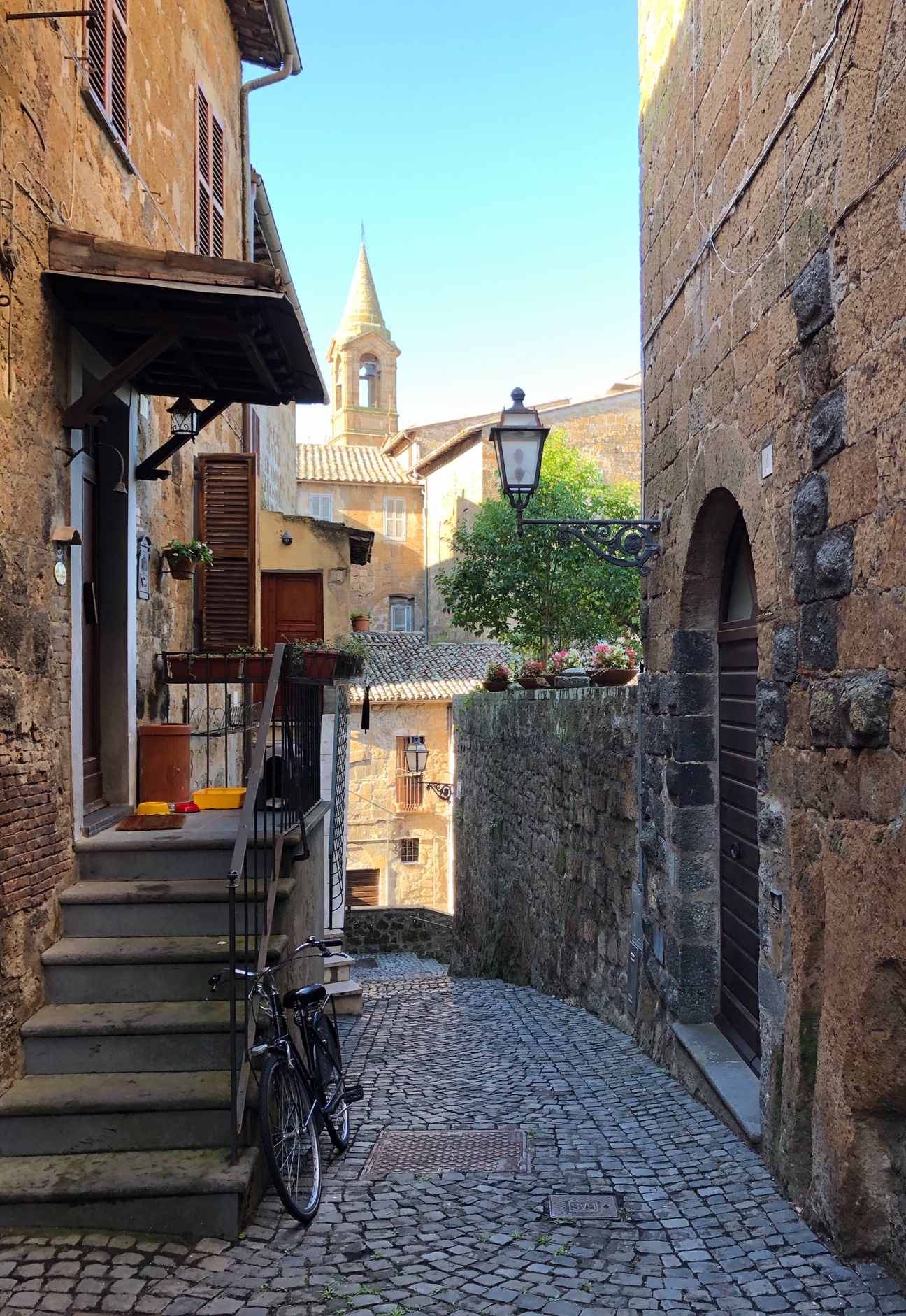
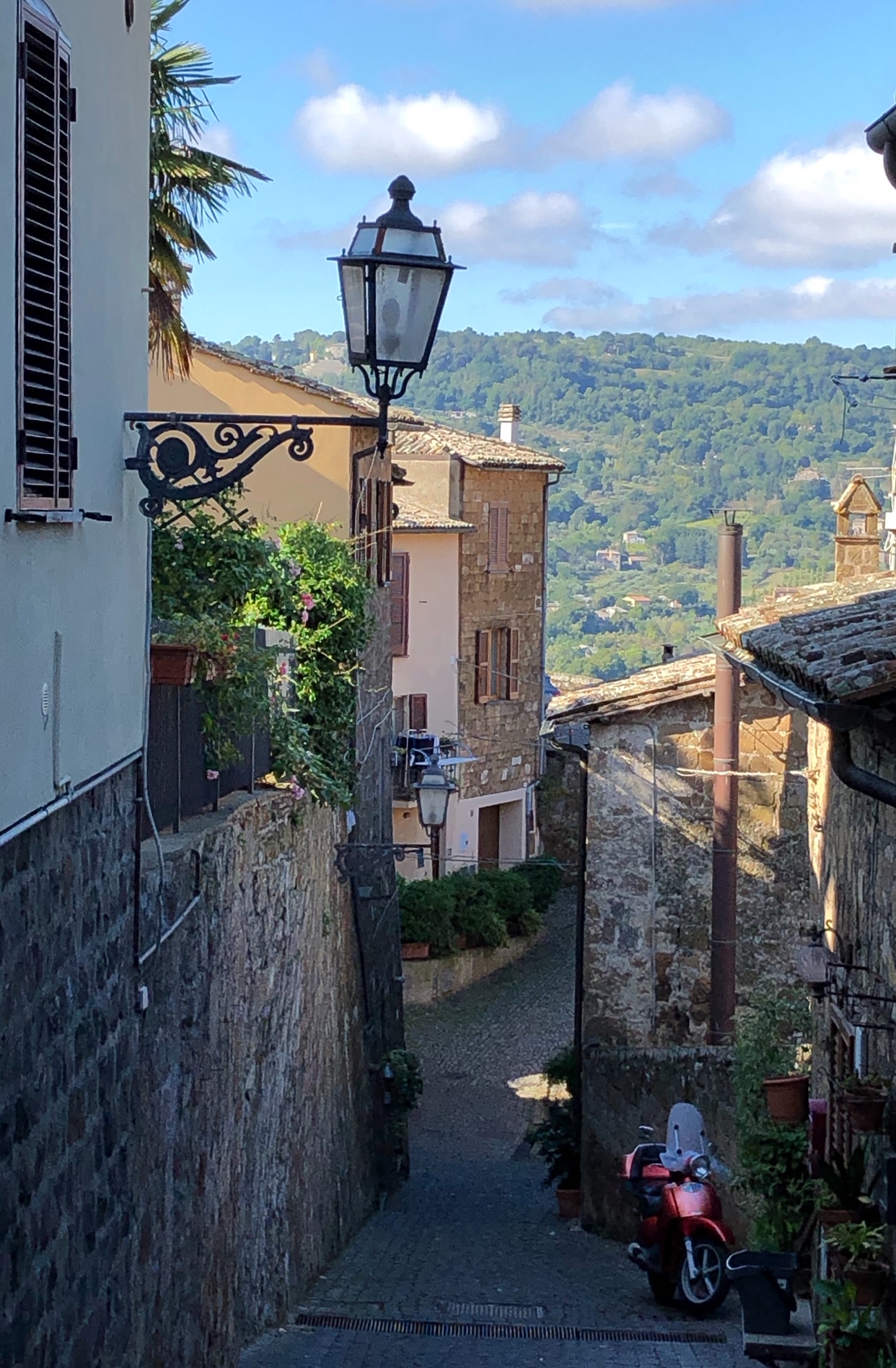
Exploring the town by foot takes you to a wide variety of interesting sights, including stunning views of the surrounding countryside.


No visit to an Italian town is complete without a red Vespa!


For a small fee, you may ascend to the top of the tower in this next photo, …

… and take in the panoramic views.


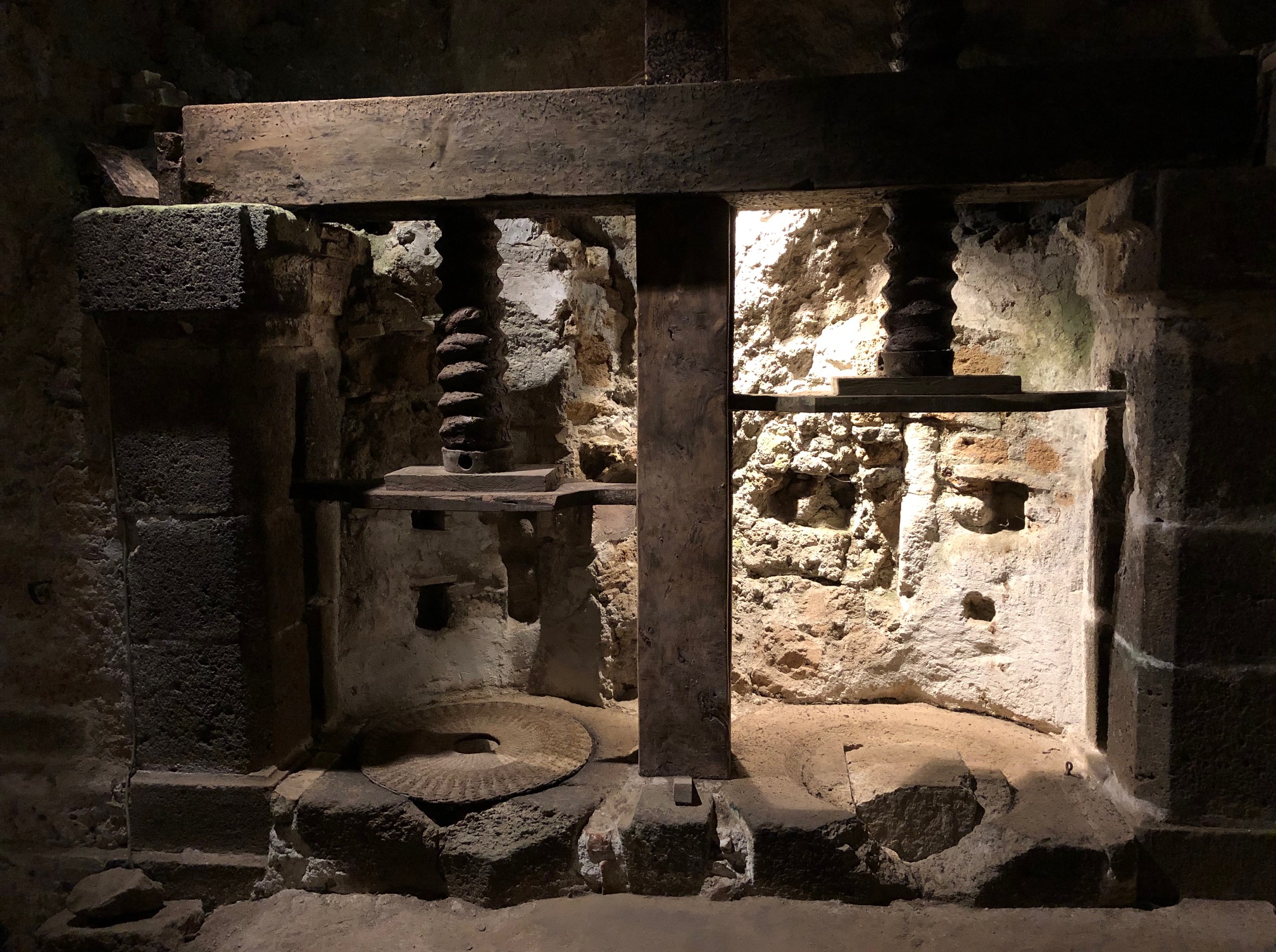
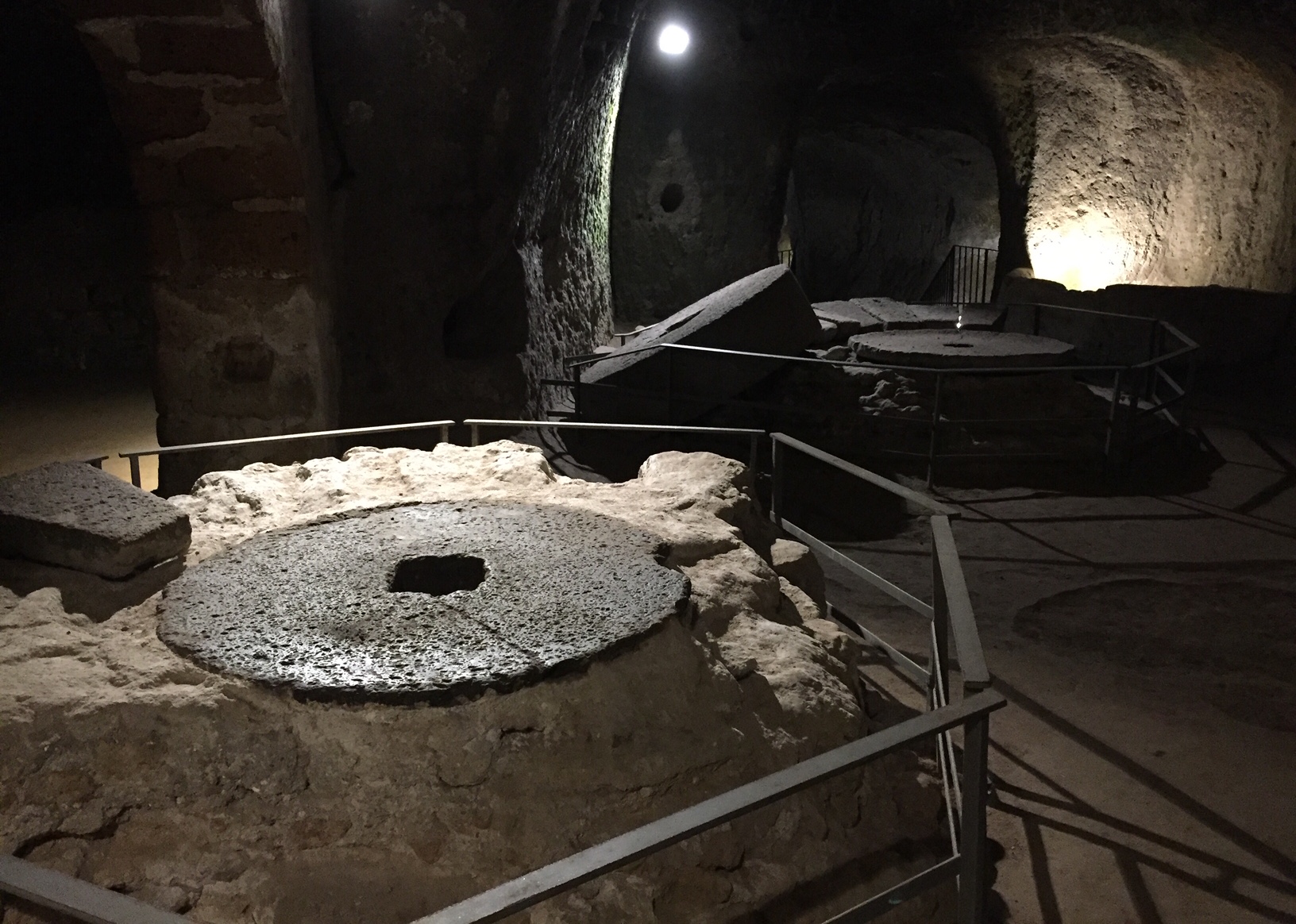
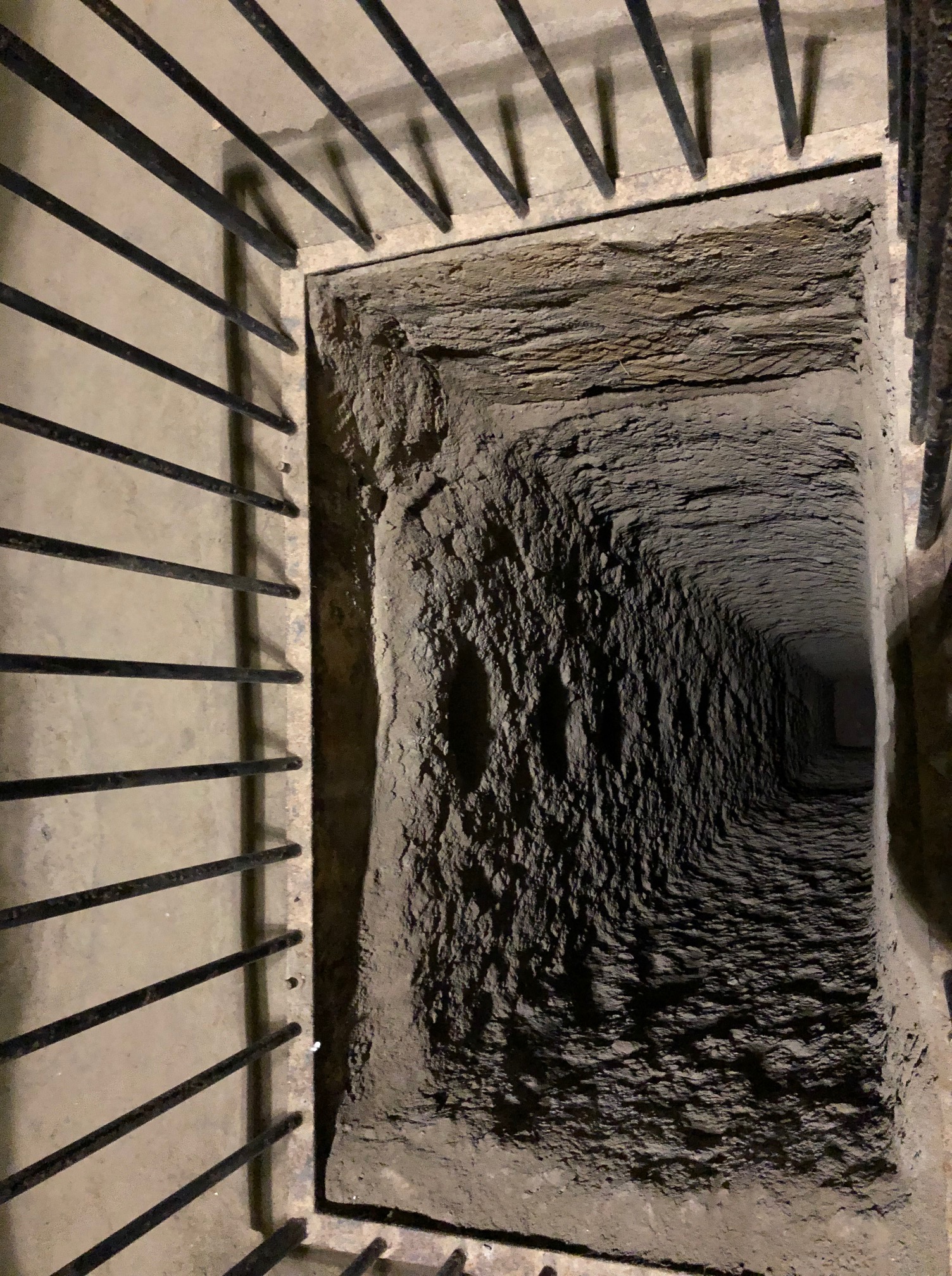
The vast majority of the tunnels below the town are privately owned. However, two are controlled by the municipality and are open for guided tours. The tours take you to sites where grains were ground into flour and olives were pressed for oil.


Other tunnel sections intersected with wells dug deep into the rock, while others were used to raise doves as a source of food.


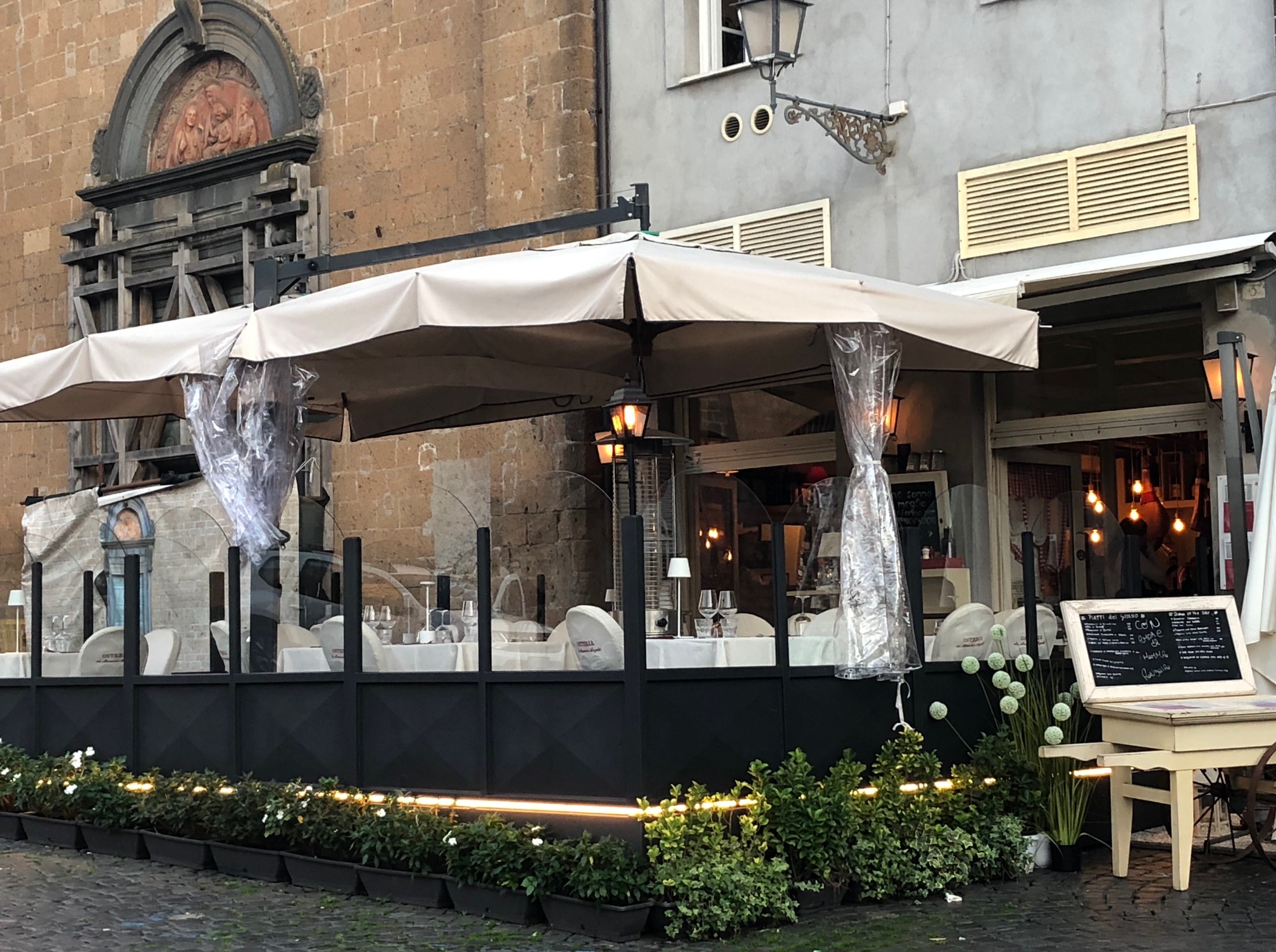
Orvieto’s popularity with international visitors is reflected in the number and quality of accommodation options, high-end retail stores and numerous cafes, bars, trattoria, enotecas and restaurants.

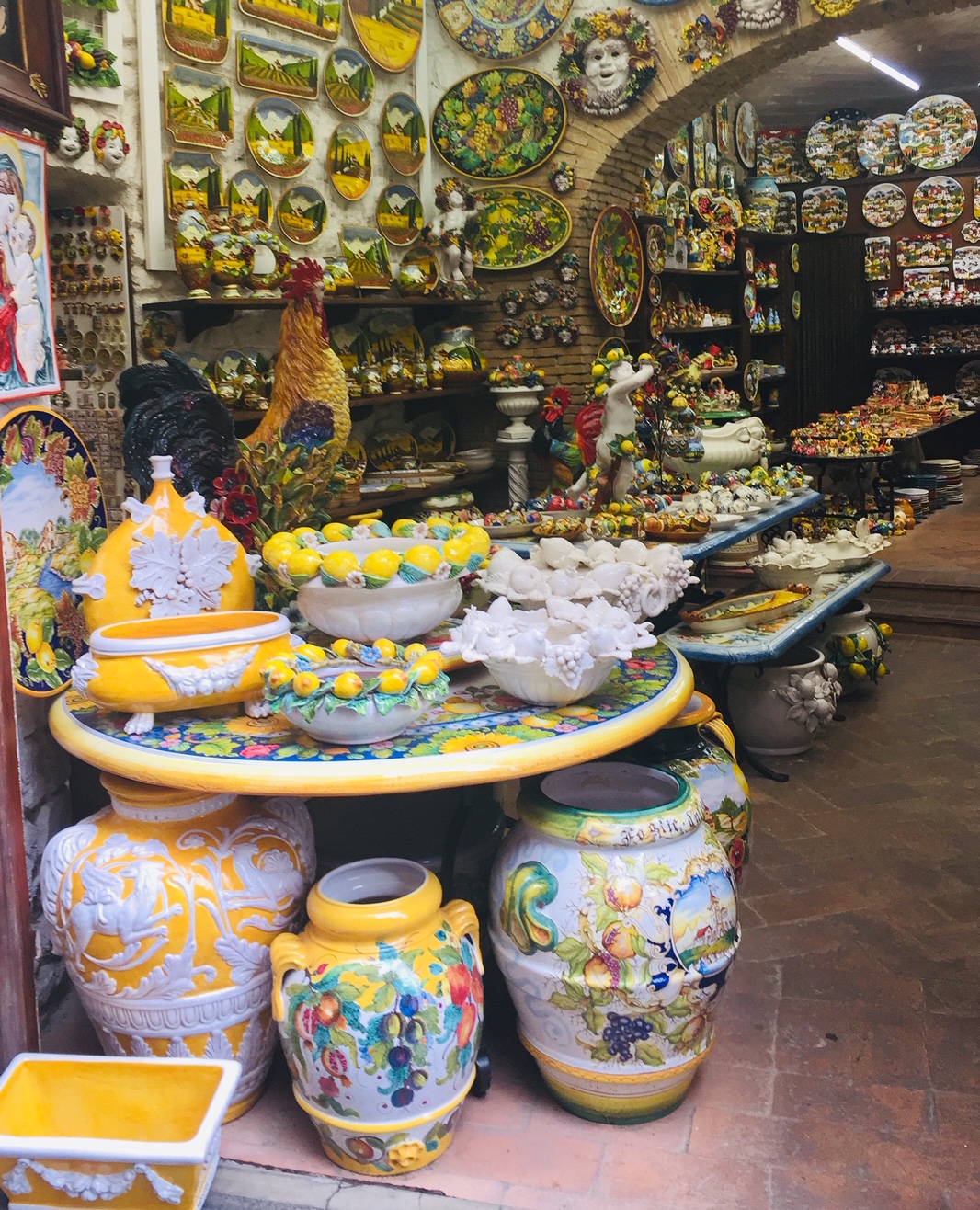
Several stores sell the colourful, locally-made ceramic goods. Browsing in one of them, we witnessed an American woman spending a five-figure sum on a collection of pieces and watching, somewhat anxiously, as the goods were carefully wrapped to be sent to her home address!

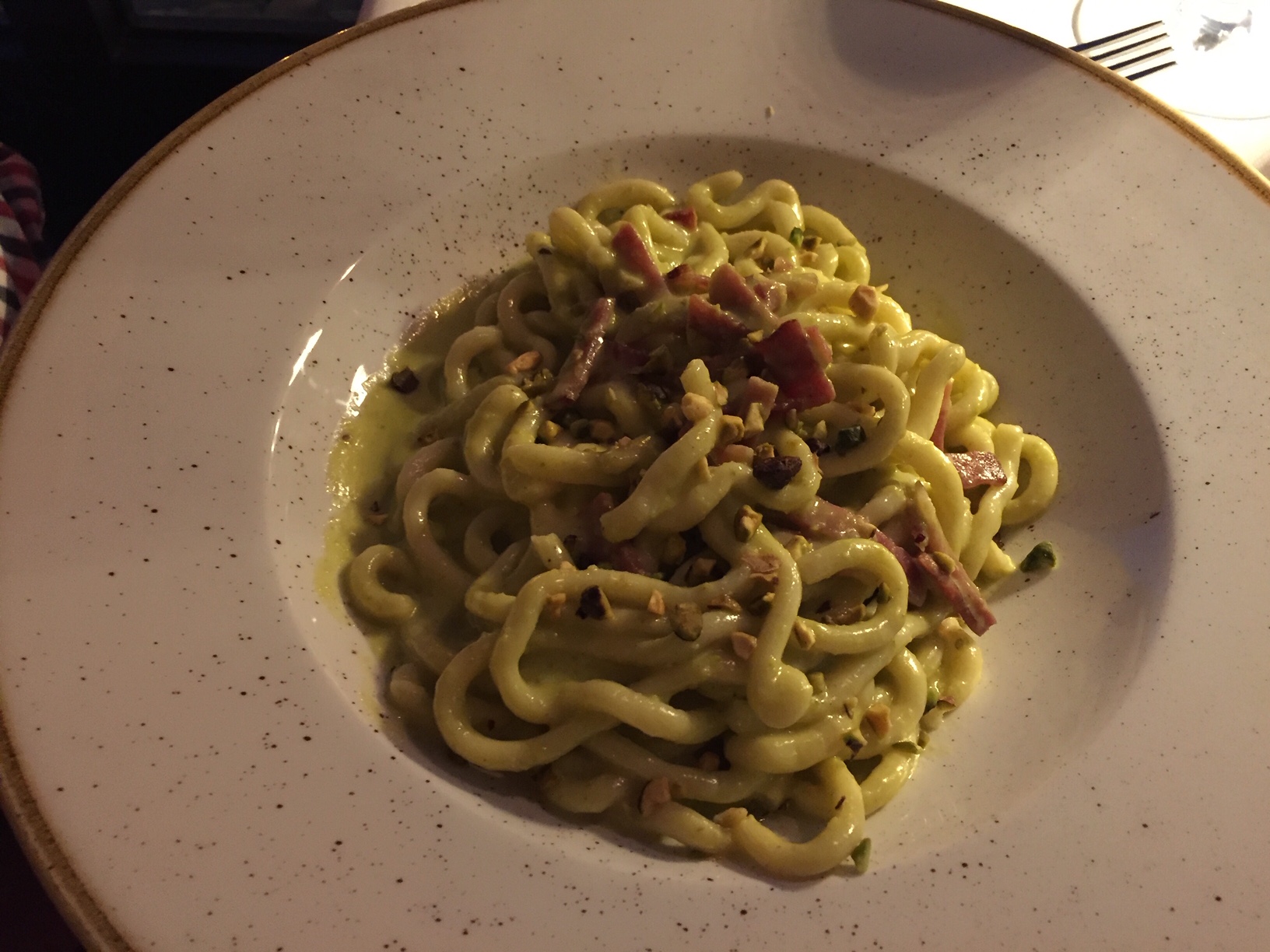
And here are some examples of Orvieto’s thriving food and wine scene.


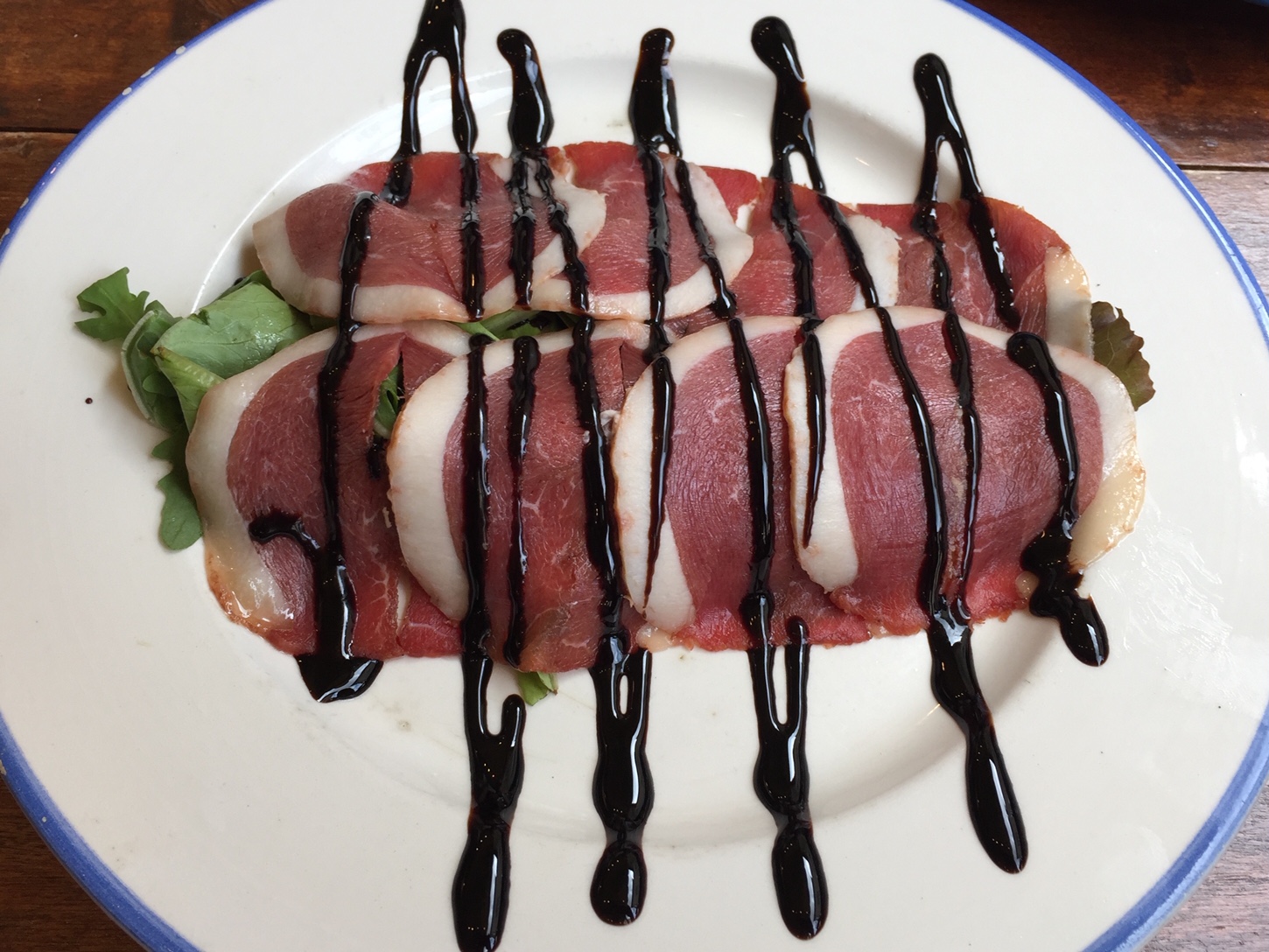
Ultra-fresh zucchini (courgette), herbs and grated parmesan, drizzled with thick, delicious balsamic


One of five versions of Tiramisu that Maggie put to the taste test during our four weeks in southern Europe


Next, to Todi.

Cheers for now!
Rick Grounds

Posted in Travel | Tagged , , | Leave a comment

It’s hot and steamy, smells like hell, could cost you an arm or a leg … and they call it Wonderland!?

Thermal mud pool, Rotorua, New Zealand

Maggie and I feel very fortunate, especially about our international travels through the years from 2008 to 2019. In October last year, we flew home from Rome at the end of our eighth visit to Europe, content in the belief that we might not visit that part of the world again, nor anywhere else requiring a long plane flight or considerable expense.

We are both 66 years old and we have spent a great deal of time and money on travels in distant countries. Now it is time for us to both tighten our belts a little and explore places in or near to our home country of Australia.

The arrival of the Covid-19 pandemic only heightened our sense of being fortunate. If it had hit six months earlier, our planned travels in France, Italy and Greece would have been cancelled, leaving us feeling somewhat bereft. And in February, we went on a cruise around New Zealand and across the Tasman Sea to Melbourne, one of the last virus-free cruises of early 2020. Lucky us!

Of course, we can both think of quite a few far-away places we’d be delighted to explore. Top of my list would be Yellowstone National Park in the United States, with its incredible variety of outstanding features: geology, topography, plants, wildlife, scenery, the seasonal changes and so on. So significant is this great park, the first national park in the USA, that National Geographic devoted its entire May 2016 edition to it. I know this because I came across it in my dentist’s waiting room, borrowed it and read it from cover to cover!

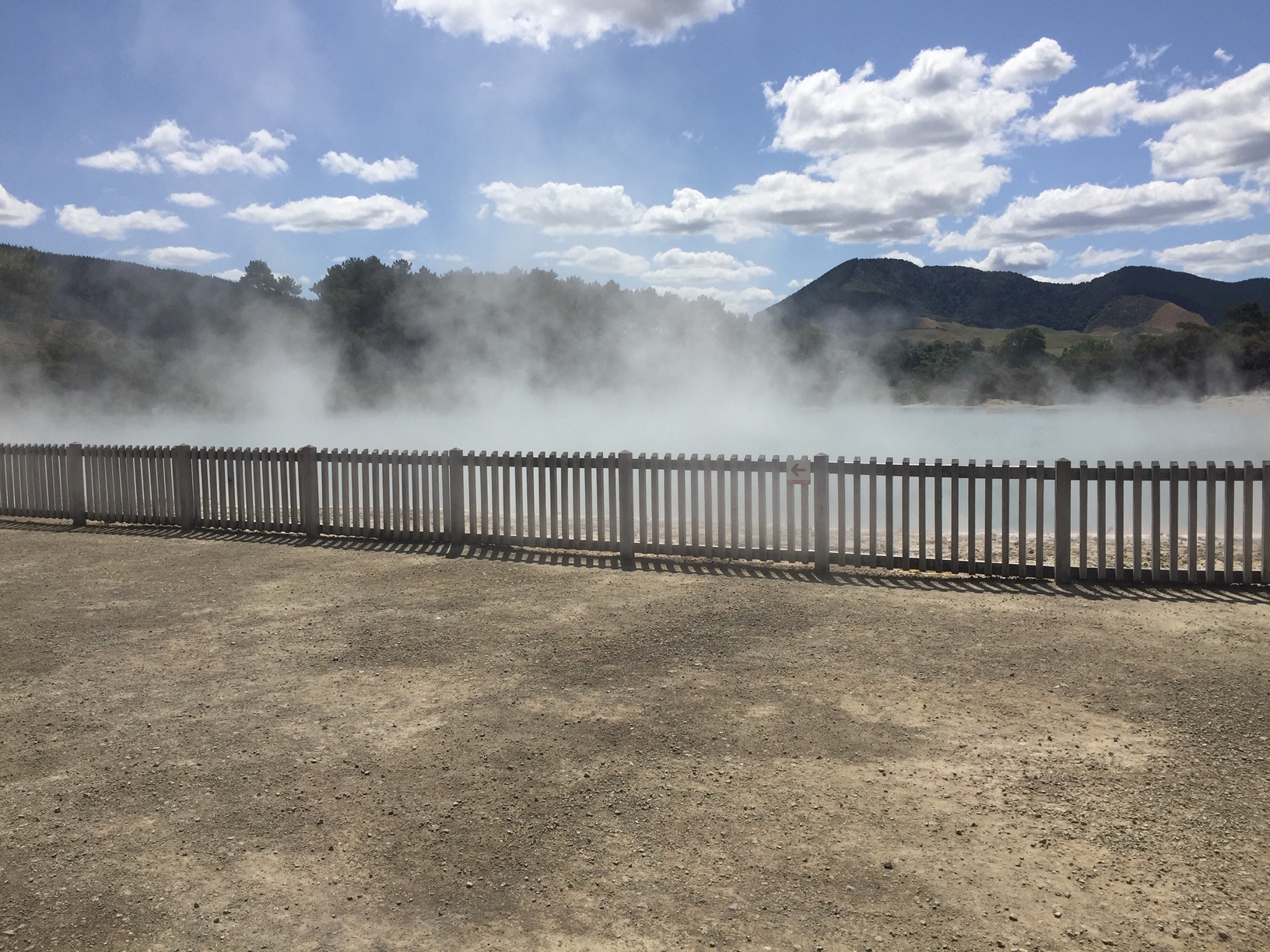
As most readers would know, one of the features that make Yellowstone so special are its geothermal formations. Well, New Zealand is also home to some remarkable geothermal activity and we got to explore some of it in February, on a day’s outing from our cruise ship (Cunard’s Queen Elizabeth). Here is some of what we saw.

The first site we visited was a large thermal mud pool. It was fascinatingly hideous, as illustrated in this short video clip.

http://https://www.youtube.com/watch?v=WxL6h1_nu20

The mud pool was a mere warm-up act for what followed – the Wai-o-tapu thermal wonderland, which is home to the largest area of surface thermal activity within the Taupo volcanic zone in the centre of New Zealand’s north island. (Wai-o-tapu means ‘sacred waters’ in the Maori language.)

We spent a couple of hours following some of the trails around Wai-o-tapu, marvelling at the variety of geothermal formations.

Here is a busy stream of heated water, which gave off sulphurous vapours.

Next, a collapsed site from which ‘rotten-egg’ gas was emanating:

This group of pools contains unrefined crude oil. In the early 1900s, they were skimmed to extract fuel for kerosene lanterns. Imagine doing that for a living. Ugh!

http://https://www.youtube.com/watch?v=VC2zv4SBJV4&feature=youtu.be

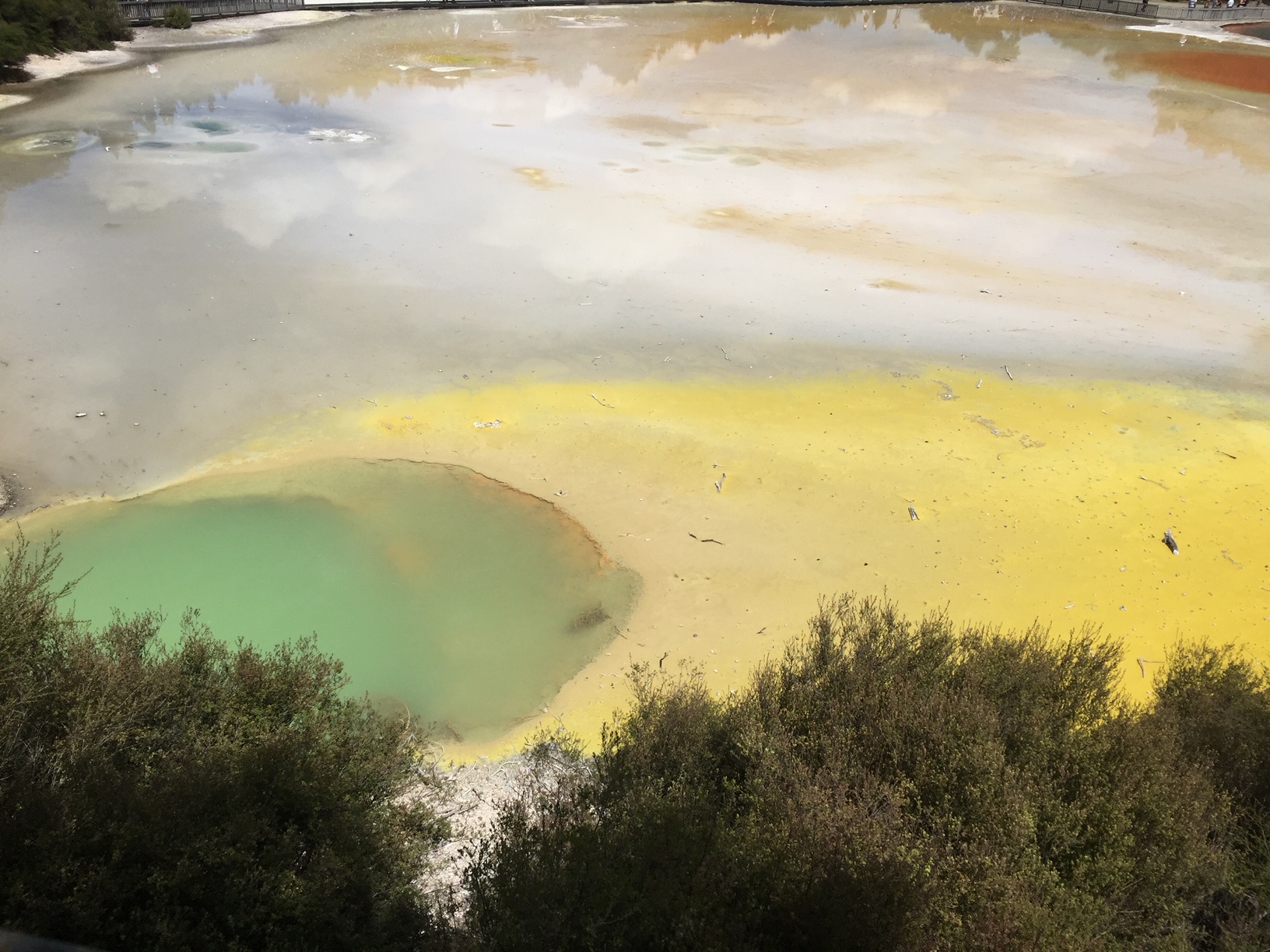
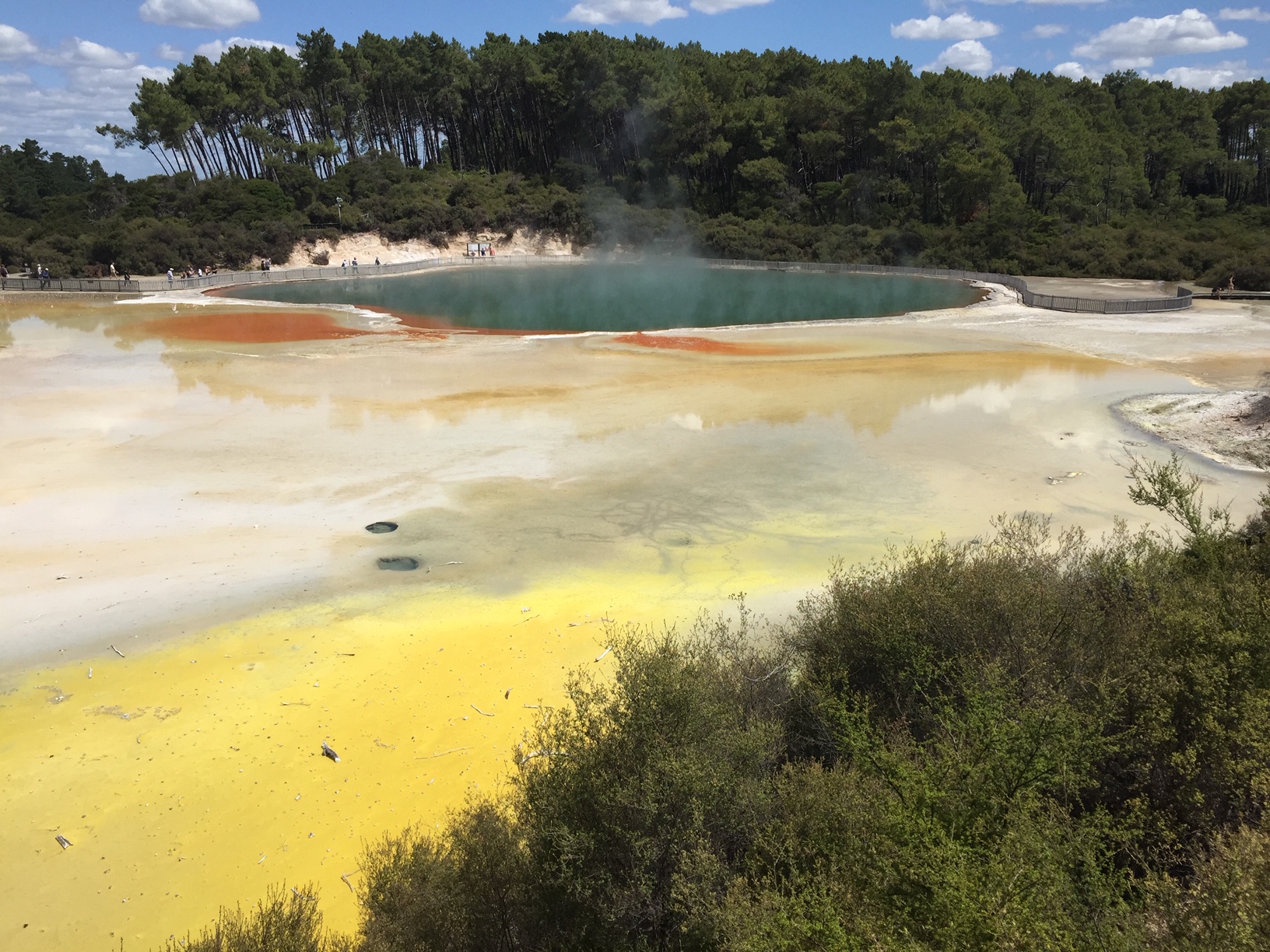
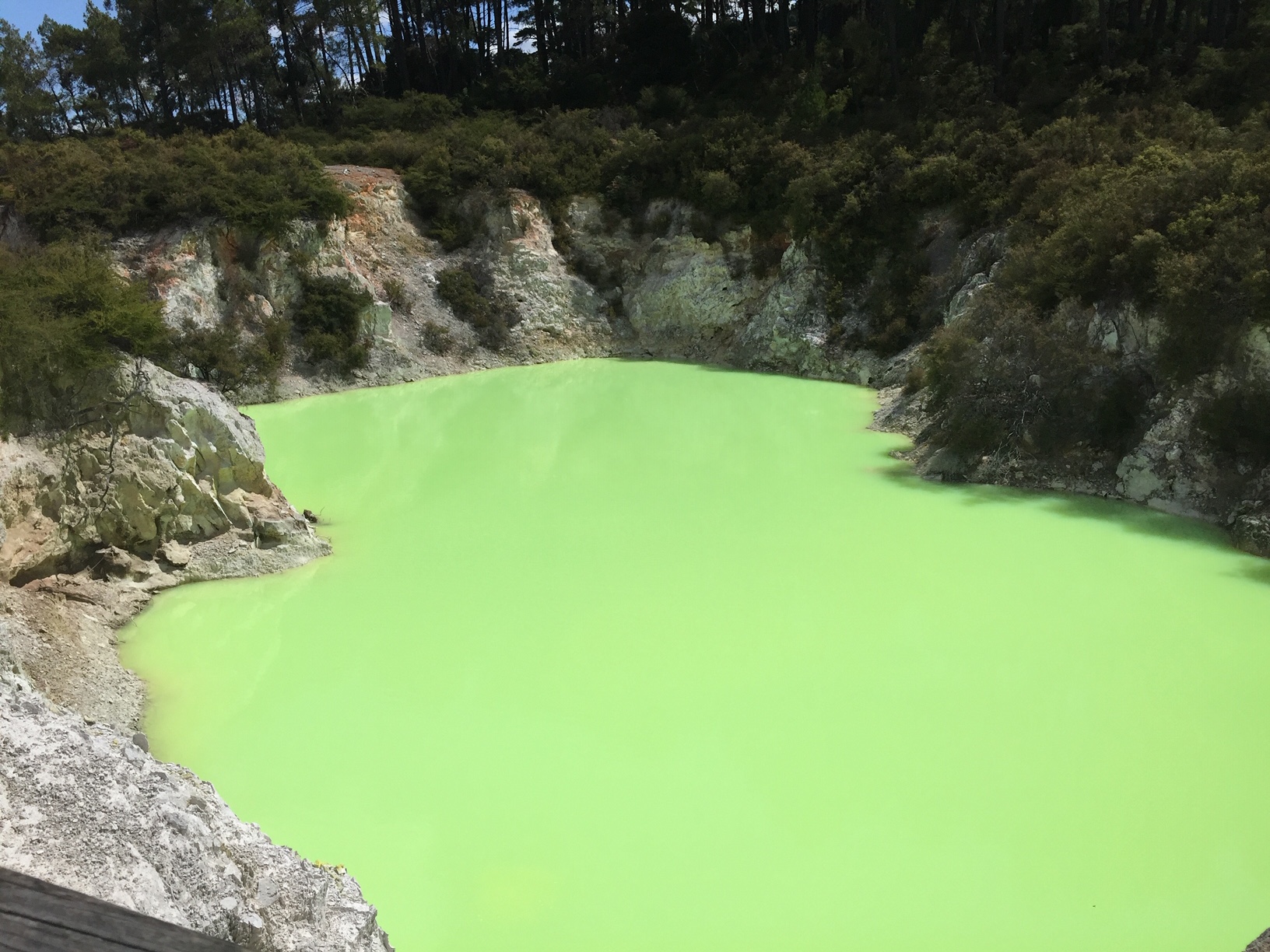
The next group of photos were taken from various viewpoints around a couple of large pools. Amazing colours were generated by a variety of minerals and the heat.


Holes in the walls of this collapsed crater are home to three species of small birds. The heat from below helps to keep the birds warm in winter and to incubate their eggs.

The last stop on our track was this large pool, with its attractive chartreuse tones. But its virtues are only skin-deep – with a pH of 2, it would made short work of an arm or leg, should you be foolish enough to test the water!

We plan to visit New Zealand again in the years ahead, once, if not twice. However, Maggie’s nostrils have had their fill of the country’s geothermal wonders, so we will turn our attention to the ‘shaky isles’ other scenic and cultural attractions.

Cheers for now!
Rick Grounds


Posted in Travel | Tagged | 2 Comments

Easing out of isolation!

The last time I published a post was early in March, when the world was about to be turned upside-down by the Covid-19 pandemic.

The pandemic hasn’t actually made a dramatic difference to my daily life, partly because Maggie had one of her knees replaced on March 5, which meant we faced a period of semi-isolation anyway. However, with most of the world’s citizens having little or no prospect of doing any meaningful international travel for the foreseeable future, I couldn’t summon enough desire and creativity to write anything interesting about our various pre-pandemic travels from 2019 and the beginning of 2020.

So, what’s changed to bring me back to the keyboard?

Well, by a combination of good fortune and good management, the spread of the virus has been arrested in Australia, enabling our federal and state governments to ease some restrictions on our movements and activities. In our state, Victoria, restrictions on holiday travel and using commercial accommodation were eased two weeks ago, just a few days before a long weekend.

Faced with a scheduled power outage in our street, we decided to get ahead of the long-weekend pack, booking two mid-week nights at Boondaburra BnB at Ruffy, a small community at the western end of the Strathbogie Ranges in north-central Victoria.

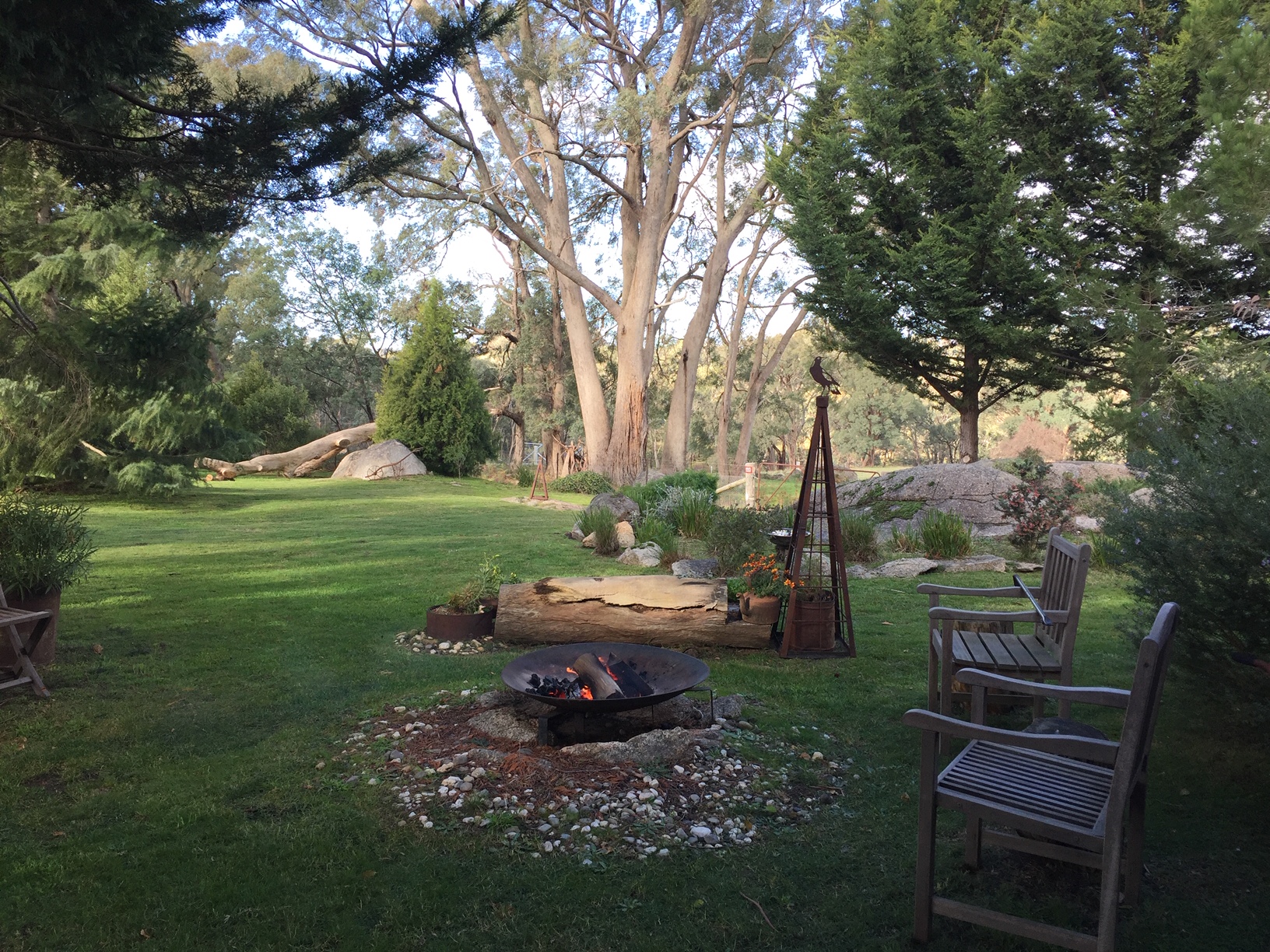
For most of the two-hour journey, we drove through drizzle and rain showers. By the time we arrived at Boondaburra, the sky was clearing but a fresh south-easterly chilled the air. No matter! Our hosts had two fires going, one in a pit close to a sheltered patio, the other warming our comfortable and spacious open-plan accommodation.

The pit fire at Boondaburra

Inside the BnB

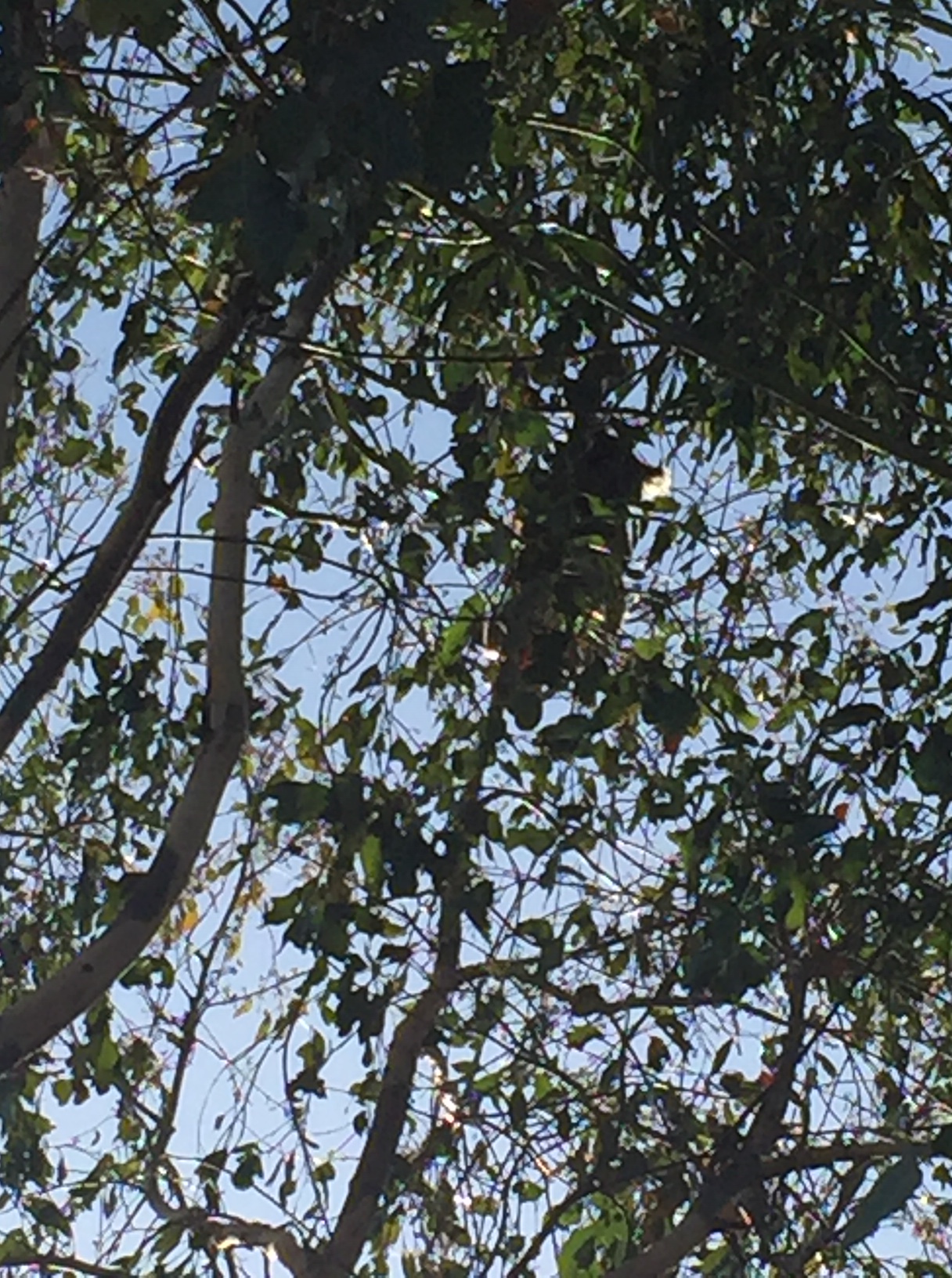
We would describe the property as a part-time farm, stocked with some beef cattle but also home to a wide variety of native birds, wombats and a few healthy-looking koalas. Exploring Boondaburra – a First Nations word for platypus – on foot is encouraged but we were advised to keep a lookout for the numerous wombat holes!

One of the koalas, up a gum tree

After a good night’s sleep and a few slices of fresh homemade bread, we set off in what we thought was the direction of the town of Nagambie. Happily, we got lost – by at least 90 degrees actually – and spent an hour wending our way along unsealed roads through a series of valleys featuring swift-flowing creeks, woodland and bushland. The valleys alternated with expanses of lush granite-strewn green pastures, dotted with cattle, sheep and sulphur-crested cockatoos, all of them seeming to be very pleased that good rains had brought plenty of new food!

Our unplanned adventure ended at the large town of Seymour, where we went in search of a quality coffee. Our luck held, as we came upon Little Stones Cafe, which was on its fourth ever day of business. Their single-origin coffees were outstanding, as was a tangy orange & almond cake. Even the hipsters of Melbourne’s inner suburbs would have been happy.

Reinvigorated, we made our way to the Vietnam Veterans Commemorative Walk, a series of 106 digi-glass panels, listing the names of every member of an Australian defence unit that served in Vietnam, set against a backdrop of black & white photos taken during the years of Australia’s involvement in what is known to the Vietnamese as the ‘American War’. The panels are supplemented by some information boards describing key activities and battles in which Australian personnel were involved.

(If you click on the link, you will read that Australia’s participation in the Vietnam conflict was “a tumultuous part of Australia’s history”, as was the case in the United States. I was old and interested enough to attend some of the massive anti-war rallies held in Melbourne in 1970 and 1971.)

From Seymour, we drove northwards along the Goulburn Valley Highway, making for Tahbilk Estate, home to some of the oldest shiraz vines in the world, dating from before phylloxera devastated vineyards across the world.  We had booked to be two of the 20 customers permitted at any one time in the winery’s Wetlands View Restaurant. (Social distancing is still mandatory in restaurants and cafes.)

We enjoyed an unhurried lunch of a main course and glass of estate wine each, a shared dessert and coffees. The food and service were both excellent, as was the view from the venue’s large timber deck.

View of the wetlands at Tahbilk Estate

After lunch, another hour-long drive – on sealed roads this time! – took us through more of the district’s idyllic scenery, arriving at Boondaburra in time to light the fire for a second cosy evening.

A clear, early-winter’s sky produced a frosty morning, so we took our time over breakfast, before making our way to the main road back to Melbourne. (We interrupted our return journey for another dose of the coffee at Little Stones Cafe!)

As we reached the outskirts of Melbourne early in the afternoon, Friday’s holiday traffic heading north was building up quite noticeably. We were content that we’d had our ‘long weekend’, two wonderful days that gave us just what the doctor ordered to blow the pandemic’s cobwebs away.

Boondaburra BnB, with its wood-fuelled fires, green scenery and clear skies worked well as a winter destination. We hope to return early one November, when the spring weather should be at its best.

Cheers for now!
Rick Grounds

Posted in Travel | Tagged , , , , , | Leave a comment

The sounds of New Zealand …

… are quietly awesome!

Maggie and I recently visited New Zealand. We flew to Auckland and spent two days exploring some of the scenic areas near to that city, before boarding the Cunard Line ship, the Queen Elizabeth, for a cruise down the east coast of New Zealand and then across the Tasman Sea back to our home city of Melbourne.

One of the main reasons we chose to explore parts of our near-neighbour by ship was the opportunity to visit a national park in the South Island known as Fiordland, a mountainous region scarred by ancient glaciers to produce fourteen spectacular fiords (fjords in Europe).

[Although ‘fiords’ is the correct term geologically, they are known geographically as ‘sounds’ in New Zealand, for reasons I don’t quite fathom (pun intended)!]

The most famous of these deep bodies of water is Milford Sound, one of five sounds that our ship was scheduled to visit. However, just because your itinerary includes Milford Sound doesn’t mean you will actually get to see much of it. Its annual rainfall is more than 6,400 mm (250 inches), spread across an average of 182 days, ie half the days in a year. Indeed, soon after we sailed out of Auckland’s harbour, about one metre of rain fell over Milford Sound in 24 hours, causing landslides, road closures and a ban on cruise ships going there for several days.

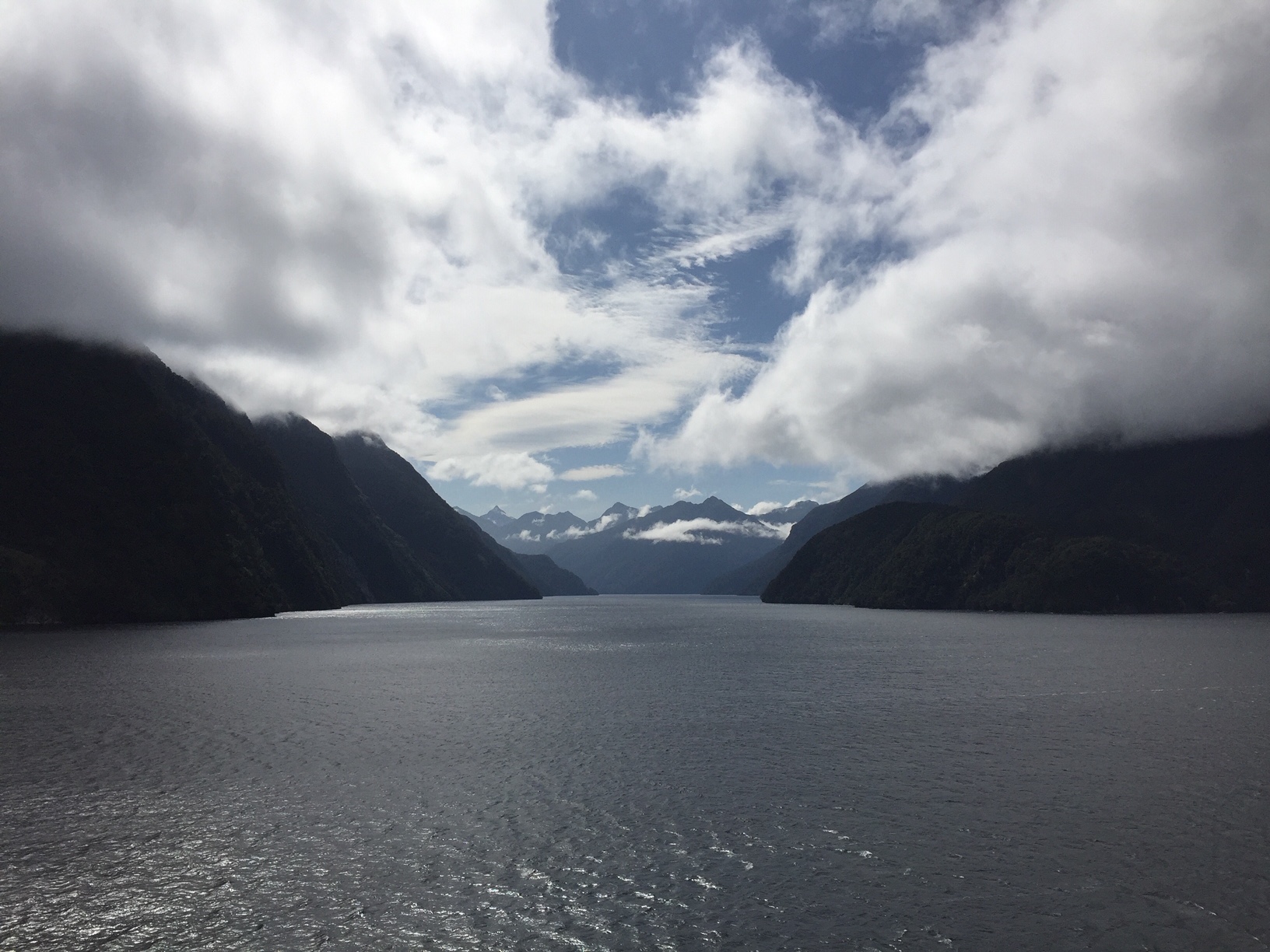
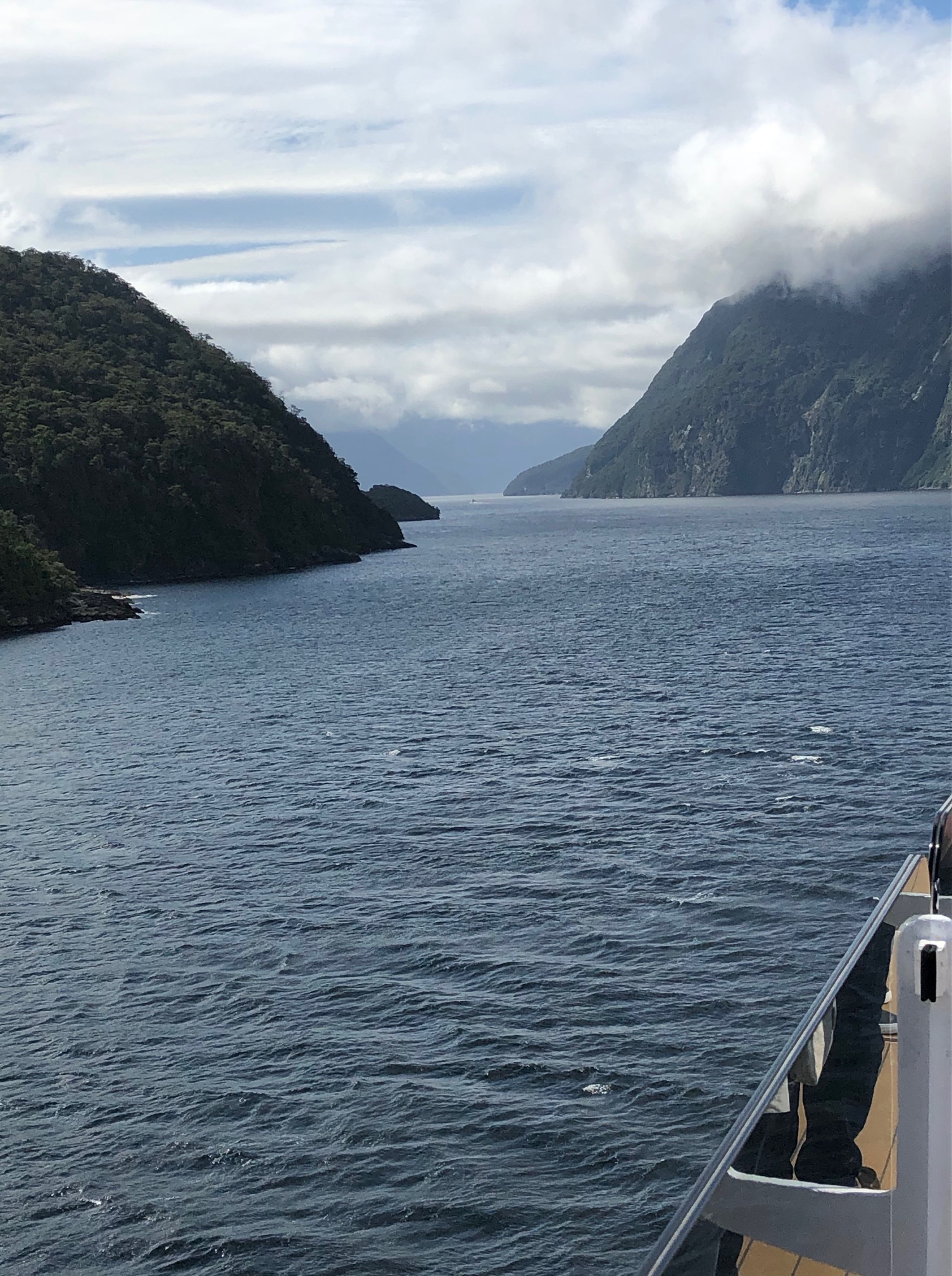
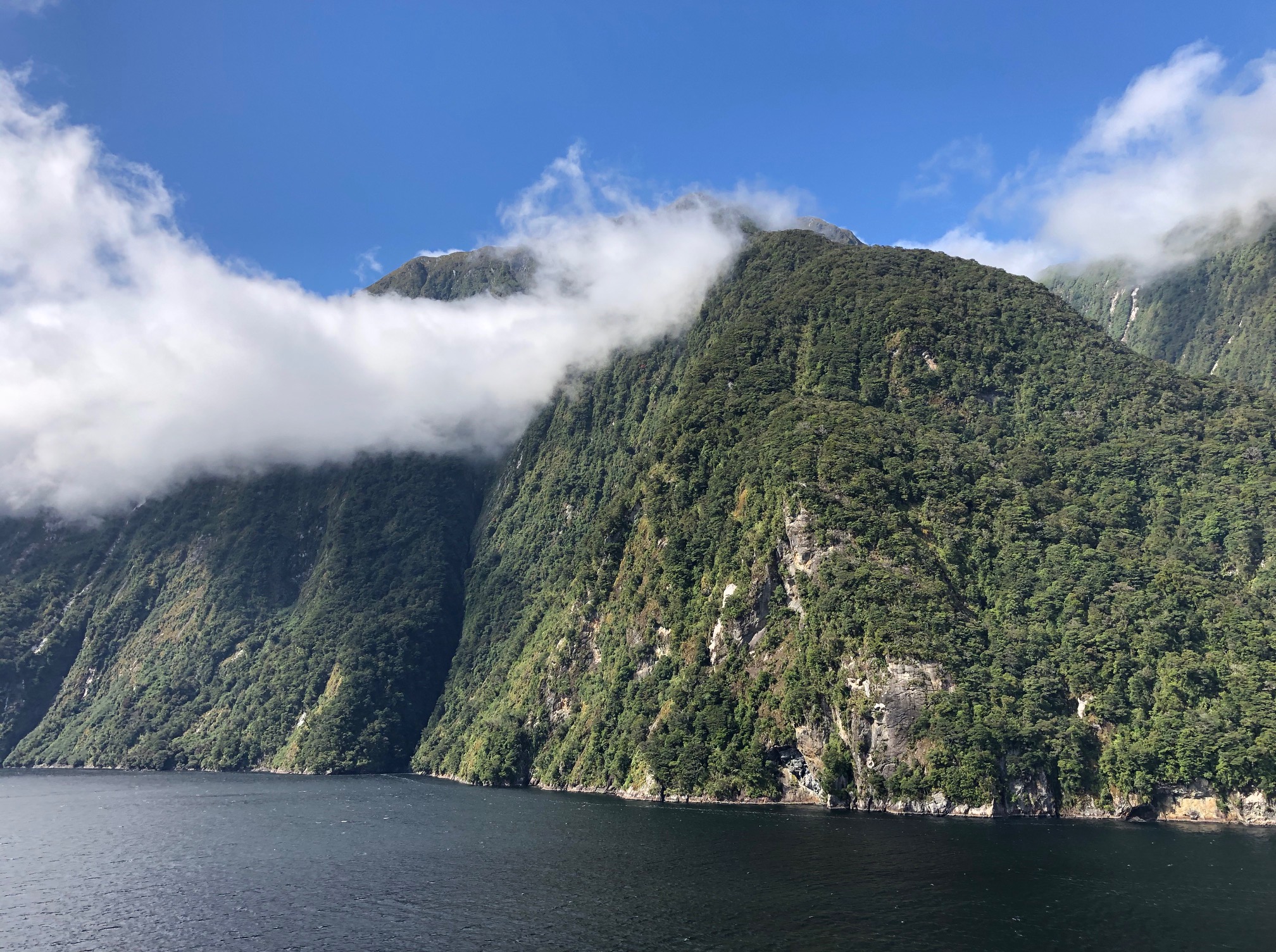
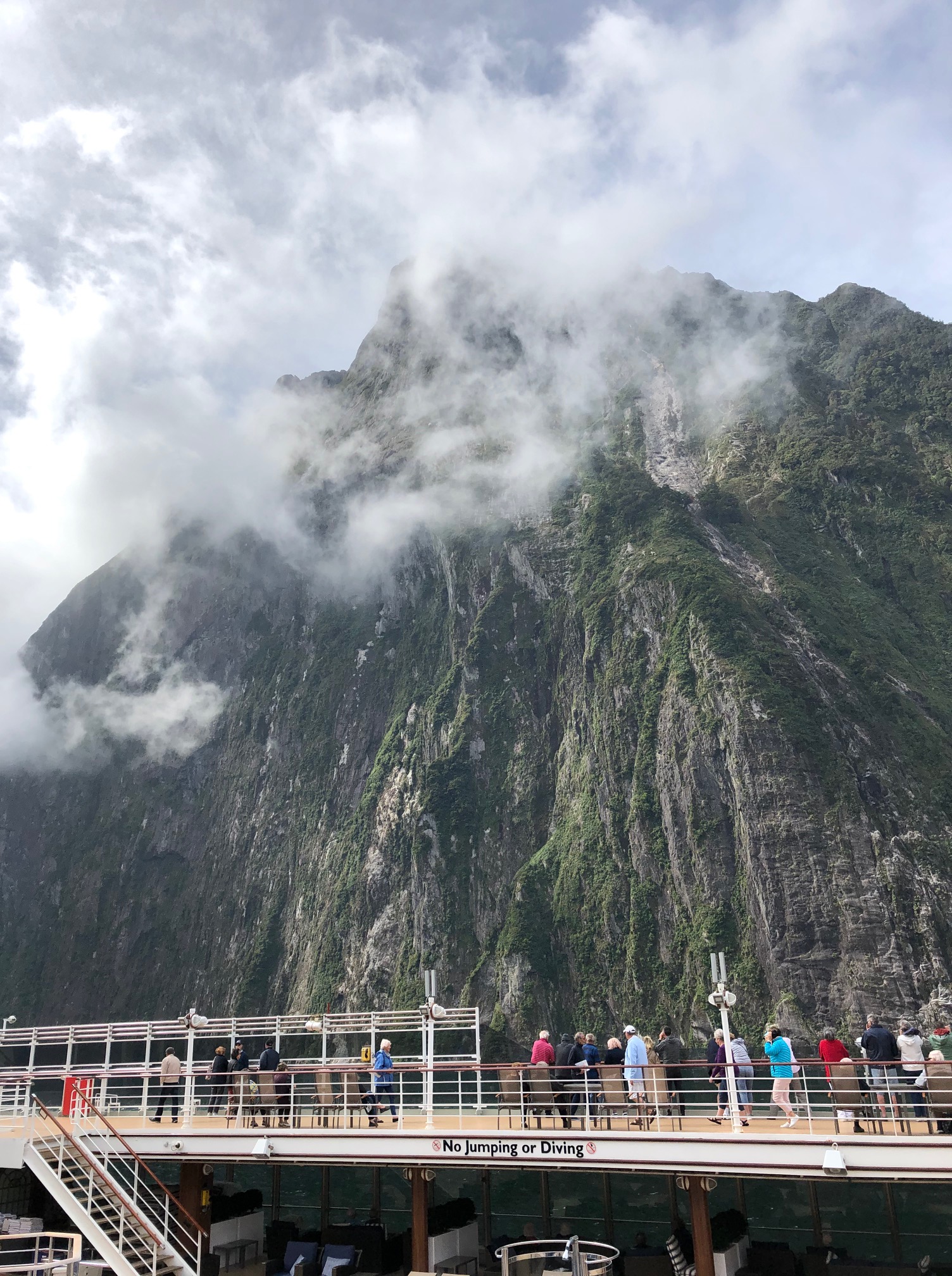
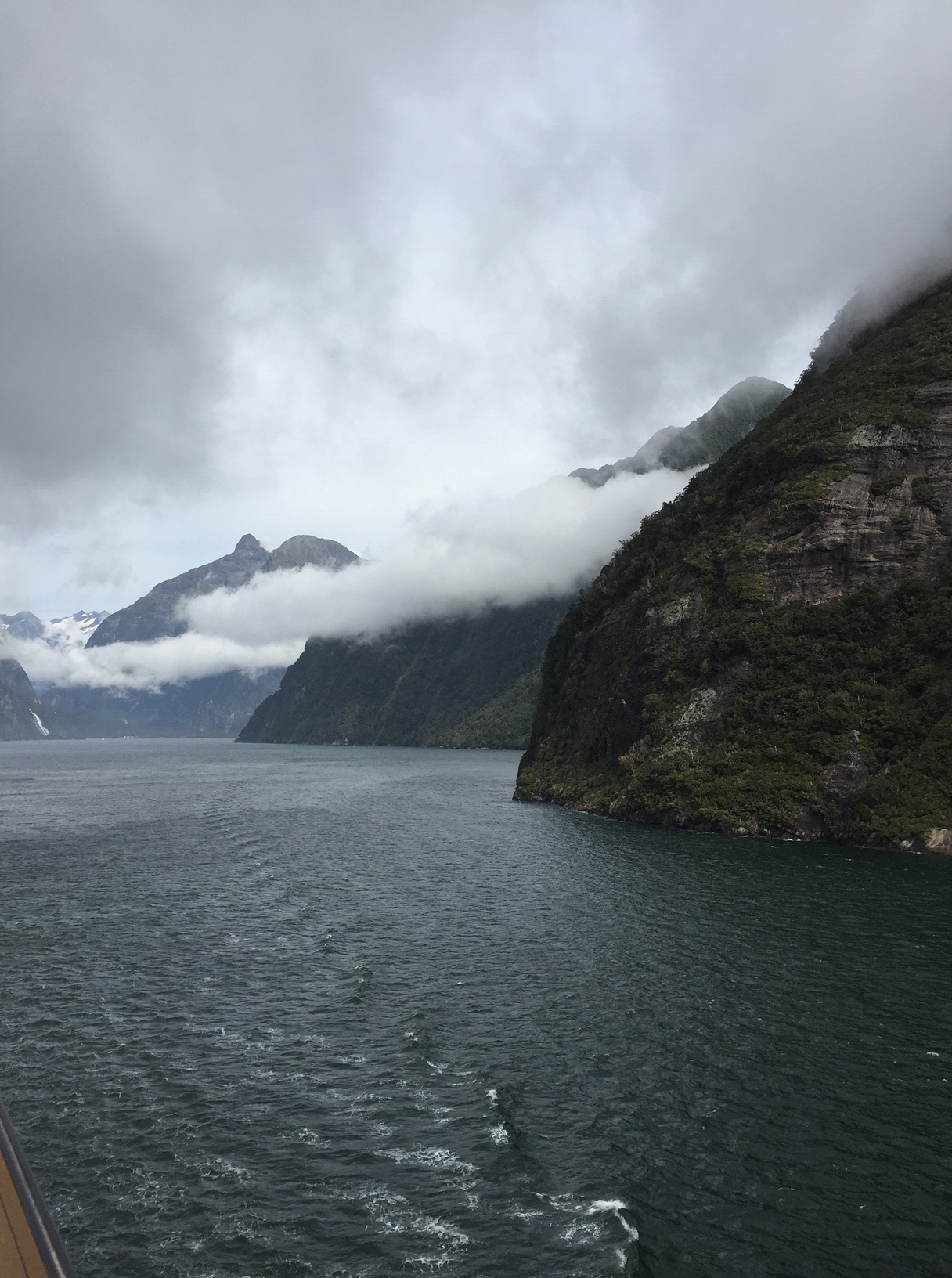
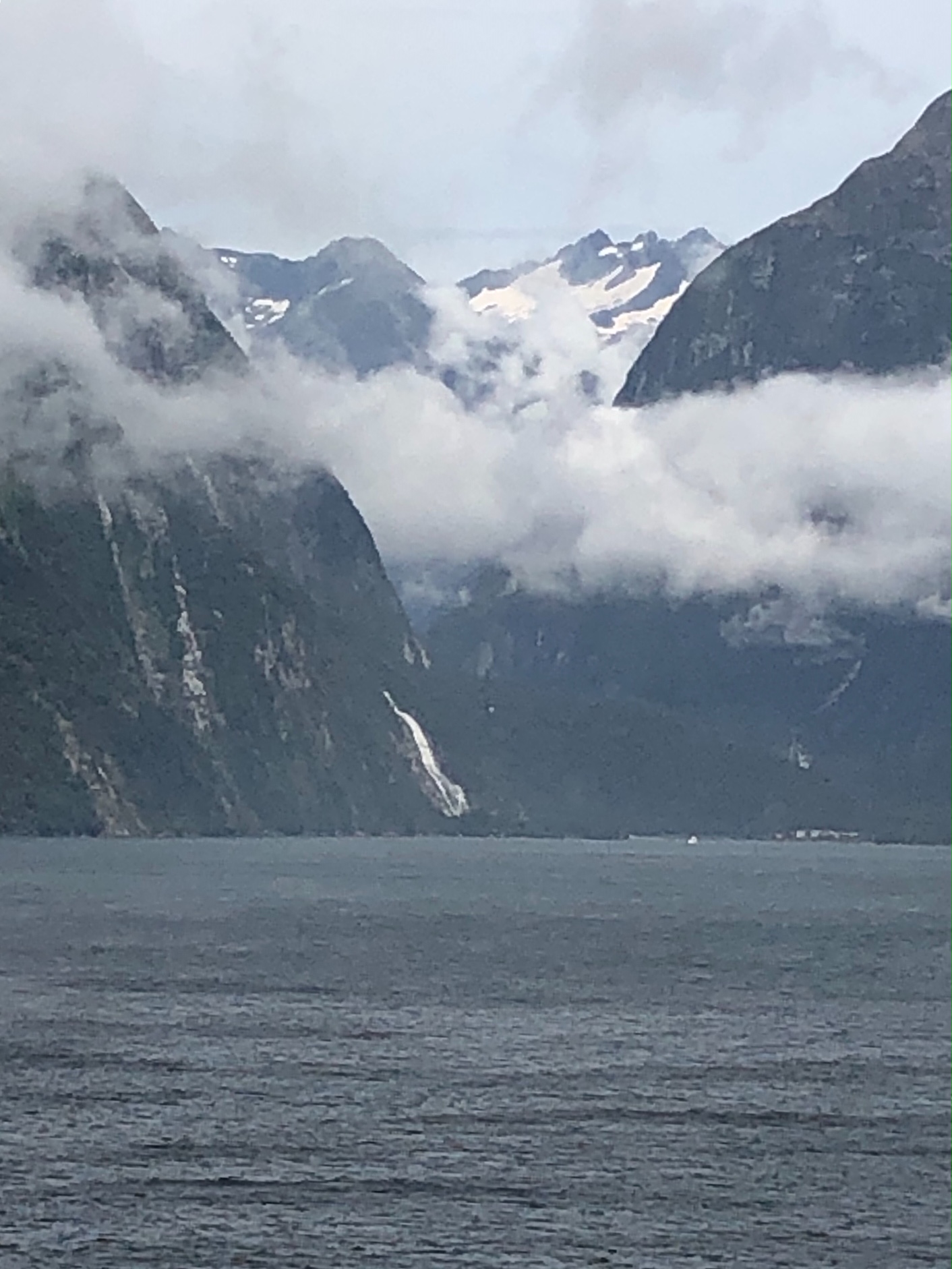
So, we count ourselves lucky for the near-perfect conditions that prevailed when we visited Fiordland, with a scattering of clouds to add atmosphere and contrast.

Of the sounds we visited, four were in pairs because glaciation had created islands bound on two sides by distinct fiords and, on the remaining side, by the Tasman Sea. If you click here you will find a map of Fiordland, showing the pairing of Dusky and Breaksea sounds in the south, Doubtful and Thompson sounds in the middle and Milford Sound at the northern edge.

Our experience, extending over six hours, was greatly enhanced through detailed information provided by a senior ranger who had boarded the ship at our previous port, finally leaving us at the inner end of Milford Sound, where there is a small settlement and an airstrip.

Alright, enough words from me. I hope you enjoy this selection of our photos.


Further posts about our New Zealand experiences will be published soon.

Cheers for now!
Rick Grounds

Posted in Travel | Tagged , , | Leave a comment

Accessible wild places in Tasmania

In March 2018, just on a year after my father’s life reached its end, Maggie and I spent eight days travelling around Tasmania and visiting some of its famous wilderness spots.

I mention Dad because he grew up in Tasmania and I spent the first four years of my life there while he worked as a young country doctor in the north-east of the state. Our family then settled in Melbourne but we visited Tasmania several times, for holidays and to catch up with Dad’s extended family.

As well as those trips to Tassie, as it is known to most Australians, I went there on two hiking trips organised by my secondary school. I visited three national parks, including Cradle Mountain-Lake St Clair, where I twice completed the famous Overland Track.

So, after my home state of Victoria, Tasmania is probably the part of Australia with which I am most familiar. Over the last decade or so, I have steadily introduced Maggie to some of my favourite corners of the state, as well as discovering new places together.

Our first two visits to Tasmania covered the areas around the two largest cities: Hobart, the capital, and Launceston, where Dad lived as a boy. (In May 2016, I published a series of posts about our time in and around Hobart, beginning with this one.)

These ‘soft’ introductions were all well and good. However, the time had come to take Maggie for a walk on Tasmania’s wild side, as in some elements of its world-famous expanses of wilderness.

When I say “walk”, I don’t mean going for a hike. Maggie has issues in both ankles and one of her knees; and I am not the sleek rodent of my youth! So, I put together an itinerary that would enable us to visit some areas of outstanding natural beauty without having to trek up hill and down dale. (This itinerary would also be relevant for younger or fitter people on a tight time budget.)

After flying into Hobart, we made our way up the east coast to the town of Swansea, which overlooks the beautiful Freycinet Peninsula.


The next morning, we drove across to Coles Bay, the peninsula’s main settlement. We had booked to go on a half-day cruise around the peninsula, most of which is a National Park.

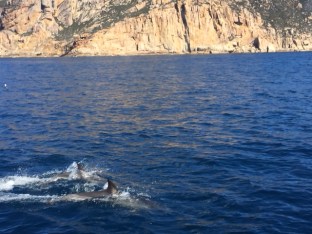
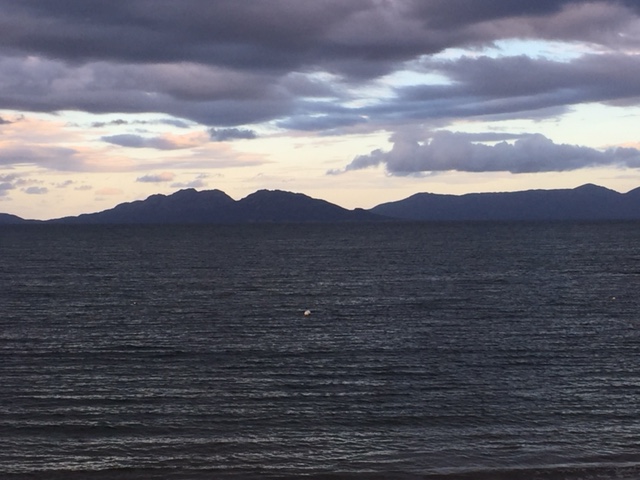
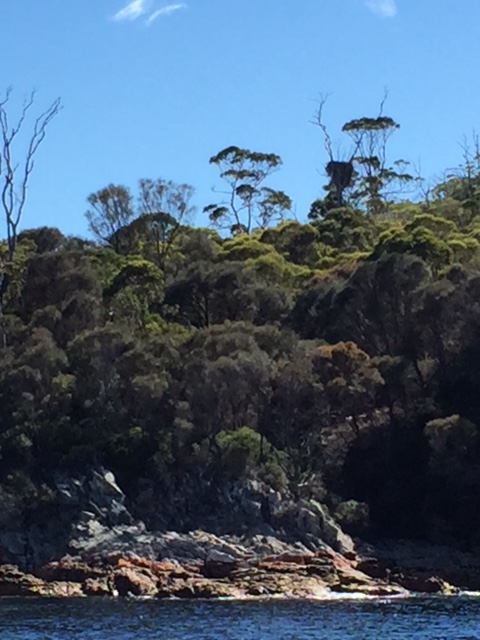
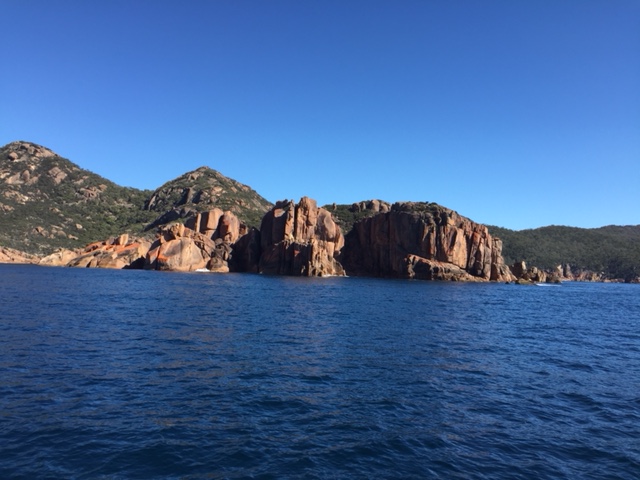
Here is some of what we saw, including a large school of dolphins. The geology of the national park is dominated by a type of granite with a distinctive orange hue, owing to its high content of the mineral feldspar.


After rounding the southern tip of the peninsula, the cruise hugged the east coast until we reached the park’s most famous feature, Wineglass Bay. You have to see the bay from above, eg the top of the modest mountains overlooking it, to realise how it got its name; here is an example.

Our cruise boat anchored in the bay while we enjoyed a quality bento-box lunch, followed by the return journey to Coles Bay.

   

We then began to make our way across southern Tasmania to our next wilderness destination on the island’s west coast. As you can see, the weather was sunny and there was plenty to admire along the way, including Lake St Clair, where Tasmania’s longest river rises.
   

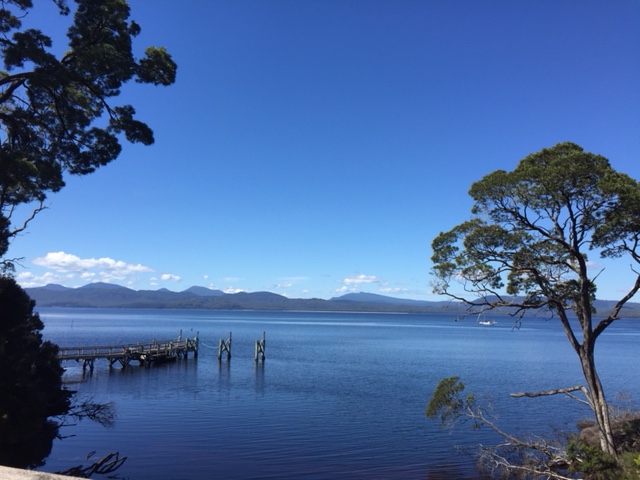
Our next stop was the town of Strahan, located on Macquarie Harbour, which is a large inlet of sea water providing shelter from the winds and swells of the Southern Ocean.

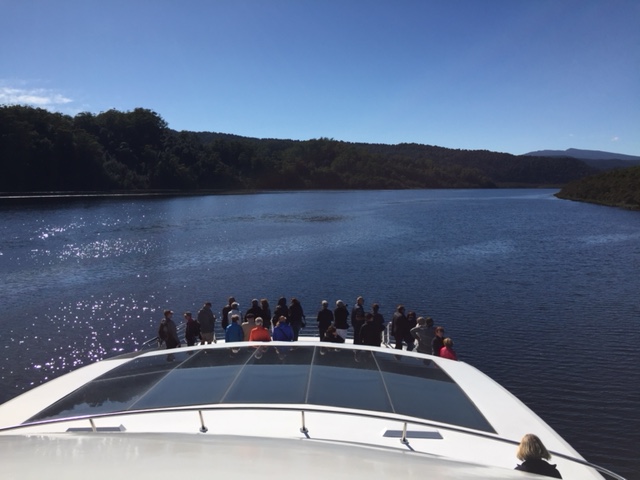
Next morning, we boarded a large, modern river-cruise boat for a journey up the Gordon River, which is a major element of the Tasmanian Wilderness World Heritage Area. You can learn more about the river’s significance here.
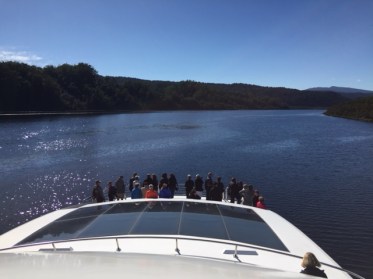
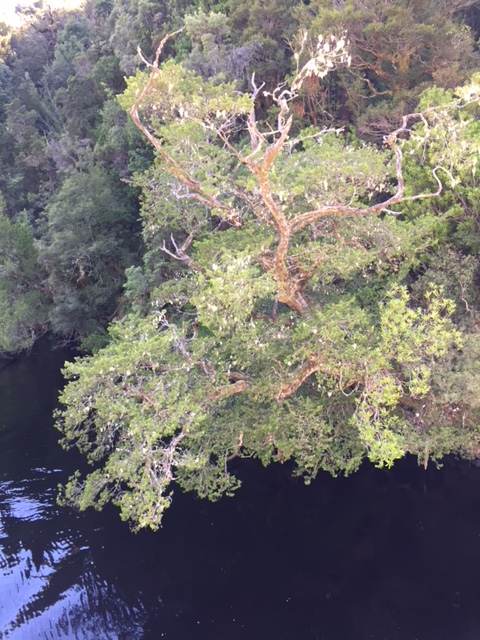
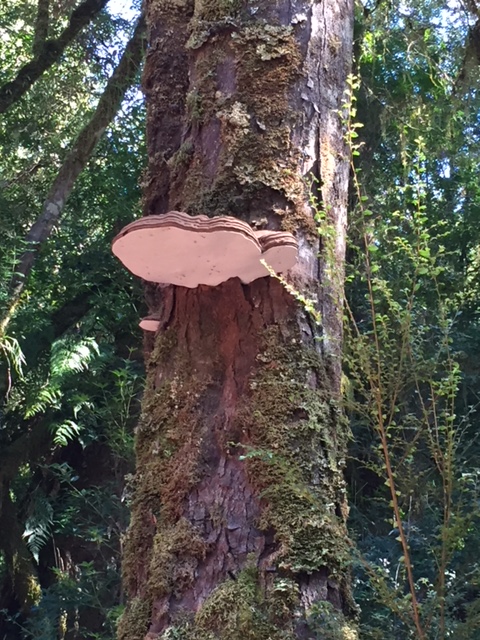
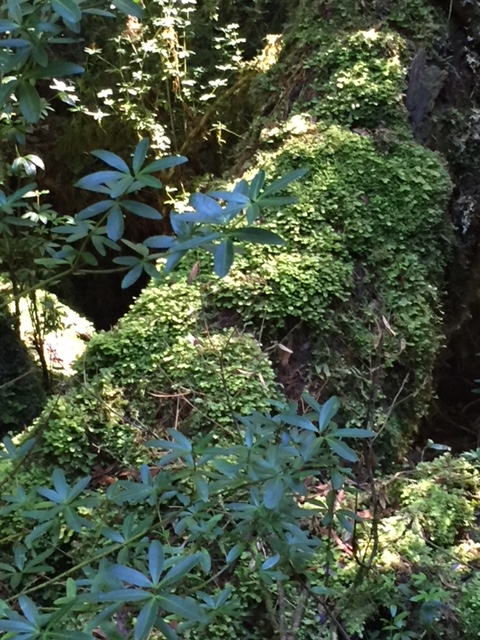
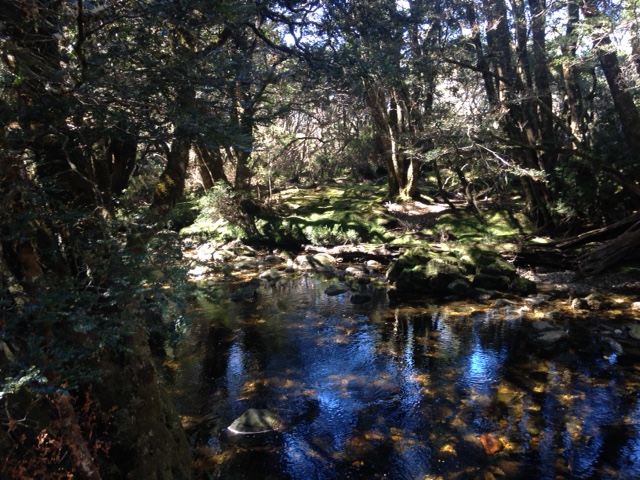
The cruise boat docked at a spot called Heritage Landing, from which there is a boardwalk through parts of the surrounding rainforest, the world’s most significant temperate rainforest.
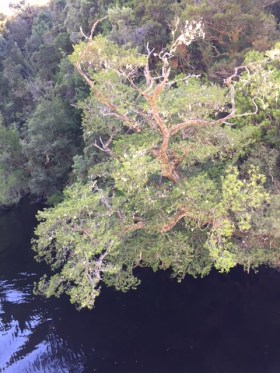
         

After we returned to the boat, it headed back downstream, re-entered Macquarie Harbour and picked up speed, taking us all the way to where the harbour meets the Southern Ocean, the outer limit of the boat’s suitability.


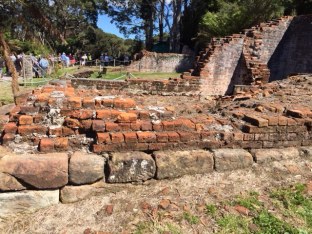
Then we backtracked to Sarah Island, another significant site within the boundaries of the World Heritage Area. The island was included in the listing for its historical values, arising from the fact that a British penal settlement was established there in 1821. (Every one of the British settlements established in Australia between 1788 and 1826 began as a penal colony, housing convicted men and women from Britain.)

You can read more about Sarah Island here.
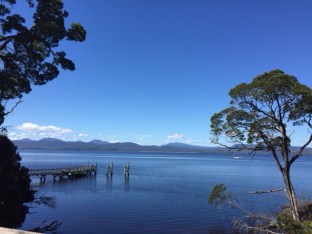
   

From Strahan, we made our way to our last wilderness destination, the Cradle Mountain area at the northern end of the national park which bears its name.

This was where my two hikes along the Overland Track had concluded, the second being 50 years ago next month. Back then, the only building of note was Waldheim (meaning Forest home), a stunning, rambling, replica of the house built by an Austrian botanist and his Tasmanian wife in the first two decades of the 20th century. And there was just a modest dirt road, along which buses would make their way to collect weary hikers and transport them to one of the towns dotted along Tasmania’s north-west coast.

Nowadays, there is a wide variety of accommodation, from camp grounds to a resort, a carpark that will hold several hundred vehicles (as it did when we arrived) and various other services and facilities. The Austrian was a strong advocate of establishing the national park and encouraging visitors but I suspect even he would have been gobsmacked by the vast numbers of people from all corners of the world who visit the Cradle Mountain area each day during the milder months (December to April). I was. Gobsmacked, that is!

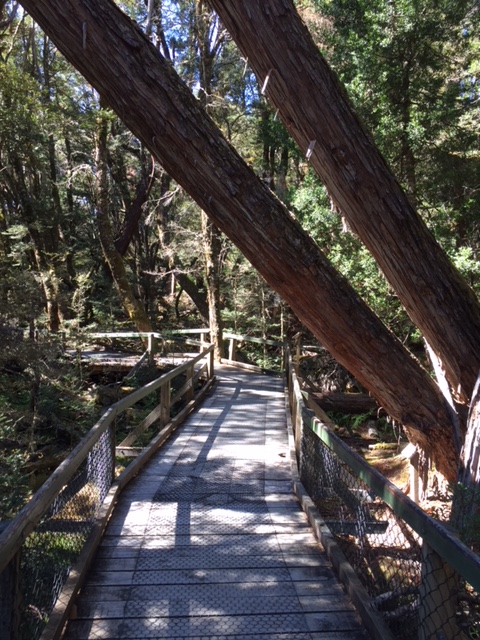
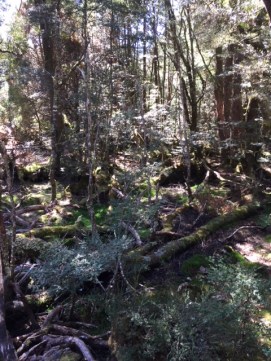
Maggie and I spent part of two days in the area, basing ourselves at a wilderness retreat in a forest located an hour’s drive further north. Our first, very gentle activity, was to traverse a boardwalk that meandered through a patch of temperate rainforest.

         

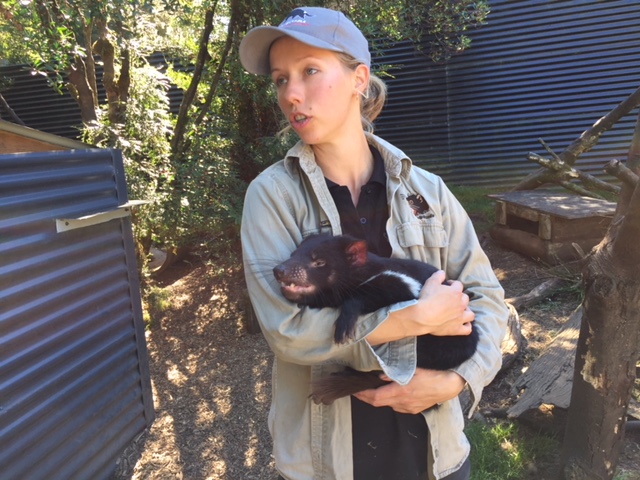
Next was a visit to Devils @ Cradle, a sanctuary dedicated to the care, protection and breeding of the world’s largest carnivorous marsupial, the Tasmanian Devil. The survival of this unique animal has been threatened by a transmissible cancer that generates facial tumours, often causing death. An outstanding national program is now making progress in controlling the spread of the disease and creating a population of immune devils, supported by a comprehensive ‘family tree’ that averts the risk of in-breeding.

We learnt much of this on a guided-tour and we even got to pat one of the young, disease-free devils that have been bred and reared at the sanctuary.

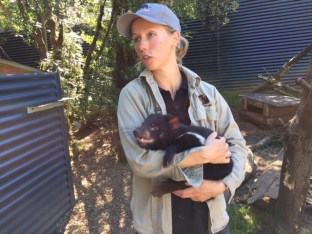
   

And here is a photo of one of the two species of Quoll supported by the sanctuary, both of which are also under threat in the wild. (You can learn more about the Devils @ Cradle centre here.)

Our time with the Tasmanian Devils was quite a thrill but we had saved the best for last: Cradle Mountain, the most iconic landmark in Tasmania, the view that launched a thousand calendars!

It appears at the beginning of this post and here it is again, majestic and serene, accompanied by its reflection in the waters of Dove Lake. Well, serene if you can avoid the non-stop flow of selfie-wannabes, that is!

There is a walking track that encircles the lake, for which you would need to allow up to 2 hours, depending on your fitness. Although it involves little uphill walking, the track is quite uneven and rocky in places, which is why Maggie found a quiet place in the shade by the edge of the lake while I completed a short section of the walk.

I had completed the full circuit on a day just like this back in December 1996, accompanied by my then nine-year-old son. The weather was so idyllic that I booked a guided ascent of Cradle Mountain itself for the next morning, something poor weather had twice prevented me from doing in the 1960s. But my cursed luck held and thick clouds rolled in overnight. I still did the climb and had my photo taken by the cairn at the top to prove it, only to see the clouds roll away as we neared the end of descent. Sigh!

This cautionary tale has a more serious intent. Even at the height of summer, the weather in the high country of Tasmania can change very quickly, due to the cold air masses that can be generated by the Southern Ocean, with little or no warning. So, if you decide to explore the wonderful Tasmanian wilderness in more depth than we did last year, I recommend that you pack for a wide range of conditions and seek advice from local experts before you venture out.

Cheers for now!
Rick Grounds

Posted in Travel | Tagged , , , , , | Leave a comment

Pasta class in Umbria

From mid-September to mid-October, Maggie and I travelled around parts of southern Europe.

We began with a couple of nights in the lovely city of Avignon, followed by a river cruise along the Rhone River from its delta – known as Le Camargue – up to Lyon. Then we used Europe’s efficient train system to move to the Italian province of Umbria, where we spent three nights in each of the delightful hilltop towns of Orvieto and Todi.

From Umbria, another train journey took us to Venice, where we enjoyed three wonderful days well before the recent tidal flood disaster – so shocking and sad! From Venice we flew to Athens, where we spent two nights in full view of the Acropolis before taking a short cruise across the Mediterranean Sea, disembarking at Civitavecchia for the flight home from Rome.

So, quite an adventure! Here is one of the scenic highlights. Ha!

Our decision to visit Umbria was inspired by a cookbook called My Umbrian Kitchen, written by Patrizia Simone, a renowned – now retired – chef in my home state of Victoria. Patrizia grew up in Umbria, learning to cook by her mother’s side. Then, as a young adult, Patrizia migrated to Victoria, where she and her husband established a much-loved restaurant in the town of Bright, some 300 kilometres by road from Melbourne.

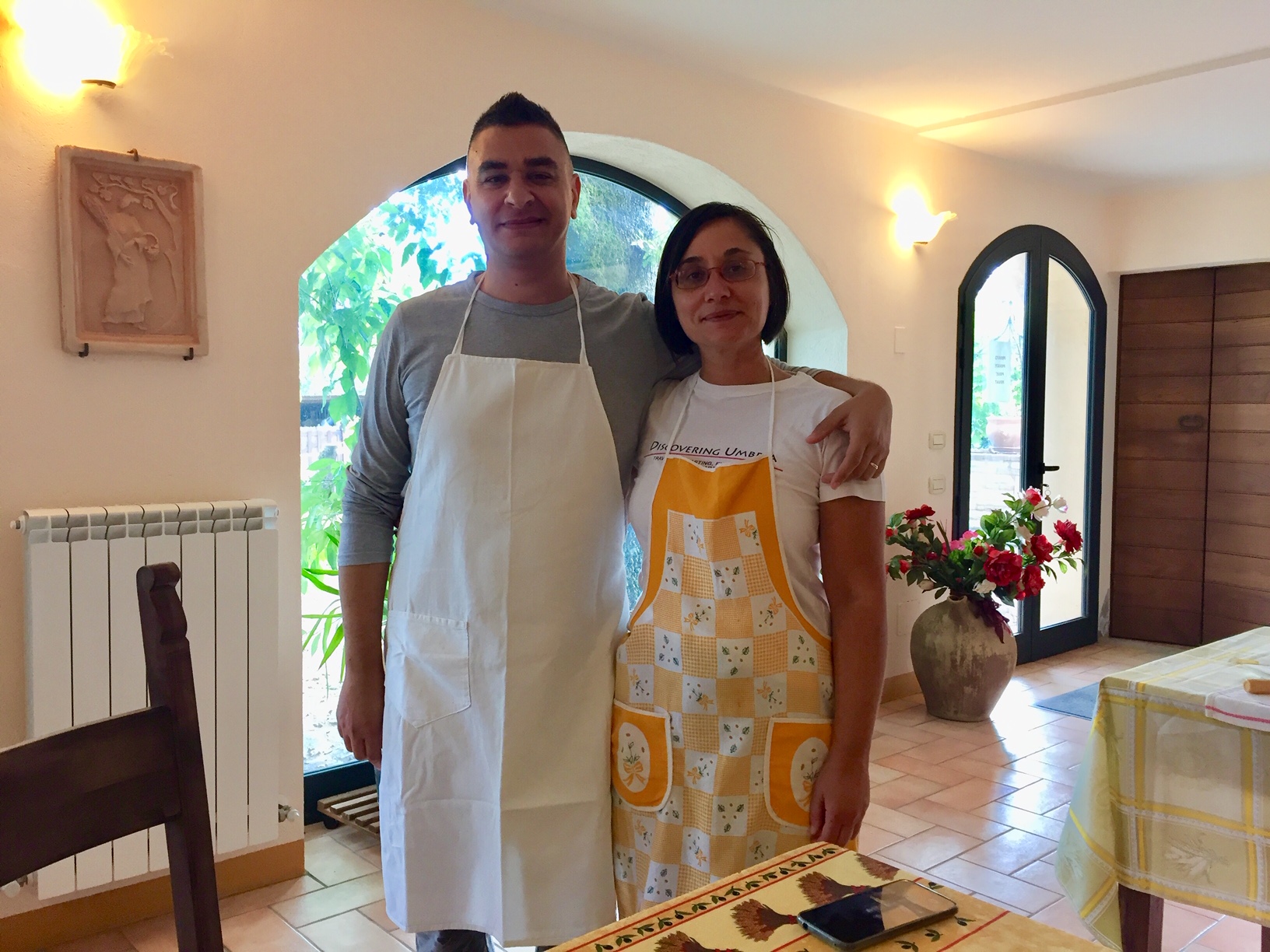
When we were planning the itinerary for our time in Umbria, we discovered the website of Todi-based siblings Alessandra and Leonardo Mallozzi, who are qualified sommeliers and olive-oil tasters. The Mallozzis offer a variety of wine and olive oil tours and cooking classes. We booked a a half-day pasta class and a full-day wine tour.

The pasta class was held in the Mallozzi family’s country villa, located in one of the 37 villages dotted through the idyllic landscape of farms and woodlands surrounding Todi.

Leonardo began the class with an informative account of the history and varieties of pasta, including the fact that, for many centuries, the region’s inhabitants were too poor to buy salt. The tradition of not putting any salt in pasta dough – and bread – is maintained to this day. (We can vouch for that, based on the bread that was served to us in Todi.)

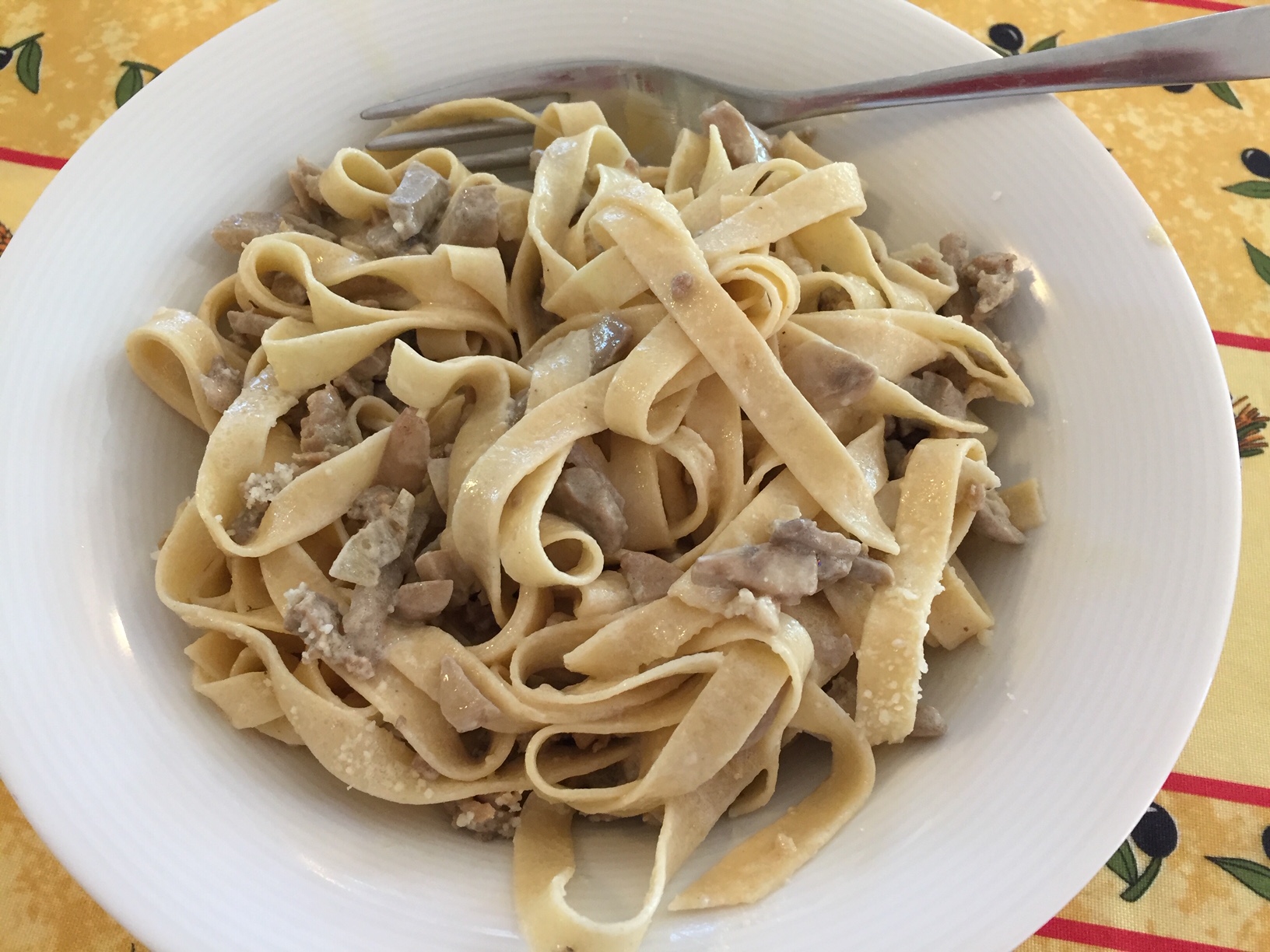
Once Leonardo had guided us through the preparation of our pasta dough, Alessandra showed us how to prepare two pasta sauces while the dough was resting. The first sauce featured meat & passata; the second one, mushroom, meat & cream. The meat ingredient was taken from traditional Italian pork & fennel sausages.

Next, Leonardo taught us how to roll out our pasta and feed it through a cutter to make fettuccine. After the Mallozzis had cooked the pasta and finished the sauces, they assembled the two dishes at the table and we sat down to a delicious lunch, accompanied by local wines.


It was a wonderful learning experience and the siblings were charming and generous hosts. Touring and cooking with Alessandra and Leonardo proved to be an ideal way to experience more of the province of Umbria, which is known as the ‘green heart’ of Italy due to its bounty of agricultural produce.

*     *     *     *     *     *     *     *     *

A couple of weeks after we had returned to Melbourne, we got to work applying the lessons of our time with Leonardo and Alessandra.

We already had a pasta rolling machine but we had only used it to make pasta sheets for dishes of lasagne; we were overdue to use the machine’s cutter attachment. To complete our equipment inventory, we tracked down a hanging rack. And we bought some Italian sausages, widely available in multi-cultural Melbourne, as the base ingredient for our pasta sauces.

We began with our interpretation of the mushroom and meat sauce that Alessandra had prepared for us in Umbria. We were happy with the result, as were the two neighbours who are our go-to guinea pigs when we are making a dish for the first time.

Recently, we made it again, just for the two of us, and measured the quantities of the ingredients so we could codify the recipe. Here are some photos of our work, followed by the recipe.


Mushroom pasta sauce (serves two)

Ingredients

1½ French shallots, finely chopped
2 cloves garlic, finely chopped
110g Italian pork sausage meat (discard skin)
90g large flat mushroom   ) vary this mixture
50g shitake mushroom      ) according to taste
50g Enoki mushroom        ) and availability
30-40ml cream
salt and pepper, to taste
120g fresh pasta

Method

  1. Cut the large mushroom in half and then cut into slices 4-5mm thick. Cut the shitake mushrooms into slices 2-3mm thick. Trim the stalks of the Enoki mushrooms.
  2. Saute the shallot and garlic for about 5 minutes in plenty of olive oil, until they begin to soften.
  3. By hand, tear the meat into small clumps and add it to the pan. Saute for 2-3 minutes until the meat has lightly browned.
  4. Add the pieces of flat and shitake mushroom and more olive oil to the pan. Cover partly with a lid, to sweat the mushrooms for 2-3 minutes.
  5. Remove the lid and add the Enoki mushrooms. Increase the heat to medium and cook, stirring regularly, for a further 2-3 minutes. Add salt and pepper to taste.
  6. Add cream to taste and adjust seasoning.
  7. Meanwhile, bring one and a half litres of salted water to the boil, add the pasta, let it cook for 2-3 minutes, until it is al dente.
  8. Drain the pasta, spoon the sauce into a large serving bowl, add the cooked pasta and toss to combine. Serve immediately.

Note 1: We do put some salt in our pasta dough. It’s not as expensive as it was in the days of the Roman Empire when soldiers were paid in salt (hence the word “salary”)!

Note 2: Fresh pasta, allowed to hang on a rack for about 1 hour before cooking, needs much less time in boiling water than dry pasta from a packet.

Note 3: This sauce is so tasty that you don’t need to add cheese. But each to their own!

Cheers!
Rick Grounds

Posted in Cooking, Travel | Tagged , | Leave a comment