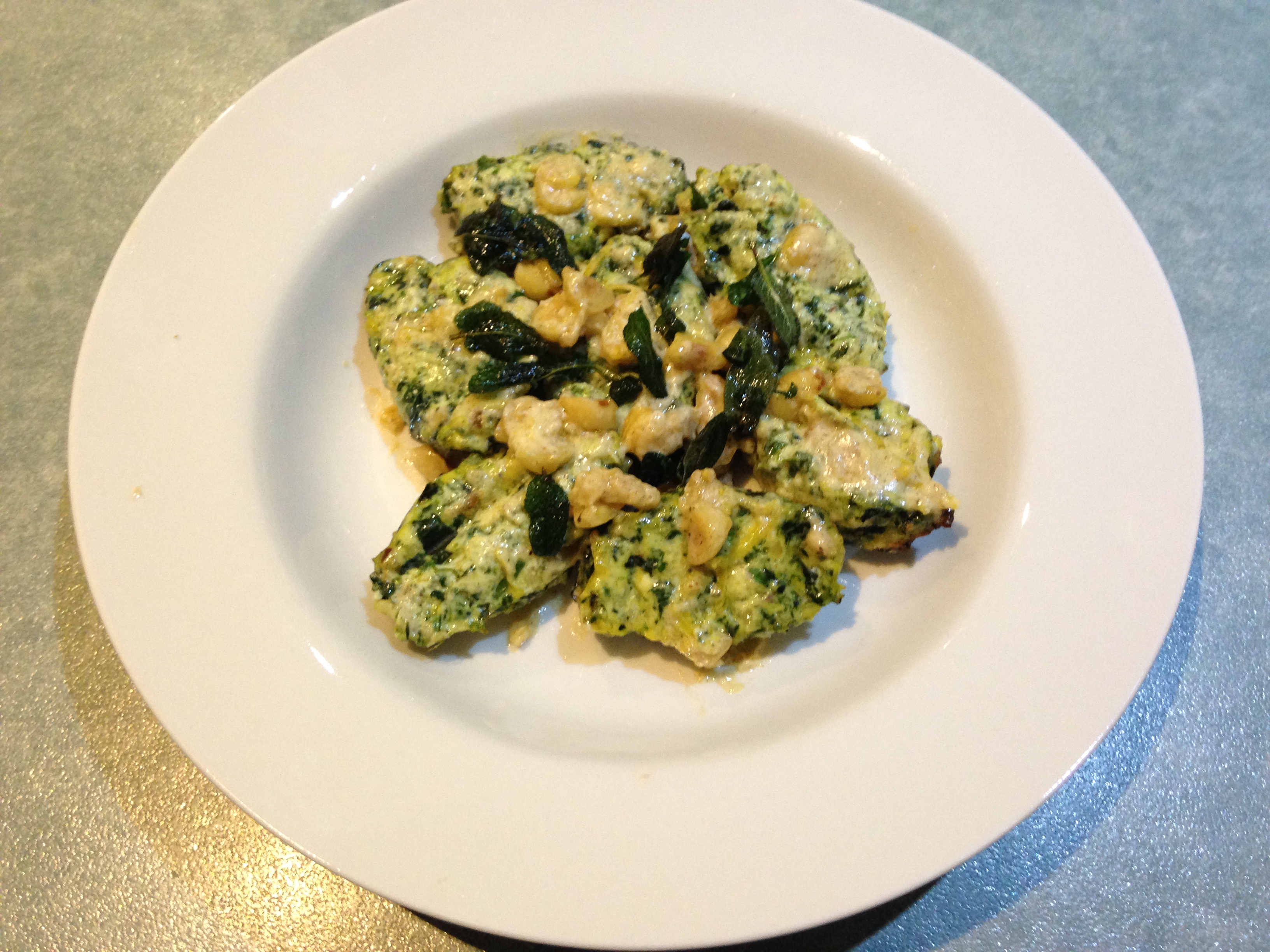
Spinach, ricotta and chestnut gnocchi

Chestnuts, the first time. 54 years old. A Saturday morning in September 2008, beside Lago Maggiore. Local volunteer firefighters roasting chestnuts as a fund-raising activity.

The second photo has nothing to do with the chestnuts. No, I just wanted to show off about our hotel and the al fresco terrace where we sat to have our morning espresso.

IMG_0308   IMG_0303

Six years later, we have made our third dish of 2014 with chestnuts grown in the north-east of Victoria, purchased at Toscano’s and roasted at home

This began as another Patrizia Simone recipe that we have modified substantially to suit our kitchen, our expertise and our palates. It is fiddly work but it produces a very satisfying dish, rich in flavour and texture, best served as an entrée for four persons.

Ingredients

Gnocchi
bunch of spinach, trimmed and washed
350g fresh ricotta (buy this from a good deli, don’t use a tub of ricotta)
70g peeled roasted chestnuts
2 eggs
70g pecorino
small handful of parsley, finely chopped
salt and pepper

Sauce
30g butter
12 sage leaves (or more, depending on their size and your palate)
40g peeled roasted hazelnuts, roughly chopped
juice and finely grated zest of ½ a large lemon
50ml cooking cream

Method

  1. Simmer the spinach leaves in salted water for about 5 minutes and drain. When it has cooled, squeeze out excess moisture and chop it. (Depending on the quality of the bunch, you might not need to use all of the spinach; we used 2/3 of a good bunch.)
  2. Put the ricotta in a large bowl and break it up with a fork. Crumble the chestnuts, by knife or hand, and add them to the ricotta. Add the spinach, eggs, pecorino and parsley and work the mixture with a fork until well combined, adding just a little seasoning along the way.
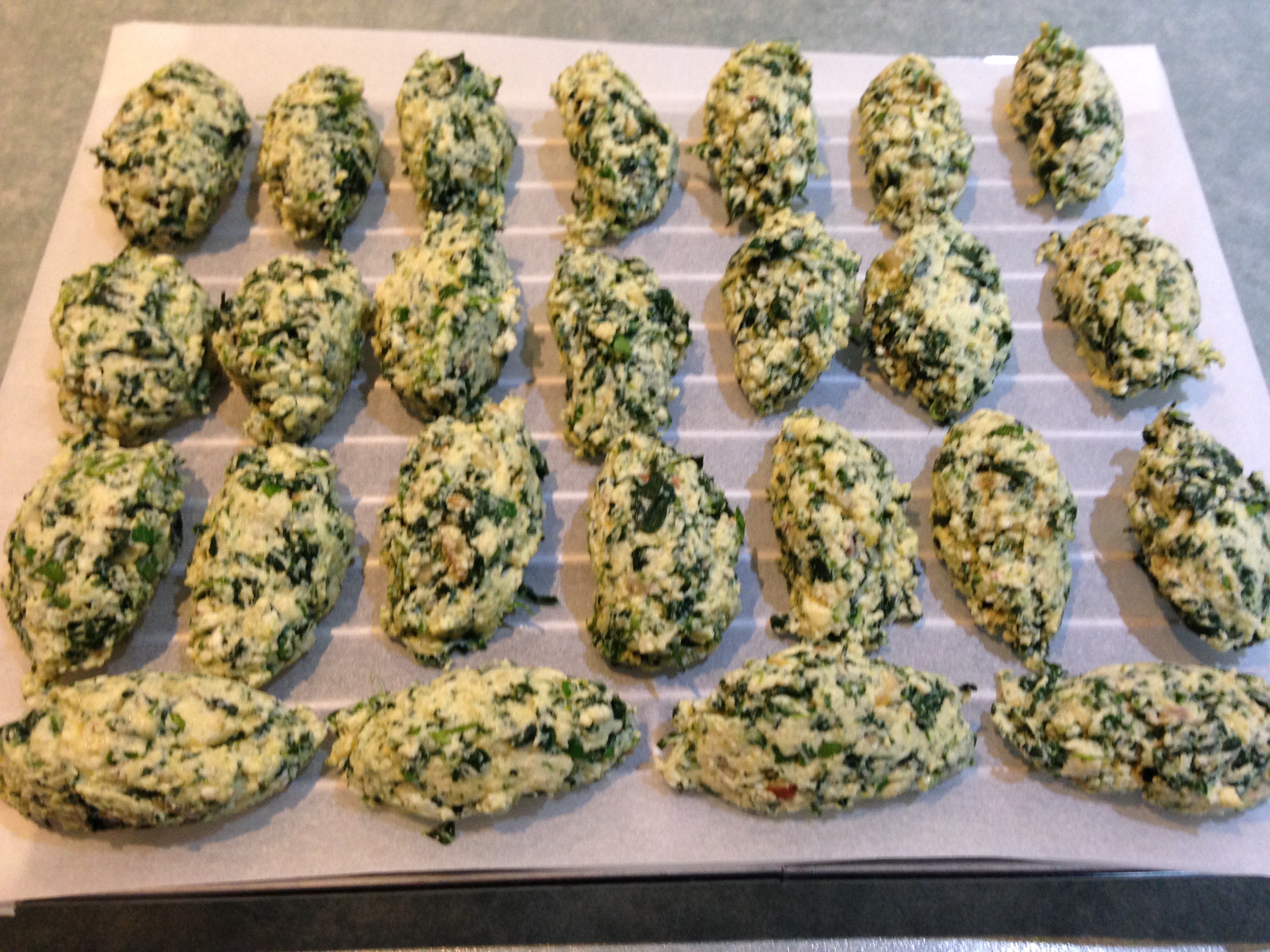
  3. Make quenelles of gnocchi using two dessertspoons and put onto a plate.
  4. To cook the gnocchi, we use a large dish of Corning ware that has its own grill rack; you will need your own equivalent. We cover the rack with baking paper and place the gnocchi on the baking paper; there is room for all of them. The oven is heated to about 165C, we pour boiling water into the dish up to 4-5cm and place the dish on the top shelf of the fan-forced oven. This method cooks the gnocchi in about 20 minutes, mainly by steam, with a little browning on the top. Reduce the heat if the gnocchi starts to brown early on and test for cooking progress by sampling a piece after 15 minutes.
  5. Meanwhile, to make the sauce, melt the butter in a large, heavy-based non-stick pan over medium heat. When the butter is foaming, add the sage leaves and gently toss them until they are crisp. Remove the sage and reserve.
  6. Add the hazelnuts to the pan and stir them for a minute then add the lemon juice and zest. Over low heat, add the cream and stir; the sauce does not need to be runny or voluminous, as the gnocchi will be moist and creamy. Add the gnocchi and toss gently for a couple of minutes. (Ideally, the gnocchi will have been removed from the oven just prior to this step and still be quite warm.)
  7. Divide gnocchi and sauce between four warm bowls and sprinkle with the sage leaves.
Gnocchi 1   Gnocchi 2

Posted in Cooking, Travel | Tagged , , , | 1 Comment

Goat PS

I was a bit tired when I wrote the post about our latest meal of goat, so my apologies for reading as if I was going through the motions of being satisfied with our experience.

The availability of goat meat, both as a raw product and as an item on restaurant menus, is due mainly to the huge number of persons who migrated to Australia in the second half of C20 from Greece and the south of Italy (for a few decades, Melbourne had the second largest Greek population in the world, behind only Athens!). These days, most butchers with a strong customer base in the Greek or Italian communities of Melbourne will stock goat meat during its season.

We source our goat from Cester’s at Prahran Market; the quality is excellent and, besides, we are frequent visitors to this market, including two other favourite suppliers. Based on the two recipes we have used this season, and another we tried in 2012, we have come to very much appreciate goat as an ingredient and we will certainly use it more often next year.

We are often asked what goat meat is like. Well, it can be cooked in much the same way as lamb; that said, we are yet to try our hands at cooking a goat leg. The texture is also similar to lamb, perhaps a little less stringy but, really, that is nit-picking. Then there is the flavour: less savoury than lamb, some would say sweeter; still meaty; palate-pleasing.

And what about a wine match? In a red, I would go no bolder than a cheap and cheerful cab merlot, ditto with sangiovese. We prefer a savoury white wine. Soave is excellent, or a dry but generous pinot gris. I do have at least one follower in Italy – perhaps she will have a suggestion. That’s you Magdalena!

Next, something quite different – the story of the meal of spinach, ricotta and chestnut gnocchi we made on Sunday. Yum!


Posted in Cooking | Tagged , , | Leave a comment

Capretto alla romana

In August, I published a post about what we had cooked with pieces of shoulder meat on the bone from milk-fed baby goat. When we went to Cester’s to buy the meat for that meal, our eyes were bigger than even our well-fed stomachs, so we ended up freezing enough raw meat to cook a second dish down the track.

A meal of goat requires a few hours of preparation and cooking. After two weekends out of town, that window of opportunity came last Saturday. Much as we had enjoyed the recipe we used in August, we chose to do a pot-roast this time, adapting the recipe for an Italian lamb dish known as Abbacchio alla romana. The lamb dish is traditionally made using shoulder pieces. This produces a very tasty result which is also incredibly sticky, from the rendered lamb fat; we now use jointed lamb shanks, to achieve a less tactile experience!

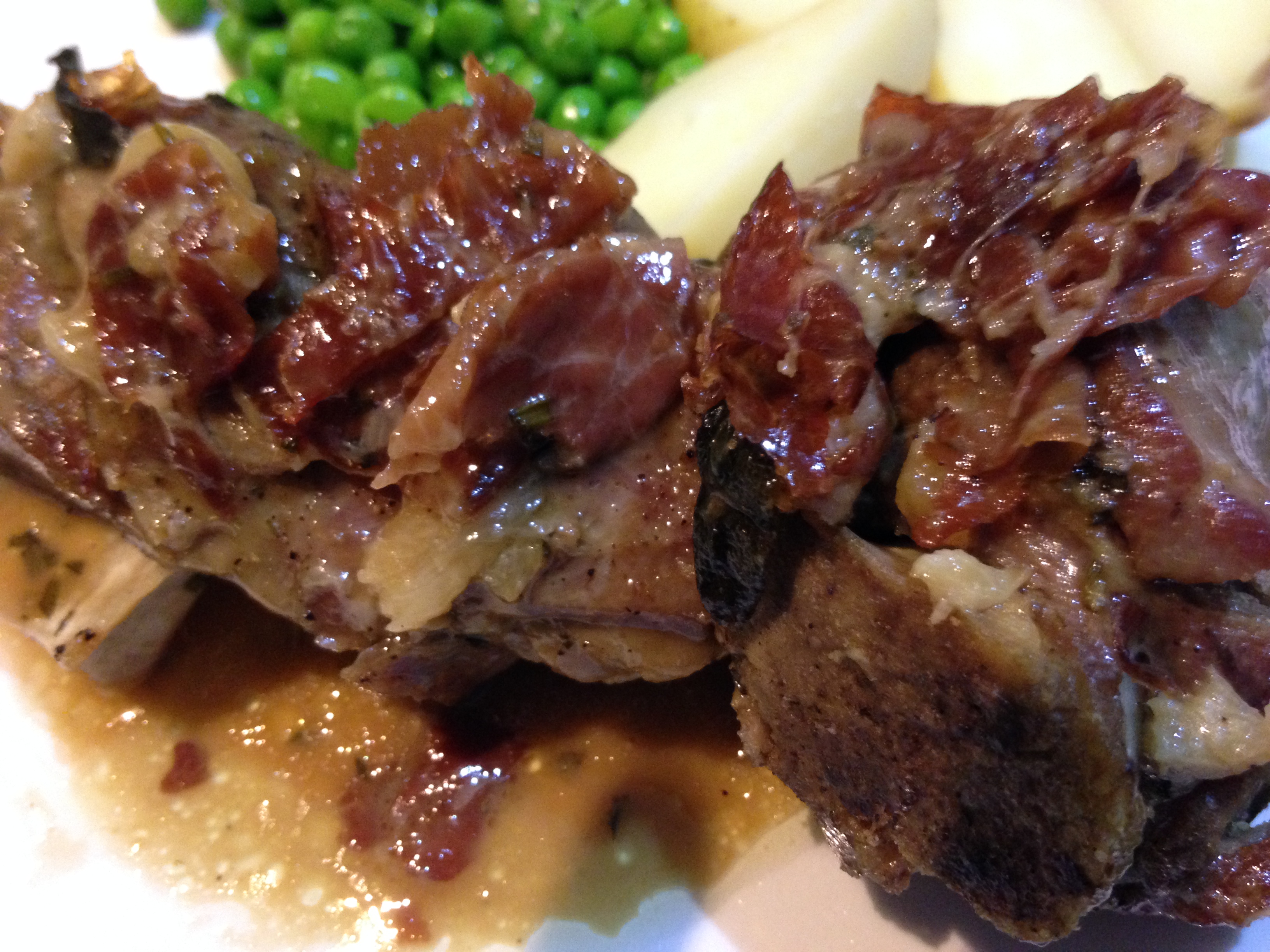
The goat worked very well but we did modify the recipe by taking a few minutes to drain the pan juices and then remove most of the fat about two-thirds of the way through the cooking time. Here are some photos of the finished dish; the recipe follows.

Goat abbacchio 1   Goat abbacchio 2

Ingredients

1-2 tbsp olive oil
3-4 slices prosciutto, coarsely chopped
1.5kg pieces of goat shoulder meat on the bone
8-10 cloves garlic (depending on size and flavour), peeled and sliced
leaves from 1-2 rosemary sprigs, chopped
12-15 sage leaves
2 tbsp red wine vinegar (or 1tbsp each of red wine and vinegar)
100ml of beef stock

Method

  1. Add a good splash of olive oil to a large, heavy-based non-stick pan over moderate heat and brown and brown the pieces of meat in one or two batches. Transfer to a plate. Use a knife to cut through any pieces of membrane on the outside of the pieces of meat (this will prevent the meat from tightening and twisting and is easier to do after browning).
  2. Preheat oven to 150C.
  3. Use an ovenproof lidded pan that will hold the pieces of meat comfortably, more or less in a single layer. Add a slash of olive oil to the pan over low heat, add prosciutto and saute for 2-3 minutes.
  4. Add the garlic and herbs, and saute for a further 2 minutes, add the pieces of meat, put the lid on the pan and transfer to the oven. Cook for about 1 hour, turning the meat once.
  5. Remove the pan from the oven, transfer the meat to a plate and tip the other contents of the pan into a coarse sieve over a bowl. Use a thin-edged spoon to remove as much as possible of the rendered goat fat from the surface of the liquid in the bowl.
  6. Return the content of the sieve to the pan, add the pieces of goat and the deglazed liquid. Add the vinegar and stock and return the lidded pan to the oven.
  7. Cook for a further 30 minutes, remove the lid and cook for a further 20 minutes to caramelise the edges of the meat.

The rosemary and sage leaves were picked fresh from our kitchen garden.

Posted in Cooking | Tagged , , | Leave a comment

A satisfying, simple dinner

Friday night dinner. End of a full-on week for Maggie, filling in as Personal Assistant to the school Principal. Early start Saturday morning, to be in Healesville by 9.30am, taking lunch for four adults and sustaining morning-tea-cake for the home improvers. So nothing too complicated.

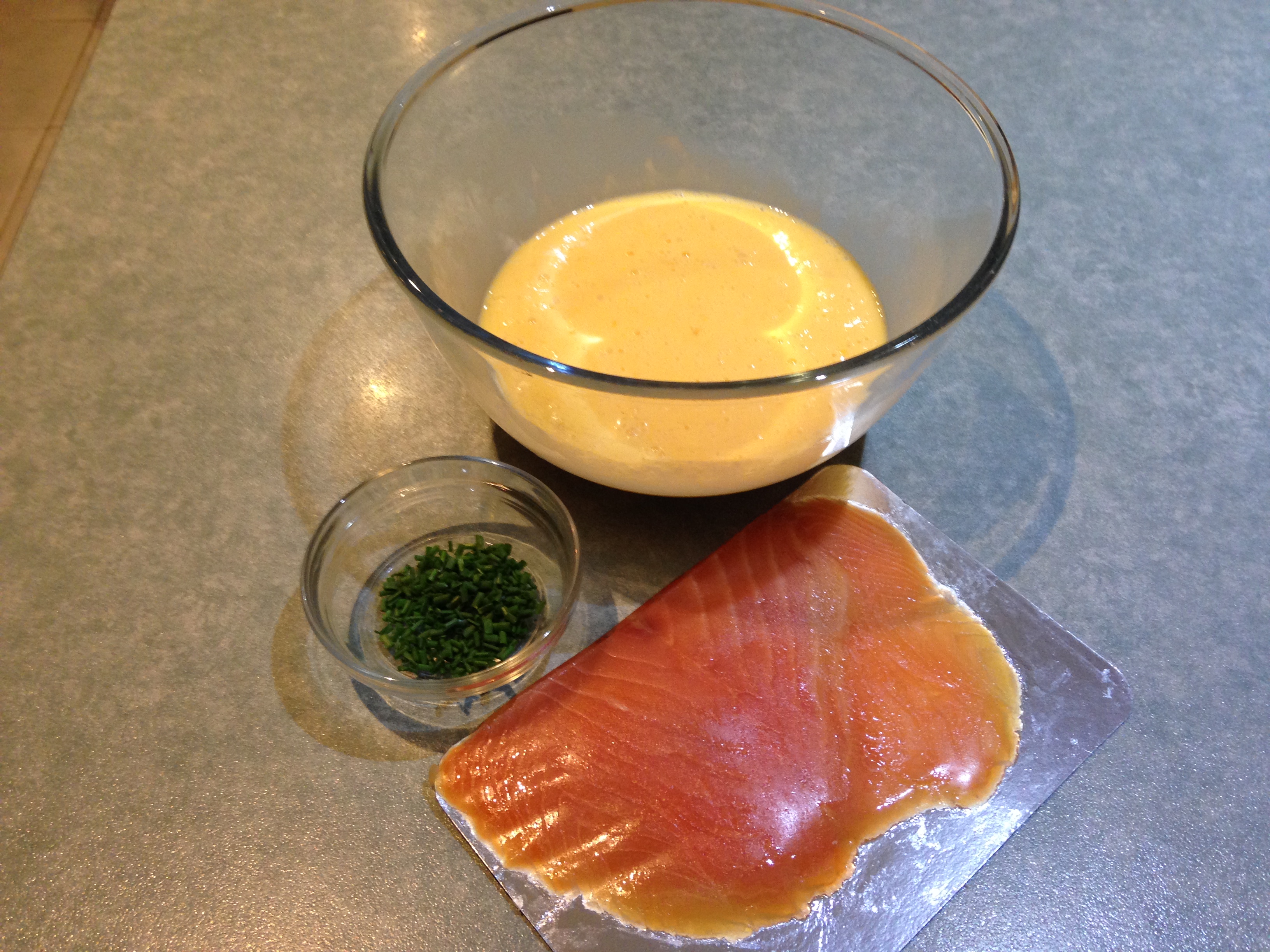
South Gippsland free range eggs; Tasmanian smoked salmon; Irrewarra sourdough bread, sliced for toasting; and freshly snipped chives from our garden. Perfect!

Scrambled eggs 1   Scrambled eggs 2

It is easier to cook scrambled eggs using 4 or 5 eggs rather than two. You can store any leftovers in the fridge for 2-3 days and use them as snack-food, gently re-heated in a microwave oven.

I use 5 eggs, 100ml of cooking cream (milk or thin pouring cream will produce a watery result), a generous pinch of salt and about 2 tsp of butter. Break the eggs into a large mixing bowl, beat them with a whisker, add the cream and salt and whisk to combine.

Heat a large non-stick pan over medium heat – low heat will not do the job – melt the butter and pour in the beaten eggs and cream. After 20-30 seconds, use a wooden spatula to move the eggs from the edge of the pan to the middle then spread (fold) it gently. Repeat this procedure until all the egg mix is cooked – it will be soft but solid.

Posted in Cooking | Tagged , , , , | Leave a comment

Hot and spicy chicken wings

Hot, as in chilli; spicy, as in cardamom, clove, cumin and co.

For this post, I will work backwards some of the time, beginning with the end result of our explorations.

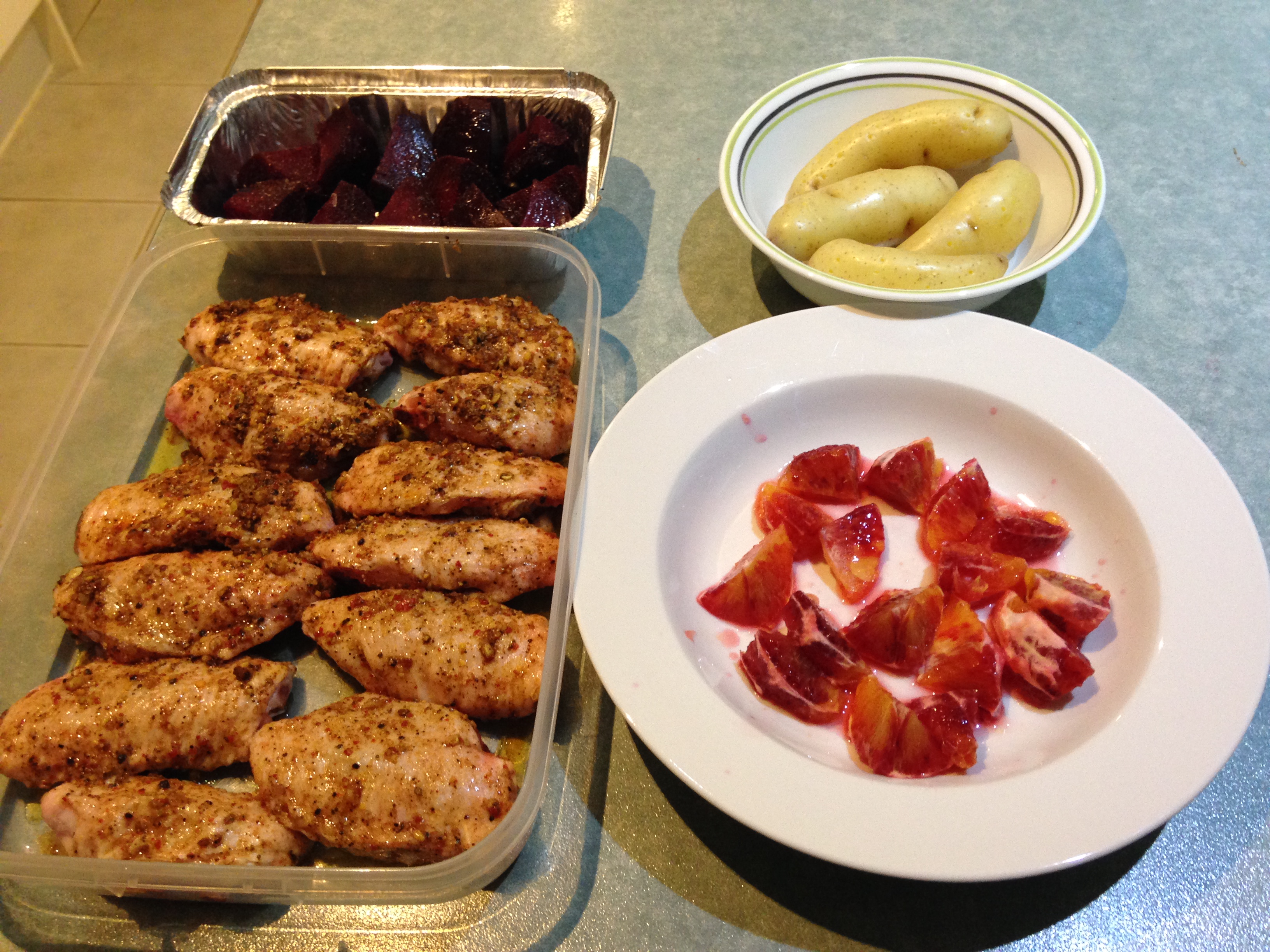
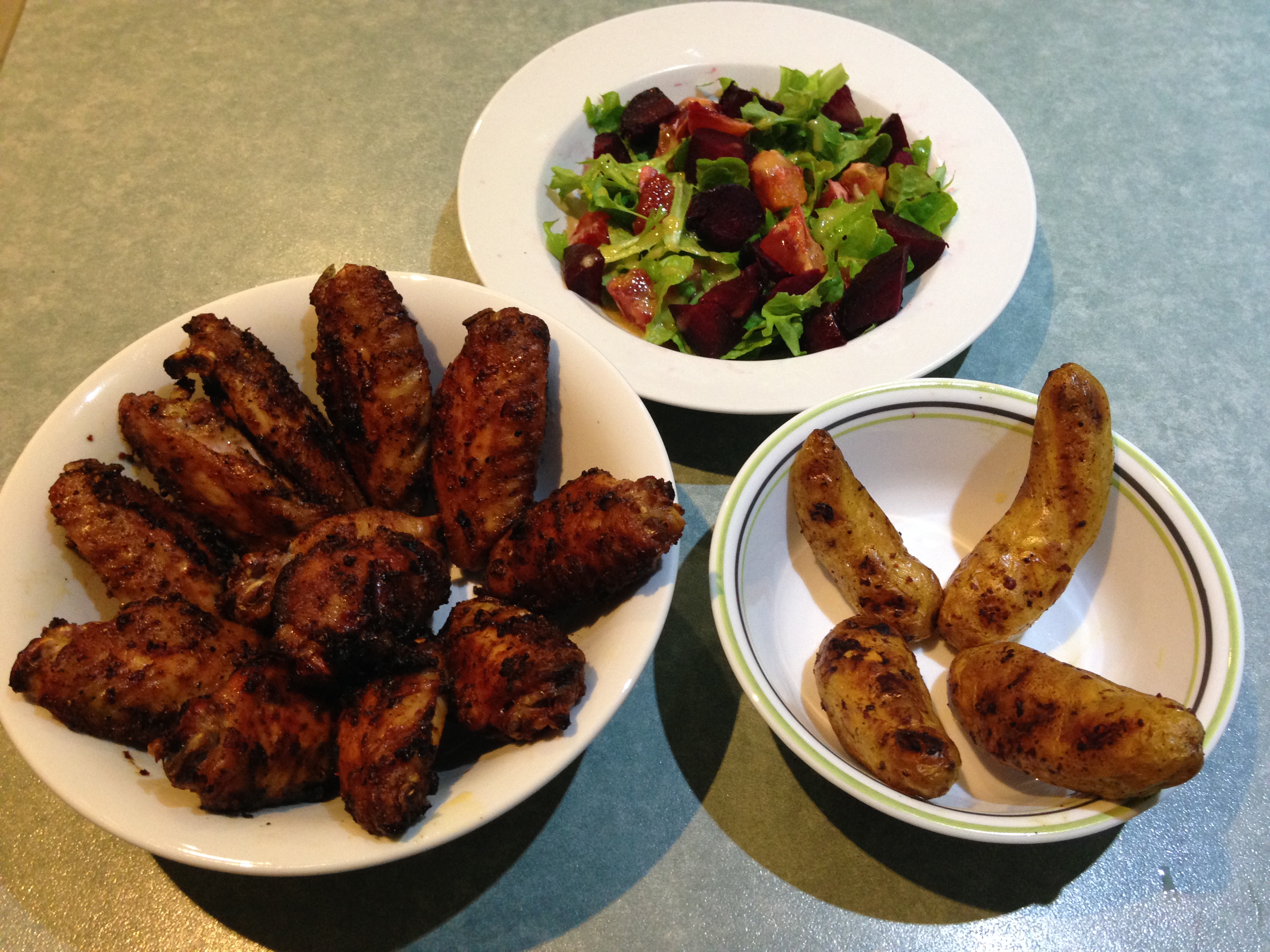
A serve of roasted, marinated chicken wings is one of our favourite Weber-weather dishes. The photos show a recent dinner, before and after cooking, including a lightly-dressed salad of roasted beetroot, blood orange and our homegrown green leaves.

Spicy wings 1  Spicy wings 2

The wing pieces – all middle segments, ideal for this kind of cooking – had spent a night in a marinade of 40ml berbere spice mix, 1 tsp chicken stock powder, 50ml cumquat-infused vinegar, 1 tsp sugar and 50ml olive oil (measurements are highly approximate).

Berbere is the traditional Ethiopian spice mix, renowned for being both hot and spicy. We have been making our own for several years. It can be bought at specialist shops in Melbourne – including the peerless Gewürzhaus – but these have so much black pepper that the other ingredients struggle to be noticed.

We mainly use it with pork and chicken. Here is our recipe:

Ingredients

20 cardamom pods
10 whole dried chillies, stalk end removed then coarsely chopped
2 tsp cumin seeds
2 tsp coriander seeds
2 tsp fennel seeds
2 tsp fenugreek seeds
2 tsp allspice berries
16 cloves
4 tsp black peppercorns
generous pinch of saffron threads
2 tsp ground ginger
1 tsp ground nutmeg
2 tbsp salt flakes

Method

  1. Heat a small heavy-based frying pan.
  2. Bruise the cardamom pods with a rolling pin and add them to the pan with all the other whole spices. Toast lightly until the cardamom seeds begin to release their aroma.
  3. Remove the seeds from the cardamom pods, discard the pods and grind/blend all the roasted spices to a coarse powder.
  4. Mix with the ginger, nutmeg and salt.
  5. Store in an airtight container in your pantry.

The other novel component of the marinade is the cumquat-infused vinegar. A few years ago, our Greek neighbours invited us to help ourselves to their abundant crop of cumquats. Yes, we made some jam/marmalade but we also tried to make some brandied cumquats and some pickled cumquats. Once they were ready to be used we decided that we didn’t much like the fruit but the liquids were stunning and we maintain a constant supply of both.

The vinegar is mostly used in marinades but I also use it to top up a batch of vinaigrette that needs more acid. Here is the recipe:

Ingredients

1 tsp salt
600ml water
500g cumquats, washed
150g caster sugar
½ stick of cinnamon
1 tsp cloves
600ml good quality white wine vinegar

Method

  1. Dissolve salt in water in a saucepan and bring to the boil. Pour over cumquats in a bowl and stand for 12 hours before draining.
  2. Simmer sugar and spices in vinegar until sugar has dissolved. Simmer a further 5 minutes.
  3. Carefully pack cumquats into sterile jars, pour in vinegar syrup and seal. Store in a cool, dark place.
  4. After 6 to 8 weeks, remove cumquats and discard.

Meanwhile, some toddler – ie, not baby – beetroots were tossed with olive oil, salt and plenty of black pepper after being boiled whole for a good 20minutes, peeled and cut into large wedges, then roasted in the Weber. The other item on the menu was whole kipfler potatoes, pricked – to prevent explosions – then boiled for 12-15 minutes, rolled in leftover marinade and roasted in the Weber.

As Maggie says, “we love our Weber Q”.

Posted in Cooking | Tagged , , , , | Leave a comment

Mardi, avant le deluge

It’s Thursday morning in Melbourne. I was scheduled to spend the morning with the residents’ cooking group, one of my four voluntary gigs at Strathdon aged care facility. However, I learnt yesterday the kitchen is not available, so we’ll have to postpone the blueberry and lemon muffins; and I now have three extra hours to spend as I please.

Most of the morning will be devoted to cooking. Julian and Sara take possession of their first house tomorrow and we are on a promise to hang out with Iris on Saturday morning while they paint a couple of interior walls ahead of moving in. We will also be preparing lunch to share when they bring their paint-spattered selves back to their rented house.

Iris, a few weeks ago

Iris, a few weeks ago

For Saturday’s lunch, the chicken I roasted on Tuesday (Mardi) will become the core ingredient of a chicken caesar salad; I will make a small fresh batch of borscht today; and Tuesday’s carrot cake will be there to accompany a cup of tea or coffee. I will also be using some of the bolognese sauce to make a dish of cannelloni but that will be reserved to provide weekday lunches for Maggie and me.

My bolognese sauce recipe, including six different vegetables, can be found in my April 2014 post Last weekend in the kitchen. I have elaborated it a little and added two photos from Tuesday.

For the roast chicken, I used a recipe from a cookbook given to Maggie for her 60th birthday – Week in, week out by Simon Hopkinson. (If you google Simon Hopkinson Bibendum, you might find something to add to your bucket list!)

I can’t reproduce the recipe here but I can tell you that it involved a roasting pan, lemon juice, salt, honey, pithless pieces of lemon rind and white wine and delivered an appealing burnished finish on the skin of the roasted bird.

Lastly, the carrot cake.

For many years, this has been the most popular of the cakes I make to share with family, friends and colleagues. For dietary reasons, I now only make the icing for special occasions; the cake is quite enjoyable on its own. I usually make two cakes at a time, as per the recipe. This reduces the margin for error in the quantity of some ingredients, eg carrot, lemon zest (this might sound anal but do the math!).

Ingredients

Cake
2 cups self-raising flour
1¼ tsp mixed spice
1 cup each of raw sugar and dark brown sugar
1 cup walnut pieces, roughly chopped
3 cups grated carrot, packed firmly but not tightly
1 cup olive oil (or any other oil with a high burning temperature, eg grapeseed oil)
4 extra large eggs
3 tsp freshly grated ginger

Icing
175g creamed cheese
2-3 tbsp icing sugar (to your own taste)
grated zest of one large lemon (fresh from a tree if you can)
2 tsp lemon juice

Method

  1. Preheat oven to 170C (fan-forced). Line the base of two greased or non-stick loaf tins, approx 10cm x 20cm, with baking paper.
  2. Sift flour and spice into a large mixing bowl. Add sugars and stir well to break up any lumps of brown sugar. Add chopped walnut.
  3. Beat eggs well in a bowl and add the grated ginger (this helps to distribute the ginger evenly through the cake mixture).
  4. Add grated carrot to the flour mixture, one cup at a time, folding the mixture after each cup. Add the oil and stir briefly. Add the mixture of egg and ginger and stir thoroughly to combine ingredients well.
  5. Divide equally between the two loaf tins and bake in oven for 45 minutes or until a cake skewer tests clean. Cool cakes in tin for 5 minutes then turn out on to a cake rack. When cooled, refrigerate the cakes while you make the icing.
  6. Mix icing ingredients in blender (creamed cheese should be used direct from fridge). Cut each cake in half horizontally, spread half of the icing over the base of each cake and gently cover with top halves. After icing, store in fridge and remove from the fridge 10 minutes before slicing and serving.
  7. If you decide to make the cake only, I recommend that you still refrigerate it for a while. The cake tends to be crumbly at room temperature; it will be easier to cut slices after it has been chilled.

Carrot cake


Posted in Cooking | Tagged , , , | Leave a comment

Out of town, out to lunch

Maggie’s birthday is 7 September. So, every now and then, it falls on the first Sunday in September, which is celebrated as Fathers’ Day in several nations, including Australia, the United States and Great Britain.

For personal reasons, Maggie wanted to spend her birthday away from Melbourne, so we took up a standing invitation to use our friendly neighbours’ holiday home at Dromana, on the Mornington Peninsula. Dromana is a popular town for family holidays, with safe beaches and close to a rich variety of visitor attractions and recreational opportunities.

For the last three decades the Peninsula has also been home to a burgeoning wine industry. As this industry has matured, many wineries have added a restaurant to the business, taking advantage of both the population of holiday-makers and the region’s proximity to most of Melbourne’s higher income suburbs. (We don’t fit neatly into either category – ours might be described as “willing to incur debt in order to have fine dining experiences”.)

Time to cut to the chase. The latest edition of The Age Good Food Guide, published last month, had confirmed the standing of the restaurant at Paringa Estate as one of the best in the region. We booked ourselves in for lunch on the Saturday, confident that the vibe would be loud and hectic come Sunday.

We had some prior knowledge of Paringa – we had visited a few years ago to taste the wines, my son had worked there for one vintage and I had shared a light lunch with him. However, this was our first serious experience of the restaurant.

We arrived ahead of time with a view to tasting the whites, to guide our choice of wines to drink by the glass with lunch. We tasted five whites and then a dry rose. I liked the cheaper of the three chardonnays less than Maggie did but we both found much to savour in the pinot gris, viognier, estate chardonnay and single vineyard chardonnay.

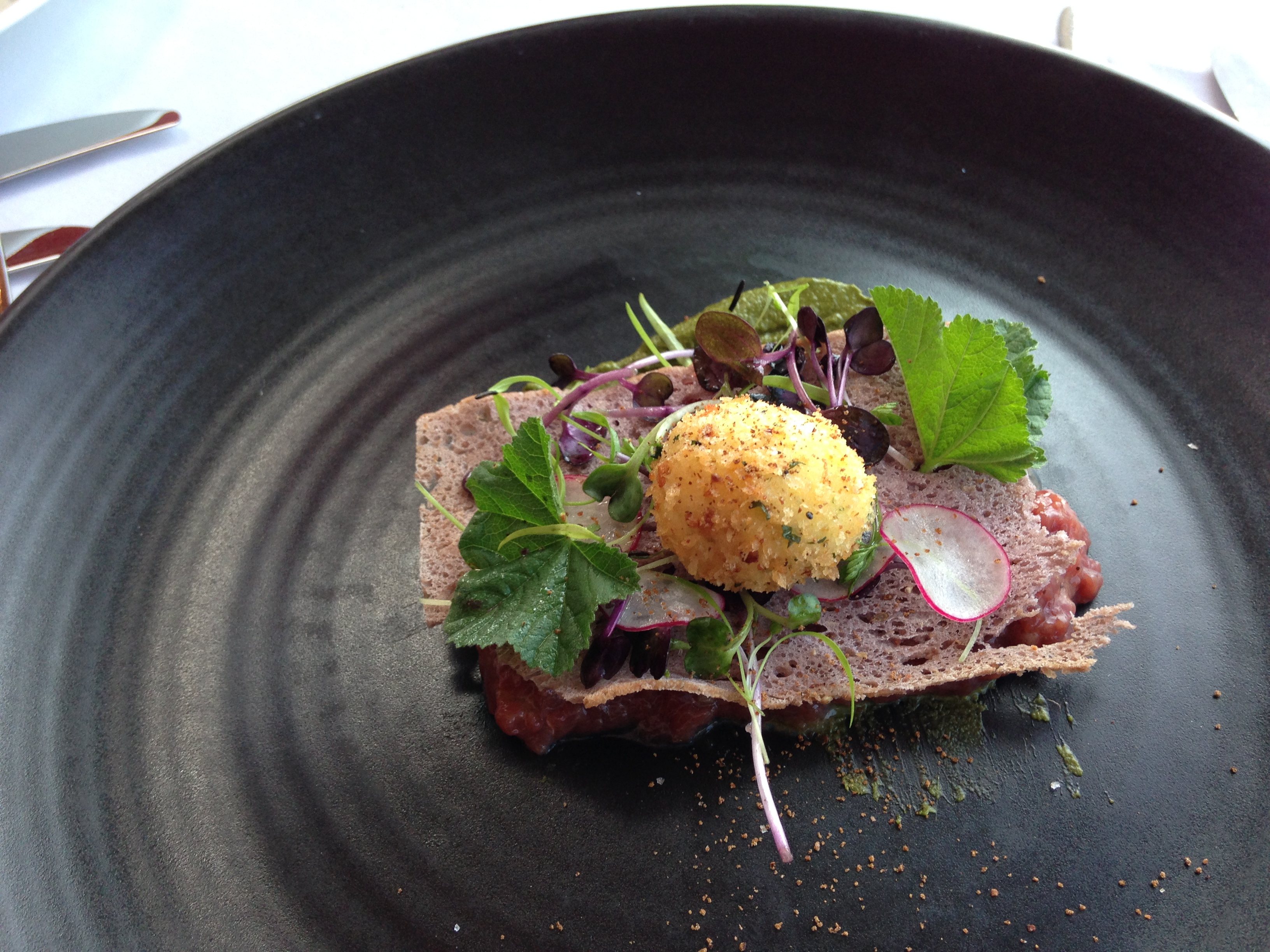
Once seated at our table with the menu, we decided to have two entrees each and to share a dessert. Our meal began with a bottle of Italian mineral water and sour dough bread rolls served with anchovy butter that had been whipped expertly. Maggie’s first entree was a dish of wallaby tartare, topped with a crumbed quail egg; I chose a goat’s cheese souffle paired with heritage carrots cooked in several ways. Our second entrees were a pork belly dish for Maggie and, for me, poached marron served with globe artichoke. We had two glasses of wine each and finished with a coffee parfait, topped with a birthday candle.

We were completely satisfied with our whole experience at Paringa. The wines are made with skill and devotion, the kitchen’s work is assured and light and the floor staff are attentive and pleasant. Paringa has been much awarded for its wine and food over many years and we expect that to be the case for many years to come.

Wallaby tartare

Wallaby tartare

Poached marron

Poached marron with artichoke

Posted in Eating out, Travel | Tagged , , | 2 Comments

A day

My day began routinely enough: shopping, including supplies from Ashburton Meats; and errands, including items for both my father and my sister.

By 10.30am, I was doing the prep for a batch of bolognese sauce, some to be enjoyed with spaghetti, the balance to be incorporated in a dish of lasagne. While the sauce was simmering, I drained a tin of tuna and combined it with some mayonnaise, black pepper, finely chopped celery, sliced spring onion – aka green onion, scallion and god knows what else – and a squeeze of lemon juice. This became the filling for a couple of sections of baguette, aka my lunch.

I decided to simmer the bol sauce for at least an hour and a half; more of that another time. While that ran its course, I got ready to roast a whole chicken – about 1.7kg or 2lbs – using a new recipe; ditto. While the chicken was in the oven, I did a bit of clearing up then began to prepare the ingredients for a couple of carrot cakes; ditto (or is that tritto?).

The cakes came out of the oven at about 3.30pm (subsequent events have warped my memory of times). While they were cooling, I looked in on the weather via the BOM site (Bureau of Meteorology). We had been told to expect 3mm to 8mm of rain, with the chance of afternoon thunderstorms. No rain had fallen in our neighbourhood but the BOM radar did show a narrow band of heavy rain heading our way and the warnings page spoke of possible severe thunderstorms.

Some light rain duly arrived, followed by unduly heavy rain, thunder, lightning, then heavier, let’s say, torrential rain and there I was in our garage placing towels in readiness for overflowing drains and 3cm of water moving across our terrace in a wave towards the gap underneath the back door of the garage.

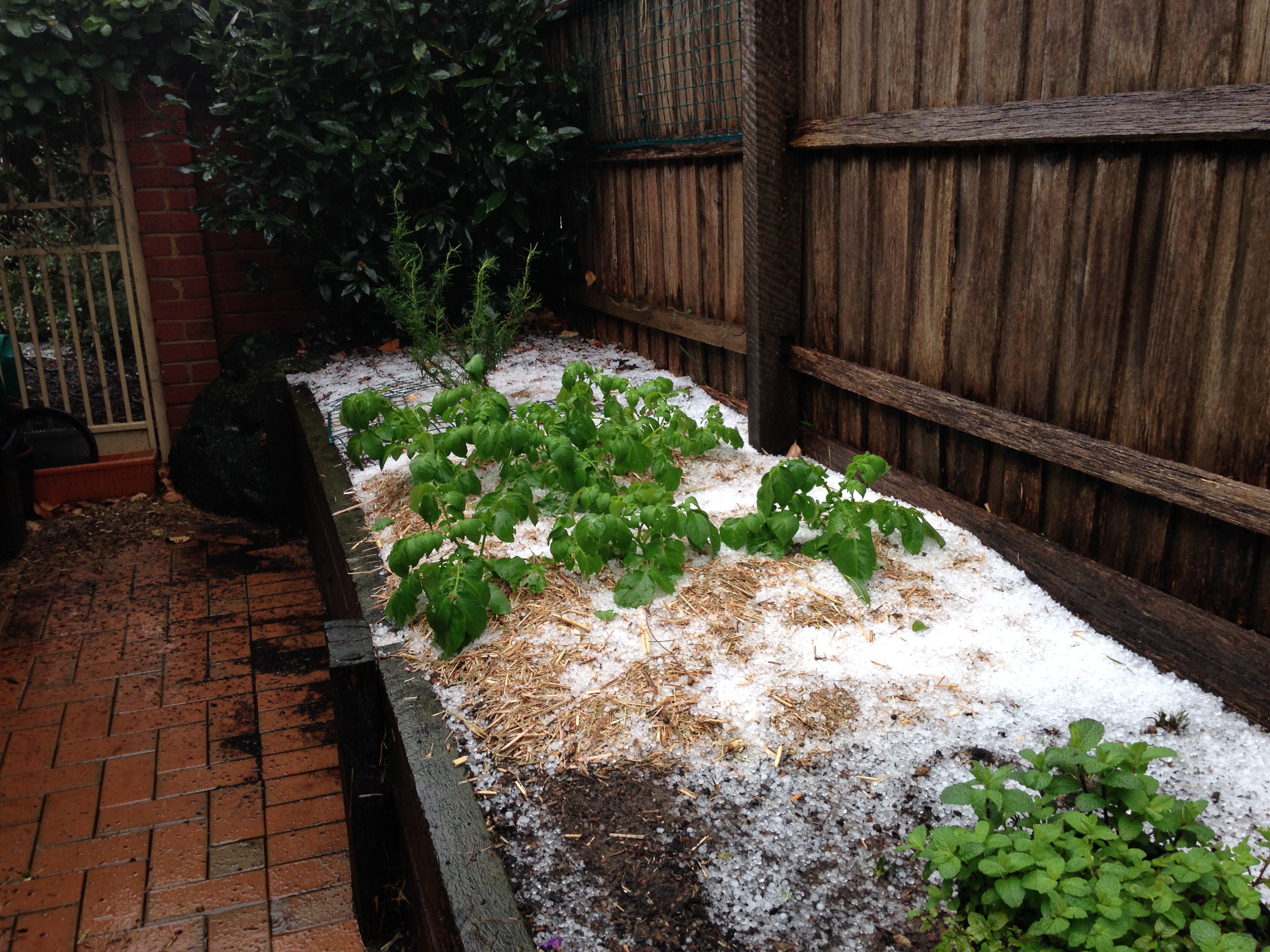
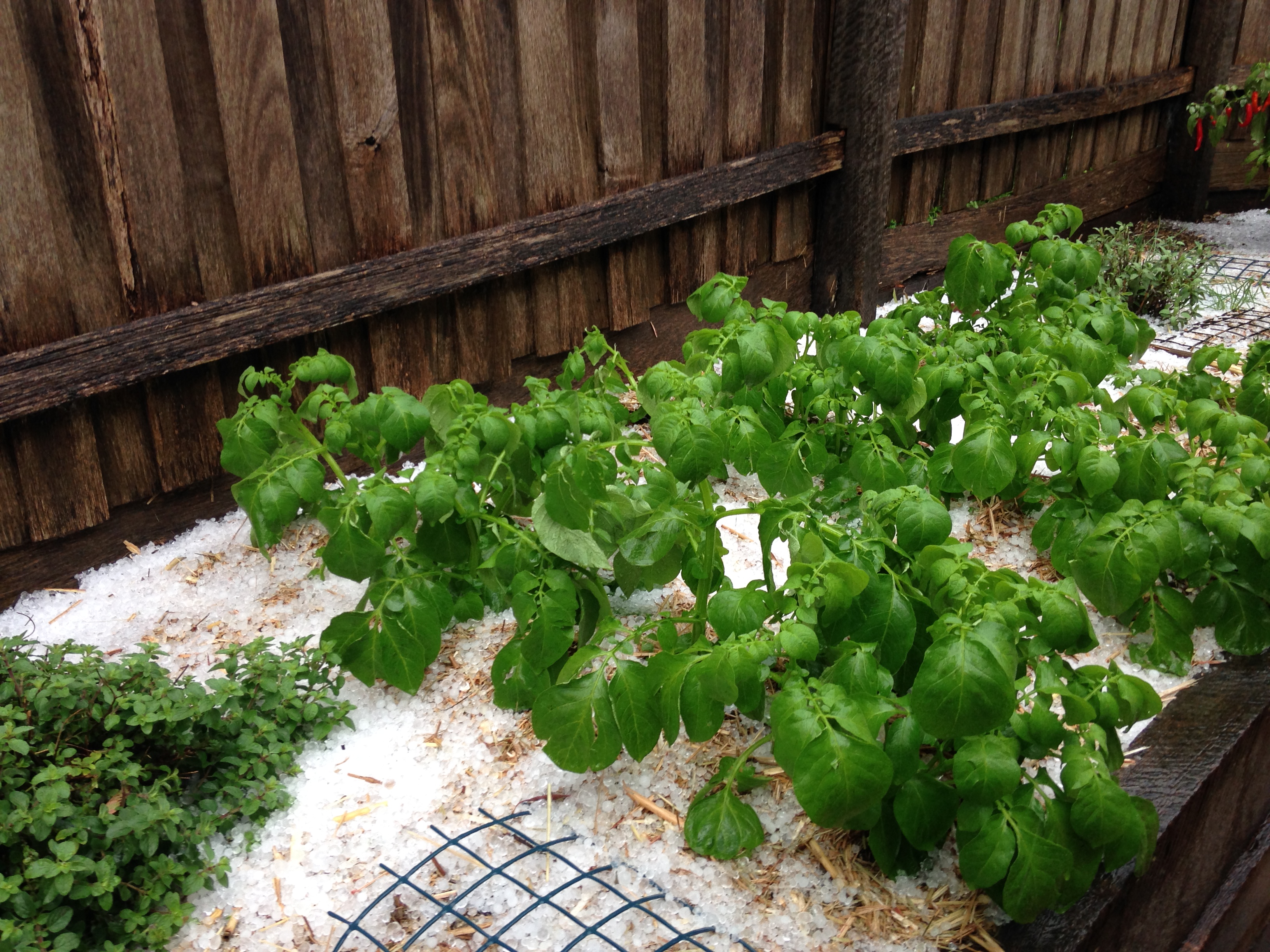
By the time there was 20mm in the rain gauge, hail had been added to the meteorological mayhem; not just a little bit, in fact, not little at all. Up to 1cm in diameter. By the time the “narrow band” had passed, there were 32mm in the gauge, our garden looked like something out of northern England in January and the crop of silverbeet, which had just begun to prosper after a long winter, had been shredded.

For the sadistic amongst you, here are some photos.

IMG_0235   IMG_0236

Posted in Cooking, Home life | Tagged , , | Leave a comment

Meatloaf

I have written this post for the benefit of a fellow-blogger. We haven’t had room in our menu for meatloaf this winter – too busy trying to relive our travel dining experiences – but we always enjoy it when we do.

Good quality lamb mince produces a more elegant result than beef but there is nothing wrong with the latter. If using lamb, you could use black rather than white pepper. The cheese is not essential to the end result. For the gluten intolerant, replace the breadcrumbs with extra rice.

Ingredients

1/3 cup brown rice
2 tbsp olive oil
1 onion and 2 cloves garlic, finely chopped
1 medium carrot, grated
1 kg lamb or beef topside mince
1 tbsp tomato paste
1 tsp sea salt
½ cup fresh bread crumbs
½ tsp dried oregano
2 tbsp finely chopped parsley
¼ tsp each of grated nutmeg and white pepper
1 egg
1 bunch spinach leaves, wilted and drained of excess moisture
150g fresh mozzarella-style cheese, eg bocconcini, cut into small marbles or 1.5cm cubes

Method

  1. Boil rice in plenty of salted water for 28 minutes; drain and set aside.
  2. Sauté onion and garlic in olive oil, add carrot after 5 minutes and cook until soft. When slightly cooled, combine with mince in a large mixing bowl.
  3. Add rice, tomato paste, salt, bread crumbs, herbs, spices and egg to bowl and mix thoroughly. Taste and adjust seasoning.
  4. Preheat oven to 170C.
  5. Place half of the mince in your loaf tin (we use one made of silicon, so greasing is not required). Make a wide channel down the middle of the loaf, fill it with spinach, place mozzarella on top of spinach and cover with the rest of the mince.
  6. Bake in the oven for about 45 minutes; when ready, a metal skewer will release clear juices. Rest briefly, then carve into slices. Serve with baked stuffed potatoes or boiled fresh chat potatoes.
Posted in Cooking | Tagged , , , | Leave a comment

There’s a pear in there …

… and apple as well.

Australians who spent their childhood here will be able to make sense of the above; it’s not so clever that further discussion is warranted!

For most of my life, I haven’t been a fan of pears; in fact, at kindergarten I used to be in dread that the mid-morning serve of fruit would include one or more pieces of pear. Anyway, my palate eventually got over it and I now enjoy slices of pear in a salad or on a pizza – think blue cheese, caramelised onions, rocket leaves and walnut pieces; poached pears – red wine in cool weather, chardonnay in summer; and baked pears.

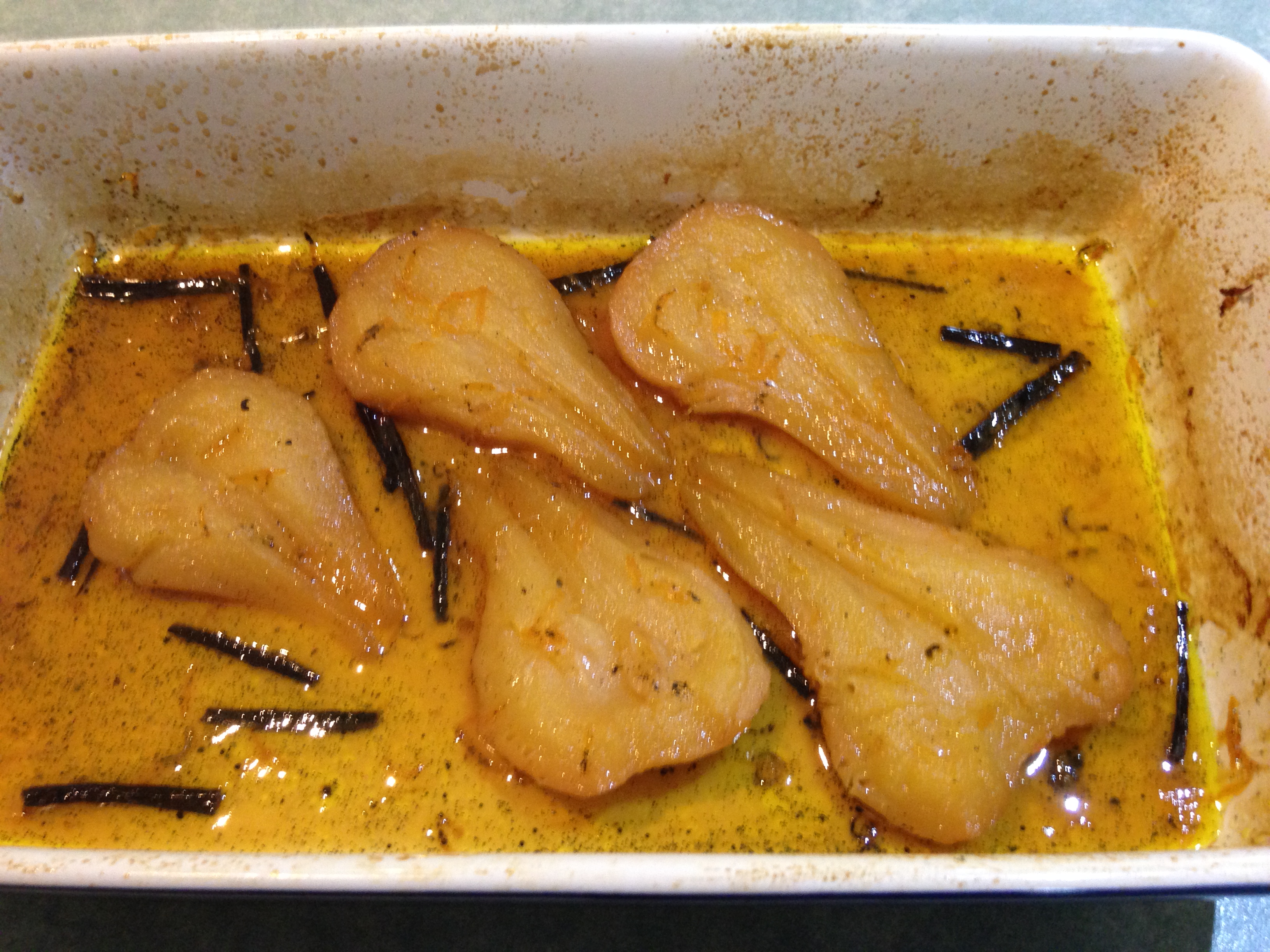
We bought some beurre bosc pears at Toscano’s last week and by Monday they were ripe enough to be eaten. As the oven was going to be used to cook the garlic and lemon marylands, I decided to bake the pears; besides, that would be the kitchen hand’s preference. Here is the recipe.

Ingredients

3 ripe-but-firm pears (Beurre Bosc, Williams, Red Sensation or Rouge d’Anjou)
1 vanilla bean
2 tsp butter
2 tbsp caster sugar
zest and juice of an orange
25ml brandy

Method

  1. Preheat oven to 150C-160C.
  2. Peel, halve and core the pears. Choose an ovenproof dish in which the pears will fit snugly and place the pears in the dish.
  3. Split the vanilla bean lengthwise, cut into ‘toothpicks’ and distribute across the base of the dish. Sprinkle sugar and small knobs of butter over pears, add the zest and liquids and cover with aluminium foil.
  4. Place in the oven and cook for 1-1¼ hours, turning the pear halves after 35-40 minutes. Remove the foil and bake uncovered for another 20 minutes or so. When the pears are starting to turn golden brown and the cooking juices have reduced to a thick syrup, they are ready.
  5. Allow to cool a little before serving, possibly with a small amount of cream or vanilla ice-cream.

I suspect the kitchen hand – my darling wife – may have been generous with the butter.  The syrup had not caramelised to the usual extent and the mouthfeel of this batch was slightly greasy to my palate. They were tasty enough but I had bought one extra pear and I knew I wouldn’t want to eat my entire share of the plentiful leftovers. Overnight, my mind turned to cake as the preferred destiny of the pear pieces and their syrup.

After some fruitless internet exploration, I decided to adapt my fresh apple cake recipe, as set out in my April 2014 post of that name.

I gently heated the dish of pears in the oven, until the syrup was runny. I transferred the pear to a plate – to be roughly chopped when cool – and tipped the syrup and solids into a sieve over a bowl. After weighing the strained syrup, I reduced both the amount of butter to be melted for the cake and the amount of raw sugar (and there was no need for any brandy or caster sugar). To top up the fruit content, I grated a peeled, smallish Granny Smith apple – grated to make it cook quicker and because I wanted the pear to be the visual and textural hero of the cake.

Sounds like an excess of fuss and bother – unless you’re a bit obsessive like me – but it did produce a delicious cake. One half was set aside for Maggie to share with work colleagues, the other to be consumed at home over the next few days.

Pear cake 1   Pear cake 2

Posted in Cooking | Tagged , , , | Leave a comment